

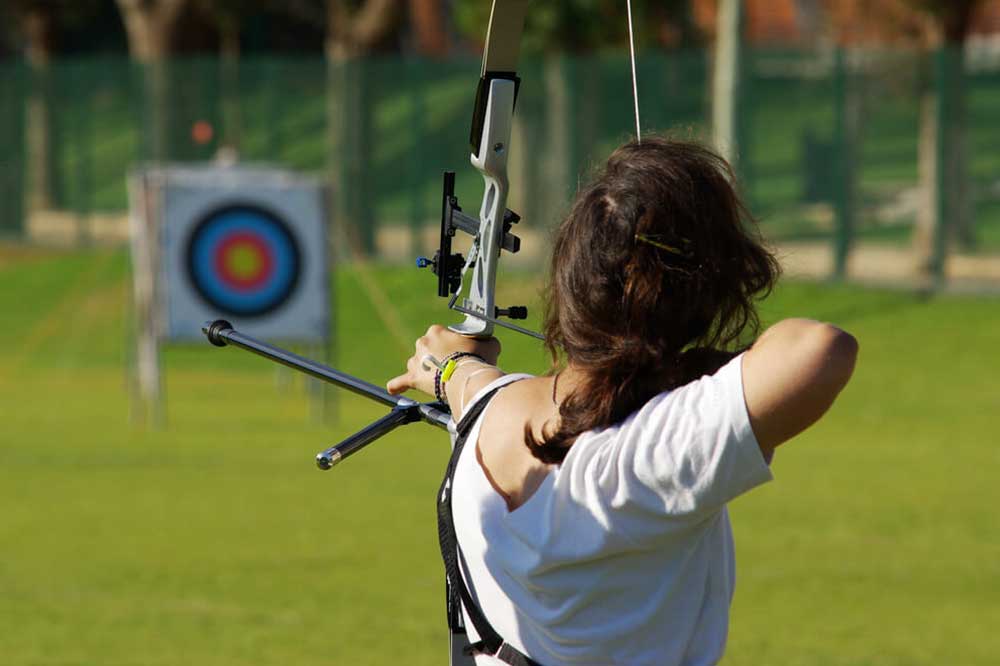
In a compound bow, the ends of the limbs are equipped with pulleys (cams) connected by cables, which reduce the force required to hold the string at the end of the draw—by up to several tens of percent. In a traditional bow, there are no mechanisms: the further you draw the string, the tighter it becomes, and you maintain all the tension with your fingers until the shot. This explains all the other differences: accuracy, shooting style, accessories, price, and how the bow fits in your hand.
The term "traditional" encompasses several types: longbows, recurve bows, and recurve bows without sights, as well as replicas of historical bows. A separate category is the Olympic recurve bow (a recurve bow with sights and stabilizers), which also does not include compound bows.
To sum it up
- Mechanism: The block type has cams, cables, and a force release mechanism; the traditional type has only a handle, limbs, and a bowstring.
- Shooting: A compound rifle is typically fired using a trigger and a rear sight with a diopter sight; a traditional rifle is fired with the fingers, often "instinctively," without a sight.
- Accuracy and speed: A compound bow makes it easier to make repeated, accurate shots and generally releases an arrow faster; a traditional bow requires more technique and practice.
- Appeal: The block type is heavier, more expensive, and requires a press for adjustment; the traditional type is lightweight, simple, and easy to transport.
How does a compound bow work?
The compound bow was developed in 1966 by American Holless Wilbur Allen, and the patent was issued in 1969. The design consists of a handle (usually made of aluminum, magnesium alloy, or carbon fiber), short, stiff composite limbs, and blocks (pulleys) at their ends. The bowstring and cables pass through the blocks, as if through a pulley system.
At the beginning of the tension, the force increases, reaches a peak, and then – as the blocks «jump» – it drops sharply. This is called release of force , or a reduction in draw weight at full draw. In modern bows, this draw weight typically ranges from 65 to 801 TP3T of peak draw weight, and in some models, over 901 TP3T. This allows the archer to aim comfortably for several seconds while maintaining only a fraction of the bow's rated draw weight.
Compound bows are most often shot with mechanical trigger mechanism , which releases the bowstring more smoothly than fingers. Competition rules permit the use of a sight and a magnified scope. Length and draw weight are adjustable within a certain range, but some adjustments require onion press — a special tool for compressing the limbs of a bow.
What is a traditional bow?
Traditional bow It works the same way as bows from thousands of years ago: energy is stored exclusively in the curved limbs. Power increases as the bowstring is drawn, so the archer maintains maximum power at full draw—this is why traditional bows shoot smoothly, without the need for a lengthy aiming process.
This group includes, among others:
- longbow (straight bow) – a longbow with D-shaped limbs, made from a solid piece of wood or from layers of wood and fiberglass.
- Recurve bow - in which the ends of the limbs are curved away from the archer, which provides more energy with a shorter bow length; it can be one-piece or folding (take-down).
- historical bows – for example, copies of steppe, Turkish or Korean bows, often without an arrow rest.
Typically, shooting is done with the fingers, often using instinctive techniques - without aiming, based on sensations developed during training.
Comparison table of compound and traditional bows.
| Characteristic | compound bow | Traditional bow |
|---|---|---|
| Construction | Maidan, short levers, cams, cables | Maidan (or a single body), weapons, bowstring |
| Full draw strength | Reduced descent rate (typically 65–80%). | Maximum value – increases throughout the entire section. |
| Releasing the string | The most commonly used trigger is a mechanical trigger. | Fingers (often gloved or with a patch) |
| Aiming | A sight, often with magnification, and a diopter sight | Usually shooting is done blindly, instinctively. |
| Materials | Aluminum, magnesium, carbon, composites | Wood, fiberglass, composite materials, horn (replicas) |
| Weight and dimensions | Heavier, shorter, with accessories. | Lighter, longer, easier to transport |
| Service | Adjustment, replacement of strings and cables - often includes pressing and maintenance. | It's simple – you change the line yourself. |
| Competition | Compound archery (World Archery Federation) will be included in the 2028 Olympic Games in Los Angeles. | Traditional and classical bow categories; at the Olympic Games – classical bow. |
The compound bow is designed for maximum repeatability The reduced draw weight ensures consistent aiming, the trigger eliminates finger error, and the enlarged sights make it easier to hit small targets. The rigid design typically results in faster arrow flight than a traditional bow of similar power. In compound archery competitions, competitors shoot at a distance of 50 meters, while those shooting with a classic bow shoot at a distance of 70 meters.
Traditional bow less forgiving of mistakes Any error in stance or shot is visible on the target. For many, this is an advantage – shooting is easier, more intuitive, and closer to historical archery. Progress is slower, but the equipment does not require significant investment or maintenance.
Which bow should I start with?
- For amateur, historical and field shooting Traditional or simple classic bows are used. They are lighter, cheaper to buy, and easier to use.
- Precision target shooting, 3D archery, and competitions for results - a compound bow, the draw length of which best suits the requirements of the service.
- Olympic Archery Competition Schedule - a classic bow, often starting with a training model in a club.
Whatever your choice, start with a small amount of bowstring tension – too much draw weight will ruin your technique and can strain your shoulders. It's best to shoot at a club or with an instructor before purchasing, who can help you choose the right draw weight, tension, and arrows. A bow is not a toy: shoot only at a shooting range or in an area where there are no people or animals behind the target.
Frequently Asked Questions (FAQ)
What is the difference, in short, between a compound bow and a traditional bow?
A compound bow uses pulleys and cables that reduce the effort required to hold the bowstring at full draw, as well as a sight and trigger. A traditional bow has no mechanisms—the draw weight increases toward the end of the draw, and you shoot with your fingers, usually without a sight.
What is draw weight release in a compound bow?
This is the reduction in draw weight at full draw, expressed as a percentage of peak draw weight. With an 80% draw weight and a bow draw weight of 60 pounds, the draw weight reduction at full draw is approximately 12 pounds. New bows typically have a draw weight reduction of 65–80%.
Is a compound bow good for beginners?
This is possible with proper draw length adjustment and a low draw weight. However, many instructors start with a simple classic bow, as it teaches proper technique and is less expensive if interests change.
Is compound archery an Olympic sport?
Until now, only classic bows have been used at the Olympic Games. The 2028 Olympic Games in Los Angeles will feature mixed team compound archery competitions, marking the Olympic debut of this type of bow.
Are traditional bows and recurve bows the same thing?
Not quite. A recurve bow is a variation of the traditional bow with limbs curved in the opposite direction. Traditional bows also include the longbow and replicas of historical bows.
See also
- What is the difference between a telescope and a regular telescope?
- What is the difference between mixed martial arts (MMA) and boxing?
- What is the difference between dynamics and kinematics?
- What is the difference between figure skates and hockey skates?