

Even with the advent of the modern era and the advent of photography, film, and digital technology, painting remains a popular means of expressing one's feelings. And it leaves open the question of what combination of talent, genius, and circumstance leads to the creation of a masterpiece capable of claiming the title of timeless classic.
We can't answer this question, but we can tell you the most famous paintings in the world, created by famous artists and considered world cultural heritage sites.
10. Monks. Wrong Way to Go, Lev Solovyov
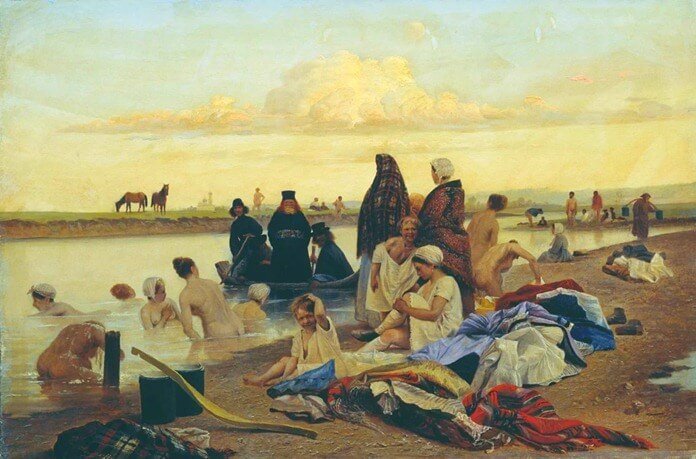
«"But that's Repin's painting 'We've Arrived!'" a reader might protest. This isn't just the name of a masterpiece and its author (not really), but a well-established expression denoting an unpleasant, stalemate.
And if the artist Lev Grigorievich Solovyov had known about it, he would probably have found it both amusing and offensive. It's amusing that this expression could be applied to him and his creation. And it's offensive because he actually painted the picture.
«The painting's origins date back to the 1870s, and in the 1930s, it appeared at a museum exhibition, hanging alongside works by Ilya Repin. Therefore, visitors assumed it, too, was by the great master. They gave it a short and succinct popular title: "They've Arrived.".
9. Les Demoiselles d'Avignon, Pablo Picasso
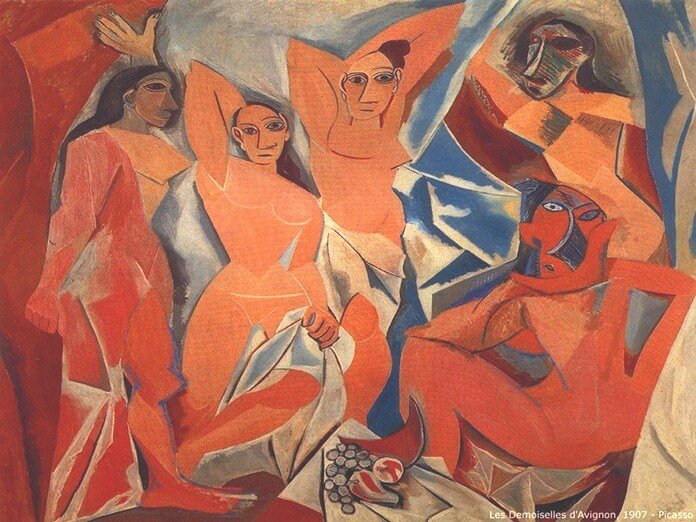
This painting ushered in the modern era of Cubism, breaking decisively with the representational tradition of Western painting and incorporating allusions to African masks that Picasso had seen in the Ethnographic Museum of Paris.
The women depicted in the painting are actually prostitutes from a Barcelona brothel, hence the painting's original title, "The Philosophical Brothel.".
8. The Scream, Edvard Munch
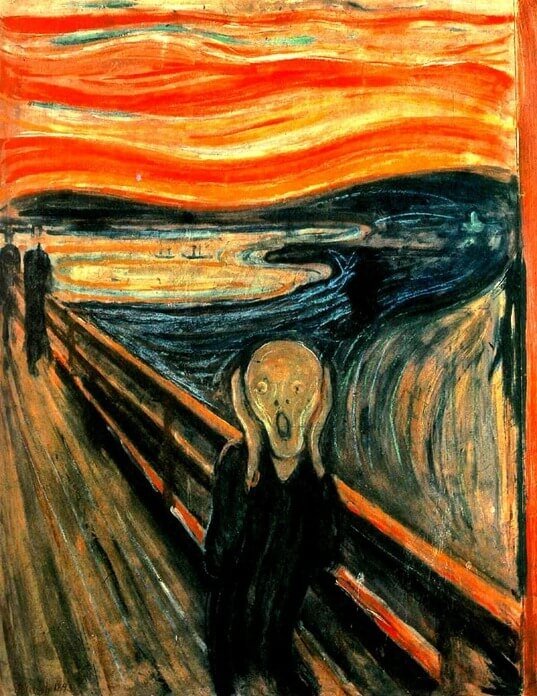
One of the first representatives of Expressionism used only oil and pastel to paint his most famous figure. The artist wanted to depict the "cry of nature" that evokes the agony of a human being so primitivized that he resembles a sperm or embryo rather than a member of Homo sapiens.
One of the most famous paintings of modern times is the result of the anxiety and fear Edvard Munch experienced one afternoon while walking with two friends. The flaming clouds reminded him of blood and "tongues of flame over the bluish-black fjord and the city.".
Since the late 20th century, "The Scream" has been widely imitated and parodied in culture. The painting has appeared in advertising, films, internet memes, and more. Some art historians consider it an "icon of modern art" and "the Mona Lisa of our time.".
7. The Night Watch, Rembrandt
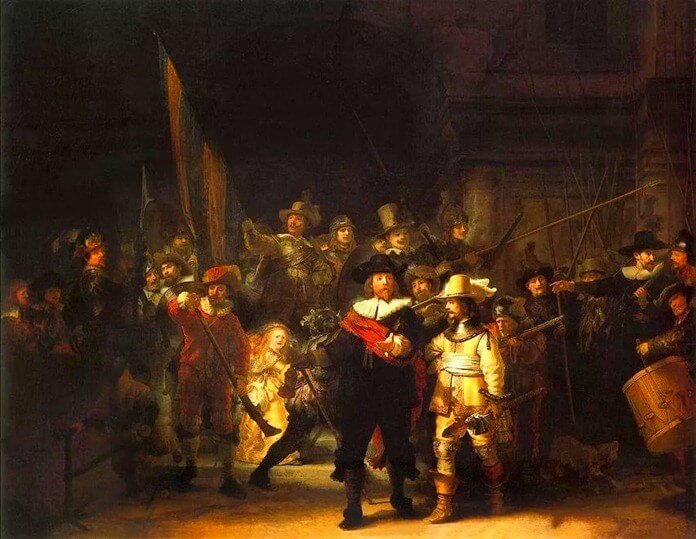
This famous painting was painted by the Dutch artist Rembrandt van Rijn and is now considered the pinnacle of the Dutch Golden Age.
This oil on canvas painting depicts riflemen from Captain Frans Banning Cocq's company. The image is renowned for its striking interplay of light and shadow and the movement that permeates the traditionally static military portrait.
The Night Watch originally had a much longer title: "The Rifle Company of Captain Frans Banning Cocq and Lieutenant Willem van Ruytenburgh." The title we know today only appeared in the 18th century.
6. The Garden of Earthly Delights, Hieronymus Bosch

The world's most famous paintings typically depict one or two people. But this triptych is truly crowded. It was created by a late-Medieval artist who believed that God and the Devil, Heaven and Hell, were real.
There are three scenes in the painting:
- The left panel depicts Christ presenting Eve to Adam,
- on the right - the outlines of hell;
- It's not entirely clear whether the central panel depicts Heaven. On the one hand, it's an idyll: people indulge in lovemaking, carefreely splashing in the water, and several figures soaring in the sky. On the other hand, in Bosch's time, intercourse was either a necessary evil or a terrible sin, demonstrating the base nature of man.
Incidentally, it wasn't Bosch who gave his work the title "The Garden of Earthly Delights," but researchers. And to this day, they haven't agreed on what the artist intended to convey with this masterpiece.
5. Portrait of the Arnolfini Couple, Jan van Eyck
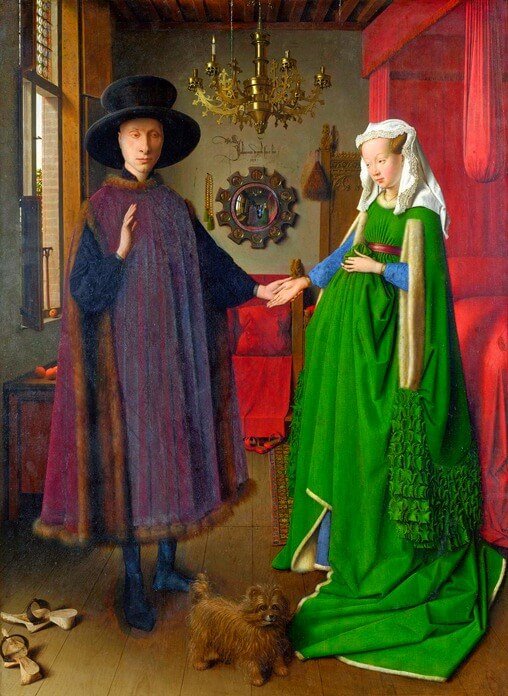
This composition is considered one of the most important works of the Northern Renaissance and is one of the first oil paintings. This full-length double portrait is generally believed to depict the Italian merchant Giovanni di Nicolao Arnolfini and a woman who may be his fiancée or wife.
In 1934, renowned art historian and theorist Erwin Panofsky suggested that the painting actually depicts a marriage ceremony. This is suggested by the clasped hands of the figures in the painting, as well as the man's pose, which is typical for taking vows.
What can be said with certainty is that the "Arnolfini Portrait" is one of the first interior paintings using orthographic perspective. This is done to create a sense of space that seems contiguous with the viewer's own. It seems as if one could stand up and step into the painting.
Someone joked that the face of merchant Giovanni di Nicolao Arnolfini bears a striking resemblance to that of President Vladimir Putin. You, dear readers, will decide for yourself whether this is true or not.
4. The Birth of Venus, Sandro Botticelli
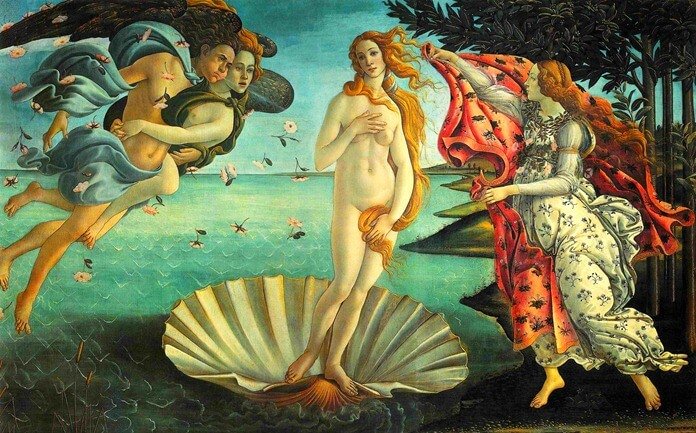
This is the first full-length painting of a nude non-biblical figure since antiquity. It was created for Lorenzo de' Medici.
The figure of the Goddess of Love was probably modeled on Simonetta Vespucci, the first beauty of the Florentine Renaissance.
Such a frivolous image infuriated Girolamo Savonarola, a Dominican monk who led a fundamentalist campaign against Florentine secular tastes. His campaign included the infamous "Bonfire of the Vanities" of 1497, in which "secular" items—cosmetics, artwork, and books—were burned at the stake.
«The Birth of Venus was also scheduled to be burned, but miraculously escaped destruction. Botticelli was so disturbed by this incident that he gave up painting for a time.
3. The Starry Night, Vincent van Gogh
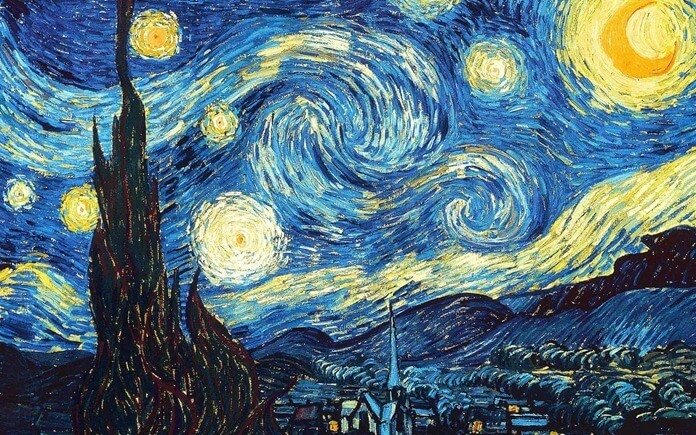
Van Gogh's most popular painting was created in a mental asylum in Saint-Rémy-de-Provence. "The Starry Night" seems to reflect his turbulent state of mind at the time. It is believed that, through the power of his imagination (and also under the influence of his mental illness), he saw the starry sky as no one else had seen it.
2. Girl with a Pearl Earring, Johannes Vermeer
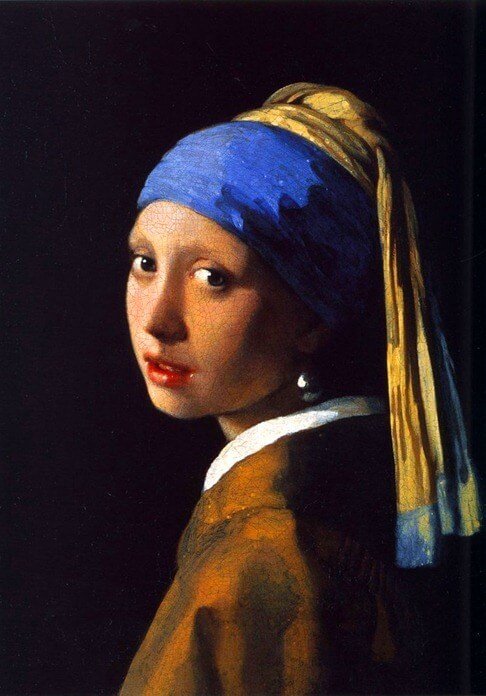
One of the most popular paintings is called the Northern or Dutch Mona Lisa. The image looks strikingly realistic and modern, almost as if it were a photograph.
This has given rise to the theory that Vermeer used a pre-photographic device called a camera obscura to create his painting. Leaving this assumption aside, another question remains about the image: who posed for the artist? Many art historians believe the girl could have been Vermeer's servant.
Technically, "Girl" isn't a portrait, but an example of a Dutch genre called "tronie." Artists who worked in this genre didn't paint the entire subject, but only their head.
1. Mona Lisa, Leonardo da Vinci
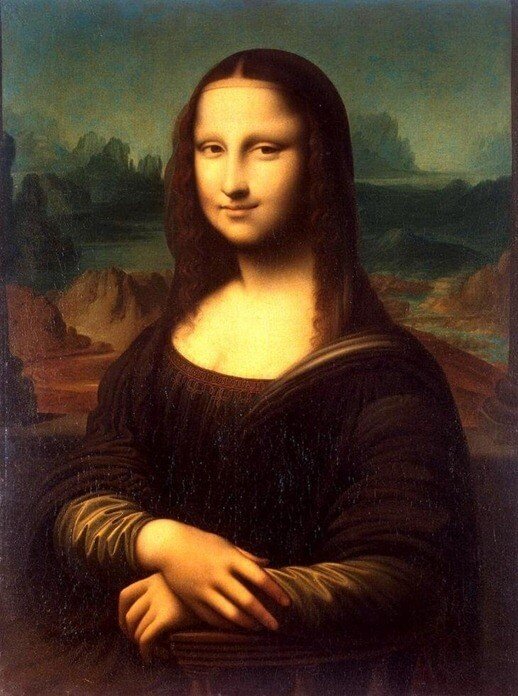
One of da Vinci's most famous paintings has long captivated art historians and art enthusiasts. Who is depicted in the canvas, and why is the woman smiling?
Several theories have been put forward regarding the first question in recent years. The most prominent of these are:
- This is the wife of the Florentine merchant Francesco di Bartolomeo del Giocondo (an alternative title for the work is Gioconda).
- This is Leonardo's mother, Caterina.
- And finally, this is a self-portrait in female guise.
As for this famous smile, its mystery has driven people crazy for centuries.
Also note the Mona Lisa's eerily calm gaze, perfectly harmonized with the landscape behind her. It seems to fade into the distance thanks to the use of atmospheric perspectives.