

There are thousands of insect species in nature, divided into various subspecies based on their habitat, diet, and appearance. Some species live on the soil, some inhabit trees, and some live on plants. Plant-dwelling insects comprise the majority of the insects on this list. Most insects you'll encounter have a natural camouflage trait that is genetically present in many living species in nature. But what makes them so special is that these ten can camouflage themselves to such a degree that you can't see them unless you look very closely. In fact, it can be nearly impossible to distinguish insect species from the true leaves surrounding them…
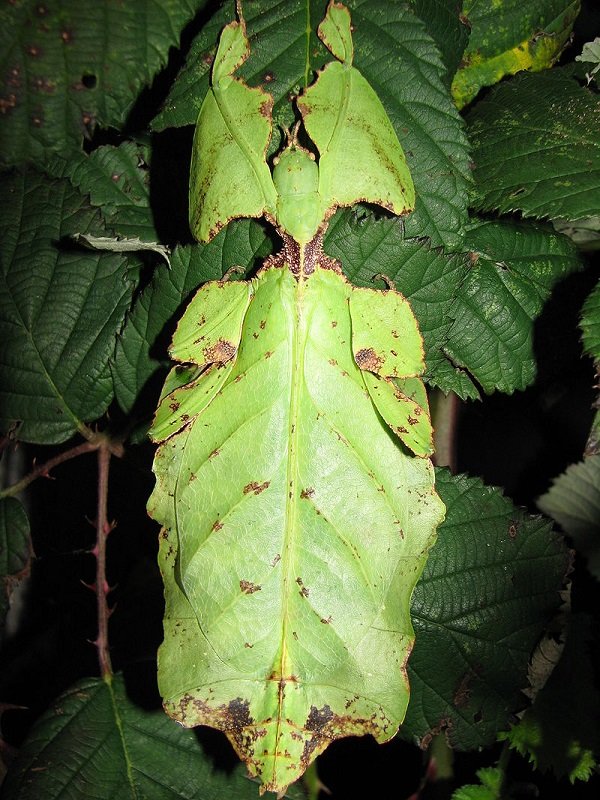
Giant leafhopper insect (Pulchriphyllum giganteum)
Pulchriphyllium giganteum, commonly known as the giant Malaysian leaf insect, is a species of leaf insect described from Malaysia by Hausleitner in 1984 and placed in the genus Pulchriphyllium in 2021. They are large in size and are most commonly found in the tropics of western Malaysia.
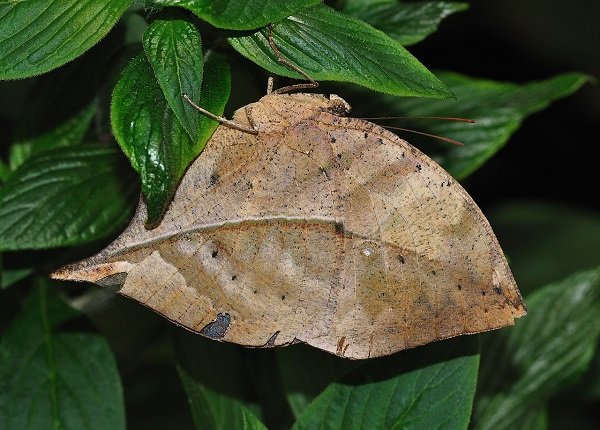
Indian orange oakleaf butterfly (Kallima inachus)
Kallima inachus, the orange oak leaf, Indian oak leaf, or dead leaf, is a nymphalid butterfly native to tropical Asia from India to Japan. With its wings closed, it closely resembles a dead leaf with dark veins and is a frequently cited example of camouflage.

False Katydid (Phaneropterinae)
Phaneropterinae, also known as sickle-headed bush crickets or leaf crickets, are a subfamily of insects in the family Tettigoniidae. There are approximately 2,060 species in 85 genera known worldwide. They are also known as false katydids or round-headed katydids.
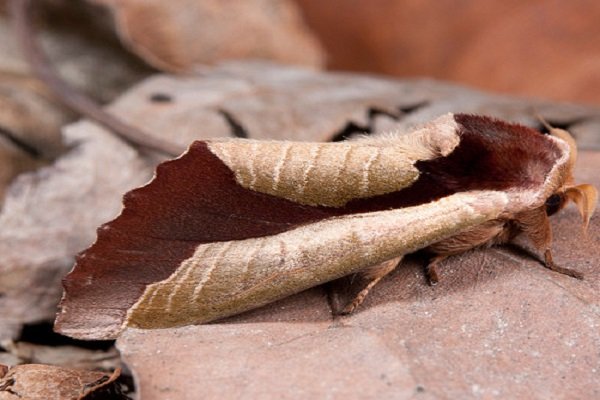
Leaf mimic moth (Uropyia meticulodina)
Uropyia meticulodina is a species of butterfly in the family Notodontidae, first described by Oberthür in 1884. It is found in Taiwan, Japan, and the Chinese provinces of Yunnan, Hubei, and Shaanxi. Its wingspan is 45–55 mm. Adults mimic dead leaves.

Deadleaf grasshopper (Chorotypidae)
Chorotypidae is a family of tropical Asian grasshoppers (order Orthoptera), formerly included in the family Eumastacidae. These grasshoppers have heads elevated above the thorax and short antennae. Some species have reduced wings, others have wings that flare out toward the tips, and still others have a flattened, leaf-like shape.

Luna butterfly (Actias luna)
The luna butterfly, also known as the American luna butterfly, is a Nearctic butterfly of the family Saturniidae, subfamily Saturniinae, a group commonly known as giant silk butterflies. It has lime-green wings and a white body. The larvae are also green.

Thorny-leaved insect (Extatosoma tiaratum)
Extatosoma tiaratum, commonly known as the spiny leaf insect, giant spiny stick insect, Macleay's ghost, or Australian walking stick, is a large species of Australian stick insect endemic to Australia.
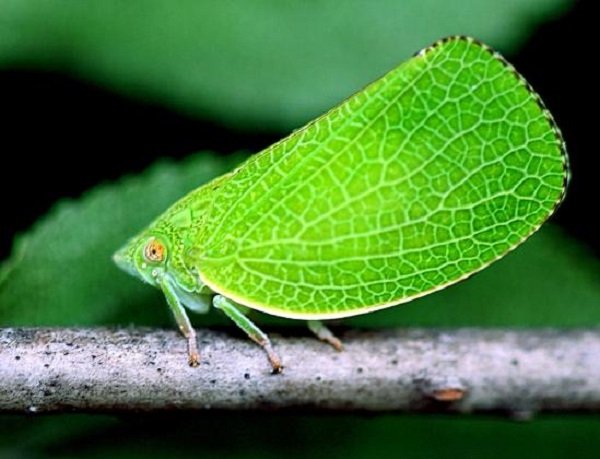
Plant grower (Fulgoroidea)
A leafhopper is any insect of the infraorder Fulgoromorpha of the suborder Auchenorrhyncha, a group containing over 12,500 described species worldwide.

Blue oakleaf butterfly (Kallima horsfieldii)
Kallima horsfieldii, the blue oak leaf, southern blue oak leaf, or Sahyadri blue oak leaf, is a nymphalid butterfly native to India. Its underside resembles a leaf with a midrib, while its upperside is brightly colored.

Green bug (Palomena prasina)
The green shield bug is a European species of shield bug in the family Pentatomidae. This name can equally apply to several other species of the tribe Nezarini, or, if called the «green stink bug,» it may more appropriately refer to the larger North American stink bug, Acrosternum hilare.
Which of these amazing insects is your favorite? Have you seen any of these in real life? Let us know in the comments below.