

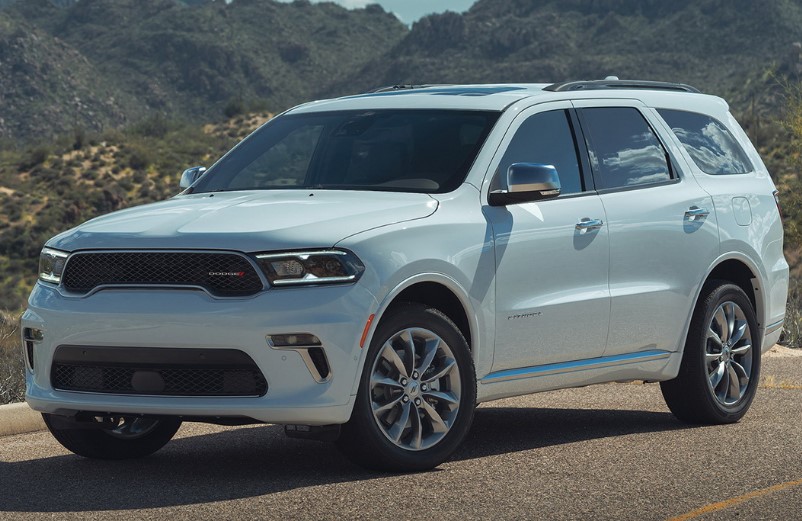
The 2027 Dodge Durango represents the culmination of more than a decade of development for its third generation, which has not only maintained but also expanded its reputation as the most powerful and charismatic SUV in America. This vehicle is a rare example of how the classic concept of a large V8 under the hood coexists with modern digital technologies and active safety systems. Durango is no longer positioned as a utilitarian family vehicle; it is now a lifestyle statement, where cargo capacity and spaciousness coexist with the ability to put many sports cars to shame at a stoplight. The 2024 restyling laid the foundation, and by 2027, the model has received a number of targeted but significant updates to its electronics and powertrains.
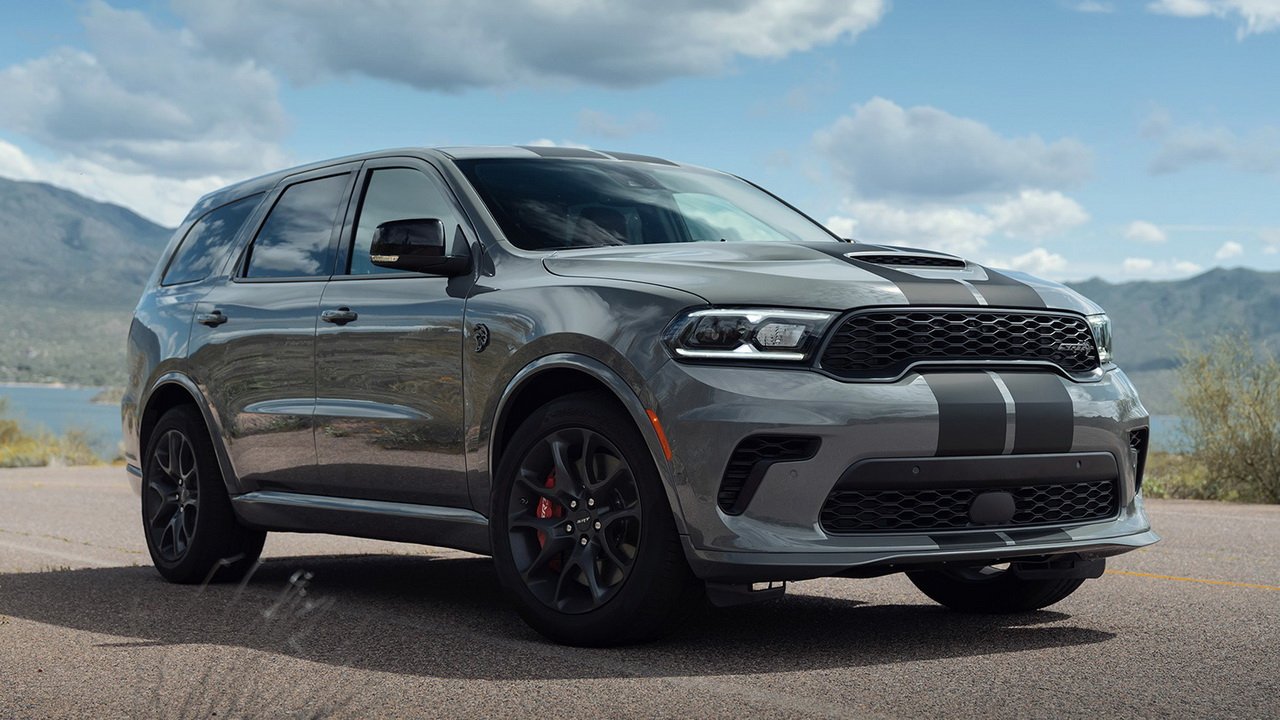
The Durango's appearance has always balanced the line between brutal muscularity and the elegance of a full-size crossover. For 2027, this balance has been adjusted toward greater aggression, particularly in the top-of-the-line SRT trims. New, even narrower LED headlights with three horizontal «fangs» of daytime running lights lend a predatory focus to the look. The grille, depending on trim, can be either a chrome mesh, a black honeycomb structure, or, on the SRT Hellcat, a fully perforated grille for improved cooling. The roofline remains virtually unchanged, emphasizing the continuity between generations and the traditional three-box shape, so rare among modern crossovers.
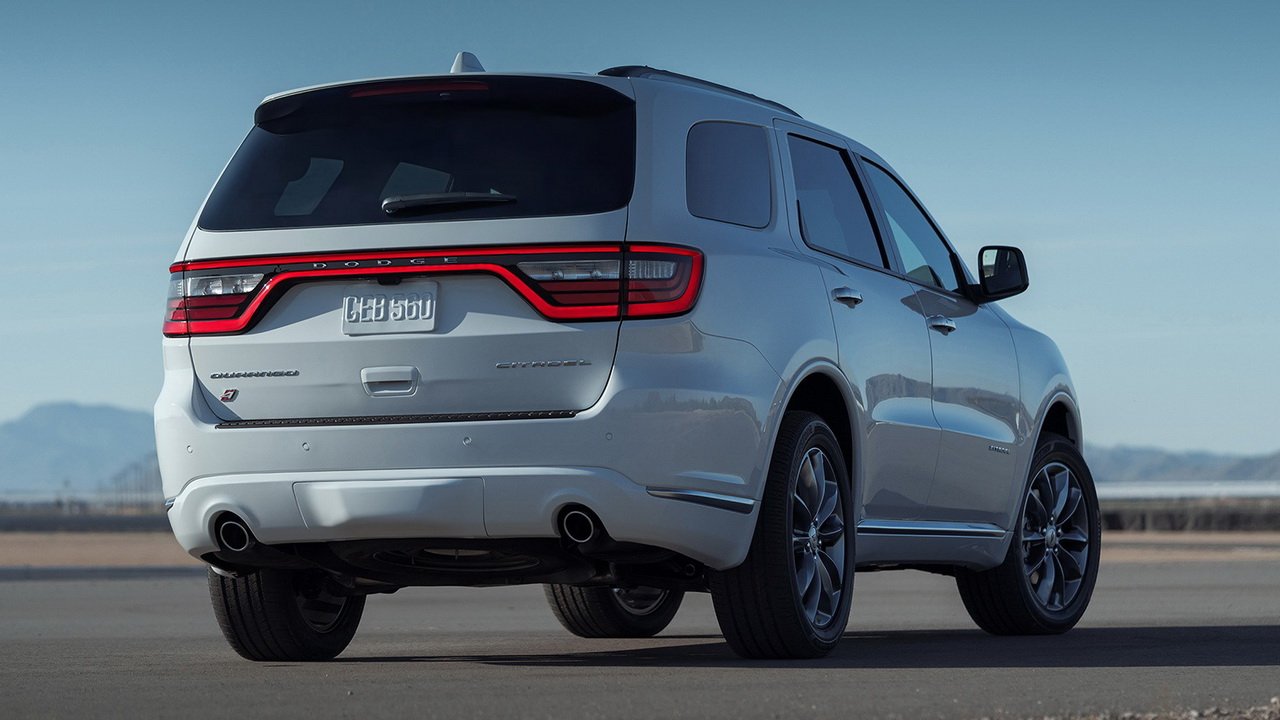
Design and aerodynamics: form subordinated to speed
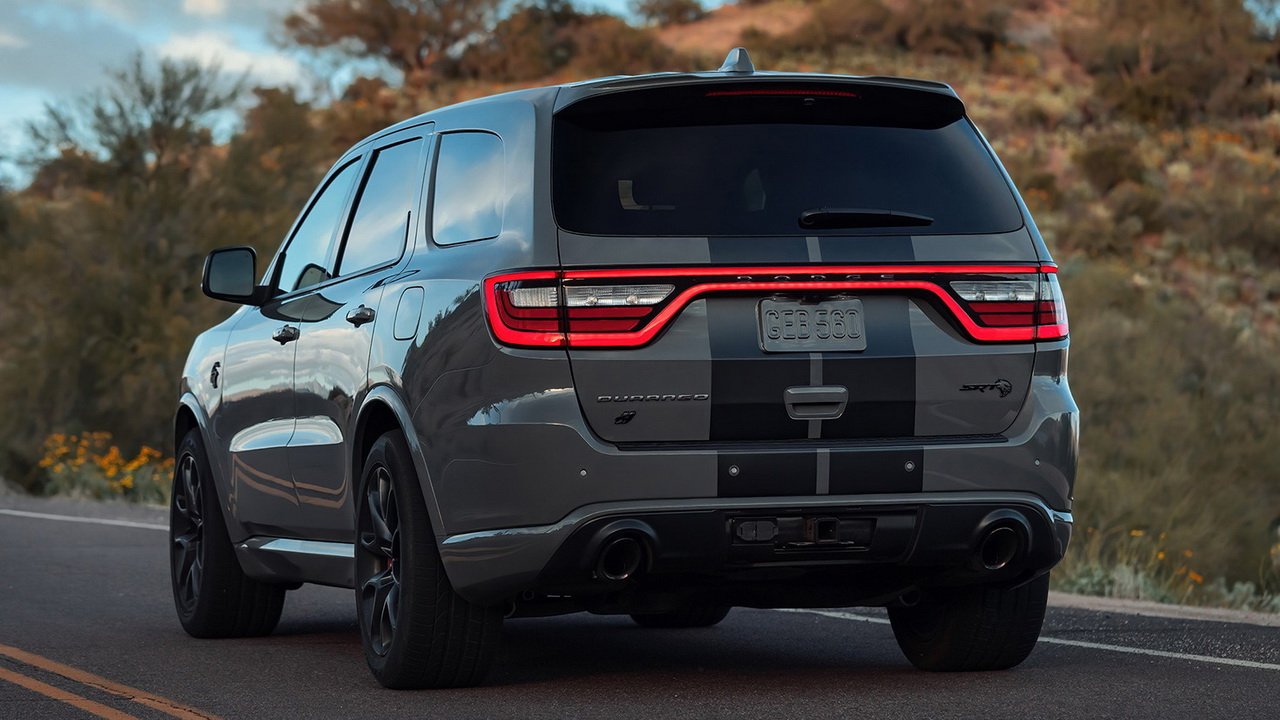
Every line on the 2027 Durango's body either reduces aerodynamic drag or serves to demonstrate power. The new wind-tunnel-developed front splitter not only tucks the front axle under the wheels at high speeds but also directs airflow to cool the brakes. The hood scoops on SRT models are functional air intakes, drawing hot air out of the engine compartment. The rear spoiler has grown in size and now features an active system that changes its angle of attack at a certain speed to increase downforce. Even the door handles, while still traditional, feature special guides for laminar air flow.
- Body materials and paint: In addition to the classic colors, a matte «Destroyer Gray» paint finish with a ceramic protective coating is available for 2027. The SRT Hellcat's hood and roof are available in carbon fiber, reducing overall weight and shifting the center of gravity.
- Active exhaust system: The Quad-Tip exhaust flaps allow you to adjust the volume and character of the sound, from a quiet stealth mode to a deafening roar at full blast, which is especially appreciated by V8 fans.
- Intelligent lighting technology: The optional laser matrix headlights not only provide an incredible beam range, but can also project information symbols onto the road, such as a vehicle width warning when driving through narrow spaces or a welcome message at a garage.
- Wheels and tires: The SRT comes standard with 20-inch wheels, but 21-inch wheels with Pirelli P Zero tires or Continental CrossContact all-weather tires are available as an option. A tire pressure monitoring system displays real-time temperature and pressure for each wheel.
Interior: A digital cockpit wrapped in American luxury
The 2027 Durango's interior is a blend of traditional Detroit materials (leather, aluminum, exposed seams) and digital high-tech. The dominant feature is the curved 28-inch display, which integrates the virtual instrument cluster and the Uconnect 5 multimedia system. However, unlike many competitors, the physical buttons for critical functions (heated/ventilated seats, audio controls, and driving modes) are retained—they are made of metal and offer a tactile click. The dashboard is angled 10 degrees toward the driver, creating a toy-scale cockpit. Alcantara is used extensively in the trim on the headliner, pillars, and upper dashboard, reducing interior reflections and creating a sense of intimacy.
Second- and third-row space remains one of the Durango's key strengths. Even in a seven-seat, three-row configuration, adults can comfortably fit in all seats. The Citadel version is available with a six-seat configuration, featuring two second-row captain's chairs equipped with heating, ventilation, massage, and folding tables. The passenger entertainment system now supports game streaming via Xbox Cloud Gaming and includes two 10-inch touchscreen displays with HDMI and wireless Apple CarPlay/Android Auto support. Climate control is now four-zone, with separate controls for each row of seats.

- Harman Kardon audio system with QuantumLogic technology: 19 speakers, including a 900-watt subwoofer, aren't just loud. QuantumLogic Surround technology artificially creates surround sound even from stereo recordings by analyzing the audio stream and distributing instruments and vocals across different channels for a concert hall-like experience.
- Wireless technologies and charging: In addition to wireless CarPlay/Android Auto, the car is equipped with five USB-C ports (three with fast charging), one wireless charging pad for smartphones, and a built-in Wi-Fi hotspot with 5G support.
- Driver Attention Assist: An infrared camera that tracks the driver's head and eye position can detect signs of fatigue or loss of concentration and prompt a break by activating seat massage and playing invigorating music.
- Customizable ambient lighting: The LED strip that wraps around the entire cabin can change up to 64 colors and sync with music, driving modes, or simply create a calming atmosphere on a long drive.
Specifications: From the family-friendly V6 to the hellish V8
The 2027 Durango engine lineup represents a power ladder, with each rung representing a specific owner type. At the core is the proven 3.6-liter Pentastar V6 (295 hp, 360 N⋅m), paired with an 8-speed automatic transmission and available with rear- or all-wheel drive. It's the choice for those who prioritize spaciousness and image over performance. The next level up is the legendary 5.7-liter HEMI V8 (370 hp, 535 N⋅m) with Multi-Cylinder Deactivation (MDS) for fuel economy on the highway. It offers that distinctive rumble and confident traction for towing up to 8,500 pounds.
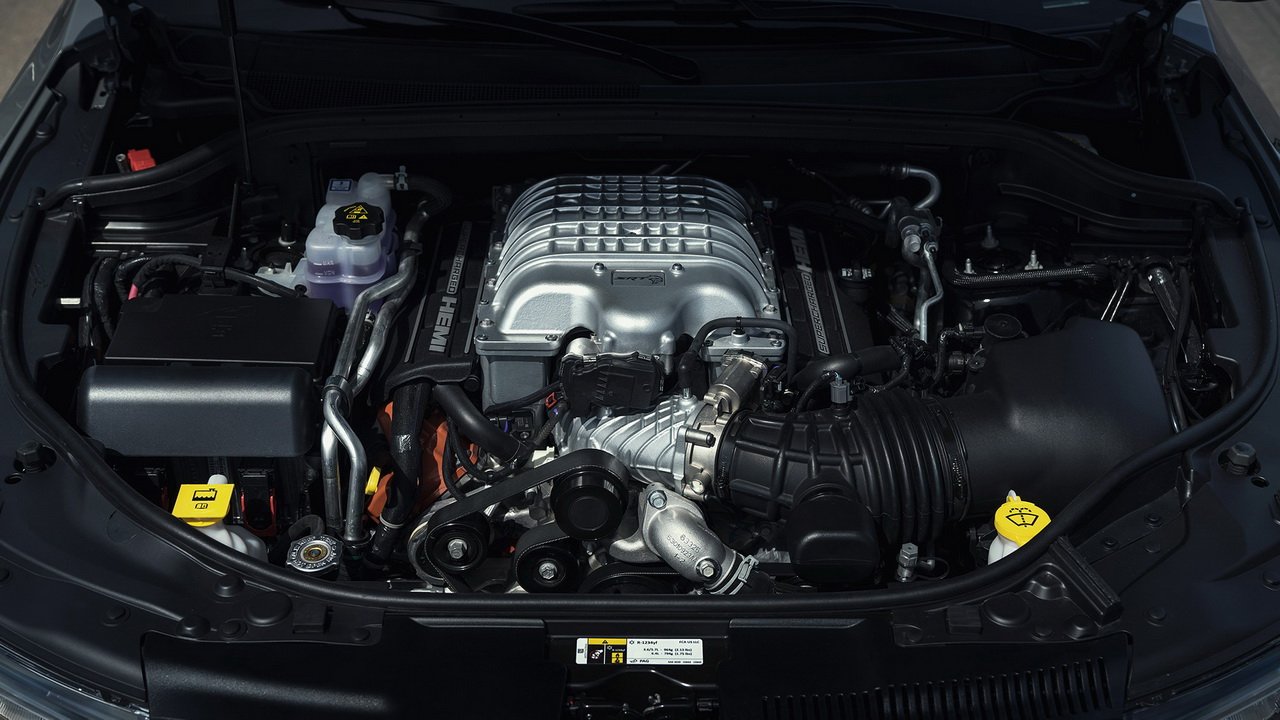
For performance enthusiasts, there's the SRT 392, powered by a naturally-aspirated 6.4-liter V8 (485 hp, 644 N⋅m). This engine has no cylinder deactivation and is tuned for responsiveness and linear power across the entire rev range. Finally, the ultimate performance model is the SRT Hellcat, powered by a supercharged 6.2-liter V8, which received minor tuning for 2027, boosting output to 730 hp and torque to 890 N⋅m. The IHI supercharger now features an electronically controlled wastegate for more precise boost control and reduced lag. All V8 versions are equipped exclusively with all-wheel drive and a reinforced 8-speed TorqueFlite automatic transmission with algorithms optimized for sharp starts and quick shifts.
- Adaptive suspension with three Bilstein modes: Electronically controlled shock absorbers can instantly change damping, switching from a comfortable damping setting to a firm sporty setup that minimizes roll. In Track mode, the suspension automatically lowers the car by 15 mm to improve stability.
- Brembo Performance Braking System: The SRT Hellcat features six-piston front and four-piston rear calipers, working with cross-drilled and ventilated discs measuring 400mm and 350mm in diameter, respectively. The system has several modes, including a track mode with increased temperature resistance.
- All-wheel drive with active differential: The all-wheel drive system not only redistributes torque between the axles, but also, using an active rear differential, can direct up to 100% of the torque to one of the rear wheels, literally «twisting» the car into the corner to combat understeer.
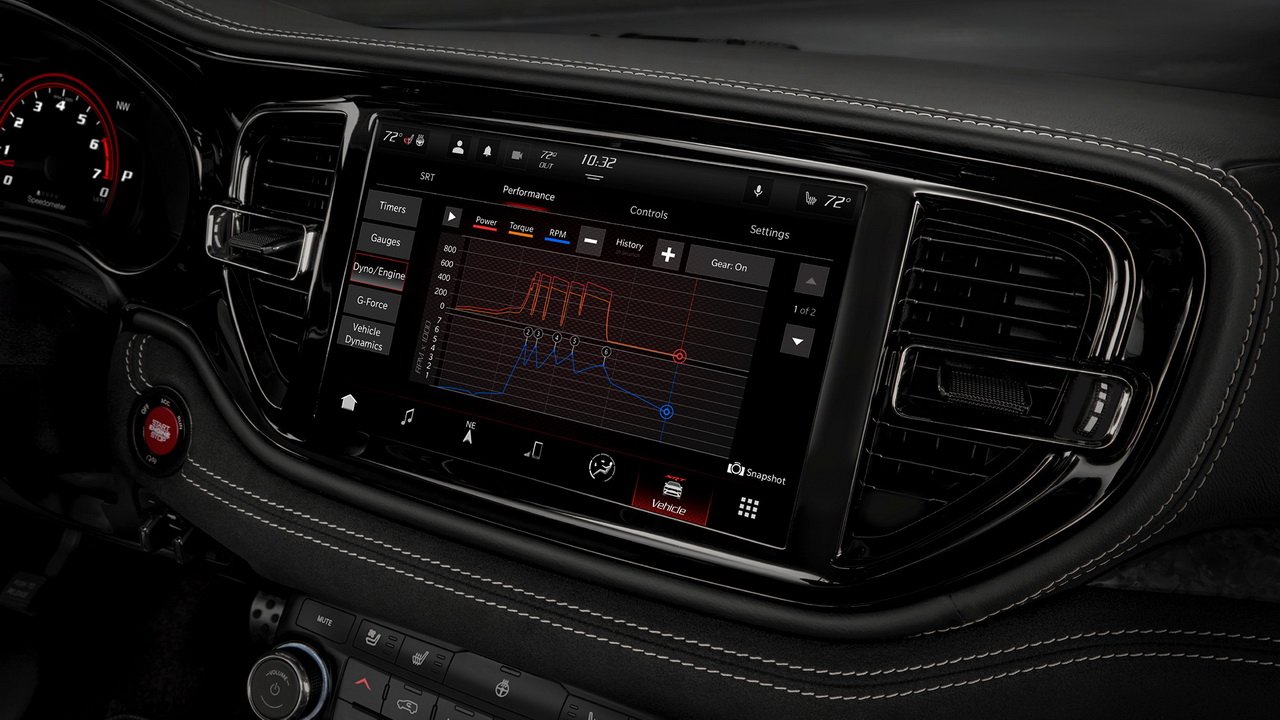
- Launch Control and Performance Pages: The built-in computer records all key acceleration parameters (0-60 mph, 0-100 mph, quarter mile time, braking distance) and even the G-forces experienced by the driver, allowing you to analyze your driving style and improve your results.
Safety and driver assistance systems
Despite its rugged appearance, the 2027 Durango is equipped with a full suite of electronic driver assistance systems, meeting the Partial Autonomy Level 2+. Adaptive Cruise Control with Stop & Go not only maintains a safe distance but can also bring the car to a complete stop in traffic and resume driving within 30 seconds. Lane Keep Assist actively (rather than using vibration) applies steering input to keep the car centered in its lane, even on moderately winding roads. A special feature is the Night Vision system, which uses an infrared camera to detect pedestrians and animals in the dark well beyond the range of the headlights and highlights their outlines on the instrument panel.
Passive safety is ensured by a high-strength body frame, in which ultra-high-strength steel accounts for 45%. Ten airbags are standard, including knee airbags for the driver and front passenger, and side curtain airbags for all three rows of seats. The Pre-Collision Assist system not only warns of a potential collision and applies brake pressure, but can also automatically apply the brakes if the driver fails to respond. In the event of an accident, the eCall system automatically contacts emergency services, transmitting precise coordinates and data on the severity of the impact.
- Blind Spot Monitoring with Rear Cross Path Detection: When reversing out of a parking space, the system warns not only about vehicles in your blind spots, but also about vehicles crossing your path from the side, which often happens in supermarket parking lots.
- Road sign recognition system: The camera reads speed limit signs, no overtaking signs, and other signs, displaying them on the dashboard. When adaptive cruise control is activated, the system can automatically reduce the speed to the new limit.
- Parking assistant with maneuver memory function: The car can park parallel and perpendicularly on its own. The unique Trailer Reverse Guidance feature helps with trailer hitching, guiding the driver with on-screen prompts.
- Anti-theft protection and remote services: In addition to the standard alarm system, Uconnect Access is available, allowing you to remotely lock/unlock doors, start the engine, track the vehicle's location, and receive notifications about unauthorized movement.
Conclusions: The last of the Mohicans of the big motor era
The 2027 Dodge Durango is perhaps one of the last large SUVs to offer the classic American formula with such panache and sincerity: a spacious interior, unpretentious operation, and the inimitable character of a large naturally aspirated or supercharged V8 under the hood. In an era when even luxury brands are switching to modest turbocharged four-cylinder engines and hybrid powertrains, the Durango remains a bastion for those who believe that the number of cylinders and liters still matters. This is a car that is unashamed of its appetite and its voice, turning every drive into a small event.
Its strength lies in the honesty of its offering. It doesn't try to be economical, eco-friendly, or discreet. It's designed to transport family and cargo in incredible comfort, tow a boat to the lake on weekends, and the rest of the time, to give the driver the genuine thrill of driving a living mechanical legend. Buying a Durango, especially the SRT Hellcat trim, isn't just a vehicle; it's an investment in a unique experience that's becoming increasingly rare with each passing year. It's an antidepressant, a car that makes you smile every time you press the gas pedal, and at the same time, a loyal and reliable family companion, capable of any task.