

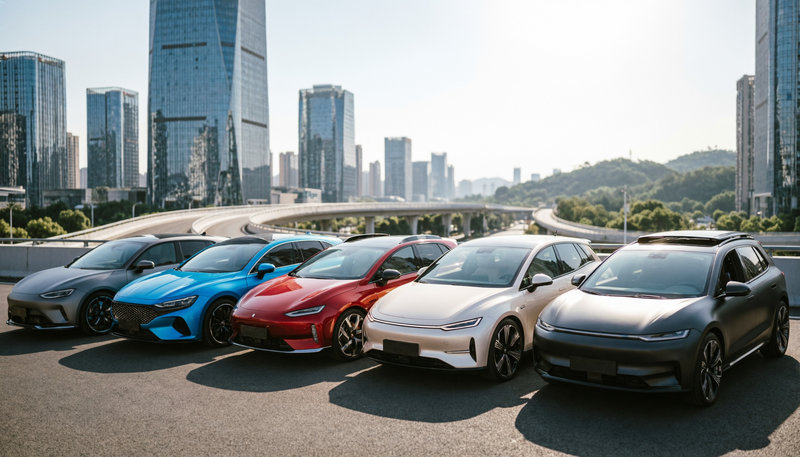
Fuel consumption remains a key criterion when choosing a car. For city trips and long-distance trips, even a difference of 1–1.5 liters per 100 kilometers per year translates into significant savings. This article features 20 hatchbacks with the best fuel efficiency ratings, from compact city cars to larger models with diesel and hybrid engines.
1. Citroen C3

A small third-generation French hatchback with a 1.6 diesel engine and 75 hp consumes only 3.1 l/100 km in the combined cycle. It's paired with a five-speed manual transmission. Top speed is 171 km/h, and acceleration to 100 km/h takes about 15 seconds.
Previous generations of the C3 also boasted moderate fuel consumption: the 2013 version with a 1-liter gasoline engine achieved 4.2 l/100 km. For a family hatchback, this is a respectable result even by today's standards.
- Engine: 1.6 diesel, 75 hp.
- Checkpoint: mechanics, 5 steps
- Consumption (mixed): 3.1 l/100 km
- Maximum speed: 171 km/h
2. Seat Leon
The Seat Leon, released in 2012, combines a sporty character with impressive fuel efficiency. The 1.6-liter turbodiesel engine produces 90 hp and consumes 3.0 l/100 km in mixed mode. Acceleration to 100 km/h is 10 seconds, top speed is 191 km/h.
For the European market, Leon is competitive not only in terms of fuel consumption: its aggressive body design, extensive standard equipment, and Volkswagen Group platform make it an attractive choice among its classmates.
- Engine: 1.6 TDI turbodiesel, 90 hp.
- Checkpoint: mechanics, 5 steps
- Consumption (mixed): 3.0 l/100 km
- Maximum speed: 191 km/h
3. Ford Fiesta

The restyling of the 6th generation Ford Fiesta with a 1.6 diesel engine (95 hp) and a five-speed manual shows the consumption 2.9 l/100 km. The maximum speed is 180 km/h, acceleration to 100 km/h is 11.6 seconds.
The Fiesta is traditionally popular in urban environments: good handling and a wide range of safety and comfort features make it a well-balanced choice. Low fuel consumption is further evidence of Ford's careful engineering efforts to improve engine efficiency.
- Engine: 1.6 diesel, 95 hp.
- Checkpoint: mechanics, 5 steps
- Consumption (mixed): 2.9 l/100 km
- Maximum speed: 180 km/h
4. Renault Clio

The 2016 Renault Clio with a 1.5-liter turbodiesel producing 75 hp shows 3.4 l/100 km in the city и 2.7 l/100 km in combined cycle. This is one of the best urban fuel consumption figures in this rating.
The creators focused on ease of use rather than speed. Attractive styling, a spacious trunk, and low maintenance costs ensure the Clio enjoys stable demand in many markets.
- Engine: 1.5 diesel, 75 hp.
- Checkpoint: mechanics, 5 steps
- Consumption (city / combined): 3.4 / 2.7 l/100 km
5. Kia Rio CRDi
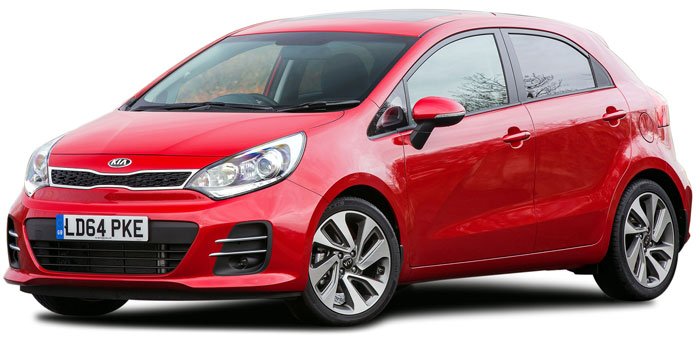
The only representative of the Korean market in this rating is the Kia Rio CRDi with a 1.1 liter engine and 75 hp. The six-speed manual transmission provides consumption 3.6 l/100 km in the city и 2.6 l/100 km in combined cycle.
The Rio's base trim is deliberately lightweight—air conditioning is optional. For an extra fee, the car becomes a practical vehicle: a spacious trunk with foldable rear seats makes it useful not only in the city but also on longer trips.
- Engine: 1.1 CRDi diesel, 75 hp.
- Checkpoint: mechanics, 6 steps
- Consumption (city / combined): 3.6 / 2.6 l/100 km
6. Volkswagen Golf BlueMotion

The special edition seventh-generation Golf BlueMotion was designed with minimal fuel consumption in mind. Under the hood is a 1.4-liter turbodiesel engine producing 125 hp and a six-speed manual transmission. The rated fuel consumption is 2.6 l/100 km, acceleration to 100 km/h - 9.5 seconds.
Among fuel-efficient hatchbacks, the Golf BlueMotion stands out for its combination of performance and efficiency. However, its price is significantly higher than its competitors, so the payback period due to fuel savings will be longer.
- Engine: 1.4 TDI turbodiesel, 125 hp.
- Checkpoint: mechanics, 6 steps
- Consumption (mixed): 2.6 l/100 km
- Acceleration 0–100 km/h: 9.5 s
7. Vauxhall Corsa
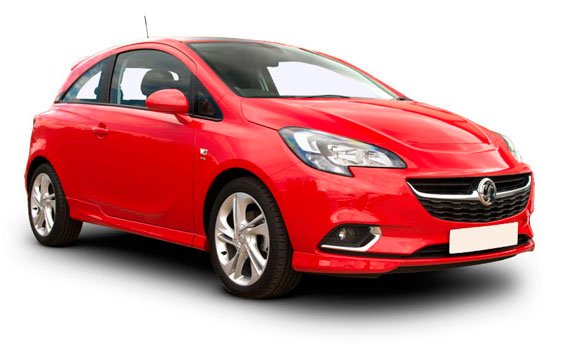
The British subcompact Vauxhall Corsa with a 1.3 liter engine and 75 hp consumes 2.6 l/100 km. The car isn't focused on speed—its strong point is practicality, reliability, and comfort for five adult passengers in a compact package.
The Corsa is common in the British Isles, but less common outside of the UK. Nevertheless, the model remains a shining example of how to combine spaciousness and a lean engine in a single body.
- Engine: 1.3 diesel, 75 hp.
- Consumption (mixed): 2.6 l/100 km
- Capacity: 5 people
8. Peugeot 208

The Peugeot 208 with a 1.6 diesel engine and 75 hp is in eighth place place in fuel consumption in this rating. During a real-world test with 43 liters of fuel, the car traveled more than 2,000 km - the final consumption was about 2.0 l/100 km. CO₂ emissions are 79 g/km, which is the lowest among all the participants in the list.
In terms of equipment, the 208 essentially inherits the larger 308, but costs significantly less. The five-speed manual transmission is tailored to the compact body dimensions and ensures comfortable operation in city traffic.
- Engine: 1.6 diesel, 75 hp.
- Checkpoint: mechanics, 5 steps
- Consumption (real test): ~2.0 l/100 km
- CO₂ emissions: 79 g/km
9. Peugeot 307

The second generation Peugeot 307 with a 1.6 engine and a six-speed manual transmission develops 92 hp and consumes 2.5 l/100 km diesel fuel. The model's features outpace many of its classmates: for a relatively low price, buyers get a comfortable and quiet interior.
Despite its compact body, the 307 offers excellent practicality: the rear seat folds down, significantly increasing trunk space. Reliable electrical systems and a lack of typical problems make this model popular on the used car market.
- Engine: 1.6 diesel, 92 hp.
- Checkpoint: mechanics, 6 steps
- Consumption (mixed): 2.5 l/100 km
10. Volkswagen Polo TSI / TDI

Volkswagen offers the Polo in two fuel-efficient variants. The petrol TSI 1.2 (90 hp) consumes 4.7 l/100 km in the combined cycle. The diesel modification TDI 1.4 (75 hp) fits into 3.4 l/100 km - noticeably more modest for those who travel a lot.
Both variants are attractive due to their German build quality and the platform's recognizable reliability. The Polo remains one of the most popular compact hatchbacks on the European market precisely because of its balance between price, quality, and fuel efficiency.
- TSI 1.2: 90 hp, consumption 4.7 l/100 km
- TDI 1.4: 75 hp, consumption 3.4 l/100 km
- Checkpoint: mechanics
11. Skoda Fabia

The new generation Skoda Fabia is built on the same platform as the Volkswagen Polo and is equipped with a similar 1.2 TSI engine (88 hp) with a consumption 4.7 l/100 km. At the same time, the Fabia has its own distinct character: the model has a recognizable Bohemian glass-style lens cut and a slightly different interior design philosophy.
Skoda has been deliberately moving the Fabia away from the strictly budget segment, adding more premium trim details. For buyers who find the Polo unsuitable for whatever reason, the Fabia is an obvious alternative with identical technical specifications.
- Engine: 1.2 TSI, 88 hp.
- Consumption (mixed): 4.7 l/100 km
- Platform: MQB A0 (shared with VW Polo)
12.Hyundai i20
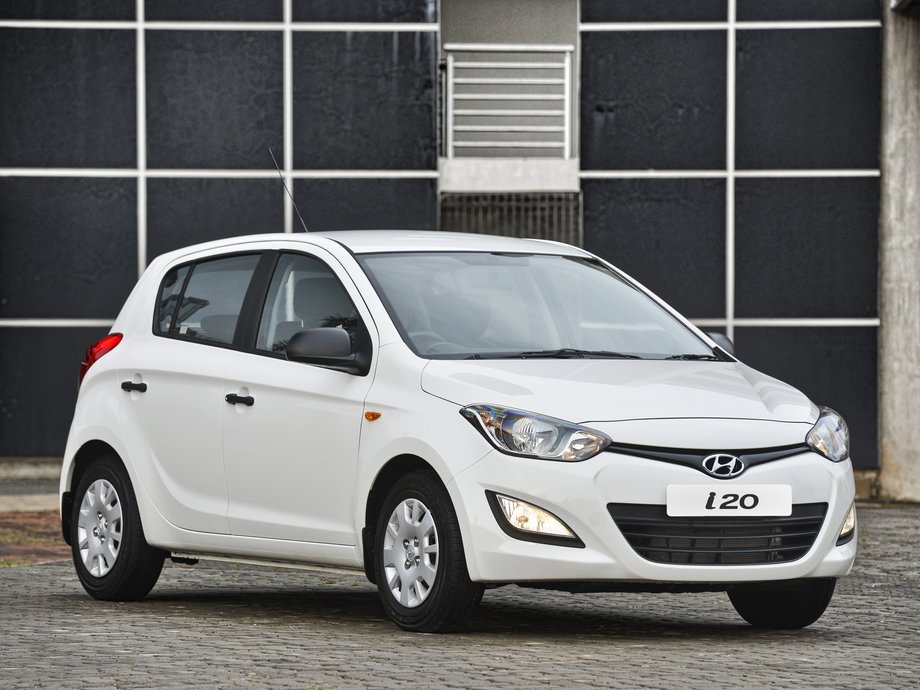
The Hyundai i20 replaces the popular Getz and has cemented its place in the fuel-efficient hatchback category. The diesel version with a 1.4 CRDi engine (90 hp) consumes 4.3 l/100 km. Despite its Korean origins, the i20 is well adapted to European roads and standards.
The model offers a wide range of powertrains, but the diesel variant is the most attractive in terms of operating costs. The base version's level of equipment is above average for its class.
- Engine: 1.4 CRDi diesel, 90 hp.
- Consumption (mixed): 4.3 l/100 km
13. Citroen C1

The Citroen C1 is one of the benchmarks for urban fuel efficiency among small cars. Its fuel consumption in city traffic is 5.5 l/100 km. Despite its French brand, the car is assembled in the Czech Republic. The fuel tank holds 35 liters, and the recommended fuel is AI-95 gasoline.
The cabin comfortably seats four adults. The C1's primary niche is city driving: its compact dimensions make parking easy, and its low fuel consumption reduces the cost of ownership to the lowest in its class.
- Consumption (city): 5.5 l/100 km
- Tank capacity: 35 l
- Capacity: 4 people
- Assembly location: Czech Republic
14. Honda Jazz

The Honda Jazz is a rare example of a subcompact car with a truly large trunk: 883 liters with the seats folded. The claimed city fuel consumption is 5.1 l/100 km. One tank lasts for approximately 764 km. Acceleration to 100 km/h takes 11.4 seconds—not bad for a car in this class.
The Jazz dispels the myth that compact cars inevitably sacrifice practicality for economy. Japanese build quality and a thoughtfully designed interior make it a versatile tool for a wide range of tasks.
- Consumption (city): 5.1 l/100 km
- Trunk volume: up to 883 l
- Acceleration 0–100 km/h: 11.4 s
- Capacity: 4 people
15. Chevrolet Aveo
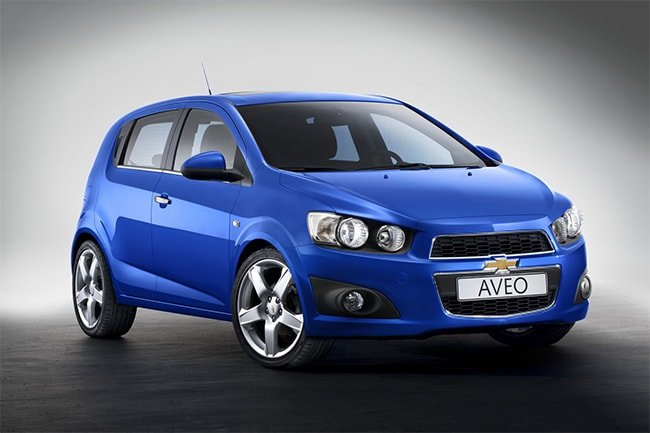
The Chevrolet Aveo is slightly larger than most of the other cars in this rating, which affects fuel consumption: 6.6 l/100 km. However, the car is designed for five passengers, and the trunk capacity is 501 liters. The Aveo's size-to-price ratio has traditionally attracted a younger audience.
Owners most often cite poor sound insulation as a drawback. Otherwise, it's a reliable everyday car with reasonable operating costs for its size.
- Consumption (mixed): 6.6 l/100 km
- Trunk volume: 501 l
- Capacity: 5 people
16. Toyota iQ

The Toyota iQ ranks first among city microhatchbacks in terms of fuel efficiency and eco-friendliness. Its 1-liter engine delivers average fuel consumption. 4.3 l/100 km, and in a gentle mode – from 3.9 l/100 km. One tank is enough for 740 km. Acceleration to 100 km/h is 14.7 seconds.
A particular achievement of the iQ is its lowest CO₂ emissions among city cars of its time. Its compact yet thoughtfully designed design makes it stand out in traffic despite its modest size.
- Engine: 1.0 petrol
- Consumption (average): 4.3 l/100 km
- Minimum consumption: 3.9 l/100 km
- Power reserve: ~740 km
- Acceleration 0–100 km/h: 14.7 s
17. Kia Soul 1.6 MPI

Kia Soul with a 1.6 MPI petrol engine (124 hp) consumes 7.2 l/100 km — higher than the other competitors in the ranking, but reasonable for a crossover hatchback. Fuel efficiency is achieved, in part, thanks to the two-wheel drive transmission. Ground clearance of 158 mm allows for confident handling on light off-road terrain.
The Soul combines distinctive design, reliability, and a practical interior. For those looking for a taller, more manageable car with city handling and low maintenance costs, it's one of the few reasonable options in its class.
- Engine: 1.6 MPI petrol, 124 hp.
- Consumption (mixed): 7.2 l/100 km
- Clearance: 158 mm
- Drive: front
18. BMW i3

The BMW i3 is the only electric car in this ranking developed from scratch by the company, without relying on existing platforms. The version with a range extender (gasoline generator) has a fuel consumption of about 0.5 l/100 km When using both energy sources together, the range on a single charge is approximately 130–160 km, and with the generator, up to 322 km.
Weighing 1,639 kg and with an electric motor producing 170 hp, the i3 delivers dynamic acceleration—0-62 mph (100 km/h) in under 8 seconds. The body is made of carbon fiber composite (CFRP), atypical for the mass-market segment, significantly reducing overall weight.
- Power: 170 hp (electric motor)
- Fuel consumption (with range extender): ~0.5 l/100 km
- Power reserve: up to 322 km
- Curb weight: 1639 kg
19. Audi A3 1.6 TDI

The Audi A3 with a 1.6 TDI diesel engine is one of the few premium segment representatives on this list. Fuel consumption is 5.2 l/100 km, a 50-liter fuel tank, and acceleration to 100 km/h in 8.3 seconds. Production began in 2012.
The A3 confirms that efficiency doesn't always mean compromising on quality and performance. Owners get German-made engineering, a sophisticated interior, and features uncommon in an «economy car.».
- Engine: 1.6 TDI diesel
- Consumption (mixed): 5.2 l/100 km
- Tank capacity: 50 l
- Acceleration 0–100 km/h: 8.3 s
20. Volvo V40 Cross Country

The Volvo V40 Cross Country rounds out the ranking as one of the most versatile options. The 120 hp diesel version consumes 3.9 l/100 km in the city, and the range on a single tank reaches 1,390 km. The more powerful 190 hp version consumes 6.4 l/100 km. The car is assembled in Belgium.
In addition to fuel efficiency, the V40 Cross Country stands out for its high level of passive safety—a traditional Volvo strength. Slightly increased ground clearance compared to the standard V40 improves handling on rough roads.
- Engine (base): diesel, 120 hp.
- Consumption (base, city): 3.9 l/100 km
- Power reserve: up to 1390 km
- Assembly location: Belgium
How to choose an economical hatchback: what to look for
The rated fuel consumption is a guideline, not a guarantee. Actual figures depend on driving style, road conditions, and the vehicle's technical condition. When assessing fuel consumption, consider several factors:
- Engine type: Diesel engines demonstrate better fuel consumption on the highway and in the combined cycle; small-capacity gasoline turbo engines are more economical than naturally aspirated engines, but are more sensitive to the quality of maintenance.
- Transmission type: Manual transmissions are generally more economical than automatic ones, especially in the city.
- Actual vs. Passport consumption: The difference can be 15–25% in urban driving conditions. Look for reviews from real owners.
- Service cost: Diesel engines are cheaper to operate in terms of fuel, but more expensive to repair the fuel system.
- Ecology: Low CO₂ emissions are important not only from an environmental perspective – in many countries, they impact transport taxes.
Electric vehicles and hybrids (like the BMW i3) form a separate category: their efficiency is assessed differently and depends largely on the availability of charging infrastructure and the owner's typical route.