

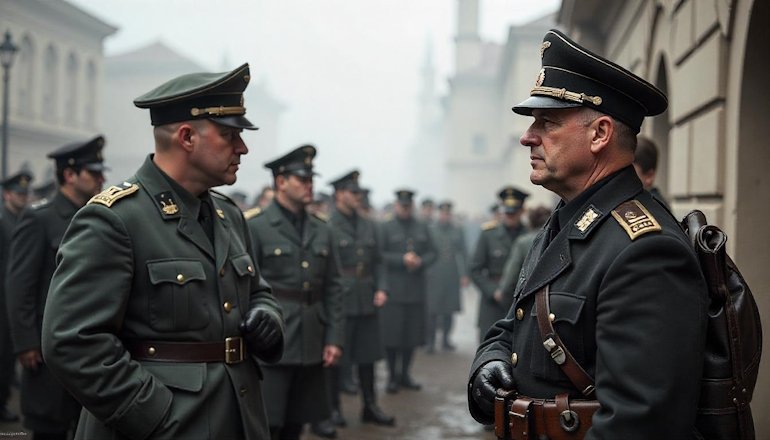
In the history of World War II, the two military structures of Nazi Germany, the Wehrmacht and the SS, are often associated as a single entity.
However, there were significant differences between them in their origins, functions, internal structure, and ideology. The Wehrmacht was Germany's regular armed forces, while the SS (Schutzstaffel) was an elite, largely political organization closely aligned with the ideology of the Nazi Party.
Understanding the differences between the Wehrmacht and the SS allows for a deeper analysis of the mechanics of the Nazi war machine, the role of both structures in the war, and their involvement in crimes against humanity.
Let's consider them step by step - from their inception to the performance of functions and participation in the war.
History of the formation of the Wehrmacht
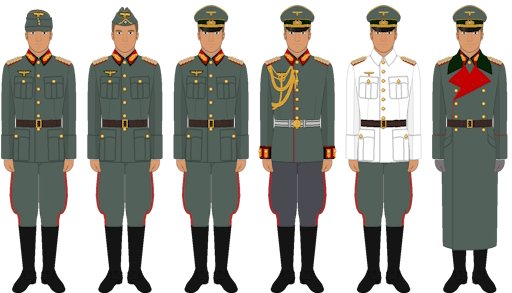
The Wehrmacht was created in 1935, replacing the Reichswehr, which had existed after Germany's defeat in World War I. The Wehrmacht comprised three branches of the armed forces: the Army (Heer), the Air Force (Luftwaffe), and the Navy (Kriegsmarine). Unlike the SS, the Wehrmacht was a regular army and followed a traditional military hierarchy.
By 1939, the Wehrmacht had become one of the most powerful armies in the world. It comprised millions of soldiers and officers, and its primary mission was to defend Germany's borders and conduct offensive operations. Although many Wehrmacht soldiers supported the Nazi regime, the army's structure remained relatively politically neutral compared to the SS.
History of the SS
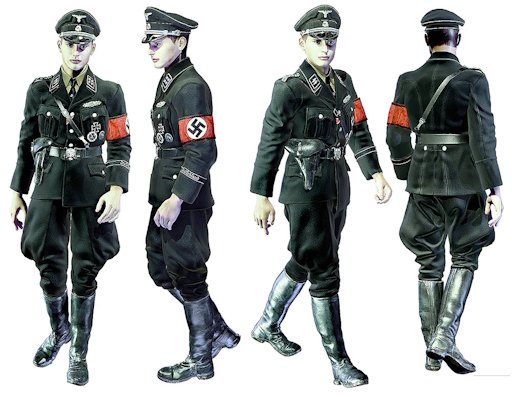
The SS (Schutzstaffel, which translates as «protection squads») was formed in 1925 as the personal guard of Adolf Hitler and other Nazi Party leaders. However, with Hitler's rise to power in 1933, the SS began to grow as an organization with significant political and military functions.
Heinrich Himmler, who took over the SS in 1929, transformed the organization into an instrument of ideological control and terror. The SS's primary mission was to maintain internal security and uphold Nazi ideology, particularly through units such as the Gestapo and the Security Service (SD). Over time, the SS developed its own military units, known as the Waffen-SS, which played a significant role on the battlefield.
Ideology and goals
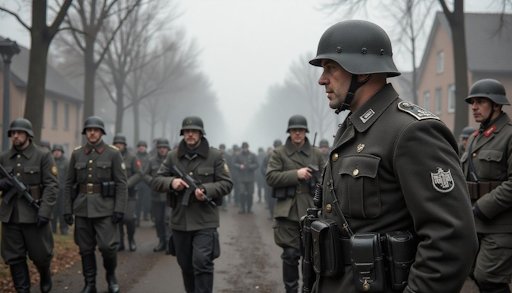
The Wehrmacht, although subordinate to the Nazi state, essentially performed traditional military tasks and operated within the framework of a common strategic and tactical concept. Wehrmacht soldiers generally received standard military training, and their primary goal was to defend national territory and win military campaigns.
The SS, by contrast, was an ideological army. The Waffen-SS, the combat units of this organization, was distinguished by the fact that its members were not only professional soldiers but also bearers of Nazi ideology. SS members underwent a more rigorous selection and training process, emphasizing racial purity and devotion to Adolf Hitler and Nazi ideas. Therefore, SS soldiers often acted with even greater brutality than Wehrmacht soldiers, especially during punitive operations in occupied territories.
Military participation
The Wehrmacht was the primary instrument of war for the Third Reich. It was responsible for the invasions of Poland, France, the Soviet Union, and other countries. Wehrmacht soldiers participated in large-scale military campaigns and battles on all fronts of World War II.
However, while Wehrmacht units participated in crimes against humanity, they were not intended to commit mass murder of civilians based on race or ideology. This was the responsibility of special SS units, which, unlike the Wehrmacht, organized and oversaw the extermination of Jews, Roma, Slavs, and other peoples during the Holocaust. The Waffen-SS also participated in military operations, but their role was often limited to supporting the regular army, and their brutality and ideological motivation made them among the most dangerous and uncompromising soldiers.
Crimes against humanity
The Wehrmacht and the SS operated closely together, but their roles in committing war crimes differed significantly. Wehrmacht soldiers participated in crimes against civilians, but this was not the army's primary function. The SS, particularly its punitive units and the Waffen-SS, were actively involved in mass murder, deportations, and the extermination of entire populations.
The concentration camps run by the SS occupy a special place in this history. These camps became the sites of the deaths of millions of people, and it was the SS that oversaw the entire process, from deportation to physical extermination. The Wehrmacht, on the other hand, primarily maintained order in the occupied territories and ensured the fulfillment of military objectives.
Contribution to the victory of Nazi Germany
Although the Wehrmacht was Nazi Germany's primary military instrument, the Waffen-SS also made a significant contribution to the Third Reich's successes in the early stages of the war. SS units were considered elite troops and actively participated in major battles of World War II, such as the Battle of Kursk, Operation Barbarossa, and the defense of Berlin.
However, by the end of the war, both the Wehrmacht and the SS were exhausted by prolonged military campaigns, leading to their collapse. Following the defeat of Nazi Germany, the SS as an organization was declared criminal, and its leaders and members were brought to justice at the Nuremberg Trials.
Conclusion
The Wehrmacht and the SS, despite their shared service to the Nazi regime, differed in their goals, structure, and methods of warfare. The Wehrmacht was a traditional army focused on military objectives, while the SS, particularly the Waffen-SS, became an ideological and repressive instrument of Nazism, closely linked to crimes against humanity.
The role of these two structures in the war and the crimes of Nazi Germany remains one of the most debated topics in historical scholarship. Today, we remember not only the might and military strength of these armies, but also their responsibility for crimes that changed the course of human history.