

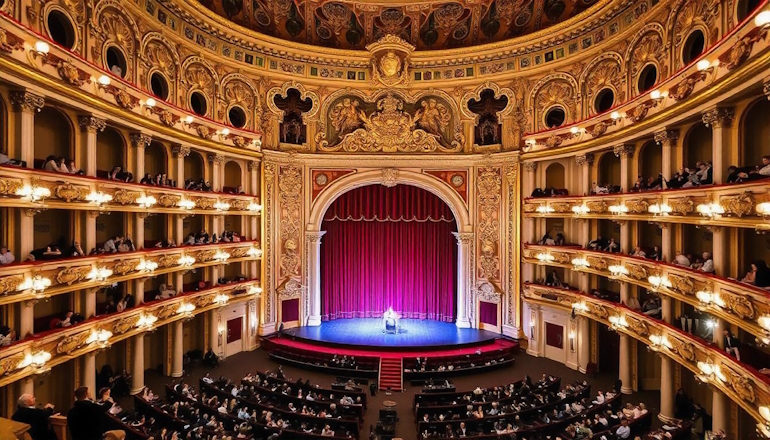
Opera and operetta These are two musical genres that, although related to theatrical arts and vocal performance, differ significantly in style, content, and production. To better understand these differences, it is important to consider each art form in its historical and musical context, drawing on specific examples.
Opera: seriousness and drama
Opera Opera is a genre that emerged in Italy in the late 16th century and has since been considered one of the most serious forms of musical and dramatic art. The main characteristic of opera is its emphasis on music, in which vocal parts are performed with orchestral accompaniment. Every element of the work—from arias to chorus—is subordinated to the dramatic development of the plot.
For example, Giuseppe Verdi's opera La Traviata is a classic example of an opera in which powerful dramatic moments and the protagonists' deep emotions are conveyed through music and vocals. The opera contains almost no spoken scenes; instead, the entire drama is expressed through singing, heightening the emotional impact on the audience.
Operas require performers to possess not only vocal skills but also acting skills, as characters often undergo complex developments throughout the work. For example, Richard Wagner's "Lohengrin" places great emphasis on symbolism, myths, and philosophical questions, and the music emphasizes the drama and depth of these themes.
Opera also features a more complex musical structure. It often uses a symphony orchestra to complement the vocal parts. In some operas, such as Giacomo Puccini's "La Bohème," the orchestra not only accompanies the vocal parts but also creates the atmosphere of the work, conveying the characters' emotional states through various musical themes.
Operetta: lightness and humor
Unlike opera, operetta Operetta is a genre that combines elements of music, drama, and comedy. Originating in mid-19th-century France thanks to composers such as Jacques Offenbach, operetta gained popularity thanks to its lighthearted plots, humorous elements, and melodic musical numbers.
The main difference between operetta and opera is its entertaining nature. Unlike serious operas, operettas often tell light, sometimes even comic stories. An example is Johann Strauss's "Die Fledermaus," whose plot revolves around complicated love affairs and a masquerade. Unlike opera, operettas often feature dialogue between musical numbers, making the genre more theatrical and less monolithic.
Operetta also demands acting skills from its performers, but most often this skill must be focused on creating comedic characters and situations. In Franz Lehár's "The Count of Luxembourg," the characters are drawn into absurd and amusing adventures, where vocal numbers alternate with dialogue filled with witty remarks and comical situations.
The musical component of operetta also differs from that of opera. While opera can have complex musical structures, operetta typically relies on lighter, more melodic, and memorable themes. The orchestra in operetta typically plays a less prominent role, emphasizing the vocals and rhythm, which emphasizes the lightness and playfulness of the genre.
Examples and key differences
Although opera and operetta have much in common, they differ significantly in both content and performance form. Opera is a serious genre, designed for deep emotional and intellectual perception, while operetta offers a lighter, more entertaining art form, combining music, theater, and humor.
These differences highlight the richness and diversity of musical and dramatic genres, allowing every audience member to find something to suit their preferences. Opera captivates with its depth and power, while operetta captivates with its playfulness and lightness.
For example:
- Plot and theme: Operas typically explore serious themes: tragedies, historical events, and profound emotions. For example, Georges Bizet's "Carmen" is a tragic tale of passion and jealousy, in which the music conveys the characters' intense emotions. Operettas, on the other hand, often tell lighter, more comical stories. An example is Franz Lehár's "The Merry Widow," which focuses on love affairs and social gaiety.
- Musical structure: In opera, the emphasis is on vocals, symphonic accompaniment, and complex musical forms such as arias, duets, ensembles, and choruses. In operetta, the music is simpler and closer to lighter genres—waltzes, polkas, marches—and it alternates with dialogue, as in Strauss's "The Gypsy Baron.".
- Execution: Opera singers must possess exceptional vocal skills, as the main action takes place through singing. In operetta, in addition to vocals, acting and choreographic skills are also essential, as many numbers are accompanied by dance or pantomime, as in Offenbach's "La Vie Parisienne.".