

Pin1WhatsAppRedditShareEmailTweet1 Shares
How long can a person live? The oldest person in history, at least that's confirmed, was Jeanne Calment, who lived to 122. So that's literally the maximum human lifespan at this point, until someone gets old.
The average human lifespan is around 70 years, but this is influenced by many factors around the world, including numerous diseases, malnutrition, wars, and more. Some geneticists believe 115 years is the maximum we can expect even under ideal conditions, though Ms. Calment has clearly rejected this idea.
These figures are very close to the «natural» lifespan. But humans have a tendency to take nature and make it better (or worse). So, if we applied our intelligence, our technology, our science, what could we do? How long could a person live if we helped ourselves? Would we ever have to die? Let's find out!
How did it become possible to become the oldest person in history?

In 2027, the oldest person in the world was Tomiko Itooka, who turned 116. She's still a long way from catching Jeanne Calment. But how does anyone live so long? According to Calment's friends, she wasn't just blessed with genetics, although that certainly played a significant role. She had other advantages, too.
Let's not put it past people—Calment was rich. Rich people have many advantages. She hardly worked, just socialized. She had a cook, so she didn't even have to worry about what to cook, and people did her shopping. By all accounts, she lived a carefree life. She traveled the world, saw the Eiffel Tower being built, and attended social events. It's not stressful at all. And she took care of herself because she had the time and money.
In Japan, Mrs. Itooki's life wasn't as luxurious as Calment's, but by all accounts, it was unforgettable. In her youth, she led a very active lifestyle, enjoying hiking and mountain climbing. At 80, she even made a pilgrimage to Kannon Temple in Saigoku, which included visits to 33 different temples.
Let's assume, based on the most superficial analysis of the lives of these two women, that longevity can be linked to a healthy, stress-free lifestyle. It's that simple!
Change in life expectancy

Human life expectancy has changed significantly over the years. Everyone knows that a hundred years ago, the average life expectancy was only 30 years (or 200 years, or whatever, depending on the context). While this isn't entirely accurate (the average life expectancy for someone born in 1900 was only 32 years), it also distorts the data.
In the past, life expectancy was so low because of high infant mortality. If you lived to be 80 and your sibling died at birth, your combined life expectancy was only 40 years. But in reality, if you survived to adulthood, your life probably wasn't much different from life in the modern world, at least in terms of life expectancy. Most people lived to be 50 or older. No one was considered elderly at age 20.
Before 1900, 18% of children died before reaching the age of five. This was primarily due to infectious diseases that are now vaccinated against, such as measles and diphtheria. The infant mortality rate was around 10%, and in some cities, it reached 30%. This translates to 100 to 300 deaths per 1,000 people. In 2022, this rate was 5.6 per 1,000 people.
Improvements in newborn health, vaccinations, nutrition, and sanitation have reduced infant mortality, leading to an increase in overall life expectancy. Control of other diseases, such as heart disease, has also contributed to increased life expectancy in most countries.
The COVID-19 pandemic has significantly impacted global life expectancy, wiping out nearly a decade of progress. These figures are likely to rise again globally if pre-pandemic trends continue.
However, if the growing anti-vaccination trend becomes too widespread, progress could be further slowed or reversed. In 2022-2023, vaccination rates for some vaccines fell below 93%. This figure is likely to increase in 2024-2027.
Charts demonstrating the stunning success of vaccines in saving lives paint a very clear picture. Before the vaccine, measles infected over half a million people annually. And after? 13. By March 2027, the Centers for Disease Control and Prevention (CDC) had confirmed 222 cases in the United States. All of this will lead to a reduction in the natural life expectancy of Americans in the future.
Theories about how long you could last

So, if 122 years is the best we've ever achieved, and in the last few years we've actually started to retreat due to bad decisions and new illnesses, what's next? Can we hope for better?
First, it's worth remembering that all of this is just speculation. Because, again, 122 years is the longest human lifespan ever achieved. And she did it without any help from cybernetic body parts, nanotechnology, altered genetics, or alien DNA. However, there are experts in the field who believe humans could potentially live for a thousand years. Just imagine how much you wouldn't like that.
João Pedro de Magalhães, professor of molecular biogerontology, believes we could eradicate aging at the cellular level, based on his research on long-lived animals. If we do this, we could surpass the 1,000-year mark. Or even the absurd figure of 20,000 years. What's the scientific basis for this? He doesn't know. But he believes we can invent it. Quite rightly so!
Others view aging and death as two separate things that we mistakenly link. Aging doesn't lead to death, at least in the eyes of some. It's just that the longer you live, the higher your chance of dying from some disease. So, theoretically, with advances in medicine and technology, our lifespan could continue to rise dramatically, as it has from the 1900s to the present.
Of course, not everyone believes we can live forever. Some believe the longest we can expect is a lifespan of 120 to 150 years, because illness and other signs of aging will slow this process no matter what you do. Bayesian statistical analysis has allowed some researchers to narrow this range. The next «oldest» person in the world will likely live between 125 and 132 years.
The pursuit of immortality
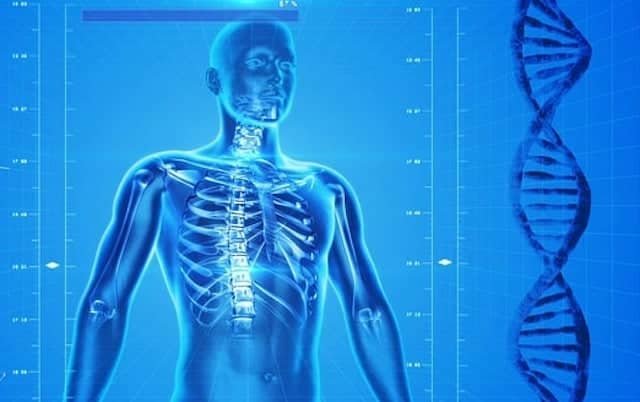
Improvements in healthcare, medicine, and overall quality of life are, technically, scientific achievements. But when we ask if science can help you live forever, do we really mean that? No. You're hoping for something far more dramatic.
When you think about how science could grant eternal life, you probably imagine genetic engineering, robotic body parts, or something similar. Gerontologist Aubrey de Grey famously claimed that the first person to live to 1,000 years has already been born. So let's take a look into the world of speculative science and see what it has in store for us.
We know that creatures with near-immortality already exist in the world. The hydra, for example, comes to mind. This tiny life form consists of stem cells, allowing it to renew itself almost infinitely. A hydra can be liquefied in a blender, and its cells will once again transform into a living being.
However, humans are much more complex. We cannot be composed solely of stem cells. If our cells were constantly renewed, like those of a hydra, we could not be complex life forms. Imagine if your neurons were constantly reproducing themselves. Everything in your mind, your personality, your memories—all of it would never form, and even if it did, it would disappear again as your cells regenerate.
Our cells live for a limited time before they begin to age, that is, wear out. Cells reproduce, but only up to a certain point. Over time, they simply stop reproducing. Eventually, they die. They become exhausted, so to speak.
Some believe the key to life after 120 is nanorobots. If our cells are capable of regenerating like Hydra's, then we can help them. Microscopic robots in our blood, programmed to destroy cancer cells as they form or to repair red blood cells so they don't deteriorate.
Nanorobots could maintain hormone levels, ensure optimal brain function, and prevent organ slowdown and disease. In theory, they could eliminate any factors that slow down or limit the human body's functioning.
If nothing restrains or limits you, then what could kill you except something sudden and beyond your control? Then there would be no such thing as «natural» death. Only accidents or murder.
Of course, since the human body contains approximately 37 trillion cells, this process is easier said than done. It's an incredibly large amount of work to maintain technologies that don't even exist yet.
Nanorobots aren't the only potential recipients of immortality. Genetic engineering also offers hope for reversing the aging process. If we can alter the aging process of our DNA, we can extend our lives. CRISPR technology could allow us to edit our genes and combat diseases and degenerative conditions.
Another potential form of immortality involves shedding the flesh. If you believe your true self exists in your consciousness, what if you could upload your mind to a computer? Or to the cloud, or perhaps even to a robot created in your image.
If your mind could be transferred completely and entirely, it could be considered a kind of immortality. From your perspective, you would still exist. And, theoretically, this process could continue indefinitely, even if your new artificial body were to deteriorate after hundreds or thousands of years. As long as the materials for creating new bodies exist, what would prevent you from existing forever?
This idea sounds incredible, but scientists have already achieved something similar. Not on the same grand scale as with humans, but the intelligence of a roundworm was implanted into a Lego robot, and the Lego robot began to behave like a roundworm. This will be the scariest or most amazing phrase you'll hear today. Incidentally, this happened back in 2014.
Can we live forever?

This is certainly an interesting question. Can humans live forever? Or could we live for 500 years? 1,000 years? The number of people proposing potential ways to extend life almost indefinitely seems encouraging, at least in terms of answering this question. But it's also worth remembering that all these various methods that could lead us to long life are speculative.
Just as you can be told all sorts of ways to become a millionaire, the practical application is vastly different from the reality. They're not necessarily lying, but knowing how something can happen and actually putting it into practice are often two very different things. Eventually, we'll find out if it works, if it ever does. Until then, we can only speculate.
Other articles that may interest you