

We found evidence that people were undergoing surgeries even 12,000 years ago . These procedures indicate that our ancient ancestors performed surgical trepanation, which involved drilling a hole in the skull to expose the brain. So this was clearly something they could rely on if the patient survived.
Today is held annually near 310 million transactions . We've come a long way. But despite our progress, some surgeries seem to circumvent the rules and procedures of what we consider safe, especially when they involve procedures performed on people themselves.
10. Werner Forssmann
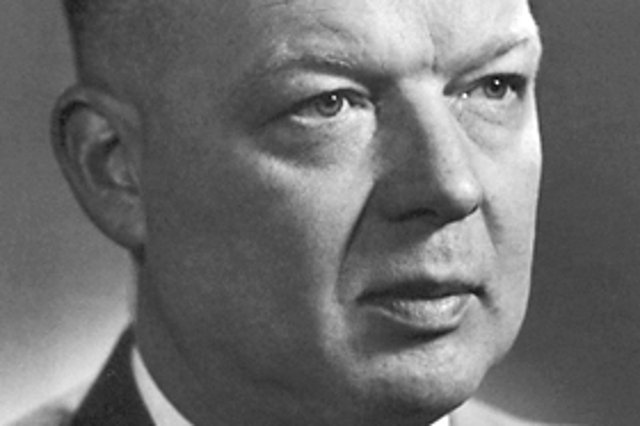
If you haven't heard of Werner Forssmann, it's likely because he was born in 1904 and was way ahead of his time. His contributions to medical science were so significant that in 1956 he received the Nobel Prize in Physiology or Medicine. All of this is due to his research in the field of cardiac catheterization , a procedure that is still used to treat and diagnose numerous heart conditions today.
Forssmann believed that by inserting a catheter into a vein in the arm, he could thread it into the patient's heart. This makes sense today, but when he came up with it in 1929, the medical establishment thought he was either an idiot or crazy. So, to prove his point, he had to do this to yourself . To be clear, he was expressly forbidden from doing so. So he snuck behind his bosses' backs and brought only one person on board—an operating room nurse, Gerda Dietzen. Without her help, he couldn't even access the instruments needed to perform the procedure.
Forssmann convinced Dietzen his procedure was correct. He convinced her so much that she volunteered to become his patient. So he strapped her to the operating table with safety harnesses and then pulled out the old switch, doing the same to himself while she was tied up and unable to stop him.
He managed to fend off another doctor who removed the catheter from his arm and then X-rayed himself to prove it had worked. He then performed the procedure on a terminally ill patient, published the results, and was immediately fired from the hospital where he worked for violating regulations.
9. Leonid Rogozov performed his own Antarctic appendectomy

Most of us will never travel to Antarctica, and for good reason. In 2021, the average temperature from April to September was -61 degrees Celsius , which is equivalent to -78 degrees Fahrenheit. Essentially, it's death in fever form. Antifreeze It freezes before it even cools down. Therefore, when people travel to the South Pole, they are usually confined to a research base for extended periods of time with a small number of colleagues and no timely contact with the outside world.
Back in 1961, Leonid Rogozov was the only doctor on staff at the Novolazarevskaya Antarctic station. In April, Rogozov felt very ill, and the ship that would take them back to Russia hadn't arrived for a whole year. Regardless, the journey took 36 days, and he needed immediate help. He needed... remove the appendix, and he was the only person who had the right to do so.
Rogozov had two options. He could die, or he could perform the surgery himself. Several of his colleagues served as nurses, and one was assigned to hold a mirror so he could see what he was doing. He was given a local anesthetic to numb the skin of his abdomen, but once inside, he would have to go without painkillers.
The mirror proved too difficult to maneuver, so he performed the operation blind, letting his sense of touch guide him. He nearly passed out several times, but after two hours of working inside his own intestine, they removed the organ, which was expected to explode within a day. He returned to work two weeks later.
8. Ines Ramirez performed her own cesarean section

If you're wondering how tough a mother can be, consider Inés Ramírez. At forty, Ramírez already had six children, and a few years earlier, he'd lost his seventh at birth. She loved living on a farm 80 kilometers from the nearest city in a very rural part of Mexico. There was no telephone in her house, and her husband had gone to the dining hall. Only Ramírez and her children were home.
After experiencing the familiar abdominal pain for 12 hours, Ramirez realized something was wrong with the baby, and if she didn't get help, she risked losing her child, just as she had lost her previous one. But there was no way to seek help. So she took matters into her own hands.
Ramirez drank several bottles alcohol and grabbed a knife from the kitchen. She had experience butchering animals, but no medical training. Despite this, she managed to make precise cuts that prevented her from injuring the baby or any internal organs. She removed the baby, cut the umbilical cord with scissors, and lost consciousness.
Ramirez's six-year-old son ran into town and returned with help. A medical worker returned and stitched Ramirez up with a regular needle and thread. Doctors who examined her afterward, were convinced , that the story happened as Ramirez told it, and were impressed with the work she had done.
7. Boston Corbett killed John Wilkes Booth and castrated himself.
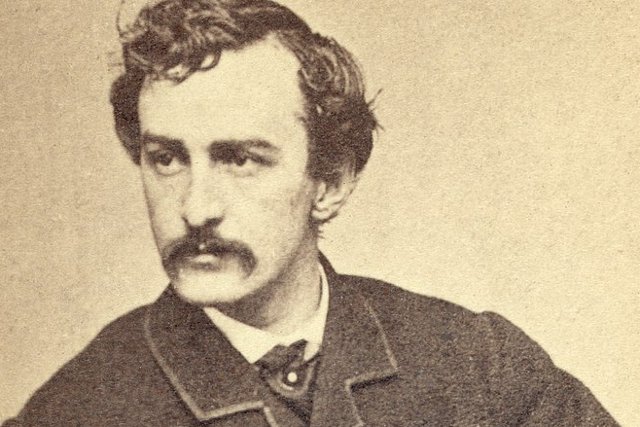
In 1865, after John Wilkes Booth assassinated Abraham Lincoln, he escaped on horseback. Troops were called in to track down the assassin, and the 16th New York Cavalry tracked him down. They found him in a barn, where Boston Corbett fired his revolver, wounding him. Wilkes in the neck .
Although this was Corbett's main claim to fame, the man led an interesting and curious life. He also disappeared, never to be seen again after 1894. But in life, his eccentricity was most noticeable in the operation he performed on himself. In 1858, he castrated himself , to curb his craving for prostitutes. Instead of seeking medical help, he went out to dinner after the act.
In later years, historians concluded that Corbett, who worked for a time as a hatter, absorbed a lot of toxic chemicals that affected his mental state.

In Cincinnati, Dr. Mohab Foad has spent years operating on people's hands. He handles more than a dozen hands a day and has been doing this for over a decade. If you need an expert in hand surgery, he's your man. And for that reason, it seems all too obvious that when he needed surgery on his own hand, he was the one to go to. made her .
After suffering an injury while playing paintball, Foud realized he had torn several ligaments. Although he received help from a colleague at his wife's insistence, he performed most of the surgery himself, gaining some insight into what his patients were going through.
5. Australian man removes his own cyst after two years of waiting
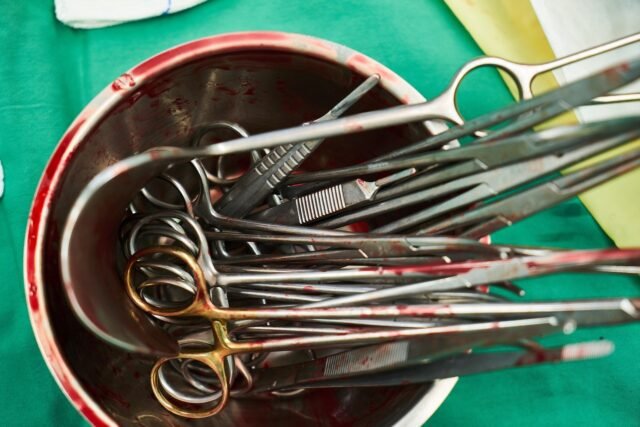
Tom Petty once sang that the waiting is the hardest part, but an Australian electrician who had his cyst removed after two years of waiting might have a different opinion. He used a regular utility knife to cut it out. a grape-sized cyst from one's own hand.
The waiting period is supposedly limited to one year, and the cyst was interfering with the man's work. After two years, he couldn't wait any longer, so he heated a knife, cut out the cyst, dried out the mucus from inside, disinfected the wound, and applied a bandage.
Doctors noted how lucky he was that nothing had worsened, while acknowledging that, yes, the wait time could be exorbitant.
4. A woman tried to enlarge her breasts on her own.
It's difficult to say there's ever a right time to perform surgery on yourself. Sometimes it's clearly done out of necessity, and sometimes it's simply because the surgeon knows how. But when an ordinary person tries surgery, it can be a sign of a much more serious mental health issue, or simply a terrible misunderstanding of the potential consequences.
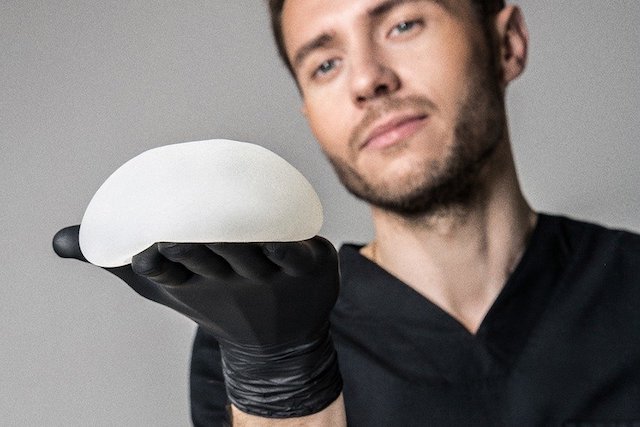
In 2014, a woman from Argentina attempted to enlarge her breasts. She did it, by entering in my chest petrolatum . Soon after the procedure, complications arose, and she began having trouble breathing. At first, she denied any knowledge of what had happened, refusing to tell the doctors what she had done. She later confessed, but by then it was too late. She had suffered a fatal blood clot.
3. Butter knife hernia surgery

Contrary to what many people believe, waiting time Surgeries in the United States are often much more expensive than in countries with universal healthcare. People can wait two, three, four months, or more, depending on how necessary the surgery is. Things like hernia surgery can require a significant wait.
In 2011, a California man decided to perform his own hernia surgery. Whether it was due to time constraints, money, or even mental illness, it's unclear. But it is known that he attempted the operation with a butter knife. When paramedics arrived, the knife was still protruding from the man's abdomen. He removed it and put in a cigarette, which he smoked, into the wound, perhaps to cauterize it or just to look like an 80s action star.
2. Tatsuya Ichihashi underwent plastic surgery to escape from the police.

Almost every self-surgery you hear about is done for medical reasons. Tatsuya Ichihashi had surgery to avoid prosecution for murder. He changed his appearance., using scissors , to reduce the size of his lips, a box cutter to remove moles, and used thread to stitch up his nose in an attempt to make it smaller.
At some point he went to a real plastic surgeon to get it done nose surgery , as his own efforts had produced little result, but the surgeon later noticed that his appearance had remained virtually unchanged.
Ichihashi had been on the run in Japan since the murder of Lindsay Hawker in 2007. It took more than two years before he was finally captured.
1. Evan O'Neal Kane has had 3 surgeries.
Dr. Evan O'Neil Kane was an odd fellow, partly due to circumstances and partly due to general eccentricity. For example, he once suggested that mothers and newborns get matching tattoos to prevent the babies from getting lost. He also tattooed his patients in ink after the operations with his initial in Morse code.
One patient he never tattooed was himself, and not for lack of opportunity. He'd performed three procedures on himself over the years. His first was amputation after his finger became severely infected, he didn't believe general anesthesia was necessary for the surgery.
Two years after his finger was removed, Kane needed his own appendix removed. Again, he simply used local anesthesia for the procedure. He didn't have to do it himself; another surgeon was in the room to close it afterward. He just wanted it done.
Years later, at seventy, Kane also underwent hernia surgery. The operation was successful, but he died a few months later.