


When you look at our entire culinary history, you see thousands, if not millions, of dishes developed around the world over time. There's no way anyone could ever taste them all, and there's also no way anyone could ever like them all. And perhaps that's part of the beauty of cooking and eating: your tastes are your own, and you're free to enjoy what you like and ignore what you don't. However, sometimes the government has to intervene and decide that no one should eat a certain food for one reason or another.
10. Haggis
When you think of global cuisine, there are several dishes that symbolize the countries they hail from. Poutine and maple syrup are distinctly Canadian. Sushi is completely reminiscent of Japanese cuisine. And when you think of Scottish food, you probably think of haggis.
Traditional haggis is made from sheep's offal, including organs such as the heart, liver, and lungs. This meat is mixed with fillers that give it body and flavor, such as oatmeal, onions, lard, and spices. All of this is mixed together like meatballs or sausages, then traditionally wrapped in the animal's stomach and cooked.
These days, there are dozens, if not hundreds, of different ways to prepare haggis. As with any food, recipes have evolved, and chefs have come up with unique and modern ways to prepare this dish. Restaurants offer haggis made not only from sheep, but also from beef, venison, rabbit, and rare game meats. However, in America, it's traditional haggis that has been banned.
In particular, the US Department of Agriculture has banned the sale of sheep lung. According to their standards, this ingredient inedible and therefore cannot be included. For this reason, if you want to make it in America, you must exclude this ingredient. So, if you're a fan of traditional haggis, you're out of luck in the United States unless you're willing to compromise and substitute this key ingredient.
9. Horse meat
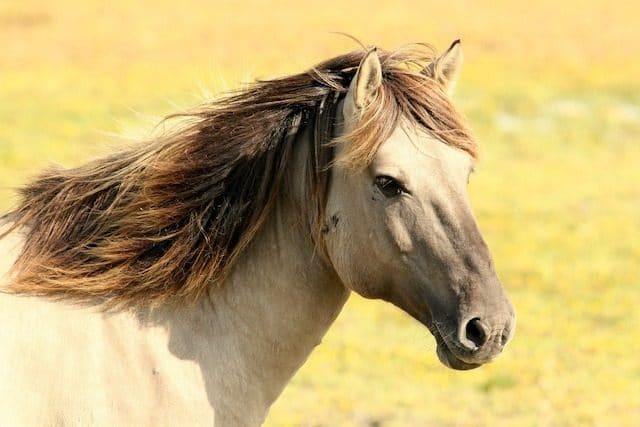
Few products generate as much controversy even to this day as horse meat . For some, it's no different from slaughtering a cow or a pig, a common and everyday occurrence in America. For others, a horse is more like a dog or a cat. These are animals that those associated with it consider closer to pets than livestock.
Due to the taboo against eating horse meat, it is banned in many states, though not all. Horse slaughter in the United States has a long history, but traditionally it was an export business. The horses are slaughtered, and the meat shipped abroad. Both Canada and Mexico permit the slaughter of horses for meat.
8. Beluga caviar
Beluga caviar, obtained from the beluga sturgeon, is one of the most expensive products in the world. One kilogram of this fish's caviar will cost you approximately $35,000 . That's about 50% worth the same weight of pure gold. One of the reasons for the incredible price of beluga caviar is its rarity. The fish from which it is obtained is native to the Caspian Sea and is seriously endangered. The population has declined over the past century. approximately 70% . This is largely due to illegal poaching and overfishing.
Because the fish is endangered, caviar was banned in the United States in 2005 to curb the population and help preserve the species. Today, if you want beluga caviar in America, there's only one legal source, thanks to a businessman who invested in some of the fish back in 2003 and imported it into the country before the ban took effect.
7. Aki
Ackee, the national fruit of Jamaica, is extremely popular on the island and is well-represented in Jamaican and island cuisine. Ackee and saltfish are a must-have in any Jamaican restaurant. The fruit itself is somewhat unusual, with a savory, creamy flavor. It was also banned in the United States.
The reason for the prohibition of ackee is that if the fruit is not prepared properly, it is actually toxic . It contains a toxin called hypoglycin A, which can dangerously lower blood sugar levels. It also causes vomiting, drowsiness, and possibly death. Therefore, the key and the product are generally safe, but fresh ones can be potentially dangerous. Furthermore, the seeds and pulp of the fruit can also be dangerous.
6. Kinder Surprise Eggs
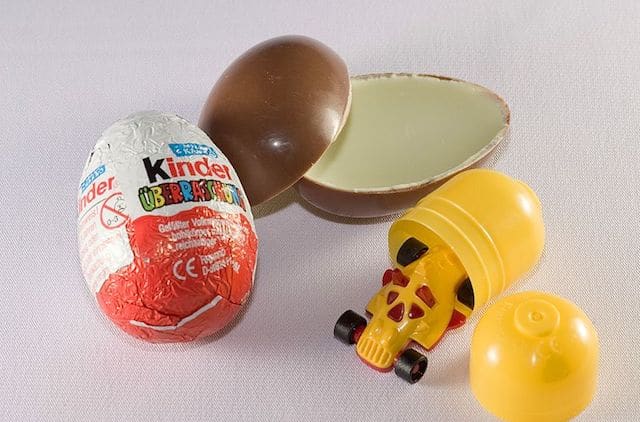
Children all over the world love Kinder Surprise eggs. Inside the chocolate shell is a tiny plastic egg with a toy hidden inside. If you've ever had one, you know that the toy is usually a cheap trinket that certainly won't change your life, but the surprise is more the fun behind the idea than anything else.
Although Kinder eggs are loved by children across Europe, Asia, and Canada, the United States has taken a stand against them. Because this tiny toy can contain even smaller parts inside, it poses a danger to children, at least from the perspective of the US government. The ban on Kinder eggs dates back to 1938, when government policy deemed the contents unacceptable. non-caloric ingredients in any food product . Kinder eggs had not yet been invented at the time, but when they appeared in the 1970s, they met the requirements of this ban and were therefore never allowed in the country.
5. Fugu
By now, almost everyone has heard of the Japanese delicacy known as fugu. This preparation of fugu fish was even parodied in "« The Simpsons» in an episode that aired back in 1991. The reason it became infamous is because if it's not prepared correctly, fugu will kill you .
Similar to poison dart frogs, the pufferfish isn't technically toxic in itself. It's its diet that makes it so dangerous. Pufferfish feed on snails and other poisonous small creatures of the deep, and these toxins are filtered by the fish's liver. The liver is incredibly toxic, and even the slightest cut during cooking will cause the toxin to leak through the entire fish. It's believed that just one pufferfish liver contains enough poison to kill about 30 adult humans. Furthermore, the rest of the fish's organs will also contain traces of the toxin.
After ingesting the toxin, you'll experience respiratory failure for between half an hour and four hours before ultimately dying. There's no treatment for tetrodotoxin in the liver, so it's best to avoid it. Despite this, humans have apparently been eating this fish for over 4,000 years.
Japanese chefs who want to become fugu masters must train for at least three years to master the art. In America, the fish was recently banned to prevent any potential problems, as several people still die from fugu poisoning each year.
4. Absinthe
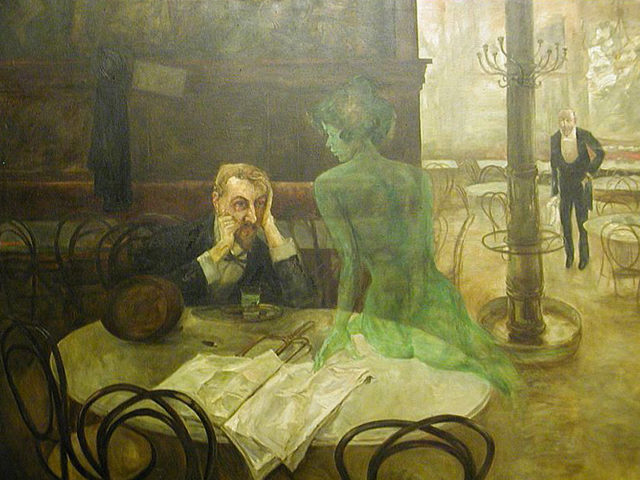
Absinthe, also known as the "Green Fairy," is the drink of choice for literary types and those who consider themselves a bit gothic. Incredibly strong and incredibly bitter, the spirit has a reputation for its association with famous literary giants like Ernest Hemingway and Oscar Wilde.
Ask anyone today why absinthe was so popular, and you'll likely hear about a chemical called thujone. A distillation product of wormwood, the plant from which absinthe is made, thujone was believed to have psychoactive properties, making it so appealing to artists. It would broaden their horizons, allow them to explore and become more creative. For this very reason, absinthe was effectively banned in the United States. Only in the last few years has absinthe been allowed to be sold again, and the amount of thujone consumed must meet federal regulations.
The irony is that studies have shown that old absinthe contains no more thujone than modern absinthe. Actually in absinthe there is nothing at all , which would have psychoactive properties. This includes modern absinthe or older bottles, which have also been studied. So where did this reputation come from? Some of it was likely simply propaganda, some was likely due to chronic alcoholism, related to the fact that absinthe has an alcohol content of around 140%, and the rest was likely due to improper distillation, resulting in contaminated batches.
3. Foie gras
Foie gras is the liver of a duck or goose that has grown to obscene proportions due to the birds being force-fed in captivity. In reality, they grow to about eight times their natural size, making them a gourmet delicacy, but technically, they are also an example of a horribly diseased liver. And it is for this reason that foie gras has been under attack for many years due to of a cruel nature method of its production.
While it's long been considered a delicacy in places like Europe, groups are taking their faxes all over America, including the most recent group in 2019 in New York State. California passed a ban in 2004, which took eight years to fully take effect. But the industry is rich, so there have been legal challenges, which have so far been unsuccessful. As more groups take action, it seems likely that a nationwide ban could be implemented in the future.
2. Ortolan
The ortolan bunting stands about six inches tall and can be found throughout Europe and parts of Western Asia. While their population is stable in most countries, it has declined significantly in France. The ortolan's delicacy in France led to its population falling so low that the animals were listed as a protected species, and hunting of ortolans was banned in France in 1999. Despite the ban, the law has never been strictly enforced.
The fact that people eat ortolan isn't a terrible thing; we eat all kinds of birds. It's the way ortolan is prepared that has led countries like the United States to ban it as food. The traditional recipe calls for the bird to be blinded. Without the advantage of its eyesight, it will constantly eat and gorge itself on any seeds or fruits. Then, as with foie gras, the small birds become extremely fat from overeating.
Once they reach a suitable size, the bird is immersed in Armagnac brandy , To drown and marinate the animal, they are then fried, and then, once cooked, the idea is to eat them whole, feet first.
Although it's banned in France, it's estimated that around 30,000 birds are still caught and sold illegally each year for around $180 per bird. French chefs still revel in the idea, and there are many disturbing descriptions of eating the bird, describing the transcendental moment when its tiny ribcage breaks in your mouth.
Part of the ritual of eating poultry involves placing the napkin you use for dinner over your head to hide your face. This is done for two reasons. One is to allow the napkin to catch the aroma of the bird before you eat it, and the other is supposedly to conceal the sin of what you're doing from God.
1. Sea turtle
There was a time when sea turtle was considered a special occasion food. People ate it the way they would eat turkey today. Not an everyday dish, but still a special dish. Abraham Lincoln was served turtle at his second inauguration. Turtle soup For many years, it was a national favorite. Campbell's Soup used to sell cans of imitation turtle soup made from calf's heads instead of turtles, because turtles were becoming increasingly difficult to find. This is the main reason for the ban on eating turtles. They were eaten to the point of critical endangerment.
Today, species like green sea turtles are federally protected as endangered species. Killing and eating these creatures is now considered a felony, so you won't find them on the menu anymore.