

A name is usually one of the first things we learn about a new person, place, or thing. We need to know how to address it. And we probably won't notice anything odd about 99 names out of 100. But every now and then, something happens to a name that makes it problematic, and a name change is the only way to save the situation.
10. The World Taekwondo Foundation had to change its name because of the Internet

Do you practice martial arts at all? If so, you might know World Taekwondo. That's the official name of the World Taekwondo Federation. But now you might be wondering, if it's the World Taekwondo Federation, then why is it called the World Taekwondo Federation? Well, thanks to the modern world with its penchant for acronyms and poisonous language.
Although the World Taekwondo Federation was founded in 1973, they changed their name in 2017 due to the fact that their initials, WTF, had acquired a completely different meaning around the world. The organization was at a loss to overcome the negative associations associated with these three specific letters, and rather than use their martial skills in a battle they couldn't win, they simply dropped the F.
A few years earlier, the same fate befell the Wisconsin Tourism Federation, which in 2009, after 30 years in business, realized the internet was unbeatable. They became the Wisconsin Tourism Federation.
9. MRI used to be called NMRI, but the N stood for nuclear
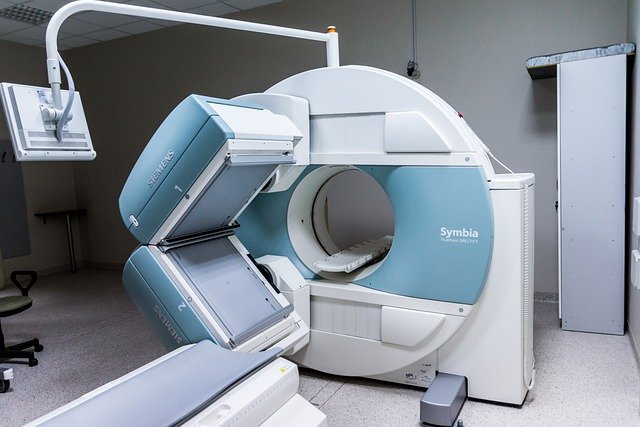
Have you ever had an MRI at a hospital? They perform about 30 million of them a year. And that high number is due to some small PR stunt the day they changed the name of the machine.
When this technology first emerged, it was called nuclear magnetic resonance imaging, and people didn't like it. The technology was developed in the 1930s and first implemented in the 1940s, then became widespread in the 1970s, when no one wanted to go near anything nuclear.
Ironically, the name derives from the way atomic nuclei interact in the presence of a magnetic field at a specific resonant frequency, and has no relation to the nuclear element that everyone feared. Nevertheless, to reassure people, they dropped the nuclear part.
8. Rapeseed oil used to have a different name

In 2021, Canada produced 12.6 million metric tons of canola oil. It's one of the most popular vegetable oils in the world and can be found almost everywhere. However, when it first appeared on the scene, it had a different name.
There's no canola plant. The name comes from a fusion of the terms "Canadian oil" and "low-acid." The name used to be "rapeseed oil." And you probably don't need me to explain why the name "rapeseed oil" was considered problematic. So in 1989, it was replaced with "canola.".
Rapeseed gets its name from Latin. Rapum is the Latin word for turnip, and rapeseed belongs to the same family. The horrific connotations were generally quite innocent, but few were willing to launch a PR campaign to try to salvage the word's innocent usage. However, some people still long supported it, such as the town of Tisdale, Saskatchewan, which grows huge canola crops. If you happened to drive toward the town, until about 2016, you might stumble upon terrifying signs proclaiming, "Tisdale: Land of Rape and Honey.".
7. Jay's potato chips were formerly called Mrs. Japp's
Jays Foods has been around since 1927. The company was founded by a man named Leonard Japp, and initially sold pretzels. This expanded to other products and eventually included potato chips. In 1940, Mrs. Japp's Potato Chips hit the market. A year later, Japan attacked Pearl Harbor, and anti-Japanese sentiment in America was at an all-time high.
Leonard Japp's unfortunate surname was pronounced identically to a popular racial slur against the Japanese. The chips were pulled from shelves nationwide simply because of the name and the associations they had with the Asian nation.
Instead of trying to combat both prejudice and misunderstanding, Japp decided to rebrand, calling the new company Jays because it began with the letter J and was available for use at the time.
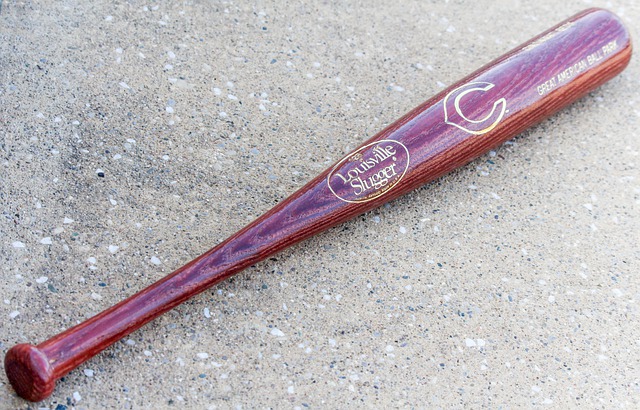
6. The Cincinnati Reds changed their name to the Redlegs
During the Cold War, there was nothing more terrifying for someone in the United States than being around a communist. The very idea of the "Red Scare" was enough to drive people out of Hollywood and ruin lives. Even today, it's easy to see people using the word "communism" with the same sarcasm as some of our most popular curse words.
This anti-Soviet hatred became a problem for professional baseball back in the 1950s. The Cincinnati Reds were founded in 1869 and were effectively the first professional baseball team in America. Back then, they were the Red Stockings. By 1881, they were simply the Reds when they moved from the National League to the American Association, and that name remained for decades. Then came 1953.
McCarthyism was at its peak, the Korean War was raging, and communism was the world's great bogeyman. The Reds needed to distance themselves from their name, and "Red Legs" was a nickname they'd been using for years, so they officially adopted it until 1959. They simply used the letter "C" for a few years, and in 1961, the Reds returned.
5. Jaguar used to be an SS car
You don't see a ton of Jaguars on the road these days, and the company has never been as big as Ford or Toyota. Jaguar Land Rover produces both luxury cars and SUVs, and the Land Rover model seems to be slightly better known. The 2023 Jaguar F-Type costs around $74,000. However, the company might not have existed at all if not for a strategic name change.
When Jaguar started out, it was the Swallow Sidecar Company in the 1920s. They made sidecars, so it made sense. But it was quite a long name for a car company, so people started shortening it. Plus, the company itself was known for simply using its initials on the front grille of the cars they made. So they all had CC. You can see where this is going.
Throughout the 1930s, it became increasingly clear that SS cars were a bad idea, thanks to the Nazi Schutzstaffel. In 1936, the company dropped its initials, and by 1945, it was officially called Jaguar Cars Limited.
4. The Canadian town of Vall de Sources used to be an asbestos town.

There are several cities around the world with some truly unfortunate names. Some are mildly offensive, some are silly, and some, like Val-de-Source in Quebec, were too closely associated with death and despair.
Vall de Sources wasn't always known by this name; it was only changed in 2020. Before that, the small French-Canadian town of 7,000 was known as Asbest. There's nothing better than naming your town after one of the few products in the world synonymous with deadly cancer.
To be fair, the town was named Asbest; in fact, it was home to the world's largest asbestos mine. They've had the deadly nickname since the 19th century. Back then, it clearly didn't have such negative connotations.
Over time, the city retained its name, even though asbestos was banished from virtually everywhere. However, the city suffered from a lack of business opportunities due to foreign investors' reluctance to deal with a place with such a sinister name.
The city held a vote on a new name, and Vall de Sources, meaning "Valley of Springs," won with 51%.
3. Biggby coffee used to be coffee
Coffee is made from beans, so it's not hard to see how a coffee company might stumble upon the Beaners name when trying to establish itself. That's what happened with Biggby Coffee when they first appeared on the scene in 1995.
By 2007, the company had grown to 77 locations and was rapidly expanding. Today, there are nearly 300 in operation. But as they grew in size and gained more attention, the company also began to face public criticism over their name. Although owners Bob Fish and Mary Roselle claimed they weren't familiar with it and didn't intend to offend anyone, the word "bob" had a well-established history at the time as a racial slur against Latinos.
The company realized the name didn't fit the image they wanted. They felt that if they didn't change it, even if they didn't mean to cause harm, they would be condoning its use. So in 2007, they rebranded all their existing stores as Biggby, retaining the "B" logo from the original store but completely losing the name.
2. The Washington Wizards used to be bullets

«The Washington Wizards have been playing in the NBA since 1997. However, the franchise's history is longer: it began in Chicago as the Packers back in 1961, then moved to Baltimore in 1963, when they became the Bullets. The team retained the Bullets name after moving to Washington in 1973, where they played first as the Capital Bullets and then as the Washington Bullets beginning in 1974. So what prompted them to change from the Bullets more than 30 years later? Two things.
First, Israeli Prime Minister Yitzhak Rabin was assassinated in 1995. He was a friend of then-Bullets owner Abe Pollin. Pollin announced his name change four days after his friend's funeral.
More important for Washingtonians was the fact that at the time, Washington was known as one of the most violent cities in the country. Gun violence was rampant, and Pollin acknowledged that the idea of their team being "faster than a speeding bullet" meant something different in that climate.
Fans weren't particularly happy at the time, though that was to be expected. Nevertheless, they were allowed to vote on five potential new names, and Wizards won.
1. The royal family took the name of the House of Windsor instead of Saxe-Coburg and Gotha

It's a bit difficult to keep track of all the names and titles used by members of the royal family, but the ruling family descends from the House of Windsor. They ascended to power from the House of Hanover back in 1901. However, if you look back in history, you'll see that the House of Hanover officially replaced the House of Saxe-Coburg and Gotha.
It was in 1917 that King George officially ordered members of the royal family to abandon their German names. Saxe-Coburg-Gotha was ruled out, and Windsor, a name well-known in British society and associated with the royal family for many years, was chosen.
Anti-German sentiment was growing, and, of course, World War I cemented it. The final straw was an air raid on June 13, 1917. The Germans bombed a school in London's East End, killing 18 children. The raid was carried out using Gotha bombers. Just over a month later, Windsor became the official name.