


Statistics show that 83% American Families eat fast food at least once a week. On average, this consumes about 10% of your annual income. So, it's easy to see why other businesses might want to adopt the fast food model in their own businesses, even if their own businesses are completely unrelated to this style. However, the rise of drive-thru businesses that aren't fast food at all shows that people appreciate convenience, or at least the convenience of not having to leave their cars.
10. Striptease show
The idea behind a drive-thru is to get something quickly and conveniently. It saves you time and gets you back on the road. It lends itself to a product or service that you can use quickly. You might get a quick meal, or you can do your banking at an ATM in minutes. Speed is integral to the idea. That's why striptease show on the roads seemed especially confusing when they started appearing during the Covid-19 pandemic.
Now, of course, we're advised to practice social distancing, so any form of transportation made more sense than in-person business. But a strip show involves sitting and watching someone take off their clothes while dancing. It was, by definition, a somewhat drawn-out process. Nevertheless, several businesses tried their hand at it.
One club in Las Vegas allowed patrons to drive up to the door, pay 100 dollars and watch a 10-minute show from your car. This included naked wrestling in hand sanitizer. They closed when the governor ordered all nonessential businesses to close.
9. Funeral by car
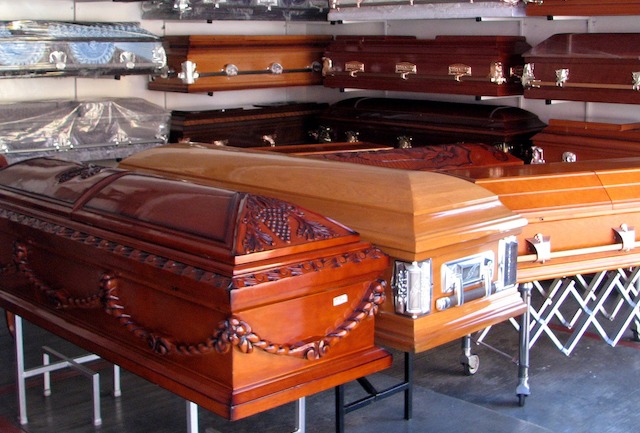
Like many businesses, funeral homes have had to find a way to cope with social distancing during the pandemic. So, off-site funeral have become a more popular way to provide funeral services around the world. The Government of Ontario in Canada even established the rules their exploitation.
However, social distancing didn't prompt the creation of a funeral home. In fact, stories of this service being offered go back more than a decade. In 2011, Robert L. Adams Mortuary in Compton became the first drive-through funeral home in California. The idea was that if a person well known in the community passed away, a drive-through would allow more people to come and pay their respects without worrying about things like parking or crowds. The funeral home in Detroit was founded in 1971.
Actually in Chicago back in 1989 a funeral home was opened . Another advantage here was the time savings for professionals, as well as the convenience for the elderly and people with disabilities who would have difficulty entering and exiting the building.
8. Wedding Chapel with Drive-In

On the opposite end of the spectrum from a destination funeral is a destination wedding. These seem to be most popular in tourist destinations such as Las Vegas , where people want to do everything quickly and without much hassle. In Canada You can do the same in cities like Niagara Falls.
They've been around for a while. Perhaps the most famous is the Little White Chapel in Vegas, where even Frank Sinatra once got married. .
There are rumors that until 1996 You could even potentially have a Catholic wedding before the church banned it, just like Disney weddings.
7. Brothels

If you thought a drive-in strip club was a bit intense, you might want to try this one. In some parts of Europe, a drive-in brothel has become a business offering the convenience of a drive-in with the amenities of, you know, a brothel.
These booths from Zurich, Switzerland, are not a Covid-induced innovation and date back to 2013, when they were installed after 52% voters They decided they needed them. They look like car washes, where you drive in and either invite your partner to join you in the car or get out and use the wooden benches. Data collected several years later showed that the booths significantly improved the safety of urban sex workers.
The idea here is that sex work is real, and pretending otherwise doesn't help anyone. So they designated a place where it could happen legally and safely. Clients go to the part of town where the kiosks are located, and a sex worker goes with them to the kiosk. In Cologne, Germany, the driver's door cannot be opened, A passenger car can, making it easier for workers to escape if necessary. There's an emergency call button, and social workers are on site.
6. Graduation passes

Due to the COVID-19 pandemic, many social events had to be completely canceled or adapted to the restrictions imposed. One of those that was adapted in many places was graduation ceremonies. Students were still attending school and still longed for that moment when they would receive their diploma. But due to regulations limiting the number of people who could gather at one time and how far apart everyone had to stay, some schools took creative approaches.
Travel pass outlet A number of schools tried the process. It was a curious one, but at least it gave students and their families something to experience. For some, they arrived in a staggered formation. The graduate would exit the car, while their family remained behind, slowly following their progress from the moving vehicle. The graduate, six feet behind the next graduate, proceeded to the principal, received their diploma, took a few photos, and returned to the car.
Other schools were a little less formal. Cars would pull up andThe diploma was presented through the window. The car drove away and the family was able to find a place elsewhere to take photos to celebrate the moment.
5. New Orleans and Houston have Daiquiri bars.

If you had to make a list of things you shouldn't do while driving, there would probably only be a handful that would be at the very top and that everyone would agree on. We all know that texting while driving is bad; you don't want to do that. And, of course, drunk driving is a really bad idea. The first American drunk driving arrest occurred in back in 1910 , so we've been aware of this for a long time.
It's remarkable that, despite the well-known problems associated with drunk driving, there are cities with daiquiri bars. People may scoff at the idea of liquor stores, which exist in so many different places, but it makes much more sense. After all, liquor stores sell unopened liquor. And it's not like pulling up to a liquor store, parking, and then going in for a bottle of vodka—it's somehow more appropriate than buying the same bottle from the display case. But a daiquiri bar sells mixed, frozen drinks.
Playing with some very sketchy legal rules, the bars in New Orleans Daiquiris can be sold as long as the drink is frozen, the cup is sealed, and the straw remains taped to the side of the cup while it's in the car. So it's basically an honor system. They mix you a drink, and you promise not to drink it while you're in the car.
A Johannesburg bar has instituted a rule that customers must park their cars first and can only buy four drinks. In Houston Thirsty motorists could get both daiquiris and margaritas as long as they were made with wine or beer, not distilled spirits like tequila or rum. The container had to be sealed when being brought into the car, but "sealed" apparently meant "has a lid.".
4. Ash Wednesday Service

According to polls, every third millennial The church seems boring. Church attendance has been declining for several years, but efforts have been made to make it more appealing. One of these is the Ash Wednesday service.
In 2019 One church in Wisconsin has started offering car travel services For people heading to work, they could get free coffee, a prayer from the pastor, and leave with ashes on their heads in just a few minutes.
At another church Vancouver had the same idea. The cars were just they drive up and honk , The minister comes out and, boom, ashes on the forehead for the beginning of Lent. As the minister noted, it's much easier to gather people in church on a weekend than in the middle of the week, so this was seen as a reasonable compromise.
3. Autovoting

What should everyone do, but few do? Voting. So, the idea of drive-through voting makes almost too much sense, allowing many people to vote quickly and easily. The concept has been discussed for years, and some proponents still in 2008 insisted that it needs to be implemented throughout the country.
This concept has been tested in places such as, like Calgary , and on a smaller scale in Connecticut during the Covid-19 pandemic. In Texas was 24-hour drive-thru voting , although not for long, and other cities are still are considering this idea .
Criticisms of drive-thru voting ranged from the idea that passengers could coerce others to bumper stickers in line influencing voting. The idea has yet to gain widespread acceptance.
2. Get Shucked is an oyster bar with oyster buckets.

Fast food is an interesting concept because it can only work if certain rules are followed. We go to restaurants for literally all kinds of food, but fast food restaurants typically serve a fairly narrow subset of those products. Burgers, tacos, fried chicken, sandwiches. You'll find very few other restaurants operating under the fast food model. Few eateries offer cassoulet or lobster. Some foods are designed for sit-down dining.
Go to Australia and you will find Get Shucked , a seafood restaurant that refuses to believe that drive-thru has restrictions. At their eatery, you can get a bucket of oysters on the go, just hop, hop, and hop from where they actually come from. Here they sell almost nothing, besides drinks, so at least they know what they're doing when it comes to shellfish.
1. Illegal cookies
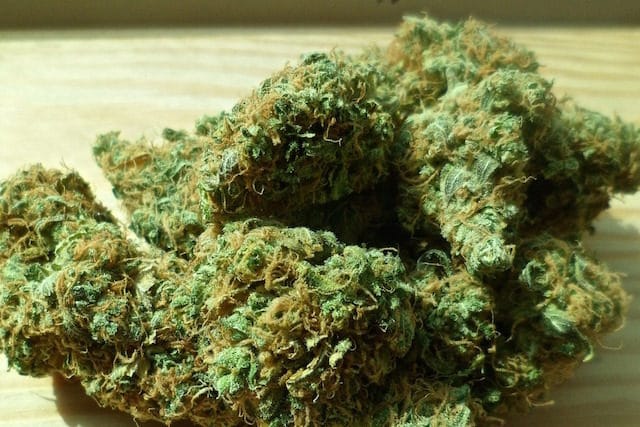
New York City chef Sebastian P. Kujawa was either brilliant or stupid, or maybe both, when he came up with his business plan. The 23-year-old was out of work, so he figured he could put his culinary skills to good use and started baking homemade cookies. Everything was going well. But then he laced them with marijuana. While that might still be fine with most people, it's not exactly what local law enforcement is looking for.
Every day Kujava would head to the dead end near his house and was hiding in the bushes — his version of an impromptu drive-through. A car would pull up to the bushes, and the cook would stick his head out and fulfill their order.
Neighbors gave the man a single penny after observing his transactions for some time. Police discovered that he was posting advertising on Craigslist , and closed it down pretty quickly.