

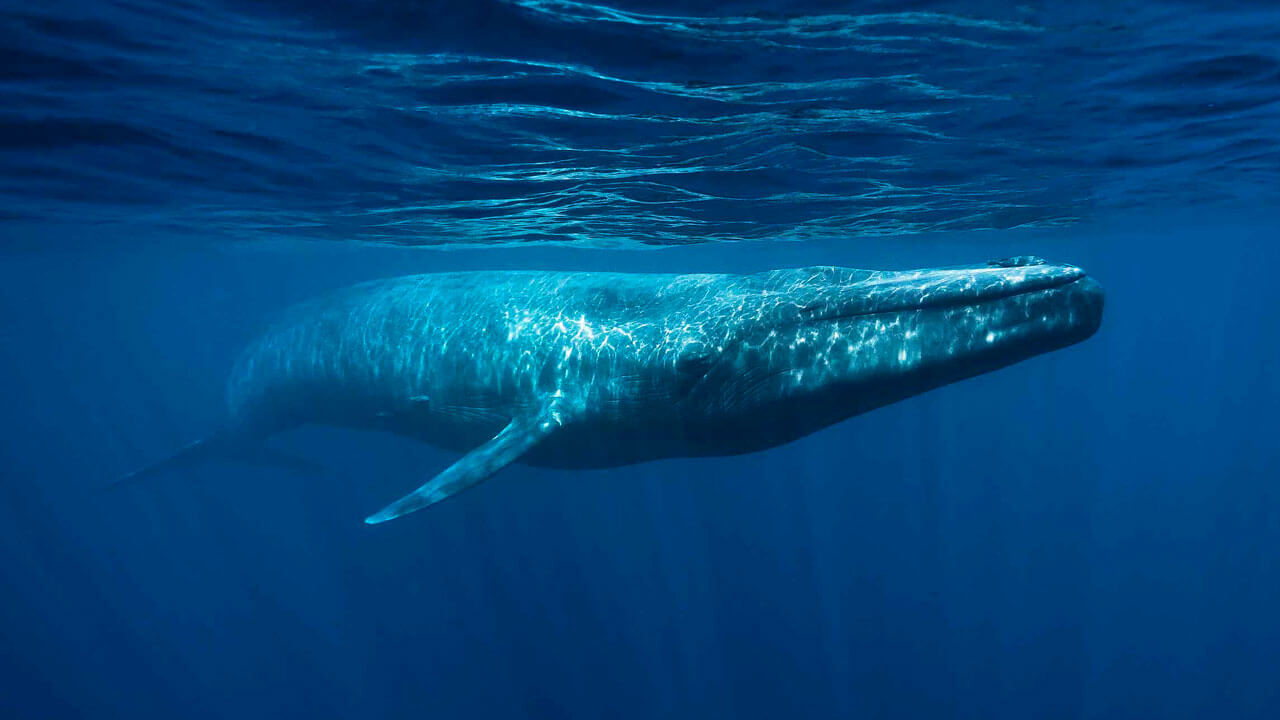
Humans may consider themselves the kings of nature. But compared to the world's largest animals, humans are mere minnows. Let's take a look at the largest giants still roaming planet Earth.
15. Giant flying fox

The largest bat on Earth, these bats live in the Philippines. Their body length is approximately 55 cm, their weight is 1.5 kg, and their wingspan is quite impressive – up to 1.8 meters.
14. Belgian Flanders giant

A domesticated form of the hare (rabbit). Breeding was primarily for meat and fur, which has influenced its size. It is the largest rabbit breed. Their average weight is 10-12 kg, with the maximum recorded being 25 kg.
13. Chinese giant salamander

The largest amphibian on Earth, the salamander reaches 180 cm in length. These amazing creatures live in China, where their meat is considered a delicacy, so few salamanders grow to their maximum size.
12. Capybara

The largest rodent on Earth, these cute little creatures live in South America. Adult capybaras grow up to 1.5 meters in length and can weigh up to 105 kg. Incidentally, these rodents happily live alongside humans.
11. Giant Green Anaconda

This close relative of the python is the largest snake on Earth. It lives in the tropical regions of South America. The maximum recorded length is over 7.5 meters, and it weighs 250 kilograms. The Asian python exceeds the anaconda in length, reaching 9.7 meters, but is smaller in weight.
10. Polar bear

To find the world's largest bear, you need to travel to the Arctic. There, amidst the snow and ice, live majestic polar bears—living embodiments of the formidable forces of nature.
The Inuit call polar bears "nanuk," which means "respected.".
At birth, a newborn polar bear cub weighs only 700 grams. And the milk it feeds on has a higher fat content than that of other bear species. Just two months after birth, the cub weighs 10 kg.
Until the age of one and a half, a caring mother accompanies him everywhere. And at two years old, when many human children still struggle to walk and soil their diapers, a young polar bear has already gained its normal weight and is capable of killing a bearded seal, a ringed seal, or even a human if they aren't careful.
Even for the world's largest bear, finding food can be a challenge. Less than two percent of polar bear hunts are successful, so half their lives are spent searching for food.
9. Saltwater crocodile

Most of the largest animals aren't known for their peaceful nature. But even among them, saltwater crocodiles stand out for their aggression and bloodthirstiness. The world's most fearsome animal even made it into the Guinness Book of World Records for devouring a thousand Japanese soldiers during World War II, along with its fellow crocodiles.
But saltwater crocodiles can hardly be counted among the allies, since they would just as happily feast on Russian, American, and any other soldiers.
8. Giraffe

Among the world's largest animals, giraffes immediately stand out for their long necks. This makes them the tallest land animals on the planet. The neck accounts for one-third of the animal's body length and, like most other mammals, consists of only seven cervical vertebrae.
Giraffes, it's safe to say, have large hearts. They weigh 12 kilograms and create pressure that would terrify any hypertensive patient. The body will go to extraordinary lengths to ensure blood reaches the brain.
Giraffes are also famous for their long tongues. They use them not for gossip, but to devour leaves from the tallest trees in the African savannah. This organ can reach a whopping 45 centimeters in length.
7. Hippopotamus

Sub-Saharan Africa is home to the third-largest land animal in the world. But hippos aren't exactly fond of walking on land. They are semi-aquatic mammals, meaning they spend most of their day in rivers and lakes. This is how they keep their hairless bodies moist under the scorching African sun. If hippos can't access cool water, their skin cracks.
Hippopotamus mothers began giving birth underwater long before it became a fashionable trend in the human world. Incidentally, hippos are one of the few mammals whose young can nurse underwater.
In most European languages, the hippopotamus is called "hippopotamus." This word comes from Latin (which, in turn, comes from Greek) and means "river horse." Of course, this massive creature can't compare to the most beautiful horses, but it is very fast and agile in the water.
6. Southern elephant seal

Among the largest animals on our planet, there are two elephants, one of which is a land animal and the other a sea animal.
This seal got its name from the leather pouch on its nose, which, when agitated or during mating fights, inflates into a large ball.
5. White Rhinoceros

An old joke about rhinoceroses is that they have poor eyesight, but at such a large size, this is no longer a problem. Indeed, these giants don't rely much on their eyesight. Even their hearing plays a secondary role. White rhinoceroses, however, have a very well-developed sense of smell. So don't approach them from upwind.
Incidentally, unlike their smaller cousins, black rhinoceroses, white rhinoceroses usually flee upon seeing a human. Black rhinoceroses, however, attack.
Due to the uncontrolled killing of white rhinos, the northern subspecies became extinct. This happened quite recently, in 2018, when the last male, named Sudan, died. So now we can only admire photos of these largest animals in the world.
The southern population still exists. But the question is: for how long?
4. African savanna elephant

Here's a seven-ton answer to the question of what is the largest land animal. Thanks to its size and mass, the elephant has earned a place in the Guinness Book of World Records as the largest land mammal. Savannah elephants also have their share of heavyweights. For example, in 1974, an elephant weighing 12.2 tons was shot in Angola.
Like their smaller cousins, African elephants can use their trunks (which contain over 40,000 muscles) to lift objects weighing up to 180 kg. Unfortunately, the largest land animal doesn't boast the largest population. 25,000 elephants die annually due to poaching.
3. Great whale shark

It seems odd that the largest shark in the world isn't the most fearsome of the shark species. It doesn't even hunt whales, despite its name. Unlike most of its predatory brethren, the great whale shark feeds on plankton for breakfast, lunch, and dinner.
This sea giant swims slowly and pays little attention to people swimming nearby. This allows divers to experience a ride on the back of a whale shark.
In videos of the world's largest animals, people can often be seen swimming with whale sharks.
2. Sperm whale

One of the best ways to identify a sperm whale in the ocean is by its massive head. Sperm whales have the largest brain of any living creature on Earth, weighing up to 7.8 kg.
However, the fact that their heads are filled with spermaceti is what makes the biology of these creatures so fascinating. The spermaceti sac accounts for 901 TP3T of the sperm whale's head weight.
Scientists speculate that spermaceti is what helps these enormous toothed whales dive and surface from the depths. There must be something keeping all 40 tons of sperm whales afloat!
1. Blue whale
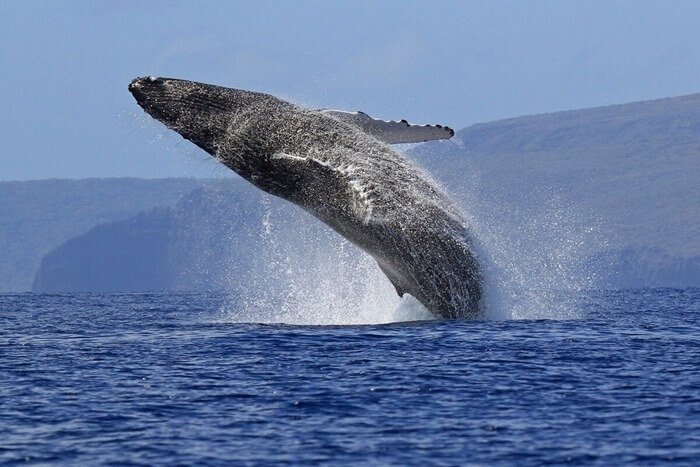
The largest animal on Earth is a majestic, carnivorous sea creature that weighs a whopping 150 tons and reaches 33 meters in length. And that's just an average, as whalers have encountered whales weighing 180 and even 190 tons.
The blue whale's heart is one and a half meters long, weighs about 180 kilograms, and its aorta is wide enough for a baby to swim through.

However, despite their enormous size, blue whales pose no danger to humans. They do not attack swimmers and feed on krill, small crustaceans, cephalopods, and fish.
Humans, however, are the blue whale's most dangerous adversary. Due to intensive whaling and severe marine pollution, the world's largest animal nearly became extinct. In 1693, only 5,000 individuals remained. And although the blue whale population has now grown to 10,000 individuals, it remains on the brink of extinction.