

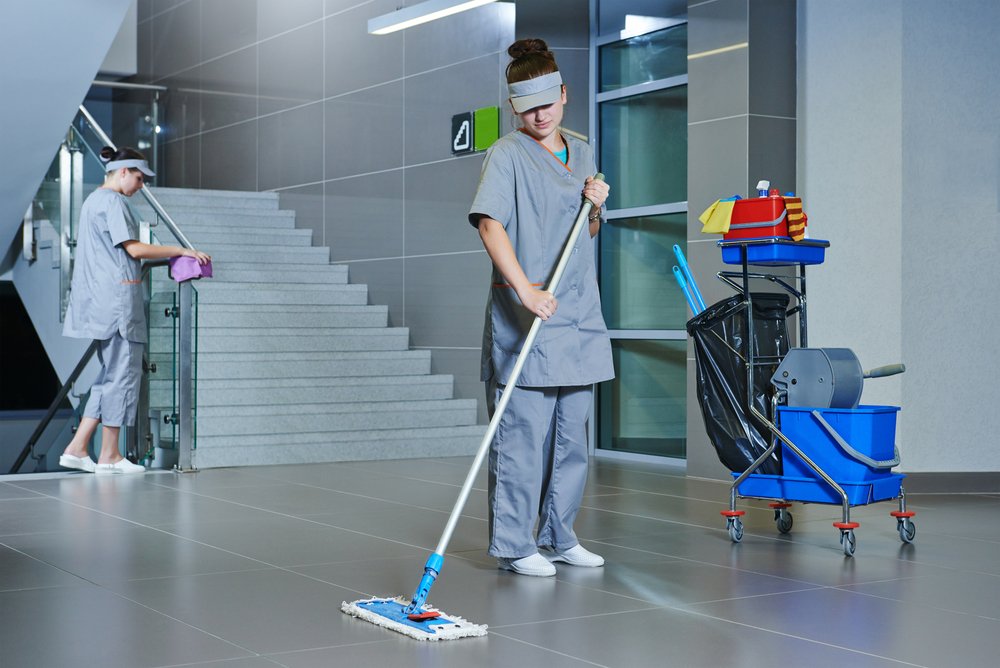
A janitor differs from a caretaker in that they have a broader range of responsibilities: in addition to cleaning, they open and close classrooms, keep track of keys, guard the cloakroom and entrance, and help children organize the space during recess. A janitor's primary responsibility is maintaining cleanliness. works mainly in schools, kindergartens and nurseries, while a cleaner works in almost any institution - in offices, government agencies, hospitals and stores.
To sum it up
- Cleaner Combines cleaning with building maintenance and tidying: keys, rooms, cloakroom, access control, and childcare.
- Responsibilities cleaning ladies This mainly includes maintaining cleanliness in the premises – floors, toilets, garbage bins, windows.
- A cleaner works almost exclusively in educational institutions, while a janitor works in any building.
- Cleaner is a separate profession in the Classification of Professions and Specialties (code 962906).
Cleaner and janitor – what’s the difference?
Both positions are service personnel and both involve cleaning, so many use the terms interchangeably. The difference is a janitor is the "keeper" of a school or preschool building , A janitor is a cleaning specialist. A janitor interacts with students, teachers, and parents, responds to the school's current needs, and ensures the building is ready for classes. Janitors typically work a fixed schedule, often after school hours, and rarely interact with children.
In large schools, both positions often coexist: the janitor monitors student flow, locker rooms, and discipline, while the cleaning staff cleans floors, windows, and restrooms. In smaller schools, the janitor also performs most of the cleaning duties.
Responsibilities of a cleaner in a school or kindergarten
According to the job description, a cleaner is responsible for the property entrusted to them and for maintaining order and cleanliness within the facility. The scope of duties is determined by the director, but typically includes:
- opening and closing of classrooms and other premises, handing over of keys,
- Ventilate classrooms and close windows after classes.
- assisting in maintaining discipline during breaks and supervising the locker room.
- duty at the entrance or in the guardhouse, checking people entering the building.
- Regular and periodic cleaning of designated areas and rooms, garbage removal, and watering of plants.
- reporting faults and careful handling of the property.
- In kindergartens, they often help with serving food and washing dishes, and also look after children.
In practice, a janitor is often the first person parents or visitors encounter upon entering a school. They provide directions to the classroom, notify the teacher of a parent's arrival, ensure unauthorized persons do not enter the school grounds, and report any problems they notice, such as a broken lock or a leaky faucet, to the principal.
Duties of a cleaning lady
A cleaner (cleaning service worker) pays special attention to hygiene and cleanliness. Typical duties include:
- sweeping, vacuuming and mopping floors.
- Cleaning and disinfection of toilets, replenishment of soap and paper supplies.
- wiping dust from furniture and windowsills.
- emptying trash bins and sorting waste.
- washing windows, doors and glazing.
- correct use of cleaning products and reporting any damage found.
A cleaner may work in offices, government agencies, hospitals, hotels, shops, or private homes, including schools, if the establishment has its own cleaning staff or uses the services of a cleaning company.
Table: What is the difference between a janitor and a cleaner?
| Characteristic | Cleaner | Cleaning woman |
|---|---|---|
| The main task | Maintenance of the building and maintaining order on the territory, as well as cleaning. | Maintaining cleanliness of premises. |
| Workplace | Mainly schools, kindergartens, nurseries. | Offices, government offices, hospitals, hotels, shops, homes and even schools. |
| Contacts with children | Daily (breaks, cloakroom, entrance) | Usually small |
| Keys and access to rooms | Yes - opens and closes rooms. | Usually only for cleaned rooms. |
| Working hours | Usually during working hours. | Often before or after classes. |
| Formal requirements | There are no educational requirements; a certificate of no criminal record and a medical examination are required. | There are no special educational requirements; a medical examination is required. |
| Working at KZiS | Cleaner (962906) | Separate professions from the group of cleaners and housekeepers |
Requirements and employment – what do you need to know?
Neither a janitor nor a cleaner requires any special education—basic vocational education or a secondary education is usually sufficient. In public schools and kindergartens, service personnel are most often employees of local authorities , and job postings require, among other things, full legal capacity, a state of health fit for work, and often a certificate of no criminal record.
Since cleaners are in constant contact with children, employers are required to screen candidates registry of persons who have committed sexual offenders, before hiring them. This obligation extends to anyone who works with or cares for minors, so it often includes cleaners in educational institutions.
A cleaner is expected to demonstrate responsibility, patience, and kindness toward children, the ability to enforce rules, and good communication skills. They must demonstrate neatness, good organization, conscientiousness, and knowledge of cleaning products.
Which job would suit you best?
- Choose a job as a cleaner, If you enjoy interacting with children, feel comfortable in the hustle and bustle of school life, can respond quickly to emergency situations, and are willing to work during the day.
- Choose a job as a cleaner, If you enjoy independent, predictable work with a schedule, no child supervision, and if morning or afternoon/evening hours suit you.
- When searching for vacancies Read the job description carefully – in practice, positions are called by different names («teacher’s assistant,» «service worker,» «technical maintenance worker»), and their tasks are determined by the employer.
Frequently Asked Questions (FAQ)
Is a cleaner the same as a janitor?
No. A janitor also cleans, but their responsibilities are broader: they open and close classrooms, manage keys, the cloakroom, and the entrance, and help maintain order among the children. The janitor is primarily responsible for the cleanliness of the premises.
What are the responsibilities of a kindergarten cleaner?
In addition to cleaning and maintaining classrooms, kindergarten teachers often assist with serving meals and washing dishes, and also support teachers in their day-to-day work with children. The exact scope of these responsibilities is determined by the principal.
Does a cleaner need to have an education?
Formal education is not required. Employers typically expect a basic or secondary education, a clean criminal record, and a recent medical examination.
What is the name of the cleaner's profession in the classification of professions?
The Classification of Professions and Specialties includes the profession of "cleaner" with code 962906. Cleaners belong to a different group of professions.
Who determines the scope of duties of the cleaner?
The director of the institution assigns tasks and defines the employee's scope of responsibilities, so the janitor's responsibilities may vary in different schools.
See also
- What is the difference between a legal adviser and an attorney?
- What is the difference between a first-level and a second-level vocational school?
- What is the difference between a psychologist and a psychiatrist?
- What is the difference between a yellow and a white ambulance?