

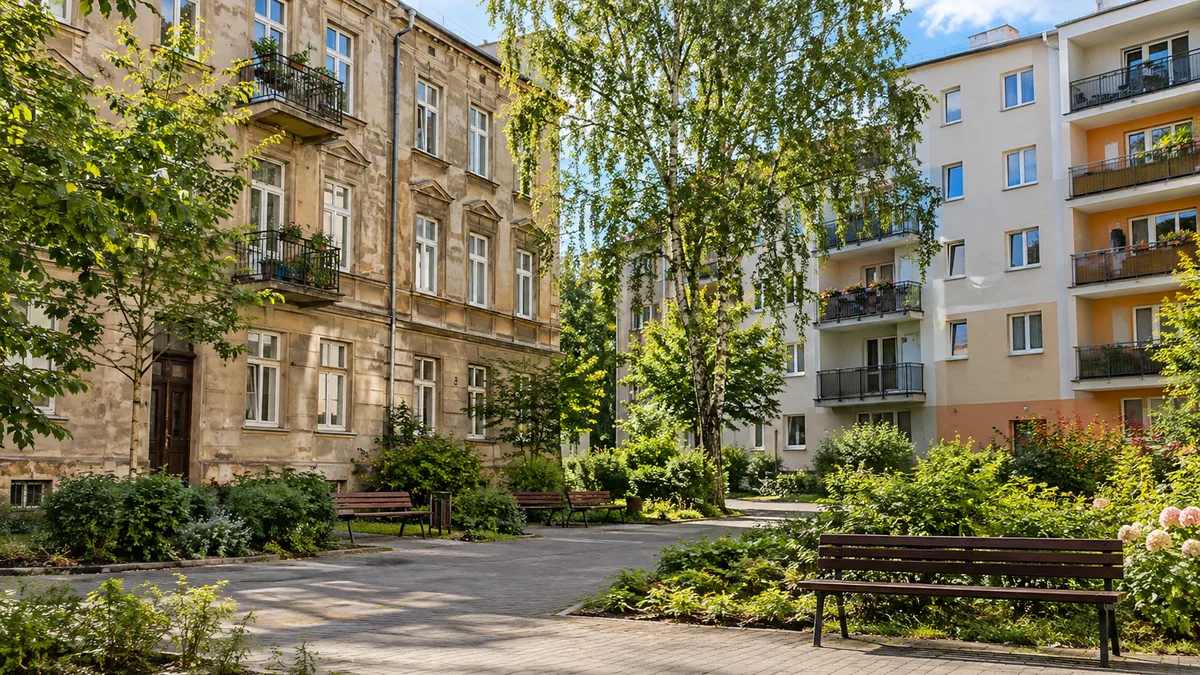
Social housing differs from municipal housing primarily in the type of contract, standards and recipient of assistance: municipal housing is typically let for an indefinite period at the standard municipal rent, while social housing is let for a fixed term at a rent not exceeding half the lowest rate in the municipality, and in an apartment that may be of a lower standard. Both types of housing belong to the same municipal housing stock, so many people consider them synonymous. The rules are defined by the Law on the Protection of Tenants' Rights, the Municipal Housing Stock, and amendments to the Civil Code.
To sum it up
- A municipal apartment is a property from municipal resources, usually rented out for an indefinite period to low-income citizens.
- In the wording of the law, social housing is defined as «social lease of premises» – a fixed-term contract with the possibility of extension.
- The rent under the social contract may not exceed half of the minimum rent applicable within the municipality's resources.
- Social rental housing may be of lower standards; the law only sets a minimum room size per person.
Municipal housing – what is it?
Municipal apartment "Housing stock" is a colloquial term for residential premises included in a municipal housing stock. According to the Law on the Protection of Tenants' Rights, this stock includes apartments owned by the municipality, municipal legal entities, or commercial companies created with the participation of the municipality. The municipality may also rent apartments from other owners and sublet them to tenants.
The law obligates municipalities to meet the housing needs of low-income families. Thus, municipal apartments are provided to individuals who do not own their own housing and are unable to rent it on the market, but who are able to pay rent regularly. Municipal apartments, with the exception of social housing and certain other types, are rented out only for an indefinite period .
Social housing – what is it according to the law?
The current wording of the law no longer contains a separate definition of the term "social housing." The 2019 amendment applies to social housing lease agreement . This is a lease agreement for residential premises suitable for habitation due to their furnishings and technical condition, with a minimum room area of 5 m² per family member, or 10 m² for a single occupant. The accommodation may meet lower standards.
In practice, this means that "social" status is determined by the type of contract and the standard of the premises, rather than by the individual building complex. Social housing is typically smaller, less equipped, and sometimes has a shared bathroom or kitchen. However, it is still part of the municipal housing stock—hence the common expression «"social housing" as a special type of municipal housing .
Social and municipal housing - the most important differences.
Contract term
The social housing lease agreement is concluded for a fixed term . After this period expires, it can be extended if the tenant's situation still justifies the lease. Municipal leases are typically perpetual, providing the tenant with greater stability.
Rent amount
Rent for social housing may not exceed half of the minimum rent, established in the municipal housing stock. The municipality sets the rent for municipal apartments in accordance with its own rental policy; low-income tenants may apply for a rent reduction in accordance with the provisions of the Law and the decision of the municipal council.
Who can rent an apartment?
Income thresholds for both types of rentals are set by the municipal council in the resolution The principles of rental housing vary from municipal to municipal. The threshold for social housing is initially lower, as this form of housing is intended to assist the most vulnerable segments of the population. Social housing can be provided to individuals who do not have legal title to any property.
Social housing and eviction
Social housing issues often arise during evictions. In its housing decision, the court determines whether the evicted person is entitled to social housing. The court cannot deny this right to, among others, a pregnant woman, a minor, a disabled or incapacitated person (and their guardian), a bedridden person, a pensioner eligible for social assistance, an unemployed person, or any person who meets the criteria established by the municipal council—unless they can live elsewhere or their financial situation allows them to independently meet their housing needs. Evictions are suspended until the municipality offers social housing.
Social and municipal housing in the table
| Characteristic | Municipal apartment | Social housing (social rent) |
|---|---|---|
| Owner | Municipality (municipal housing resources) | Municipality (same resource) |
| Contract type | Typically for an indefinite period. | For a fixed term with the possibility of extension. |
| Rent | According to the tariffs set by the commune. | Maximum half of the lowest rent in the commune. |
| Standard | Ordinary residential premises | Can be reduced; minimum room area is 5 m² per person (10 m² per one person). |
| Destination | Low-income households | People in particularly difficult situations, including those who have received an eviction order. |
| Income criterion | Determined by decision of the municipal council. | Determined by decision of the municipal council (lower threshold). |
| Periodic income verification | Yes, no more than once every 2.5 years. | When renewing a contract (assessing whether the situation justifies it) |
The procedure is similar in both cases, but the details are always determined by a specific municipal ordinance. Typically, it looks like this:
- Please consult your municipal office's regulations or information bulletin regarding rental regulations for information on income thresholds and priority criteria.
- Submit your application along with income declaration family members for the last 3 months and a declaration of financial status.
- Please include a statement declaring that you are not the legal owner of any other property in this or a nearby city. This document is provided under penalty of perjury.
- Once you've successfully completed the screening process, you'll be placed on a housing waiting list; the wait time depends on the municipality's resources.
The municipality will refuse to sign a contract if the applicant fails to provide the necessary documents or if there is a clear discrepancy between the applicant's low income and the declared assets. If your income slightly exceeds the threshold for social housing, check whether it meets the threshold for municipal housing—these are two different criteria.
Housing regulations are subject to change, and detailed rules are established individually by each municipality. Before submitting an application, it is recommended to familiarize yourself with the current law and the municipal council's resolution. If a dispute arises (for example, during eviction), you should seek legal assistance or take advantage of free legal aid.
Frequently Asked Questions (FAQ)
Is social housing the same as council housing?
No. Both are municipal resources, but social rentals are for a fixed term, at a lower rate (maximum half the minimum municipal rate), and in premises that may be of lower quality. Municipal apartments are typically rented for an indefinite term.
What is the rent for social housing?
The law does not specify the amount. It merely stipulates that rent in social housing cannot exceed half the minimum rent in effect in the housing stock of a given municipality. Specific rates are set by the municipality.
Is it possible to extend a social housing contract?
Yes. After the initial term expires, the contract may be extended if the tenant's situation still justifies social housing. If the household income exceeds the threshold set by the municipal council, an extension is no longer possible. The municipality may also terminate the contract without notice if the tenant has acquired legal title to another property and is able to use it.
Is it possible to buy a municipal apartment?
This depends on the municipality. The multi-year property management program adopted by the municipal council includes, among other things, the planned sale of premises. Information on the availability and conditions of purchase can be found in the regulations of your municipality or the property management organization.
Who has priority rights to social housing?
Priority criteria are determined by a municipal council resolution. A special group consists of individuals who have been granted the right to social housing by a court eviction decision—the municipality is obligated to offer them housing.
See also
- What is the difference between renting and leasing?
- What is the difference between renting and leasing?
- What is the difference between an act and a resolution?
- What is the difference between a representative appointment agreement and an employment contract?