

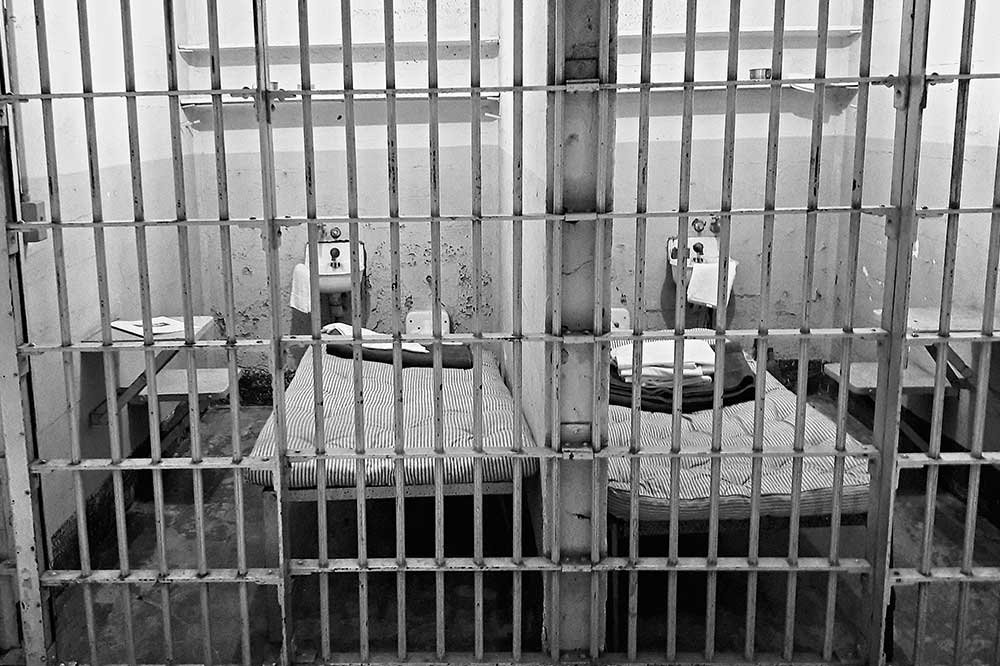
A sentence involving restriction of liberty does not entail imprisonment—the convicted person remains at home but must, among other things, perform unpaid community service or forfeit part of their wages. A sentence involving imprisonment entails serving the sentence in solitary confinement, usually in a prison. Both types of punishment are provided for in the Criminal Code, but differ in severity, duration, and consequences. Below, we explain the differences based on the provisions of the Code.
To sum it up
- Restriction of freedom lasts from one month to two years (unless otherwise provided by law), imprisonment – from one month to 30 years; life imprisonment is a separate punishment.
- When a prisoner is given a restriction of liberty, he or she remains in her familiar environment : He or she performs community service for 20-40 hours per month, he or she may have 10-25% withheld from wages, or he or she may remain at home under electronic monitoring.
- Deprivation of liberty means isolation - usually a stay in prison.
- Restriction of liberty is a more lenient punishment; failure to comply with it may result in an alternative punishment in the form of imprisonment.
Punishments in the Criminal Code – what’s the difference?
Article 32 of the Criminal Code lists the punishments for the crimes: fine, restriction of liberty, imprisonment and life imprisonment . The order is not random—it's a graduated system from the most lenient to the most severe punishment. Thus, restriction of freedom is a punishment that doesn't involve imprisonment, an "intermediate option" between a fine and imprisonment.
In short: restriction of freedom deprives the prisoner of some of his time and money, but leaves him with a home, job and family. Imprisonment deprives him of freedom of movement and separates him from everyday life.
What is the punishment for restriction of liberty?
In accordance with Article 34 of the Criminal Code, unless otherwise provided by law, punishment in the form of restriction of liberty lasts no less than one month and no more than two years and is assigned in months and years. The court may assign, among other things:
- A duty to perform unpaid, supervised work for public purposes – from 20 to 40 hours per month (Article 35 § 1 of the Criminal Code),
- obligation to permanently reside at the place of permanent residence or at another specified location using electronic monitoring.
- Deduction from 10% to 25% from monthly remuneration for social purposes determined by the court - only for an employed person; during this period, the convicted person cannot terminate the employment relationship without the consent of the court.
- other obligations specified in the rules, such as those relating to specific conduct.
The court may make orders for the collection of obligations and deductions jointly or separately. While serving their sentence, the convicted person may not change their permanent residence without the court's consent and must provide explanations regarding the execution of the sentence. Supervision is usually carried out by a probation officer.
What is imprisonment?
According to Article 37 of the Criminal Code, the minimum term of imprisonment is one month, and the maximum is 30 years . The harshest penalty under Polish law is life imprisonment. The convicted person serves their sentence in solitary confinement, usually in a correctional facility, under conditions established by the Executive Criminal Code.
However, not every prison sentence entails imprisonment. The court may to suspend the execution of a prison sentence conditionally for up to one year, if the conditions of Article 69 of the Criminal Code are met. The law also provides for the possibility of serving certain short sentences under electronic monitoring. The court decides whether this is possible in a particular case.
Restriction of liberty and imprisonment - table
| Characteristic | Restriction of freedom | Imprisonment |
|---|---|---|
| Legal basis | Articles 34–35 of the Criminal Code | Article 37 of the Criminal Code |
| Duration | from 1 month to 2 years (unless otherwise provided by law) | from 1 month to 30 years; life imprisonment is also possible. |
| The place where a convicted person serves his sentence | in your environment, in your place of residence | usually in prison |
| Contents of the punishment | Social work, 20-40 hours per month, deduction from salary 10-25%, electronic monitoring, other duties. | isolation from society |
| Professional work | The convicted person usually continues to work. | Work is only possible within the penitentiary system. |
| Add to the catalog of punishments | less severe punishment (Article 32, paragraph 2) | more severe punishment (Article 32, paragraph 3) |
| Annulment of a criminal record by operation of law. | 3 years after execution, mitigation or limitation of execution of the punishment | for a longer period, depending on the provisions of Article 107 of the Criminal Code. |
In what cases does the court issue a decision on restriction of freedom instead of imprisonment?
Many provisions of the special section provide for alternative punishments, such as "a fine, restriction of liberty, or imprisonment for up to two years." In cases where the law provides for such a choice and the crime is punishable by imprisonment for no more than five years, Article 58 § 1 of the Criminal Code requires that imprisonment be imposed only if another punishment is inconsistent with the purposes of the punishment in question.
In addition, Article 37a of the Criminal Code allows the court to impose a punishment in the form of restriction of liberty. instead of imprisonment if the crime is punishable by imprisonment for up to eight years and the sentence imposed does not exceed one year. The final decision depends on the circumstances of the case, the severity of the crime, and the personality of the offender.
What is the penalty for evading a sentence in the form of restriction of liberty?
A restriction of liberty may be more lenient only if the convicted person fulfills the obligations assigned to him. If he evades community service or other obligations, the court may, in accordance with the provisions of the Criminal Code, impose alternative punishment in the form of imprisonment . Thus, failure to comply with the sentence "because it is only community service" may result in imprisonment.
This article is for informational purposes only and does not replace legal advice. Criminal legislation is subject to change, so it is recommended to check the current text of the law and consult with an attorney or lawyer regarding your specific case.
Frequently Asked Questions (FAQ)
Is restriction of liberty a punishment in the form of imprisonment?
No. A prison sentence does not mean serving a sentence in jail. The convicted person lives at home but must, for example, perform unpaid community service, remain at home under electronic monitoring, or have a portion of their wages withheld from their paycheck.
How many hours of community service are required under a restriction of liberty?
In accordance with Article 35 § 1 of the Criminal Code, unpaid work under supervision for socially useful purposes is performed for 20–40 hours per month.
How long can a custodial sentence last?
Unless otherwise provided by law, the minimum sentence is one month and the maximum is two years. Prison terms can range from one month to 30 years, with life imprisonment being a separate punishment.
What is more severe: restriction of freedom or imprisonment?
Imprisonment is a more severe punishment. Among the penalties provided for in Article 32 of the Criminal Code, restriction of liberty ranks somewhere between a fine and imprisonment.
Can a sentence of restriction of liberty be replaced by imprisonment?
Yes, if the convicted person refuses to serve their sentence. In this case, the court may impose an alternative prison sentence in accordance with the provisions of the Criminal Code.
See also
- What is the difference between a felony and a misdemeanor?
- What is the difference between a collision and an accident?
- What is the difference between quarantine and isolation?
- What is the difference between a leader and a manager?
- What is the difference between arrest and imprisonment?