

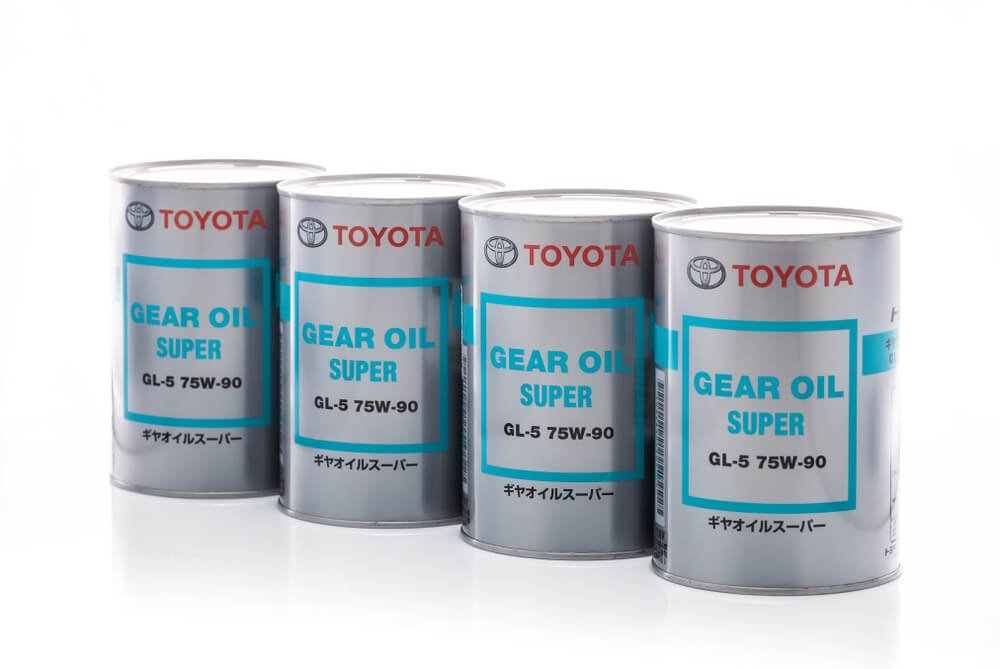
75W80 and 75W90 oils differ in viscosity at operating temperature: 75W90 is thicker at 100°C, while 75W80 is thinner. At low temperatures, both oils perform equally well, as they share the same winter rating of 75W. In practice, manufacturers of many new manual transmissions recommend 75W80, while 75W90 is more commonly used in transmissions and axles with higher loads. The vehicle manufacturer's specifications, not the number on the label, are decisive.
To sum it up
- The same winter class: «75W» means the same requirements for frost resistance for both oils (up to -40°C according to the SAE J306 standard).
- Different viscosity at 100°C: for class 80 - from 8.5 to less than 11.0 mm²/s, for class 90 - from 13.5 to less than 18.5 mm²/s.
- 75W80 oil reduces resistance and makes gear shifting easier, and 75W90 oil Forms a thicker oil film under high loads.
- Not only viscosity is important, but also the API quality class (GL-4, GL-5) and car manufacturer standards .
What do 75W80 and 75W90 mean?
The viscosity of transmission oils is described by the standard SAE J306 . Both oils are all-season , so the designation consists of two parts:
- 75W - This is winter oil (W stands for "« winter"» ). According to the SAE J306 standard, the viscosity of 75W oil must reach 150,000 mPa s only at temperatures no higher than -40°C. This allows it to remain sufficiently fluid when starting the engine in freezing conditions. In this regard, 75W80 and 75W90 oils are also considered "winter" grades.
- 80 or 90 - this is the summer class, that is, the kinematic viscosity at 100 °C . This is the whole difference between these oils.
Transmission oil viscosity grades are not comparable to motor oil viscosity grades. A 75W90 transmission oil is only a few times thicker than a 5W30 motor oil, and the numbers in both standards (SAE J306 and SAE J300) mean different things.
The difference in viscosity is 75W80 and 75W90 in numbers.
According to the 2019 revised SAE J306 standard, grade oil 80 has a kinematic viscosity of 8.5 to less than 11.0 mm²/s (cSt) at 100°C. Class oil 90 has a kinematic viscosity from 13.5 to less than 18.5 mm²/s. Between them lies grade 85 oil (from 11.0 to less than 13.5 mm²/s), which is why 75W85 oils are also available on the market.
Therefore, warmed up 75W90 oil is much thicker . It creates a thicker lubricating film between gear teeth and bearings, which helps under high loads and high operating temperatures. Oil 75W80 creates less resistance , so the transmission loses less energy "mixing" the oil, and gear shifts are smoother, especially before the transmission warms up. Automakers choose thinner oils, in part to reduce friction losses.
Comparison Chart: 75W80 vs. 75W90
| Characteristic | 75W80 | 75W90 |
|---|---|---|
| Winter Course (SAE J306) | 75 W: 150,000 mPa s at ≤ -40°C | 75 W: 150,000 mPa s at ≤ -40°C |
| Viscosity at 100 °C | from 8.5 to <11.0 mm²/s | from 13.5 to <18.5 mm²/s |
| Density in the workplace | Rarely | Thicker |
| Resistance in the box | Less | More |
| Cold shift | Usually lighter | It might be a little more difficult to warm up. |
| Typical use | Manual transmissions are found in many modern passenger cars | Heavy-duty transmissions and axles, delivery vans, SUVs. |
| Quality classes | Commonly labeled as GL-4, GL-5, or GL-4/GL-5 | Commonly labeled as GL-4, GL-5, or GL-4/GL-5 |
GL-4 or GL-5 is the second important difference on the label.
Besides viscosity, you should also check API quality class . Oil GL-4 Designed for medium-duty transmissions such as typical manual transmissions with synchronizers. GL-5 Contains more extreme pressure additives and is used for transmissions operating under severe conditions, such as hypoid gears in axles.
GL-5 oil isn't always "better" than GL-4. Some transmissions require GL-4 oil because the different additive package can impair synchronizer performance. There are also oils labeled GL-4/GL-5 , approved for both types of application. Therefore, two 75W90 oils can be suitable for different transmissions.
75W80 or 75W90 – which oil to choose?
- Start with the manufacturer's manual or catalog . They indicate viscosity, API grade, and often a company standard, such as the VW, PSA, or Ford specification number. Look for oil that meets or is approved for this standard.
- Don't just change oil brands. A thicker 75W90 oil in a transmission designed for 75W80 may make shifting difficult, especially in winter. A thinner oil in a transmission requiring 75W90 may provide less protection for gears and bearings under high loads.
- The drive shaft is different from the gearbox. In rear-wheel drive or all-wheel drive vehicles, the shaft often requires a different oil (such as 75W90 GL-5) than the transmission.
- For automatic transmissions, DSG and CVT Completely different fluids are required (ATF, DSG/CVT fluids). 75W80 and 75W90 fluids are not suitable for them unless the manufacturer specifically specifies them for a specific unit.
- If in doubt, contact an authorized service center or a reputable repair shop. The cost of an oil change is minimal compared to the cost of a transmission repair.
Frequently Asked Questions (FAQ)
Can I use 75W90 oil instead of 75W80?
Only if the vehicle manufacturer allows the use of both viscosity grades in a given transmission. In a transmission designed for 75W80 oil, a thicker oil may make shifting difficult, especially in winter. It's safest to stick to the specifications in the owner's manual.
Which oil is thicker: 75W80 or 75W90?
The 75W90 slurry has a higher viscosity at operating temperature: its viscosity at 100°C is from 13.5 to less than 18.5 mm²/s, compared to 8.5 to less than 11.0 mm²/s for the 80 grade. At low temperatures, both slurries meet the same requirements of the 75W grade.
Can you mix 75W80 and 75W90 oils?
The transmission is filled with oil that meets the manufacturer's specifications. Mixing oils of different viscosities and qualities results in oil with unpredictable properties. It's best to use the same product when topping up and replace the entire oil during a change.
Is 75W90 oil better than 75W80?
In general, there is no best oil; there is only the right oil for a specific transmission. 75W90 oil performs better in transmissions designed for higher loads, while 75W80 oil performs better in transmissions designed for thinner oil and lower friction.
What does the letter W mean in oil marking?
The letter W comes from the English word "winter" and denotes the winter grade. The number before the W (here 75) describes the oil's behavior at low temperatures, and the number after the hyphen (80 or 90) indicates its viscosity at 100°C.
See also
- What is the difference between 5w30 and 5w40 oils?
- What is the difference between 5w40 and 10w40 oils?
- What is the difference between 2T and 4T oil?
- What is the difference between synthetic and semi-synthetic oil?
- What is the difference between the M32 and F40 gearboxes?