

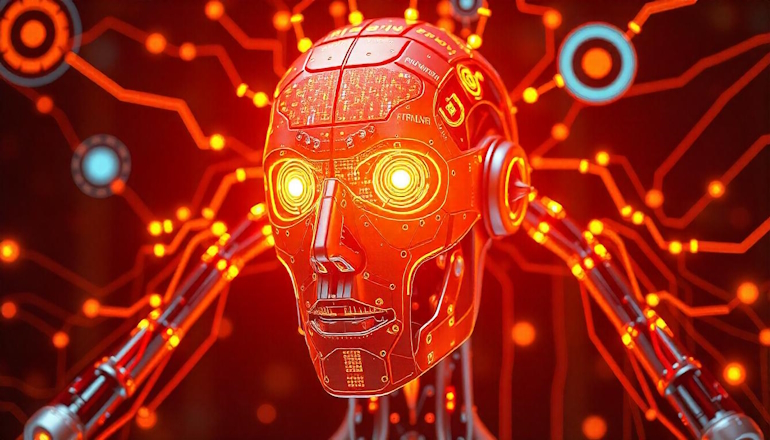
Artificial Intelligence (AI) — is a system that imitates human intelligence by performing tasks such as learning, language comprehension, decision making, and even self-correction.
AI is applicable across a variety of industries, from medicine to transportation, making it one of the most important technologies of the 21st century. At the core of AI are algorithms and models that enable systems to perform tasks that require intelligent decision-making. To better understand how AI works, it's necessary to examine the key technologies and mechanisms behind its development.
In simple terms
Artificial Intelligence (AI) It works like a smart program that learns from large amounts of data. Imagine showing a child lots of pictures of cats and dogs. Over time, they'll learn to distinguish between them. It's the same with AI: it's shown lots of examples (data), and it finds patterns to solve problems.
For example, AI can recognize faces in photos, suggest recipes based on your preferences, or help you find the right products in online stores. This is all thanks to AI analyzing data and drawing conclusions by learning from examples.
Basic elements of AI work

The core elements of AI include machine learning algorithms, neural networks, big data, and process automation. Machine learning allows AI to learn from given data and make predictions or inferences. Neural networks, inspired by the human brain, handle complex tasks such as image and speech recognition. Big data is essential for effectively training models, providing them with rich information for analysis. Automation helps AI speed up routine tasks, significantly increasing efficiency across various industries. Let's take a closer look:
- Machine learning
Machine learning (ML) is a core AI technology that enables computers to learn from data and improve over time without explicit programming. ML uses specialized algorithms that analyze massive amounts of data, identify patterns, and make predictions. Algorithms can range from simple linear models to complex neural networks. For example, when a system predicts the weather or recognizes images, it analyzes previous examples to identify patterns. The more data fed to the system, the more accurate the predictions or results will be. - Neural networks
Many modern AI systems are based on artificial neural networks. These networks simulate the functioning of the human brain, which consists of many neurons, each processing specific data. In artificial neural networks, information passes through layers of "neurons," with each layer processing the information at a deeper level. This is especially important for tasks such as image and speech recognition. An example of the use of neural networks is a facial recognition system. It analyzes an image, breaking it down into pixels, and through multiple layers of neurons, determines which facial features match the person in the photograph. - Natural language processing (NLP)
AI can also understand and process human language. This approach is called Natural Language Processing (NLP). Using NLP, AI systems can analyze text, understand the meaning of what's written, and even generate meaningful responses. NLP is actively used in chatbots, translators, and voice control systems. For example, voice assistants like Siri or Google Assistant process natural language commands, interpreting user requests and offering appropriate responses. - Deep Learning
This subset of machine learning is based on deep neural networks and allows the system to learn on more complex data. Deep learning is used for complex tasks such as self-driving cars, medical image analysis, or speech recognition. Unlike traditional machine learning, which requires pre-processing of the data, in deep learning the network itself identifies key features and makes predictions based on them. One example is teaching AI to play games such as chess. The system learns from a large number of games, analyzes moves, and improves its strategy with each new game.
Specific examples
Artificial intelligence is widely used in various fields. In healthcare, AI aids in diagnosing diseases by analyzing medical images and patient data. In finance, AI optimizes processes, predicts market trends, and reduces investment risks. In retail, machine learning technologies are used to personalize the shopping experience and manage supply chains. Autonomous vehicles also use AI for navigation and accident prevention. In the service industry, virtual assistants and chatbots improve customer service by providing 24/7 support.
- Autonomous cars
Autopilot systems like those in Tesla use AI to recognize the environment, make real-time decisions, and predict the movements of other road users. They analyze data from cameras, radar, and other sensors to build a model of what's happening on the road and make safe decisions. - Medicine and diagnostics
Doctors use AI to analyze medical images and detect pathologies. For example, AI systems can analyze X-rays and detect tumors at early stages. This helps improve diagnostic accuracy and reduce the risk of human error. - Financial forecasts
AI is actively used in the financial sector for market analysis, stock price forecasting, and even fraud prevention. Systems are trained using past transaction data to identify suspicious transactions and reduce the risk of loss.
Conclusion
Artificial intelligence relies on data analysis and algorithms that enable machines to learn, make decisions, and evolve. Machine learning, neural networks, and deep learning are key components that enable AI to solve complex problems, from self-driving cars to medical diagnostics. Although AI lacks consciousness in the human sense, it can perform intelligent tasks with high accuracy and efficiency, making it an indispensable tool in various industries.