

The famous Japanese proverb, «Fall down seven times and get up eight,» applies to many successful people who founded brands we all know today. The founders of such well-known brands as IKEA, PayPal, Wikipedia, and Facebook have little-known stories that nonetheless contributed to their success. Their paths are fascinating. Here's a list of facts you might not know about the founders of famous brands. Read on.
1. Wendy's restaurant chain founder Dave Thomas feared that children might perceive his success as a reason to drop out of school. So, decades later, he returned to high school to earn his GED.
Setting a good example was important to Dave Thomas. The Wendy's fast-food chain, synonymous with burgers, first opened in Ohio in 1959. Thomas, the chain's founder, worked closely with Colonel Sanders of KFC for a year before opening Wendy's, an experience that proved invaluable. Thomas, who never knew his mother, was adopted by Rex and Auleve Thomas when he was just six weeks old. He spent most of his childhood with his grandmother, Minnie Sinclair, as his adoptive mother died when he was only five years old, and his father spent much of his time traveling. From his grandmother, he learned several invaluable lessons that would serve him well in his future business ventures.
At 15, Thomas decided to drop out of school and work full-time in a restaurant, choosing to stay in Fort Wayne, Indiana, rather than move with his father. But he would later call this the biggest mistake of his life. In 1993, having become a successful businessman, he decided he didn't want to be a role model who taught that skipping school was okay. So he returned to school and earned his General Education Diploma (GED). When Thomas enrolled at Coconut Creek High School to earn his GED, he was 59 years old. (source)
2. Ingvar Kamprad, the founder of IKEA, was a frugal man. He drove an old 1933 Volvo 240. When he ate at restaurants, he regularly took salt and pepper packets with him. At home, he reused tea bags. At the time of his death, his net worth was $58 billion.

Frugality and simplicity—that's the philosophy followed by Ingvar Kamprad, the founder of IKEA. A private man, he wrote a manifesto about his views in 1976, titled «The Last Testament of a Furniture Dealer.» In the book, he discussed his frugality and wrote, «We avoid luxury hotels not only for the sake of economy. We don't need fancy cars, impressive titles, uniforms, or other status symbols. We rely on our own strength and our own will!»
In an interview with the Swiss television channel TSR, Kamprad revealed that he always flew economy class and drove a 1993 Volvo 240. He also said he recycled tea bags, hid salt and pepper packets in restaurants, and asked IKEA employees to use both sides of paper. He was known to buy Christmas paper and gifts at post-Christmas sales. The Swedish businessman's IKEA is known for its focus on cost control, and this practice has allowed the company to gradually reduce prices by 2-3%, benefiting its customers. (source)
3. Theo Albrecht, founder of the Aldi discount store chain, was kidnapped and held captive for 17 days while he negotiated a ransom. He later secured a tax deduction for the ransom payment, claiming it as a business expense.

Theo Albrecht and his brother Karl transformed their mother's small shop into the successful Aldi empire, with over 8,000 stores worldwide. In 2010, their combined wealth was estimated at $40 billion. Known for their reclusiveness, the German brothers almost completely ignore the media, which further heightens public interest in their lives. Their self-imposed isolation intensified in 1997, the year Theo was kidnapped.
Theo was returning home from work when two men, one a convicted robber and the other a lawyer with massive debts, demanded his identification after kidnapping him because of the clothes he was wearing. His casual attire did not reflect his status or success. Theo negotiated a ransom and secured his release after 17 days in captivity. He paid $2.2 million for his release. After his release, Theo declared these expenses as business expenses and claimed tax benefits. After this, Theo never spoke to the media again and tried to avoid being photographed. (source)
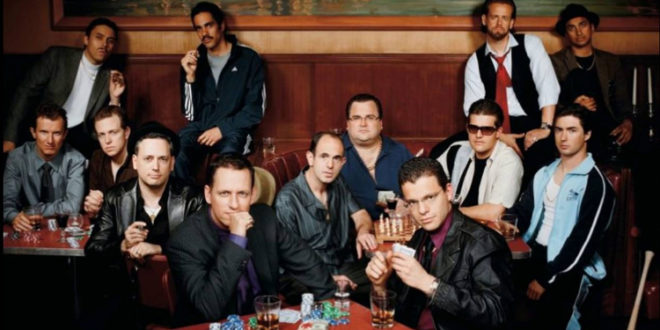
4. The PayPal Mafia: The original group of PayPal founders and employees who went on to achieve massive success and founded numerous tech companies such as Tesla, YouTube, SpaceX, LinkedIn, Yelp, and Founders Fund, to name a few.

«X.com» was PayPal's pre-renaming name, when it was simply a money transfer service offered by Confinity. In 2002, eBay acquired PayPal, and the company's founders struggled to adapt to eBay's traditional corporate culture. Within four years, all but 12 of the original 50 employees and founders had left. They stayed in touch, and some of them co-founded companies that later became major players in the tech industry. Seeing their incredible success, the term «PayPal Mafia» was coined to describe them.
Peter Thiel, co-founder of PayPal, later founded Founders Fund. Elon Musk, founder of X.com, created companies such as Tesla Motors, SpaceX, The Boring Company, and others. Roelof Botha, PayPal's CFO, founded Sequoia Capital. Stephen Cheyne, a PayPal engineer, co-founded YouTube. Reid Hoffman, executive vice president, founded LinkedIn and was an early investor in Facebook, Flickr, Zynga, and many other companies. Russell Simons, another PayPal engineer, founded Yelp. Many other PayPal employees went on to create successful businesses, most of whom became billionaires. (source)
5. To avoid paying $700 million in taxes, Eduardo Saverin, co-founder of Facebook, allegedly renounced his US citizenship.
In September 2011, one of Facebook's co-founders, Eduardo Saverin, renounced his US citizenship. His actions sparked controversy, as it was alleged he did so to avoid paying capital gains taxes on $700 million. However, Saverin denied this accusation and stated that he was renouncing his US citizenship because he was «interested in working and living in Singapore.».
Saverin met Mark Zuckerberg at Harvard during his third year, and Zuckerberg during his second. The relationship between Mark Zuckerberg and Eduardo Saverin has been strained since they sued each other in 2012. Saverin claimed Zuckerberg spent Facebook money on «personal summer expenses,» and Facebook, in turn, sued Saverin for invalid stock purchase agreements. These suits were settled out of court. (source)
6. Billionaire Uber founder and CEO Travis Kalanick has been claimed to be the second-best Wii Tennis player in the world.

Travis Kalanick, the founder and CEO of Uber, has found himself at the center of a controversy over claims that he is the second-best Wii Tennis player in the world. Uber's website previously featured a short bio about him that stated: «...has the second-highest Wii Tennis score in the world. Game, set, match.» The controversy erupted when Lowercase Capital founder and Uber investor Chris Sacca recounted how his father lost to Kalanick in the game, and how Kalanick subsequently found himself tied for second place in the global Wii Tennis rankings.
Kyle Orland of Ars Technica, author of a book about the Wii, claimed that Wii Sports doesn't have an online leaderboard. What was called «Wii Tennis» could have been «Grand Slam Tennis,» a game that did have an online leaderboard. But this was highly unlikely. Ars Technica claims that «Wii Tennis,» which was actually part of «Wii Sports,» did have an offline leaderboard comparing the player's scores with those of AI opponents. To take second place, Kalanick needed to score 2399 out of 2400 points, which was extremely difficult. Whether this is true or not remains a mystery. (1,2)
7. The founders of the famous ice cream company Ben & Jerry's took a five-dollar correspondence course to learn how to make ice cream. One of them failed to get into medical school, and the other couldn't sell enough ceramics to make a living.

Ben and Jerry met at the gym when they were in seventh grade. They were the slowest students in their class and remained friends. Jerry, who dreamed of going to medical school, failed to do so, and Ben dropped out of college to pursue pottery, which also failed. They decided to start a business together and realized it had to be food-related. With only $8,000 between them, they narrowed their choices to two options: bagels or ice cream. They couldn't afford a bagel business, so they chose ice cream.
How Did They Learn to Make Ice Cream? From Wendell S. Arbuckle's book «Ice cream» and a five-dollar correspondence course from Pennsylvania State University. They bought a few instructional brochures for a few cents to learn more about the ice cream-making process. They worked all week, sometimes sleeping in their industrial freezers. They opened their first store in a renovated gas station in Burlington, Vermont. Their hard work paid off, growing it into a $300 million business. (source)
8. Disney founder Walt Disney and the man who bought, popularized, and «founded» McDonald's, Ray Kroc, both served in the same sanitation unit during World War I and knew each other.

Ray Kroc, the self-proclaimed and controversial «founder» of the famed fast-food chain McDonald's, acquired the company from Richard James and Maurice James McDonald, who had founded the restaurant in San Bernardino, California. Kroc expanded the chain first nationally and then globally. Kroc saw a more promising vision for the restaurant and, after its success, began calling himself «the founder.».
Ray Kroc trained as an ambulance driver in South Beach, Connecticut, for service in the Ambulance Corps during World War I. Another young man named Walter Elias trained with Kroc. Walter Elias is now known to the world as «Walt Disney,» the founder of the Disney Company. They both lied about their ages to join the Ambulance Corps (the minimum age for enlistment was 17—Disney was 16 and Kroc was 15), and Kroc often saw Walter drawing in his spare time. Kroc addressed Disney as «Diz» and called him «an odd duck... whenever we went into town to pick up girls, he'd stay at camp and draw.» Neither of them knew then what fate awaited them, or that they would achieve phenomenal success and become famous worldwide. (1,2)
9. Gary Kremen, the founder of Match.com, lost his girlfriend to a man he met on Match.com.

Gary Kremen, credited with inventing online dating, founded Match.com in 1993. He noted that he designed the site with women in mind. Kremen once said, «You should design the entire system for women, not men. Who cares what men think? So things like safety and anonymity were important. And little things, like discussing body types rather than weight. Never ask a woman her weight.».
Kremen realized his idea was a success when his own girlfriend left him for a man she met on the site. This story is widely used in discussions of online dating. Since 1993, Kremen has been a business angel and has invested in over 100 companies. (source)
10. Wikipedia co-founder Jimmy Wales is worth only about a million dollars.

Wikipedia, the online encyclopedia known online as the «sum of all knowledge,» is not a commercial enterprise, and its founder, Jimmy Wales, also known as «Jimbo,» would like to maintain that status. As of 2014, his net worth was estimated at just $1 million, a surprise to many given Wikipedia's success and popularity.
Jimmy Wales, a member of the Wikimedia Foundation's board of directors, was named a Wikimedia Foundation member in 2006. Time on the list of «100 most influential people in the world.» When The Guardian newspaper I asked him why people talk so much about him not being a billionaire, and he replied, «It's true, I'm not a billionaire. So what? You're not a billionaire either, and neither are most people. It's pretty stupid to keep saying that.». (source)