

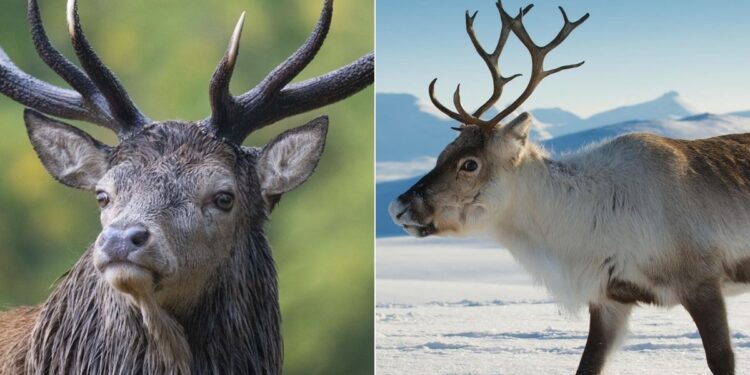
Reindeer, native to the cold northern regions, attract attention not only for their magnificent appearance but also for their unusual characteristics and cultural significance. These amazing animals have been the subject of legends, found their place in mythologies, and played an important role in the lives of people throughout history. So, are you ready to discover the unknown sides of these special creatures? Let's explore some fascinating details—from reindeer names to stories about how they pull Santa's sleigh. Here are some facts about reindeer...
1. Deer have many names.
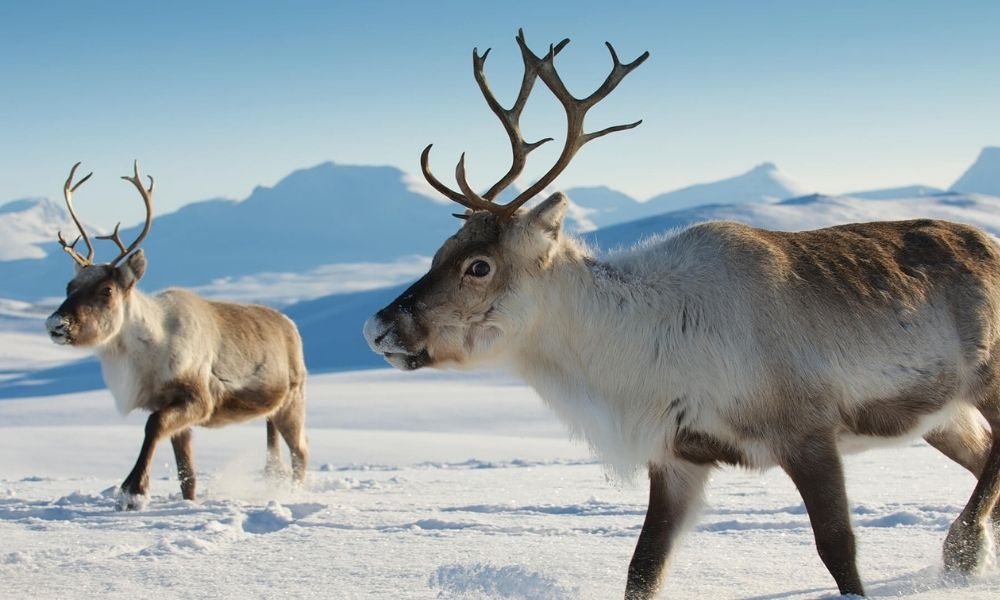
The names given to reindeer reflect their history and cultural origins. In Old Norse, the reindeer was called hreindyri. This name comes from a combination of the words "hreinn" (reindeer) and "dyr" (deer). Another interesting fact is that the Mi'kmaq word "kaleboo" is used to describe reindeer in Canadian French. The word means "rake," referring to the reindeer's habit of scraping snow to find food.
2. Santa's reindeer may belong to the Svalbard subspecies.
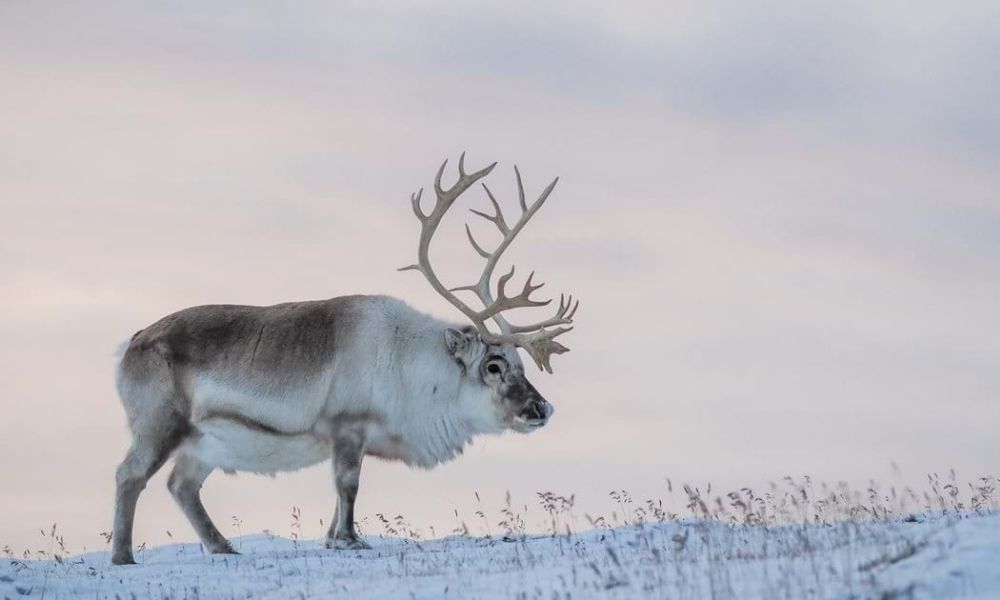
Clement S. Moore's 1823 poem "A Visit from St. Nicholas" introduced the world to Santa's reindeer. The poem describes these animals as "little." Indeed, the Spitsbergen subspecies, called Rangifer tarandus platyrhynchus, is much smaller than other reindeer species. This species weighs half as much as the average reindeer, has shorter legs, smaller antlers, and thick, fluffy fur. These features may make it easier for Santa to navigate rooftops. However, in films and animated films, larger and more impressive reindeer are often favored over this smaller species.
3. Their gender may be difficult to understand.
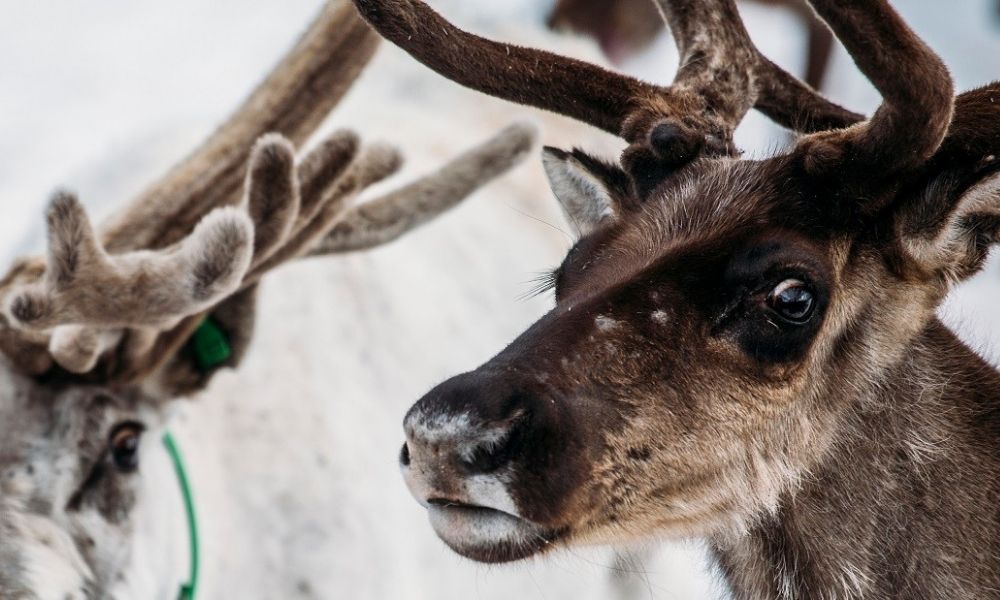
Generally, antlers are considered a distinguishing feature of male deer. But stags are an exception! Most females also have antlers. So how can you determine a deer's sex? Male reindeer shed their antlers in late winter or spring, while females do so in summer. Therefore, depending on the season, you can determine a deer's sex by its antlers.
Some Slow Their Heart Rates! Strategies Animals Use to Survive the Winter Season
4. So Santa's reindeer were female?
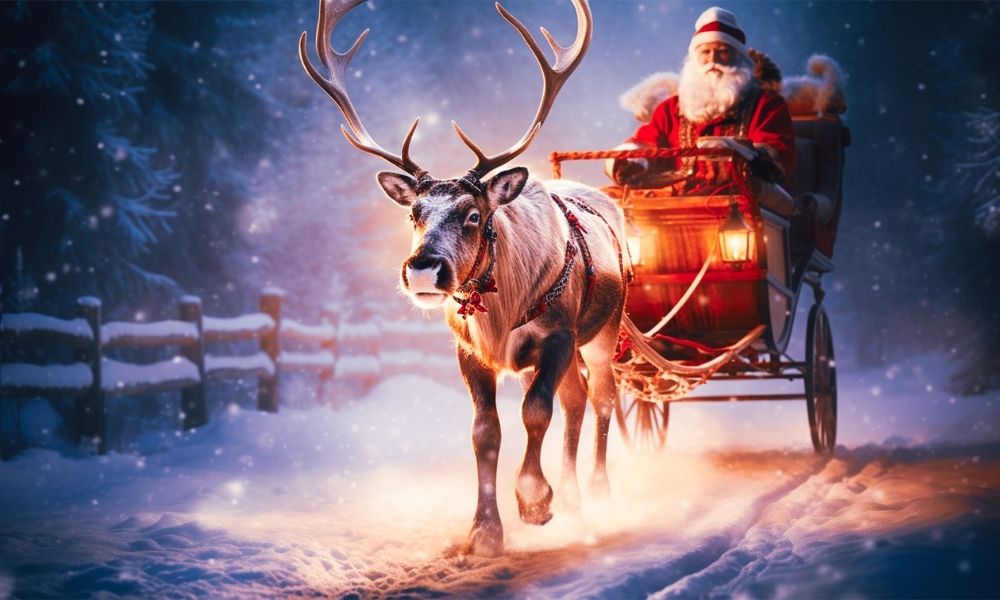
The reindeer pulling Santa's sleigh are always depicted with antlers. However, older male reindeer lose their antlers in December. In this case, Santa's reindeer are either young males or females!
5. The connection between reindeer and Santa Claus was established through a poem
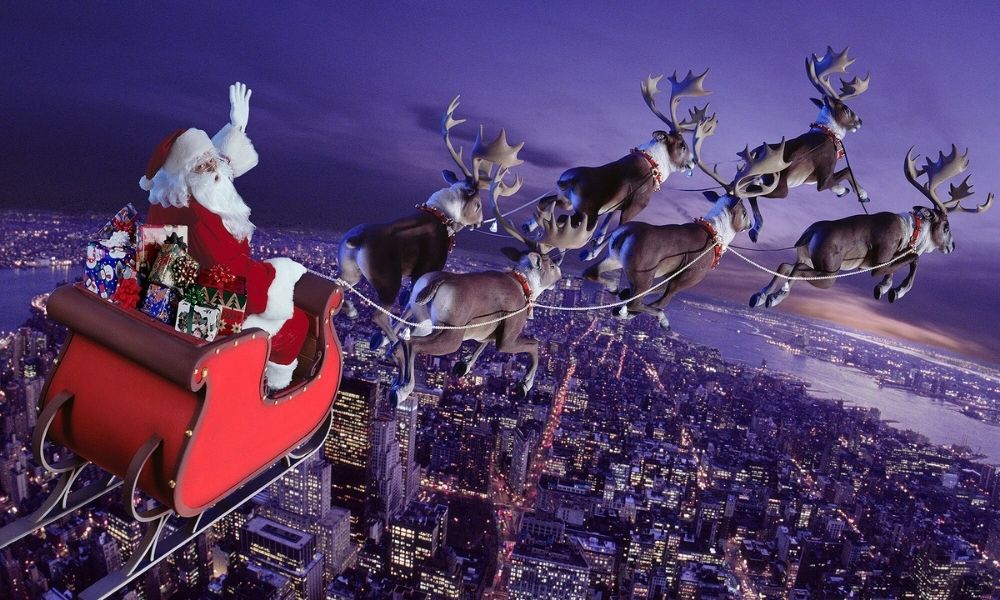
The association of reindeer with Santa Claus became popular solely because of a poem. Clement S. Moore's "A Visit from St. Nicholas" features eight reindeer named Dasher, Dancer, Prancer, Vixen, Comet, Cupid, Dunder, and Blixem. Dunder and Blixem were later changed to the German "Donner" (thunder) and "Blitzen" (lightning).
6. They are able to see ultraviolet light.

Another interesting fact about reindeer! These beautiful creatures are the only mammals capable of seeing ultraviolet light. While the human eye perceives wavelengths of light ranging from 400 to 700 nanometers, reindeer can perceive ultraviolet light up to 320 nanometers. This provides them with a crucial survival advantage, especially in Arctic regions. In the snowy tundra, white furred animals can see objects that are normally difficult to spot, such as urine, in high contrast, making it easier to hunt and defend against threats. Just as reindeer see the glow of an object under ultraviolet light, they can clearly see details thanks to ultraviolet light.
7. They evolved to withstand cold climates.
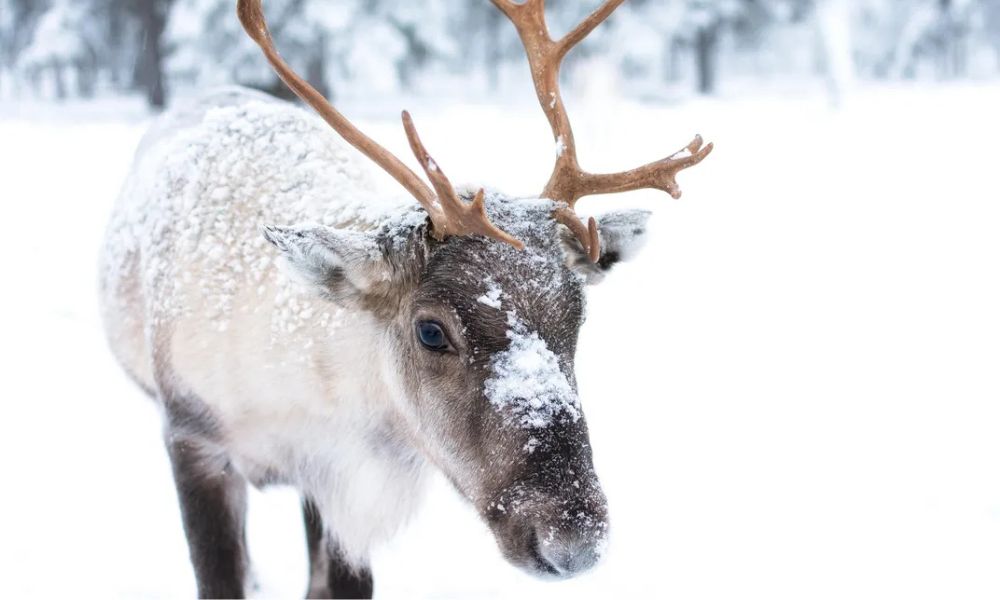
The body structure of reindeer has evolved to adapt to the harsh tundra conditions: their noses warm the air they inhale, preventing it from damaging their lungs. Furthermore, moisture in their noses condenses, protecting the mucous membranes from drying out. Their fur provides excellent insulation thanks to its air-trapping structure. This feature allows them not only to withstand the cold but also to migrate by swimming in water. Their hooves adapt depending on the season. In summer, they become softer, providing additional traction on wet surfaces, and in winter, they harden, revealing edges that prevent slipping on snow and ice.
From Crabs to Horses: 11 Places Where Different Animal Species Rule
8. Reindeer are champions of migration.
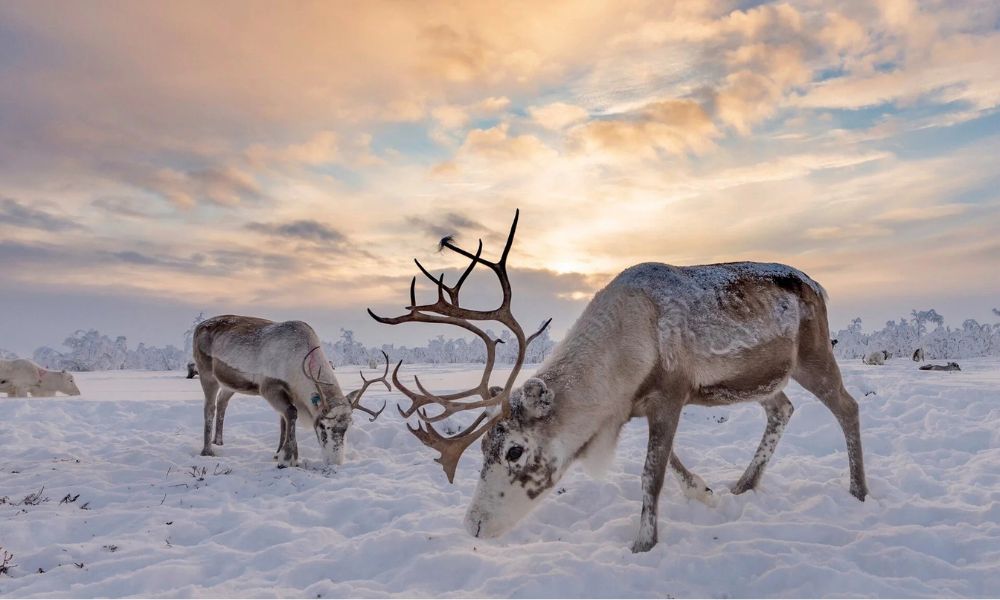
Reindeer are migratory creatures, covering incredible distances. Some populations, particularly in North America, can travel up to 5,000 km per year. Although they travel at an average speed of 37 km per day, when necessary, they can run at 80 km per hour and swim at about 10 km per hour.
In spring, flocks can form huge aggregations of 50,000 to 500,000 individuals, while in winter, during the mating season, these groups become smaller. Newborn cubs adapt with amazing speed; they begin running within 90 minutes of birth!
9. They are important in many indigenous cultures.
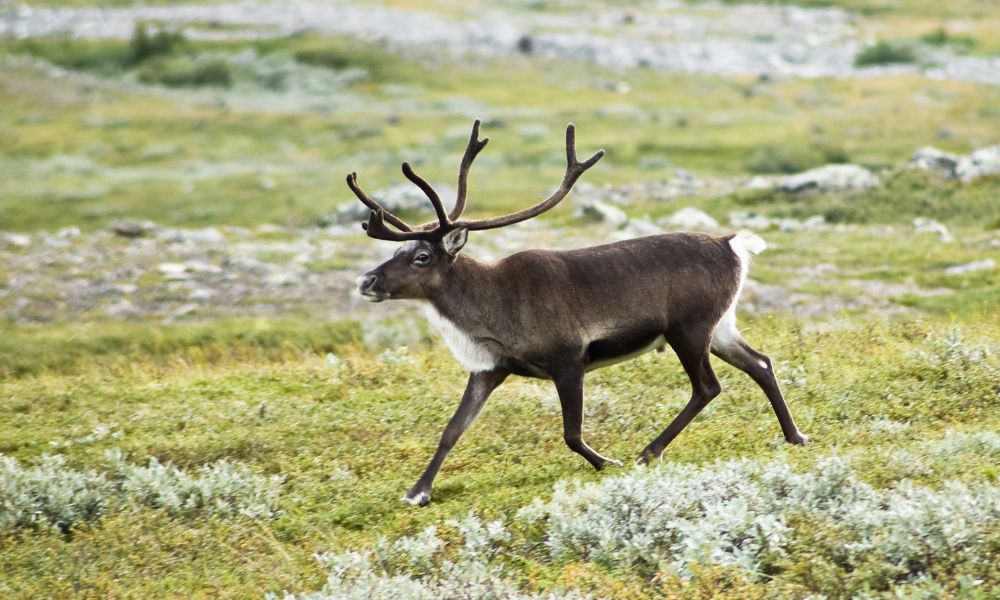
For thousands of years, reindeer have been a vital resource for indigenous peoples living in the north. In Scandinavia and Canada, from the Stone Age to the present day, reindeer have been a primary source of hunting, food, and clothing. Archaeological finds, particularly in Norway, such as old trapping pits and guide fences, demonstrate the importance of this animal to people. Since reindeer meat is almost entirely edible, it is an integral part of many traditional recipes. It is sold in markets fresh, dried, or canned. The Inuit people of North America use reindeer for many purposes, including producing food, clothing, shelter, and tools.
10. They used to live further south.
We've reached the end of our article on reindeer facts. Although today they are found only in areas near the North Pole, during the Pleistocene era they inhabited much further south. Their range stretched from Nevada to Spain. However, due to climate change and human impact, their habitat has significantly diminished. The last caribou from the United States were relocated to Canada as part of a conservation program in 2019.
Share your opinion in the comments!