

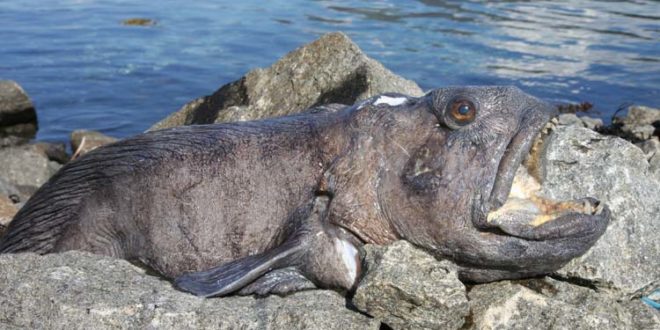
Some of the most amazing creatures on Earth live deep underwater, and the wolffish is another example of this. Besides its unusual appearance, wolffish possess many unique characteristics that set them apart from other fish species found in the same waters. Here are ten interesting facts about wolffish that you probably didn't know and should be of interest.
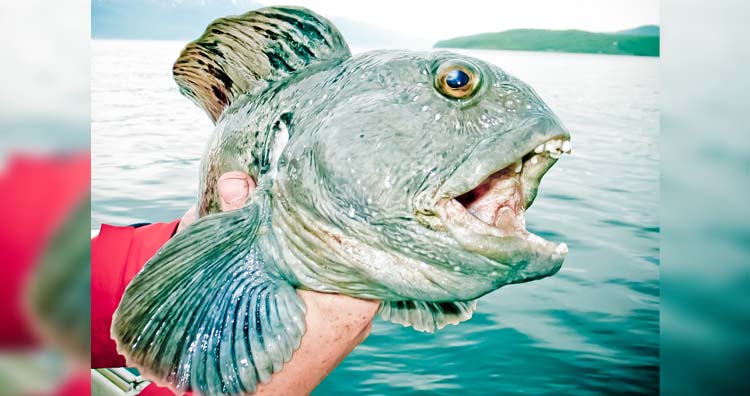
1. Although the wolffish isn't particularly attractive, it has a very distinctive appearance. It also gets its name from its large, fang-like teeth.
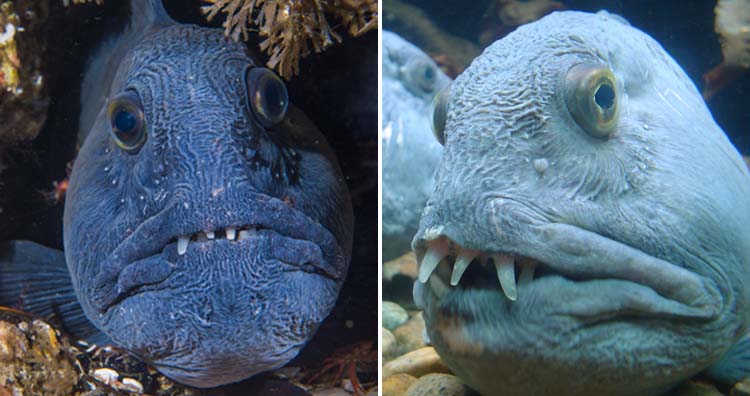
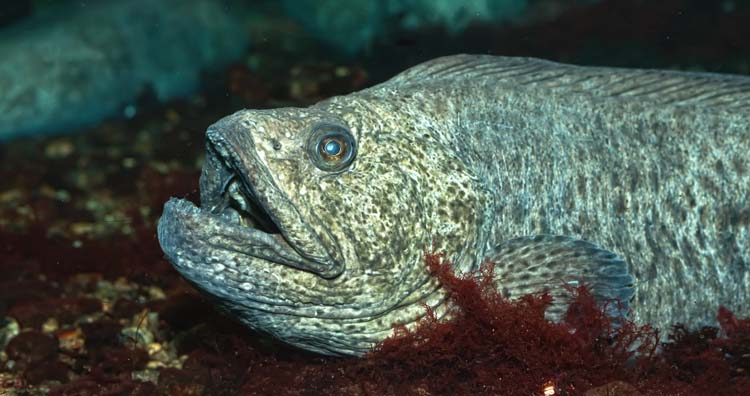
Many would agree that wolffish have a face only a mother could love. While physical characteristics vary slightly from species to species, some traits are common to all. For example, they are large fish, with the largest species reaching 7.5 feet in length.
They also have a large head, a tapering body, a thin tail, and a single long dorsal fin. Wolffish lack pelvic fins, and the spines on their dorsal fin are not rigid. Instead, they are flexible at the tips. Although some minor color variations occur, wolffish are generally dull in color, with most individuals having a bluish-gray tint.
Perhaps the most remarkable feature of this fish is its mouth, armed with massive molars and large fang-like teeth. In the lower and upper jaws, wolffish have about six large, strong, conical fangs, and behind them, in the upper jaw, are three rows of crushing teeth. In fact, the name "wolffish" derives from its distinctive teeth. (1, 2)
2. There are five species of wolffish, belonging to two genera.
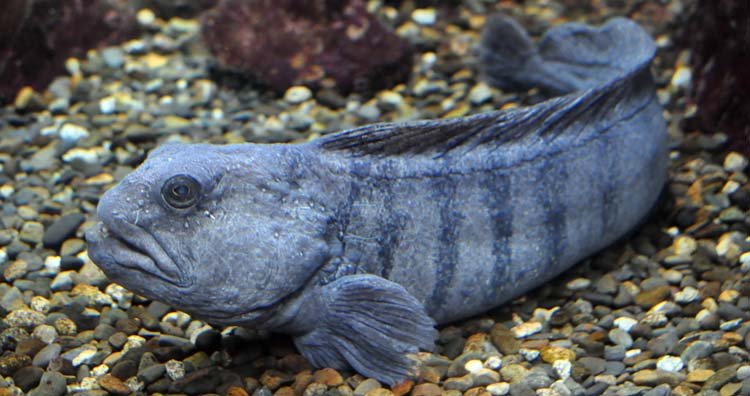
The wolffish belongs to the family Anarhichadidae , and there are three main species of wolffish: the North Atlantic wolffish, the Atlantic wolffish, and the spotted wolffish. However, there are actually five species of wolffish, divided into two genera. In the genus Anarchic four species: the northern wolffish, the Atlantic wolffish, the spotted wolffish, and the Bering wolffish. On the other hand, the fifth species, called the "toothfish," belongs to the genus Anarrhichthys . (1, 2)
3. The wolffish lives in the cold waters of the Pacific and North Atlantic Oceans.
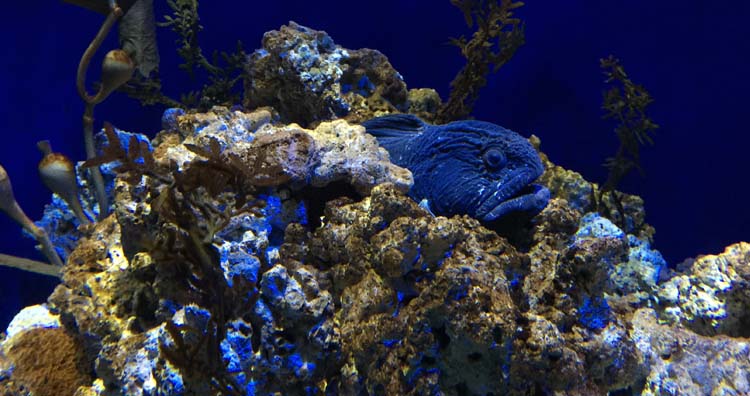
Wolffish prefer cool and cold waters and can be found at depths of 300 meters and sometimes deeper. The Atlantic wolffish and spotted wolffish are North Atlantic species, while the northern wolffish inhabits the Arctic Ocean and North Atlantic. The wolf eel, on the other hand, is found primarily in the eastern Pacific Ocean. Wolffish stay close to the bottom and primarily inhabit hard bottoms, while the northern wolffish appears to prefer both muddy and rocky surfaces. (1, 2)
4. Icelanders have a funny name for wolffish.
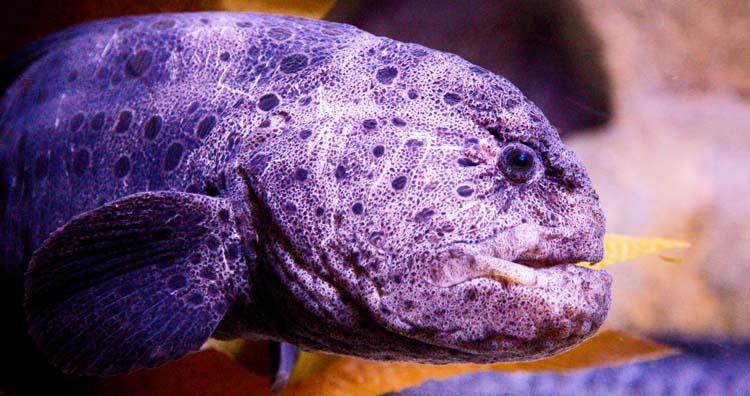
The Atlantic wolffish is found all along the coast of Iceland, where it has a curious name. Icelanders call it "steinbitur," meaning "stone eater." Although the wolffish doesn't actually eat stones, the name likely refers to its strong teeth and jaws, which easily crush the rock-like, hard shells of crustaceans.
5. Atlantic wolffish produce natural antifreeze.
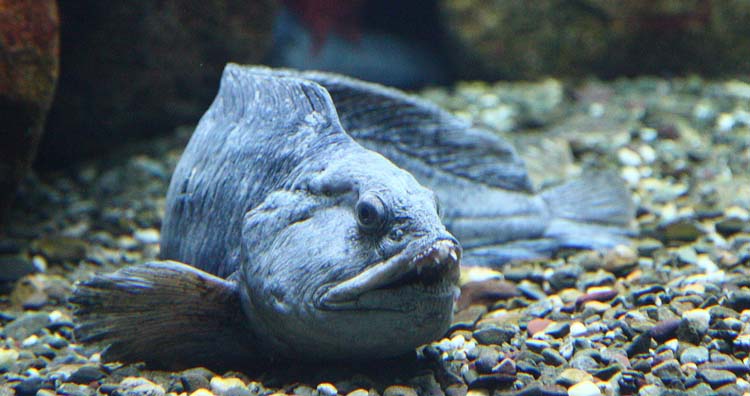
As mentioned above, wolffish prefer cold waters and are typically found in regions where water temperatures range from -1.2ºC to 10.2ºC. Naturally, the question arises as to how this fish survives in such icy waters. The Atlantic wolffish, which is at greatest risk of freezing, produces a natural antifreeze that maintains normal blood circulation. This species also secretes five times more antifreeze protein than its relatives. (1, 2)
6. Unlike most fish, wolffish mate through internal fertilization. The female wolffish lays large eggs, and both male and female guard them until hatching, a rare occurrence among fish.
The wolf fish is unique in many ways, but perhaps the most touching aspect is its method of reproduction. Most fish species spawn hundreds or thousands of eggs, after which the males fertilize them externally. The Atlantic wolf fish, by contrast, mates through internal fertilization, similar to mammals.
They don't simply release their eggs and abandon them. Male and female wolffish form pairs during the mating season, and the males remain in the nest to guard the eggs and protect the larvae for up to four months. They leave once the offspring are strong enough to become independent. This type of parental care is rare among fish. Even in public aquariums, Atlantic wolffish exhibit the same behavior. (1, 2)
7. Northern and Atlantic wolffish are voracious predators. They use their powerful jaws and sharp teeth to hunt and consume spiny or hard-bodied invertebrates. Their diet includes various starfish, sea urchins, and crabs.
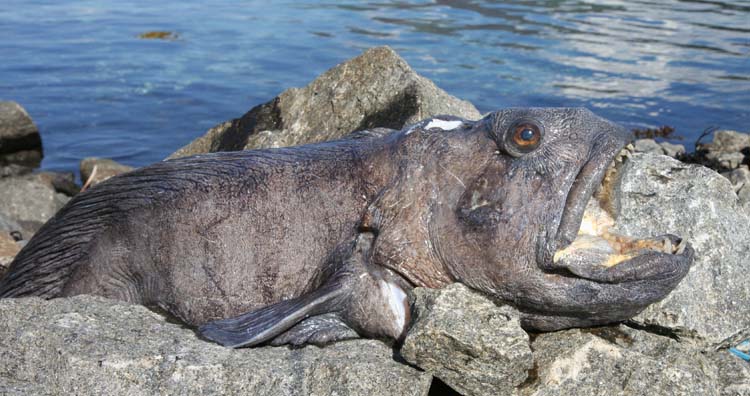
Both the northern and Atlantic wolffish have strong jaws and fearsome teeth. They use this fearsome combination to hunt. The Atlantic wolffish prefers to feed on hard-shelled mollusks, echinoderms, and crustaceans, but typically does not eat other fish. Its diet primarily consists of large gastropods, mussels, clams, sea urchins, starfish, and large hermit crabs. The northern wolffish is also a keen hunter and feeds on pelagic fish, crabs, sea urchins, and starfish. Occasionally, its diet includes other bottom-dwelling organisms. (1, 2)
8. Atlantic wolffish and catfish are known to be friendly to divers.
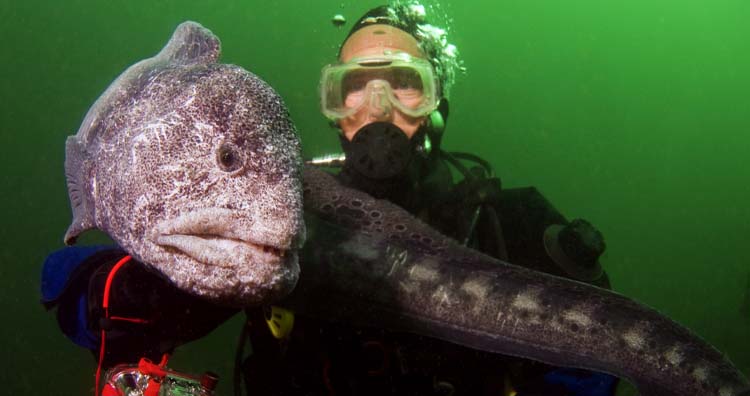
Wolffish are predominantly solitary creatures, forming pairs only during the mating season. Their appearance often makes them appear aggressive and even intimidating. However, wolffish do not actually attack humans unless provoked. The Atlantic wolffish and its Pacific relative, the wolf eel, are curious. In many cases, they have even approached divers and "cuddled" them. (1, 2)
9. They say that the taste of wolffish is similar to lobster.
European chefs have long considered wolffish a worthy alternative to flounder. In northern England, Atlantic wolffish fillets are used in fish and chips. Wolffish meat is known for its pearly white color, leanness, and firm texture. The meat also has a sweet flavor and is often reminiscent of lobster. (1, 2).
10. Currently, the wolffish population is under threat.
Wolffish play a vital role in the marine ecosystem. They control sea urchin and green crab populations, which, if left unchecked, can cause serious habitat disruption. However, factors such as habitat disruption, overfishing, and bycatch seriously threaten the survival of wolffish. The Atlantic wolffish is declining in numbers and is currently considered a "species of concern." The northern wolffish population is also rapidly declining, and this species is considered "endangered.". (1, 2)