


Cosmetic manufacturers offer many miracle products that can preserve youthful skin and make hair shiny and thick. Of course, such products aren't cheap. An alternative to expensive cosmetics can be found... in the refrigerator! Homemade cosmetics often have amazing results, just as effective as brand-name products from a reputable manufacturer. And not just as effective—sometimes they even outperform brand-name products.
At home, you can make a wide variety of cosmetic products:
- tonics,
- creams,
- masks,
- scrubs, etc.
The most popular cosmetic products are for facial skin care and hair care.
Sour cream, cosmetic clay, honey, and grated fruit can be used as a base for a homemade scrub. Natural coffee, sugar, ground nuts, oatmeal, and salt can be added as abrasive particles.

Face masks at home
The most commonly used ingredients in face masks are sour cream, honey, flour, olive oil, chicken eggs, lemon juice, raw and boiled potatoes, and apples.
Here is one of the most popular face mask recipes:
- Add a few drops of lemon juice to the white of one egg and beat the resulting mixture. Apply the mask to your face.
- After 10-20 minutes, a film will form on the face, which should be carefully removed with a damp cloth.
- Beat the yolk and apply to your face.
- After 15 minutes, rinse off the yolk with warm water.

Homemade decoctions and infusions
These products are excellent for washing. Decoctions are usually based on water and a variety of medicinal herbs. Sometimes milk is used instead of water. The technology for making homemade decoctions and infusions is simple.
Place the herbal ingredients in a saucepan. Then pour a glass of boiled hot water or milk over them. Cover the saucepan with a lid and set over low heat. Let it steep for 15 minutes to create an infusion; if you heat it for 30 minutes, it will become a decoction. Remove the saucepan from the heat and let it cool for 40 minutes. These decoctions and infusions can be stored in the refrigerator for 2-3 days.
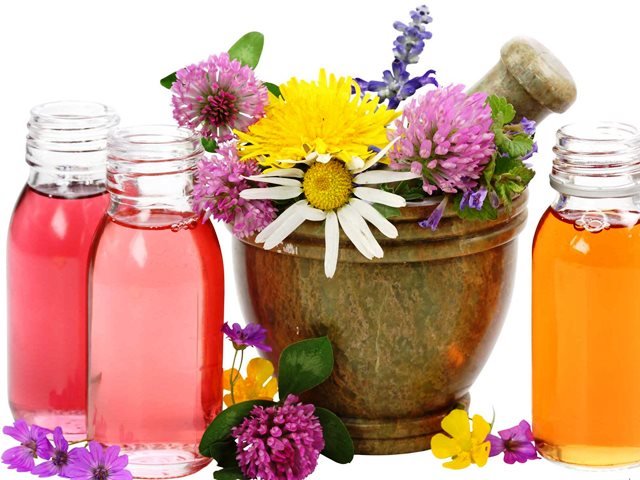
Cosmetic tinctures - tonic
This homemade cosmetic is used as an anti-inflammatory treatment for facial skin. To prepare the tincture, soak the medicinal plant in alcohol or vodka.
Classic recipe:
- The plant material is poured with vodka (in a ratio of 1:5).
- The mixture should be placed in a dark place for several weeks.
- It is advisable to shake the mixture several times a day.
- The finished tonic is filtered and stored in a glass bottle with a tightly closing lid.
DIY hair masks
Hair masks vary in their intended purpose and composition. Masks are classified as:
- to accelerate hair growth,
- against dryness;
- against split ends;
- against oiliness; for hair shine;
- for hair thickness.
Homemade masks for accelerating hair growth are the most popular. This is achieved by improving blood circulation.

For this purpose the following is used:
- pepper,
- mustard,
- onion juice,
- garlic,
- horseradish.
It's important to remember that these masks should only be applied to the roots, and it's recommended to moisturize the hair afterward (you can use oil). A yeast mask is also popular for hair growth.
The second most popular are masks for dry hair and against split ends. Split ends can't be cured (only trimmed), but they can be prevented. For this purpose, masks containing oils are used: burdock, castor, peach, olive, and sea buckthorn.
After using the oil, you will have to thoroughly wash your hair several times with shampoo, otherwise your hair will be greasy, which is not at all attractive.
Masks with salt, aloe, beer, nettle, gelatin, rye bread, cream, kefir, clay, yolk—the choice is limitless.
The main thing is to choose the right mask for your hair type.