

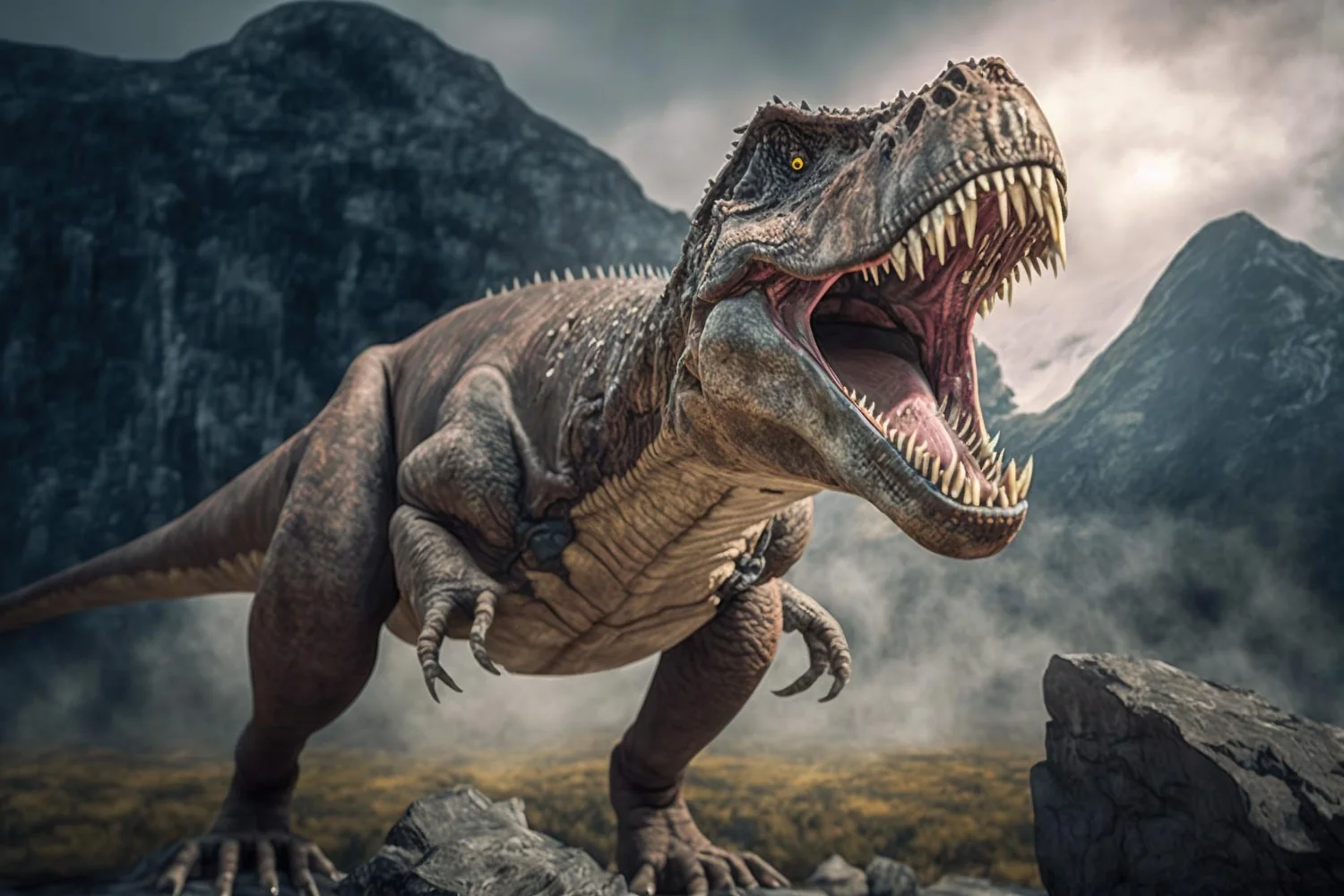
Tyrannosaurus rex, often simply called Tyrannosaurus rex, is perhaps the most famous dinosaur species to ever roam Earth. Living approximately 68–66 million years ago during the Late Cretaceous Period, this awe-inspiring creature captured the imagination of both paleontologists and the general public. Known for its enormous size, predatory nature, and popularity in pop culture thanks to films like Jurassic Park, Tyrannosaurus rex epitomizes our fascination with the prehistoric world. Let's delve into some intriguing facts about this magnificent dinosaur.
- The name Tyrannosaurus Rex is Latin for "tyrant lizard king.".
- Tyrannosaurus Rex lived in North America, and its fossils have been found in a wide variety of habitats, from forested river valleys to arid desert areas.
- It was one of the largest carnivorous dinosaurs that ever lived on Earth.
- An adult Tyrannosaurus Rex can reach 12 meters in length.
- The lifespan of Tyrannosaurus Rex was approximately 30 years.
- It is estimated that the Tyrannosaurus rex weighed up to 9 tons.
- The first Tyrannosaurus Rex fossils were discovered in Montana, USA, in 1902.
- It had one of the most powerful bites of any land animal in history.
- Despite its short legs, Tyrannosaurus rex could use them to lift approximately 200 kg.
- They had 50 to 60 thick, conical teeth up to 9 inches long.
- Tyrannosaurus rex's binocular vision was better than that of an eagle, meaning it could see prey from miles away.
- The bite force of a Tyrannosaurus rex is believed to have been equivalent to that of a medium-sized seated elephant.
- Despite its reputation, Tyrannosaurus Rex is thought to have been both a predator and a scavenger.
- The top speed of Tyrannosaurus rex is estimated to have been between 10 and 25 miles per hour (16 and 40 km/h).
- Tyrannosaurus rex's brain was twice as large as that of other giant carnivorous dinosaurs.
- The smallest Tyrannosaurus Rex specimens ever discovered were only half the size of the largest.
- Tyrannosaurus rex was the last known tyrannosaurid and one of the last non-avian dinosaurs to exist before the Cretaceous–Paleogene extinction event.
- The dinosaur maintained its body balance with the help of its long and heavy tail.
- Tyrannosaur fossils have been found with tooth marks belonging to their relatives, suggesting they may have been cannibals.
- Tyrannosaurus Rex's body mass exceeded that of an Asian elephant.
- The dinosaur's two-fingered forelimbs, although small compared to the rest of its body, possessed incredible strength.
- During its adolescent growth spurt, Tyrannosaurus Rex grew at an incredible rate of 2 kg per day.
- Tyrannosaurus's unusually wide skull allowed for larger jaw muscles and thus contributed to its enormous bite force.
- Many Tyrannosaurus rex fossils show signs of severe pathologies, including broken and fused bones and severe infections, indicating that they led a hard life.
- A well-preserved Tyrannosaurus rex specimen discovered in 2020 has been nicknamed "Stan" after the paleontologist who first discovered its remains.
- Tyrannosaurus Rex belongs to the group of theropod dinosaurs, which includes all carnivorous animals.
- Theropods, including Tyrannosaurus, are believed to have given rise to birds.
- Some Tyrannosaurus rex specimens have been found to have a covering of filament-like structures, suggesting that these creatures may have had primitive feather covering.
Tyrannosaurus rex is a captivating symbol of our prehistoric past, a colossal predator that ruled its ecosystem with a combination of strength and sophistication. Its enormous size, robust build, and ferocious nature have rightfully earned it the reputation of "king of the tyrant lizards." From its sophisticated hunting abilities to its potential cannibalistic tendencies, each new discovery about this fascinating creature adds to its enduring appeal. Tyrannosaurus rex will continue to capture our imaginations as we learn more about its biology, behavior, and role in Earth's prehistoric biodiversity.