

Between pollution, extreme weather, and other natural phenomena, climate can have a profound impact on us. This means it's quite easy for those who want to play on our primal fears or sow misunderstanding to spread lies. All the clickbait put out by the media or conspiracy theorists may be entertaining on a perverse level, but that doesn't make it true.
10. There has never been a serious shortage of honey bees.
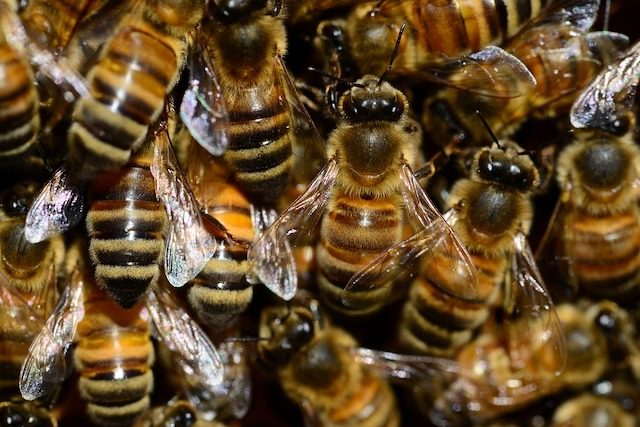
Several years ago, hysteria erupted across the news and on social media about the disappearance of bees. According to the breathless reports, if something wasn't done soon, all crops would perish, condemning us to a horrific death by mass starvation. Environmental groups used the news as a fundraiser, and many enthusiastic people with land decided to take up beekeeping as a hobby to help save the world.
While many of these people and agencies have the best intentions, the problem is that it's all nonsense. Since the 1990s, there have been scientific papers and concerns about pesticides, but the predicted damage simply hasn't materialized. It's true that beekeeping faces some challenges, such as diseases that regularly affect bees. However, there are more bees than ever, and the population is stable. The fact is, bees aren't as wild as some people think, and aren't even native to North America. They were brought here from Europe to produce honey and pollinate crops, but they are an artificially managed species, and they are very well managed. While all agricultural industries have their challenges, there's no reason to think that beekeeping won't be able to overcome the current problems facing it.
9. The Bermuda Triangle is not the cause of an excessive number of accidents.

The Bermuda Triangle is so ingrained in the popular imagination as a place of mystery and danger that most people debate what causes the Bermuda Triangle's dangers, rather than whether they exist. However, the less interesting reality is that nothing special happens in the area known as the Bermuda Triangle. First, it's important to understand that the area isn't even officially recognized or considered important enough to warrant any kind of marking beyond answering rumors. The National Oceanic and Atmospheric Administration hasn't even officially charted it.
Conspiracy theorists may see this as nothing more than evidence of a cover-up; there's no evidence that this part of the ocean has more accidents than any other heavily trafficked region. The truth is, this whole story was made up back in the 1970s, and the original publication was riddled with errors. Among other things, it mentioned incidents that occurred in other parts of the ocean, incidents that never happened, and incidents that occurred during severe storms, which the publication mysteriously omitted. Don't get us wrong, the ocean itself can be a dangerous place, just like the Bermuda Triangle—in that regard, it's nothing special.
8. Many people think that we need trees to get more oxygen.

When the Brazilian rainforest caught fire, many celebrities around the world posted messages on social media, and even a fair number of global politicians also spoke out. Everyone was concerned because the Amazon rainforest is the Earth's lungs, providing 20% of the world's oxygen. This claim was breathlessly circulated by many prominent media outlets, and it was accepted as fact. However, this claim is simply not true.
It's true that the Amazon rainforest does produce a lot of oxygen, but it also consumes almost as much to sustain itself. Most of the oxygen on Earth actually comes from the oceans, approximately 50% of it. However, what's interesting is that much of this oxygen is also used by its own ecosystem. The truth is that most of the oxygen we breathe has accumulated in the atmosphere over hundreds of millions of years by almost all plants, not just trees. The fact that most things that produce oxygen also consume almost as much of it makes sense if you stop to think about it. We actually breathe a very complex mixture of gases, not just pure oxygen. If life produced too much oxygen without using it up, we would quickly find ourselves in the same danger as oxygen deprivation.
7. Wind is not an exhaustible resource.
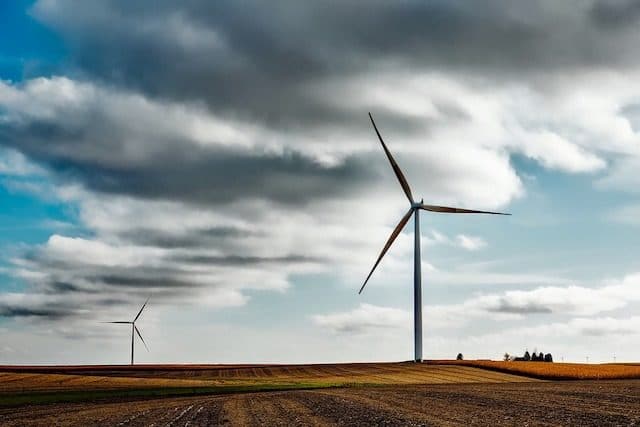
Back in the early 2010s, Congressman Joe Barton found himself the target of memes ridiculing him. The memes claimed he was nothing more than a big, dumb figurehead for fossil fuel giants and ignorant of science. He was mocked for allegedly saying that wind energy would slow down winds and warm the Earth—he was also accused of saying wind was a finite resource. Many people called him anti-scientific and questioned how such a person could have power over decisions about the nation's energy supply.
The point is that he effectively stated that wind energy, not wind itself, is a finite resource. More importantly, he directly cited a paper that discussed the potential impact of large amounts of wind energy. The paper argued that if the Earth received 10% or more of its energy from wind alone, the enormous scale could potentially cause a very small change in Earth's temperature. Congressman Barton didn't even state whether he thought this could happen, but he suggested it was possible. As for the credibility of the paper, there have been mixed studies since then, but researchers seem to agree that massive wind energy will have some negative effects, just less so than fossil fuels.
6. People tend to misunderstand that overpopulation does not only mean population density

Overcrowding is a highly controversial topic among most people and tends to evoke very strong opinions. Unfortunately, some people with strong opinions on the subject misunderstand what it actually means. Many people think that overcrowding is associated with too many people in an area, which impedes traffic flow and clogs sidewalks. While such an area may be overcrowded, that doesn't necessarily mean it isn't. The reason is that overcrowding isn't related to the density of people per square meter, but to whether the area where all those people live has the resources to support them.
This is because overpopulation is actually related to carrying capacity, that is, how many people a land or piece of land can support at any given time. This may seem relatively simple to calculate, but in reality, it can be quite complex. People don't always behave predictably, making modeling difficult, and many times, when people predicted massive food shortages, people simply found ways to produce more food to keep up with the growing population. This makes the whole concept highly controversial, even among experts, as opinions on how to address the problem vary widely—from artificially limiting population growth to technologies that simply produce more food.
5. Cow farts are environmentally friendly.

If a vegan tries to convince you to stop eating beef and you won't listen to the ethical arguments, they'll point out that even if you don't care about the aspects of industrial animal agriculture, you should be concerned about the incredibly negative impact cow farming has on the environment. They'll tell you how cow farts create 40% of methane emissions, which is obviously very harmful to the environment. The claim about cow farts has become legendary, and some people have even suggested putting filters on their butts, but the real problem is their burps.
These methane burps are part of a cow's natural digestive process, which occurs in its first stomach, called the ruminant. Now, while vegans are right, this doesn't necessarily mean we can't keep our cows, whether for milk or beef. Scientists have been working for years to significantly reduce methane emissions from cows, and while past methods have been unsuccessful, several promising methods are being tested today that could solve the problem once and for all.
4. An eruption of the Yellowstone caldera is actually unlikely.

A favorite among those who believe the world is doomed and love to shout about it is the claim that the Yellowstone caldera is long overdue for an eruption. They claim that when it does erupt, it will be so catastrophic that it will essentially destroy the United States of America. Some even go so far as to claim that it will be such an incredibly powerful supervolcano that it will wipe out all of humanity.
The fact is, while it may not sound exciting, there's actually no danger that the Yellowstone caldera will doom us all anytime soon. The United States is in no danger, and the world certainly isn't. The fact is, the danger is exaggerated, and there's no evidence that this eruption is imminent. If it were to erupt, it would likely be a smaller magma flow, as only 151 TP3 T of the remaining magma in the caldera remains. As for whether it could erupt very far in the future and cause a supervolcano, that's possible, but it wouldn't doom humanity. Supervolcanic events have occurred at least twice while humans have been on the planet, and we're still here.
3. We are not in danger of being hit by an asteroid.

In recent years, news about the danger of an asteroid hitting Earth has become increasingly drastic. Perhaps playing on our fears of the asteroid that wiped out the dinosaurs millions of years ago, as well as all the movies that have made us anxious about such a catastrophe, this has become a common way to get cheap clicks.
However, while all this sounds incredibly frightening, there's actually no truth to it. While there was an asteroid impact that wiped out the dinosaurs millions of years ago, and another major asteroid impact may occur one day, there's no reason to expect one anytime soon. The next one that might even come close isn't predicted until at least 2185, and the odds of it hitting us are about 0.2%. As for what would happen if we lived that long and one got close—there's no need to worry about that either. NASA and other government space programs are tracking asteroids approaching Earth and are already developing strategies that could be tested in an emergency to deflect them before they could impact Earth.
2. A pole shift may happen, but it won't be the end of the world.

In recent years, fears that a pole shift will destroy humanity have grown increasingly. News outlets and alternative science websites have seized on the idea to generate clicks, and a film 2012 , which spoke of Mayan predictions, was primarily an attempt to demonstrate what would happen if a pole shift occurred within approximately 24 hours. Many people are understandably frightened by the hype and worried that life as we know it could one day come to an end.
Fortunately for those of us who don't want to die a horrible death, there's not a shred of truth to the rumors. Geomagnetic field reversals have happened before and will happen again, but it's hard to predict exactly when. What we do know is that when they do happen, it's unlikely to cause us any serious harm; they've never caused mass extinctions before. As for what effects it might have, they'll likely be slow, over time. Animals that rely on magnetic fields might be slightly affected, and we might experience increased radiation to worry about, but nothing catastrophic. As for the effects we've observed in In 2012 , then they are completely unrealistic, since a pole shift simply will not affect the climate in this way.
1. Mining causes serious harm to the environment.

Many people think of bitcoin mining as the future and tend to assume it will simply be here forever. However, China has already completely banned all cryptocurrencies, and it's quite possible the rest of the world will follow suit—and not for the reason many expect. The fact is that while governments are concerned about its difficulty in being traced, the environmental impact of cryptocurrency mining is of even greater concern.
The problem is that to earn new bitcoins, you have to mine them, running your computer to solve a puzzle of sorts to verify the proof of the bitcoins you're "mining." This consumes an incredible amount of electricity, so much so that it's becoming globally significant. A single bitcoin transaction consumes roughly the same amount of energy as most American homes consume in a month, leading private investors to buy up power plants just for bitcoin mining. To put this all in perspective, the amount of energy used globally for bitcoin mining is approximately 132 terawatts, equivalent to Norway's annual energy output. While crypto companies scramble to find a way to clean up their act, they'd better do so quickly before they lose ground, as has already happened in China.