

The history of past civilizations is rich—even in terms of wealth. Kings, queens, and pirates were known to possess vast treasures, which they often hid to prevent plunder. Warring kingdoms hunted for treasure to weaken their enemies, and these treasure hunts required deciphering clues and solving puzzles, which often proved unsuccessful. Many of these ancient treasures, buried or sunk to the ocean floor, remain a mystery to this day.
The tradition of hiding treasure and then forcing people to search for it has persisted into the modern world, albeit for recreational purposes. However, some continue to search for lost ancient treasures, and companies and individuals invest considerable money, time, and energy into this endeavor.
In this list, we've collected the most exciting true stories of treasure hunts from around the world.
1. The book was published in 1982 , containing 12 riddles and 12 illustrations pointing to 12 real locations in the United States where the key to unlocking a $1,000 treasure was buried. To date, treasure hunters have only managed to find two such treasures.

American writer Byron Preiss wrote a book called «The Secret: Treasure Hunt» , which consisted of 12 short poems and 12 fantastical paintings by John Jude Palencar. Each painting corresponded to a poem pointing to the locations of 12 parks across North America. In each of these 12 parks, it was claimed, one could find a ceramic box containing a key that could be exchanged for a precious stone worth $1,000.
Inspired by another book, «Masquerade», Preiss wrote the book in 1982, which sparked a massive treasure hunt. He personally buried these ceramic boxes, or as he liked to call them, «sheds.» Treasure hunters have searched for these 12 boxes, but only two have been found so far. One was found in Grant Park in Chicago in 1983 by a group of students, and the other in Cleveland in 2004 by two forum members. Quest4Treasure . The remaining boxes have not yet been found. The author, who knew the boxes' location, died in an accident in 2005.
On page 219 of the book, it is stated that all the boxes are buried no deeper than three feet into the ground and are not in natural locations, but in areas already disturbed by humans. The search continues. (1,2)
2. The 200-year-old Oak Island treasure mystery has baffled hundreds, leading to several treasure hunts to discover the «Shakespeare manuscripts,» «pirate's chest,» and «Marie Antoinette's jewels» believed to be buried there. U.S. President Franklin Roosevelt remained occupied with the mystery until his death.
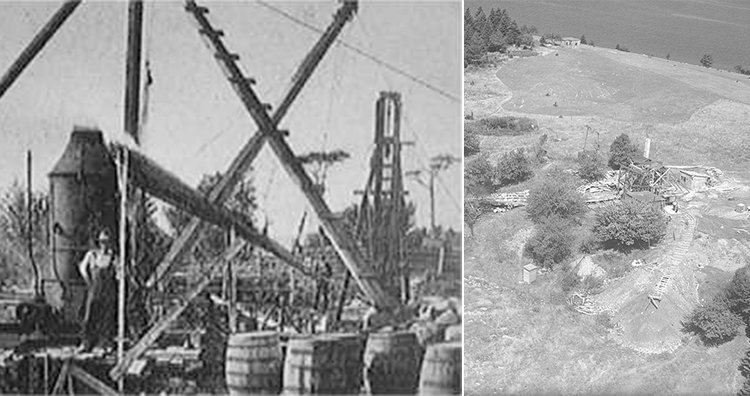
Oak Island in Nova Scotia, renowned as a treasure trove, has been the site of a pit dug for two centuries, specifically in search of the pirate Captain Kidd's treasure. The first treasure hunt at this site dates back to the 1700s, but the first published description wasn't until 1856. It all began when a man named Daniel McGinnis discovered a pit on the island while searching for a plot to build a farm. He was then told a legend about a dying sailor. The dying sailor was one of the pirate Captain Kidd's crew and claimed that a treasure worth two million euros was buried on the island. The location of the pit matched the dying sailor's story, so McGinnis and two other men began digging.
Tool marks and loose soil were found on the pit walls, but the treasure was not found. Eight years later, two different companies, Onslow and Truro, conducted their own treasure hunts. Many people and companies have tried to find treasure on the island. In 2014, the History Channel aired an episode about the excavation, which involved two brothers.
The 32nd President of the United States, Franklin Delano Roosevelt, began investigating this mystery in 1909 and even planned to visit the island, but bad weather prevented this. He continued to oversee the excavations until his death in 1945. Actors Errol Flynn and John Wayne contributed to the treasure recovery efforts. The pit is believed to contain Marie Antoinette's jewels, Masonic artifacts, and Shakespeare manuscripts (those that point to Francis Bacon as the true author). (1,2)
3. In 2010, a millionaire hid $2 million worth of treasure somewhere in the Rocky Mountains. Of the 350,000 people who tried to find it, four died. The clue to the treasure is hidden in a cryptic poem he wrote himself.
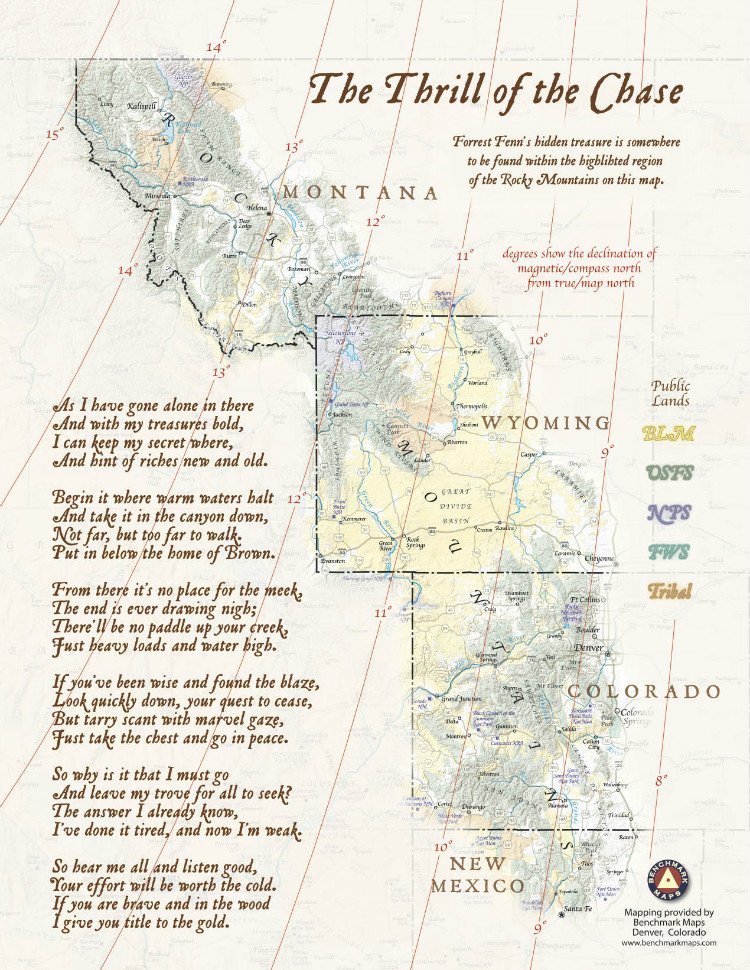
«Start where the warm waters stop.».
And go down the canyon.
Not far, but too far to walk.
Place this below Brown's house…»
A stanza from a mysterious poem by millionaire Forrest Fenn is read. Fenn claims that in 2010, he buried a bronze chest full of gold and precious stones somewhere in the 3,000-mile-wide Rocky Mountains. He believes it will take at least 1,000 years to find it. After hiding the treasure, he published a memoir, « »The Thrill of the Chase", which contain a 24-line poem with nine clues and a map of the area where the treasure is located. Approximately 350,000 treasure hunters have attempted to find the chest, worth approximately two million dollars, and four of them have died.
After being accused of causing the deaths, Fenn claimed the chest wasn't underwater, wasn't located near the Rio Grande, and didn't require moving large rocks or climbing steep slopes to find it. He organized the search to encourage families to spend more time outdoors. At age 80, he made two trips to the treasure's location. The 85-year-old said that if he died before the chest was found, the hidden location would be buried with him. (1,2)
4. The Copper Scroll, one of the Dead Sea Scrolls, was discovered by an archaeologist in a cave at Qumran. The scroll lists 64 locations in detail, 63 of which are said to have contained buried or hidden gold and silver objects. Several expeditions led by treasure hunters have so far found nothing.
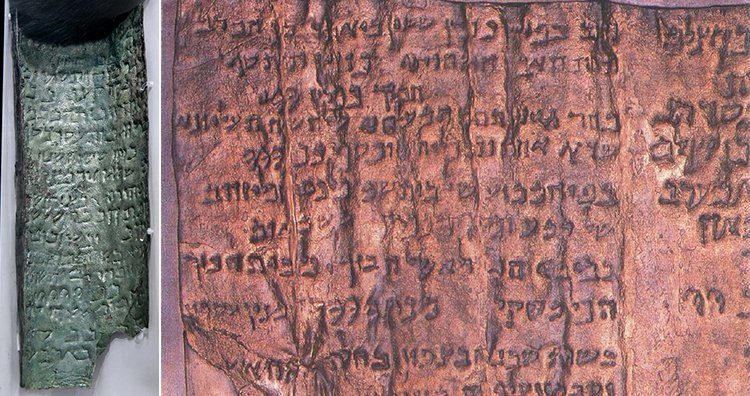
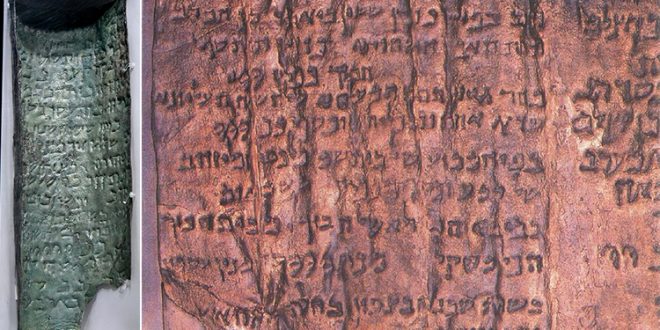
«The Copper Scroll is the only Dead Sea Scroll that is not a literary work but contains detailed information about treasures and their locations. Discovered in Cave 3 near Khirbet Qumran on March 14, 1952, it has been on display at the Jordan Museum in Amman since 2013. The scroll is a kind of inventory, but of treasures. Of the 64 locations listed in the scroll, 63 mention gold and silver coins and the names of their burial sites. One list describes a location where 868,000 troy ounces of gold are allegedly buried.
Written on the assumption that the reader is familiar with the places mentioned in the scroll, one of the verses reads: «In the salt pit under the steps: forty-one talents of silver. In the cave of the old laundry, on the third terrace: sixty-five gold bars.». In 1960, the total value of the treasures mentioned in the Copper Scroll was estimated at $1,000,000. They are believed to have been hidden by Simon bar Kokhba, the leader of the revolt against the Roman Empire to establish an independent Jewish state. Scholars believe the treasures belong to the Second Temple of Jerusalem. The treasures have not yet been found. (source)
5. In a small village in India, a local priest reported having a dream about a 19th-century king who spoke of a thousand-ton gold treasure buried beneath his village palace. He convinced the Indian government to conduct a month-long excavation to find the treasure. Nothing was found.
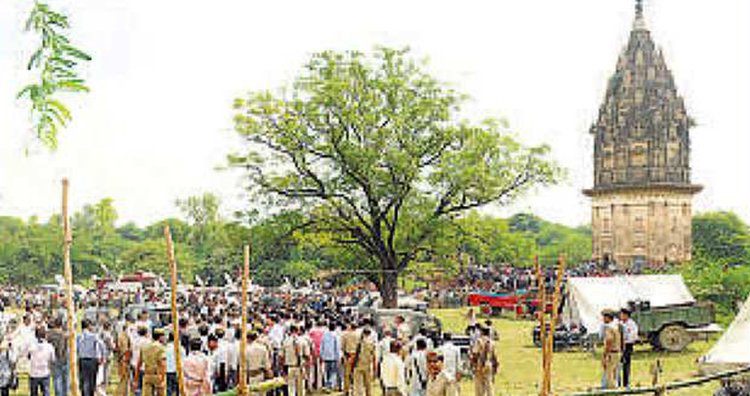
In October 2013, a local priest from the village of Daundia Khera in the Indian district of Unnao saw a treasure in a dream. He told people that the 19th-century king Ram Baksh Singh had spoken to him in a dream of a treasure buried beneath his palace, which now lay in ruins. The priest said the king was concerned about the current state of the Indian economy and therefore revealed the treasure's location.
When his letters to the Archaeological Survey of India (ASI) were ignored, he appealed to the Minister of State, who convinced the ASI and the Geological Survey of India (GSI) to at least conduct an inspection. On October 12, 2013, the inspection began, and the ASI discovered metal 20 meters underground. Six days later, excavations began in search of treasure. Ten pits were dug under the watchful eye of hundreds of people and media representatives. On October 29, the ASI halted the excavations after discovering toys, bangles, and an earthen floor dating back to the 17th century.
The same priest dreamed of treasure buried beneath a temple in a district of the Indian state of Uttar Pradesh. It was believed that some people excavated the site and retrieved the hidden gold. (source)
6. Having heard an Egyptian legend about gold buried in the pyramids of Meroe, treasure hunter Giuseppe Ferlini destroyed 40 pyramids in the 19th century in search of gold. He tried to sell the treasure he found, but no one in Italy believed that jewelry of such high quality could be made in Sub-Saharan Africa.
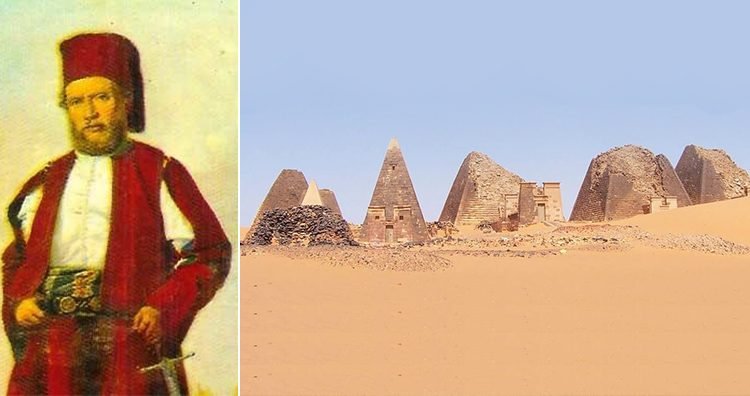
Italian treasure hunter Giuseppe Ferlini destroyed 40 pyramids in his search for treasure. After joining the Egyptian army, Ferlini met Albanian merchant Antonio Stefani, with whom he deserted and set out on an expedition to Meroë on August 10, 1834.
In Meroe he heard from local workers a story about the legend of 40 ardebakh gold buried beneath a pyramid. To find this treasure, he plundered and emptied more than 40 pyramids, stopping only when he found what he was looking for in the pyramid at Wadban Naqa. In Pyramid No. 6 of Queen Amanishakheto of Kush, he discovered several gold and silver ornaments, which he brought back with him when he returned home to Italy in 1836.
When he tried to sell his finds two years later, after publishing a report on his expedition, people refused to buy them, unable to believe that jewelry of such high quality could be made in Sub-Saharan Africa. He eventually sold the treasures in Germany, part of which was purchased by King Ludwig I of Bavaria, and the rest by the Egyptian Museum in Berlin. All the treasures are on display at the State Museum of Egyptian Art in Munich and the Egyptian Museum in Berlin. (source)
7. The Nazis had a secret project in which they built a complex system of underground tunnels beneath the Owl Mountains. It is believed that a «gold train» containing over 300 tons of various precious metals and stones is buried there. The search continues to this day.
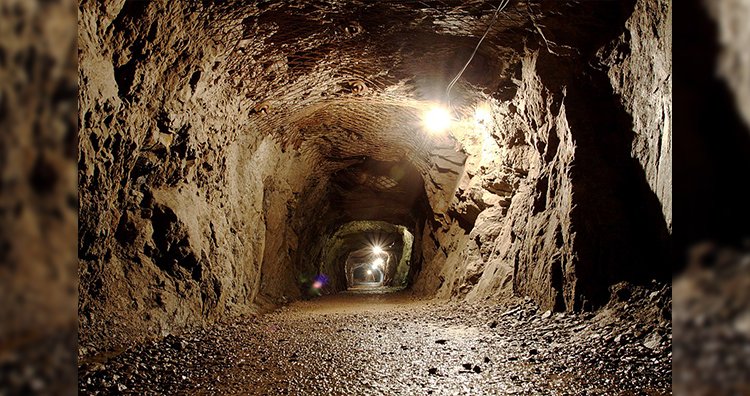
A «gold train» is believed to be located beneath the city of Wałbrzych in Poland (formerly part of Germany), carrying 300 tons of gold, jewelry, weapons, and some art masterpieces. Shortly after World War II, the train left Breslau (now Wrocław) and entered a secret underground tunnel system built by the Nazis beneath the Owl Mountains.
In August 2015, the media widely reported the discovery of a train by two men, Piotr Koper from Poland and Andreas Richter from Germany. They obtained a deathbed confession about the train's location and struck a deal with the Polish government, receiving 10% of the discovery proceeds for disclosing the location. Later that month, Poland's Minister of Culture stated that ground-penetrating radar images clearly showed the discovery of a 100-meter-long train. However, the governor of Poland's Lower Silesian Voivodeship later refuted these claims.
Koper and Richer began digging for the train in May 2016, but were forced to stop seven days later when no trace of tracks, tunnel, or train was found. They didn't give up and, like many other curious treasure hunters, continued their search for the «golden train.». (source)
8. When the pirate Olivier Levasseur was executed in the 15th century, he left a cryptogram to the crowd, revealing the location of a vast treasure. Another pirate, who managed to seize part of the treasure, left three cryptograms before his death. The centuries-long hunt continues to this day.
Pirate Olivier Levasseur, nicknamed «La Buse,» is famous for possessing one of the largest treasures in history. Before his death in the 18th century, he wrote a 17-line cryptogram on his necklace indicating the treasure's location and threw it to the crowd with the words, «Find my treasure, whoever can decipher it!» In 1923, a woman named Rose discovered mysterious carvings on a rock on Mahé Island in the Seychelles, caused by low water levels. These were later discovered to be pirate symbols associated with the treasure. Deciphering the symbols led to the discovery of two coffins containing the bodies of pirates, but the treasure was never recovered.
The second discovery of treasure was made in the last will of another pirate named Bernardin Najon de l'Estang, who died 75 years after La Buse. In his will, he claimed to have found part of the treasure and revealed its location in three cryptograms and two letters, as well as a key for his nephew.
In 1947, Reginald Cruise-Wilkins studied the documents, symbols, and cryptograms together and discovered they were Masonic symbols. He began excavations on Mahé Island and found a few coins, ancient weapons, and pirate sarcophagi, but nothing else. Before his death, Cruise-Wilkins deciphered the final part of the code. His son, a history teacher named John Cruise-Wilkins, continues the search for Levasseur's treasure to this day. A game, several films, and a television series have been created based on Levasseur and his treasure. (source)
9. Odyssey, a marine exploration company specializing in shipwreck treasure hunting, discovered coins worth $500 million in the wreckage of a Spanish vessel. Despite the discovery occurring in international waters, the treasure was not returned to Spain in 2012.
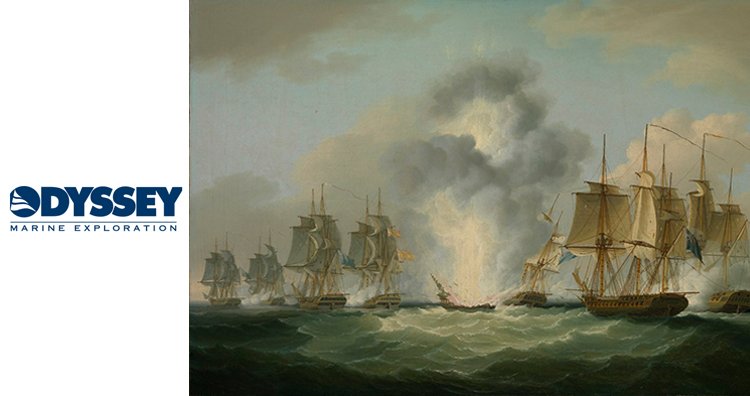
Spanish ship «Nuestra Señora de las Mercedes» The ship sank on October 5, 1804, after the Battle of Cape Santa Maria with the British. It was carrying treasure, which also sank with the ship. In 2007, Odyssey Marine Exploration discovered the treasure off the coast of Portugal, valued at $500 million. The company codenamed the salvage operation «Black Swan.».
The Spanish government claimed ownership of the ship and all property on board. A five-year legal battle ensued, ultimately leading to the Odyssey's sinking. Peru also laid claim to the treasure, citing Spain's previous looting. An American court ruled in favor of the Spanish government, and the company was ordered to return everything salvaged from the sunken ship. This decision was seen as a deviation from the legal principle of «finder, owner.» The discovery of the ship's treasure occurred in international waters.
In 2013, the coins were returned to Spain, which put them on display from June to December 2014. In 2015, when the Spanish government sent an expedition to conduct an archaeological study of the sunken ship, they stated that the Odyssey had severely damaged the vessel when it discovered the treasure. (1,2)
10. After 161 people invested millions of dollars in the search for treasure from the sunken ship SS Central America, Treasure hunter Tommy Thompson built an underwater robot capable of diving to depths of 8,000 feet. After finding the treasure, he disappeared. He was later arrested, but refuses to reveal what he did with the treasure.
Steamship SS Central America sank during a hurricane with 457 people and at least three tons of gold, originally from California, on board, near South Carolina. About 130 years later, Tommy Thompson, a young engineer obsessed with shipwrecks, built an underwater robot named Nemo. Nemo could dive to depths of 8,000 feet, and Thompson used the robot to recover treasure from a sunken ship, convincing 161 people to invest in the project.
In 1989, Thompson's team discovered large gold bars, 19th-century coins, and a ship's bell during an expedition considered the most daring in American history. When investors failed to receive their share of the profits and grew impatient, they sued Thompson in the early 2000s, but when a judge ordered him to appear in court in 2012, he was nowhere to be found. After a two-year search, Thompson was arrested in Florida, but the treasure was never found.
Thompson initially claimed the treasure was in Belize, but his lawyer later said Thompson couldn't remember who he gave it to. Now in prison, he refuses to reveal the whereabouts of the treasure, which has been lost, found, and then lost again. (source)