


The idea of the world beneath our feet has fascinated people for centuries. It's a staple of old science fiction, in stories like "« Journey to the Center of the Earth» And "« The Divine Comedy» , both describe incredibly rich and detailed worlds, and even today, the idea that there is something more underneath exists in films like Godzilla versus King Kong" and "Godzilla vs. King Kong" ». THX 1138 .
Caves, tunnels, underground passages and subterranean structures all feed the idea that there could very well be a society somewhere underground. And although still no society did not live entirely underground, this does not mean that smaller groups did not do so.
10. New York City Tunnel Dwellers
According to New York City transit officials, about 350 people call the network of subway tunnels beneath New York City their home. They regularly take refuge there. more 1000 people, although the city is now investing in their complete removal.
The first metro opened back in 1904 , and since then this system has become an iconic part of the city. There is 230 miles tunnels, not to mention a number of secret stations and tunnels , which are no longer in use. In addition to the city's homeless population.
Although officials have identified approximately 30 parking lots homeless people, the situation is not new at all. A film called "« Dark Days"» documented life tunnel inhabitants back in 1990. Before that, the New York Times published headlines about a "hobo colony" under Park Avenue. back in 1977 . The tradition of living there is long-standing, and even if current plans are implemented, it is unlikely that the tunnels will remain empty for long.
9. Las Vegas Storm Tunnel Community
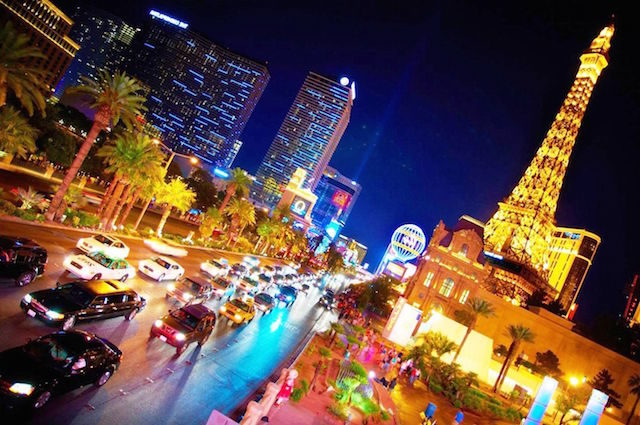
Like New York City, Las Vegas has become a prime location for a thriving homeless population living underground. Although Vegas lacks a subway system, it does have a network of storm drain tunnels, which, combined with the desert climate, make it an enticing home for those with no alternative.
Estimates of how many people live below Las Vegas vary widely. Some suggest that lives in the tunnels about 300 people , while others say about thousands . The population includes homeless people, drug addicts and criminals scattered throughout 600 miles of tunnels.
One of the major dangers for those working in the tunnels in Vegas is that the tunnels are specifically designed to handle rainwater. If a storm hits, those below risk being washed away and potentially drowning. Many of them have built incredibly complex and large structures from recycled waste that serve as homes.
The tunnel dwellers, also known as mole people, have their own rules that all residents of the area must follow. These rules are governed by people called mayors, who determine who can stay and who must leave.
There are organizations that help tunnel dwellers, but not everyone wants to be helped, and you can imagine how difficult it is to fight an addiction, whether it's drugs or gambling, in a place like Las Vegas.
8. Jamaica's Gull Queens
Homelessness is by no means a uniquely American problem. In Jamaica, there is a group of people often referred to as the Gully Queens, who live in sewers to avoid persecution from those who might cause them violence. Life can be especially difficult for the LGBT community in Jamaica, which is often called one of, if not the most difficult place in the world for this community. Prejudice can and does manifest itself in violence, and families often disown them. children , who come out as gay or transgender. As a result, these people often end up in the sewers, one of the few places where they are accepted.
Documentary 2014 film tells the story of these ravine queens. Reports indicate that over 80% Jamaicans hold anti-gay views, making them extremely difficult to gain acceptance. Sexual relations between gay men remain illegal in Jamaica, with offenders facing up to ten years in prison.
7. Homeless people near Manchester

The British city of Manchester has its own problem with homeless people living underground. The community there is smaller, and some residents - immigrants , who came to England to work but soon lost their jobs and had nowhere to turn.
The community, described as small, is set up similarly to other groups we've seen. Sofas and other furniture, even rugs and dressers, are provided to make the space feel more like home. Dangers, of course, come from sudden weather changes and human error, including theft and violence.
Those who live there do their best to make it livable, moving from shack to shack around the city and swimming in the dormitories several times a week.
6. Bucharest Mole People
Bucharest, the capital of Romania, is over 500 years old and the country's cultural and financial center. Beneath the city lies a completely separate city of people who have been living in the sewers for many years. Generations, in fact, as families live down there, and children grow up to be adults with their own families. Precise numbers are impossible to determine, but estimates run into the hundreds.
When the Soviet Union collapsed in 1989, everyone Romanian orphanages closed . Literally thousands of children were abandoned on the streets with nothing, and many went into hiding, struggling to survive. Over the next 30 years, many of these children grew up and started their own families, perpetuating the problem.
Furthermore, the tunnels attracted drug addicts and other homeless people, in addition to the children who were evicted back in the 1980s. Even interviewing those living in the tunnels required, permission required leader. The place is so crowded that there is little room for newcomers.
5. Paris Catacombs
2014 horror film «"As above, so below"» introduced many people to a part of Paris no one had ever seen before. Beneath the city lies a labyrinth of catacombs containing human remains. The walls, lined with skulls and other bones, stretch for 200 miles. Some of them are crumbling, and there is no map or paved path that could safely guide anyone through this place.
The remains are the result of Parisian officials of the past running out of space for them above ground. Cemeteries were literally overflowing after bad weather spilled corpses onto the streets, and tunnels became final resting place Around 6 million former residents. Previously, the tunnels were the result of limestone mining dating back to the 13th century, connecting quarries.
For many years, the tunnels housed criminals and refugees. Recently, there has been growing evidence that more and more people are being held in the tunnels, which are off-limits. At some point officials discovered whole underground cinema 30 seats, bar and restaurant.
4. The Homeless City of San Antonio
In 2020, officials in San Antonio, Texas, discovered an entire homeless community beneath the city while inspecting drainage tunnels after receiving complaints from local businesses near the highway under which the tunnels run.
Someone saw a man entering the tunnel, and local police investigated, only to discover a network of tunnels and rooms. The smaller tunnels gave way to a series of larger tunnels over ten feet high, and in them they discovered what the police chief called "« incredible ».
He described a small underground town full of shopping carts, furniture, food, and filth. The smell was clearly shocking. The community's population has grown due to the COVID-19 pandemic, but police are conducting regular sweeps in an attempt to flush them out.
3. Coober Pedy, Australia is mostly underground.

If you want to find the closest place to a real underground community, head to Coober Pedy , Australia. Founded as an opal mining town, much of the property was built underground, including homes, businesses, and even the local church. Situated in Australia's harsh outback, summer temperatures can reach a scorching 120 degrees Celsius or more. Imagine trying to become an opal miner in such conditions, and it's easy to understand why locals began building downwards rather than upwards.
Today 60% out of 3,500 city residents They live underground. This is the culmination of a century-long history, beginning with the discovery of a single piece of opal by a teenager in the early 1900s. It eventually became the world's largest source of opal, although the mine has since been largely exhausted. Opal is still mined, but in much smaller quantities.
Due to the climate and location, local residents are able to generate 70% of the city's electricity from renewable sources such as wind and solar.
2. Moscow sewers
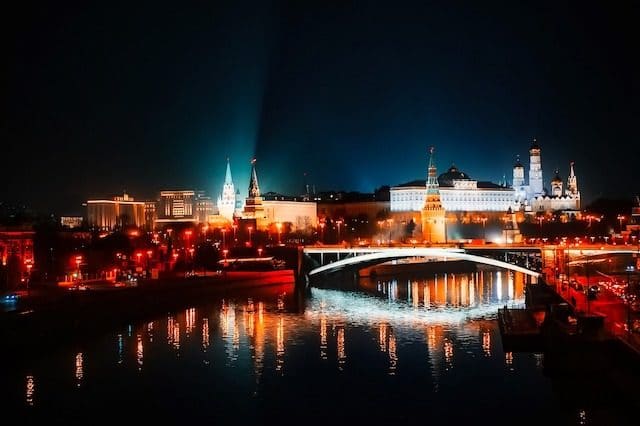
Moscow can get very cold in winter, with average temperatures ranging from 14 to 25 degrees Fahrenheit, and some spots dropping to -44 degrees Fahrenheit. With a population of almost 12 million people in the city there are about 100,000 homeless .
To escape the deadly cold, many of the city's homeless people go underground into the sewers, where heating pipes They can provide warmth from the weather. Like any major city, Moscow attracts residents from outlying areas. People move there to find work and leave their mark. But the economic downturn has made Russia as vulnerable as anywhere else, making finding work difficult. Add to this the fact that officials regularly evict homeless people from their warm places above ground, and sewerage becomes one of the only options.
Huddled around heating pipes, some of the homeless note that even homeless shelters refuse people , unless they meet certain criteria. When Sky News spoke to someone who worked at a homeless support center, they said homelessness is a lifestyle choice, meaning there's little empathy for those struggling with it.
1. Cold War-era underground city beneath Beijing

We said from the outset that no completely underground society has ever existed in history, and while that's true, it doesn't mean there aren't incredibly large communities living underground. Today, in Beijing, China, you can find a city beneath a city where a million residents call the underworld home.
At the height of the Cold War, China was on high alert, just like the United States and the Soviet Union. To prepare for a potential nuclear war, Chairman Mao built an entire city outside Beijing. The result was 10,000 bomb shelters , which were later rented out to homeowners once the country opened up in the 1980s.
The bunkers were divided into tiny living units, and today one million people rent these rooms, in some cases barely big enough for a single bed. Laws stipulate that any living space must be at least 43 square feet per tenant. These bunker homes do not comply with the laws.
The complex is sometimes called«"Dungeon"» , and for many low-income city residents, this is the only option. Some residents are reluctant to give interviews or appear on camera, fearing their families will see them and realize how bad things are. Many of these people came to the city from smaller towns, expecting good jobs with good pay, but they didn't find the opportunities they needed and were unable or unwilling to return home.
One of the reasons this massive city is so overcrowded is due to Beijing's housing market. In 2017, one square meter of Beijing real estate cost you $5,820. On the other hand, an apartment in a nuclear bunker can cost around $40 per month.