


If words and grammar are the basic ingredients of language, then idioms are undoubtedly the secret sauce of herbs and spices added to give language its distinctive flavor. They are quirky, sometimes meaningless, and almost always lost in translation, but they add color to any vocabulary.
In the past, we looked at the strange and obscure origins of ten such idioms that we use in our daily lives, and today it's time for ten more.
10. Bring home the bacon
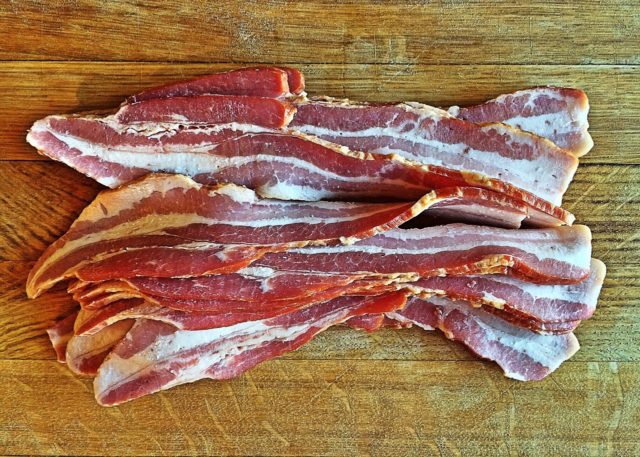
Bring home lard – means to earn money, especially to support a family. While its meaning is clear and straightforward, its origins are not, as there are several stories about how this idiom arose. Some say the phrase originated from county fairs, where people would chase a greased pig, and whoever caught it would receive it as a prize, thus bringing home bacon.
Another story takes the practice back to 12th-century England, to a tradition that is still present in some parts of the country – a tradition Dunmow . The rector of Little Dunmow is said to have been so touched by the newlyweds' devotion that he rewarded them with a slice of bacon. His act of generosity proved so popular that it became a common tradition, and became so famous that Chaucer even referred on him several centuries later in his "« The Canterbury Tales» , when he wrote: some in Essex, in Dunmow.
But while this may show us the origins of the practice of bringing home the bacon, it's not definitive evidence of the idiom's use. For that, we need to go back about a hundred years, to the 1906 championship boxing match between Joe Gansom and Oscar Nelson. Hans's mother reportedly telegrammed him to bring home some bacon. After winning the fight, he replied that he had not only bacon but also gravy. Sportswriters of the time seem to have taken a liking to this little story and widely used the expression, thus introducing it into common usage.
9. Growing a beard

In the previous list we mentioned the television idiom "« jump over the shark» , referring to a definitive point in a series when the quality plummets. Well, there's also the idiom "« grow a beard"» , which means the exact opposite—a turning point when the series dramatically improves in quality. Usually, the show grows beard after one or two seasons, and there could be several reasons. Perhaps a problematic producer is fired. Maybe a supporting character becomes a breakout star. Or maybe the writers and showrunners simply have a better understanding of the story and the characters.
The idiom's name comes from TopTenz... no, wait, from Star Trek: The Next Generation . Fans of the show believe the series truly reached its peak in the second season, which coincided with Commander Riker growing a beard. As for why he did it, Riker actor Jonathan Frakes had a simple explanation—he hated shaving .
8. Close your eyes

Expression « close your eyes"» means to deliberately ignore something even if you know it's wrong, and some believe its origins go back to one of the most famous acts of defiance в stories.
In 1801, Great Britain entered the war with Denmark-Norway to prevent the Danish navy from allying with France. The British side was led by Admiral Sir Hyde Parker, supported by Vice-Admiral Horatio Nelson, although they disagreed on the best course of action.
At the Battle of Copenhagen, the Danish fleet had an early advantage, so much so that Parker gave the signal to retreat. Nelson, however, wanted to continue, so he took advantage of the fact that he had lost the sight in his right eye and said to his flagship: "You know, Foley, I only have one eye—and I have the right to be blind sometimes ... I really don't see the signal." So Nelson ignored his admiral's orders, continued the attack, and emerged victorious, achieving one of the victories that defined his career.
It's a tantalizing story and could make a great idiom origin story, but unfortunately that's not where it's at. was born phrase "« "close your eyes"» . We're not actually sure how this happened, but we do know that it does appear in the novel. Francis Lathom «Men and Manners» , published a year before the Battle of Copenhagen.
7. The proof is in the pudding

You may have heard from friends or colleagues about that popular new restaurant that opened just a block away, but you've decided to hold off on forming an opinion until you get a chance to eat there yourself. After all, the proof is in the pudding.
This quirky phrase means that you can only judge the true value of something from personal experience, not from hearsay, theories, or rumors. It's an idiom that's been around for a while, first appearing in writing in research William Camden 1623 «"Remains relative to Britain"» . Back then, pudding wasn't the delicious dessert we all know and love today, but rather something similar to haggis or sausage—animal intestines stuffed with minced meat, spices, and other ingredients.
And the proverb itself was a little different back then. The original proverb went like this:« The proof is in the pudding "It's food," and as you can imagine, it was quite literal. The only way to know if a pudding is good or not is to taste it. Over the centuries, it was shortened slightly; by the mid-19th century, it had evolved into the idiom we still use today.
6. Get your goat
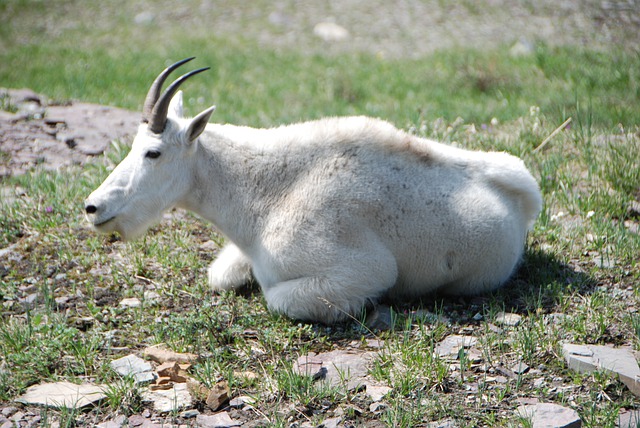
If something really irritates or angers you, you can say that it you're fed up , which a lexicographer described in 1927 as "one of the most absurd slang phrases in English.".
This is not only absurd but also mysterious, as its origin seems shrouded in mystery. Lexical spies have combed through old books and newspapers, and so far the earliest written example of this idiom is found in an issue Washington Times 1905 , where the journalist described a boxing match in the US Navy. He wrote:
«"I think that the crowd got his goat or the idea of a fight - one or the other - because he didn't say boo and sat there moping.".
There are several theories about the origin of the expression, but none are supported by evidence. The most popular one comes from horse racing and the supposed practice of keeping goats in the same stall with a horse to act as a friendly companion. If a slacker wanted to influence the outcome of a race, he would sneak into the stable beforehand and steal a goat, causing undue stress to the horse, which had just lost its little friend. As we've already said, it's a good story, but there's no evidence to support it.
5. The elephant in the room

Another animal-based idiom of uncertain origin is elephant in the room , which relates to an important topic that everyone knows about, but no one wants to discuss openly because it is uncomfortable or controversial.
The idea of not noticing an obvious elephant probably originated with the Russian writer Ivan Krylov, who published a fable in 1814 called « Inquisitive Human »", where the protagonist wanders through a museum and sees all sorts of little creatures, but misses the giant elephant. This concept was revived several decades later by Mark Twain in a short story called "« The Stolen White Elephant» , in which the entire police force searches for a lost elephant only to discover that it has been in their basement all along.
In the early 20th century, the idea of pretending you can't see an elephant appeared several times, including in the musical "« Jumbo» 1935 , but it was not until the 50s that we noticed the definitive use of the present idiomatic elephant in the room with the meaning it has today.
4. Baker's Dozen

Everyone knows that a dozen means 12 of something, so why a dozen bakers does 13 mean? It's not that he's bad at counting, but that he's trying to avoid a fine and a spanking.
Throughout history, bread has been a staple food for many civilizations. Easy access to bread was considered essential for a stable society, so bakers who tried to cheat their customers by offering smaller loaves were often subject to severe punishment.
Although we are not entirely sure when the idiom originated a dozen bakers , this practice probably dates back to 13th-century England, during the time of King Henry III. He passed a new law called "« Meeting about bread and ale"» , which strictly regulated the weight and quality of bread and beer.
This created problems for bakers, as sometimes even honest ones could accidentally produce lighter-colored bread. Rather than risk punishment for breaking the law, it became much more reasonable for them to include 13, even 14. loaves for every dozen, just to make sure they never weigh less than normal.
3. Mad as a Hatter

Expression «"mad as a hatter"» is quite complex. Its meaning is fairly obvious—it's used to describe someone who behaves crazy or unpredictably. However, its origins might surprise you. Most people would assume the phrase comes from Lewis Carroll's iconic 1865 novel,« Alice's Adventures in Wonderland» , but they would be mistaken. This idiom first appeared in print at least several decades before Carroll's book, and its origins may even be several centuries older.
The most popular story claims that the expression, unsurprisingly, originated in the hat industry. Beginning in the 17th century, hatters developed a technique for separating fur from animal skins called "carroting," which required the use of mercury nitrate . Let's just say that inhaling this substance was harmful to them, and prolonged exposure led to depression, irritability, apathy, and even death.
You can see why they gained a reputation for unpredictable behavior, but another possible origin story claims that the idiom was born not from hatters in the plural, but from a single hatter named Roger Crab . He lived in Chesham in the mid-17th century and was considered eccentric because he was a hermit, an ascetic and a vegan at a time when such characteristics branded you a bit crazy.
2. The Whole Nine Yards
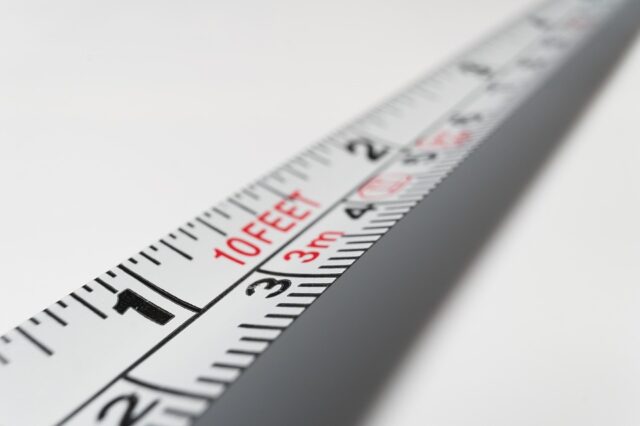
Expression «the whole nine yards» means "« all you can to want, have, or do in a particular situation." It's a simple phrase with a very complex history, described New York Times How "« Bigfoot in the origin of the word »" and as "one of the greatest etymological riddles of our time.".
The reason for this is simple. There are many hypotheses regarding the origin of the expression, and yet they are all likely wrong. The most popular version claims that the length ammunition belts on WWII fighters was nine yards, and that walking the whole nine yards meant that the planes continued firing until their ammunition ran out. Others believe the saying refers to cement trucks, as a standard truck carried concrete nine yards. Some people think that this expression came from fashion, since it took a lot of time to make a real one. Scottish kilt nine yards of fabric were required .
For decades, most people assumed the World War II-era explanation was probably correct, until one day in 2009, an amateur sleuth found the lexicographic equivalent of a pipe bomb—an article in the Spartanburg Herald-Journal titled « All "Six Yards of It," dating back to 1921. Since this revelation, even older references have been discovered, dating back to 1912. Because the number has changed, which lexicographers claim has happened with other idioms, they believe the meaning was never intended to be an exact measurement of something, but the search for the source of this elusive expression continues.
1. To hell with the dog

We end this list with a strange idiom - to fuck the pooch , which means to make a gigantic, humiliating mistake. Some of you may be a little wary, because, as we've seen in our previous posts, many of these phrases began quite literally. However, as far as we can tell, no canine companion was tainted in the creation of their idiom.
There is no doubt that this expression was popularized by Tom Wolfe's 1979 book,« "The Right Material"» about the Mercury space program, where he wrote: «Grissom just… fucked a mongrel , that's all." Wolfe did extensive research for the book and likely heard or read the phrase, which was popular in NASA circles, perhaps in a 1977 memoir by astronaut Walter Cunningham, who used the expression when talking about fellow astronaut Gene Cernan, who was in a helicopter crash.
This appears to be the earliest written example of the idiom we have, but its creation may date back several decades and may be attributed to radio DJ Jack May, also known as "« Candied Yam Jackson." There was already another, more vulgar phrase that meant fuck a dog , only it meant to laze around and do nothing. In 1950, May used this colorful expression to criticize his roommate for not working on his project. Chastised for his rudeness, May then changed the idiom to the more polite phrase, "« "fuck a mongrel"» , which made his roommate laugh. That roommate's name was John Rawlings, and he later joined the Air Force and went on to work at NASA, developing some of the first spacesuit prototypes and likely introducing the idiom to his fellow astronauts.