Spain is a wonderful country for history buffs! Throughout history, this country has been ruled by leaders from a wide variety of cultures: Celts, Romans, Arabs, and Catholic rulers. Reflecting this colorful historical heritage, Spain boasts magnificent sites like the Roman Bridge of Cordoba, the Basilica of Santa Eulalia, and El Escorial, all filled with visitors. Furthermore, Spain's historic sites include remarkable architectural structures like Belchite, the Roman Walls of Lugo, and the breathtaking Sagrada Familia. So, what else comes to mind when you think of historical sites in Spain?
Looking back at history, it can be said that it was the Romans who laid the foundations of modern Spanish culture and identity. Even Spain; it is the birthplace of such prominent Roman emperors as Trajan, Hadrian, and Theodosius I. In the early 8th century, the Visigothic Kingdom, which had conquered southern Spain from the Romans, was invaded by the Umayyad Caliphate, ushering in over 700 years of Muslim rule in the region. During this period, Andalusia became an important center both economically and intellectually. Christian from the 16th century onward.The kingdoms recaptured Spanish territories and came to control one of the largest and richest empires in the world. Where can you see the most beautiful reflections of Spain's fascinating historical heritage? Here are the historic sites in Spain that are a must-see for history buffs…
1. Roman Bridge of Cordoba
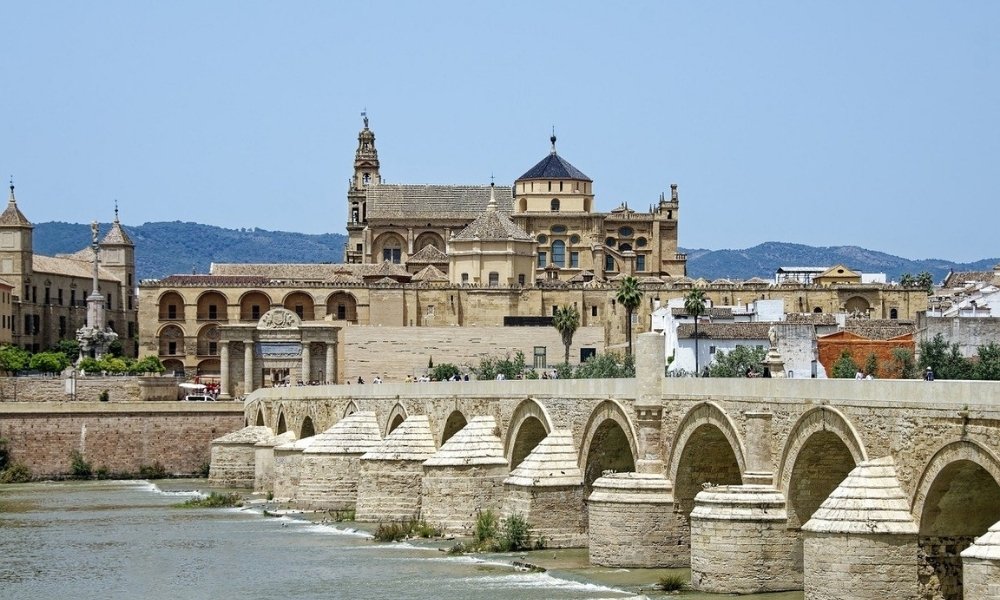
The Roman Bridge in Cordoba, 3rd century BC. A magnificent structure built by the Romans in the 1st century BC. This bridge, spanning the 657-kilometer-long Guadalquivir River, consists of 16 arches supported by irregular semi-cylindrical buttresses. It is 247 meters long and approximately 9 meters wide. Around 1140, the Arab geographer Muhammad al-Idrisi described the Roman bridge in Cordoba as superior to all other bridges due to its "aesthetic qualities and durability." Undoubtedly, this bridge, in addition to being a magnificent architectural structure, also played an important role in wars.
2. Alhambra Palace
The Alhambra Palace in Granada occupies a prominent place among Spain's historical landmarks. Surrounded by impressive two-kilometer-long walls, this vast complex of royal palaces, mosques, baths, shops, and other buildings is today open to the public. You can explore all the surrounding palaces, including the Palacio Nazaries and the 16th-century Palace of the Holy Roman Emperor. The Alhambra is organized around two main courtyards: the Courtyard of the Lions and the Courtyard of the Elder Tree. The Courtyard of the Lions features a fountain, while the Courtyard of the Elder Tree features a long pool. The Architect's Garden and other buildings within the complex are also worth visiting, and the Alhambra Museum houses magnificent artifacts from this period.
3. Seville Cathedral
Seville Cathedral, considered the third largest cathedral in the world, is one of Spain's most important historical monuments. A UNESCO World Heritage Site, the cathedral is also the burial place of explorer Christopher Columbus.
Seville Cathedral is an impressive Gothic structure, surpassing St. Paul's Cathedral in London and St. Peter's Basilica in Rome with a total area of 11,520 square meters. According to some sources, it is actually the largest cathedral in the world by volume.
4. Basilica of Santa Eulalia – Merida
Although the Basilica of Santa Eulalia was built in the 18th century, the ruins of a church from the Roman period lie beneath this basilica in Mérida. According to one theory, this basilica was named after the 13-year-old girl, Eulalia, who was martyred by burning at the stake during the reign of Emperor Diocletian. Legend has it that the girl is buried near the basilica. Inside the Basilica of Santa Eulalia are Roman mausoleums, a tomb decorated with mosaics, and marble-clad tombs from the Visigothic period. Thus, this basilica is a wonderful place to explore not only its own period but also hundreds of years of Mérida's history.
5. El Escorial
Continuing our list of historical sites in Spain, El Escorial was built between 1563 and 1567 by the Spanish architect Juan Bautista de Toledo, who spent most of his life in Rome. It was built in the name of King Charles II of Spain. It is a vast complex, consisting of numerous sections, such as a monastery and a library, and also served as the residence of King Philip IV and the center of his empire. There is so much to see at El Escorial that it's helpful to bring a map and mark the important sites. You can easily spend an entire day exploring these impressive buildings.
10 Places Around the World Every History Buff Should Visit
6. Miguelete Tower
The Torre de la Miguelete, or El Miguelete, is a Gothic bell tower begun in 1381 and incorporated into Valencia Cathedral in the 15th century. El Miguelete means "Little Michael." The tower's architect was Andreu Júlia, a master of Valencian Gothic architecture. Although El Miguelete is awe-inspiring today, its spiral staircase and complex design meant that its construction took many years. This tower, whose architecture will leave you in awe, is a must-see when visiting Spain!
7. Sephardic Museum (Toledo)
The Sephardic Museum (Museo Sefardi) is a national museum dedicated to the history, culture, and heritage of the city's Jewish population. The Sephardic Museum of Toledo traces the long history of Spain from the Roman Empire to the Jewish expulsion in the 15th century. The building housing the Sephardic Museum of Toledo was built as a synagogue in the 14th century and has become part of this heritage. The museum's northern courtyard houses a necropolis displaying Jewish tombstones from various regions of Spain. The museum also features historical artifacts, books, and numerous works reflecting the spirit of that era.
8. Montserrat Monastery
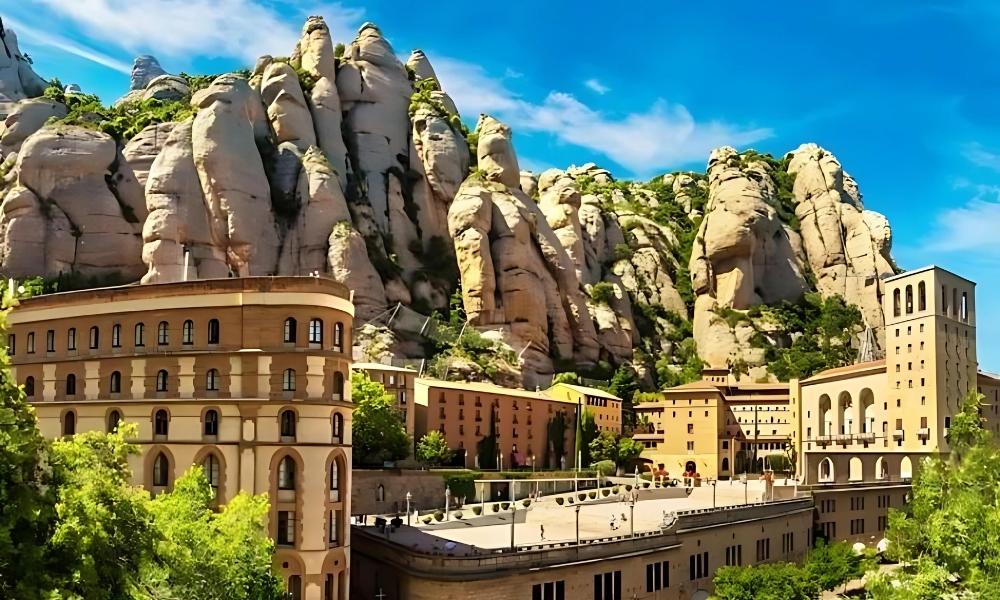
Montserrat Monastery, officially known as Santa Maria de Montserrat, is an important medieval monastery and one of the most important religious sites in Catalonia. Situated high in the Catalan mountains, the monastery offers visitors stunning views, magnificent architecture, and a rich history.
The monastery was burned and looted by Napoleon's troops in 1811. Sadly, this was not the only destruction in its history. During the Spanish Civil War, the site also became the scene of violence, resulting in the deaths of numerous priests, monks, and nuns who lived there. Montserrat Monastery during the Franco era was considered a refuge for scholars, politicians, and artists.
9. Badajoz Castle
Badajoz Castle is located in southwestern Spain, near the border with Portugal. Built in the 9th century during the Islamic period, the castle changed hands over the centuries between Muslims and Christians due to its strategic location. Perched on the banks of the Guadiana River, a tributary of the Tagus River, the castle expanded over time and became one of the largest fortifications in Spain. Inside the castle is a central building known as the Alcazaba; this area is known as the administrative and military center of Badajoz. Today, Badajoz Castle is a major attraction for tourists captivated by the city's views and rich history.
10. Sagrada Familia
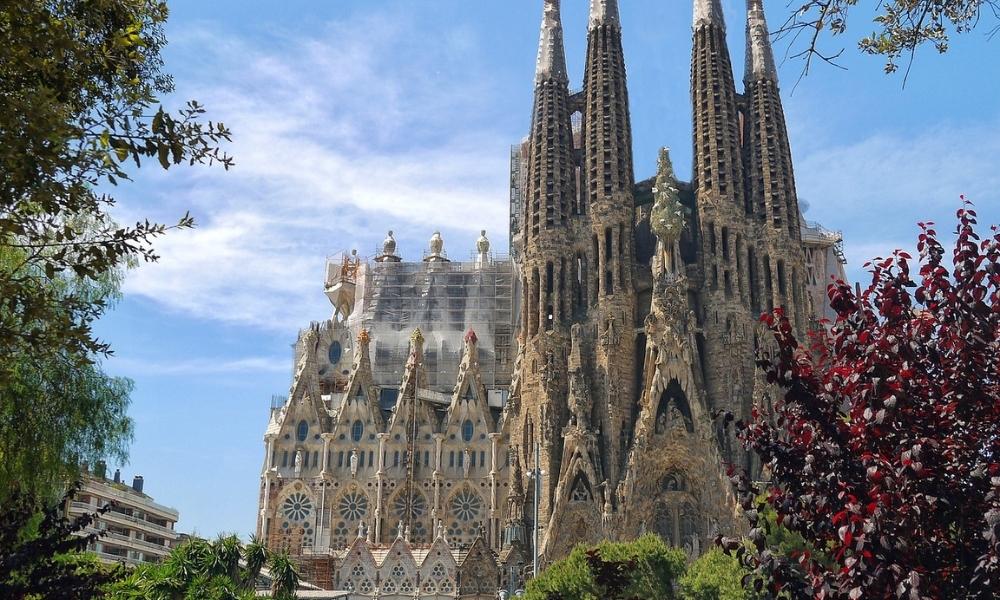
We've reached the end of our list of historic sites in Spain. The Sagrada Familia is one of Barcelona's most iconic buildings, a UNESCO World Heritage Site. However, it is an unfinished church, and it is here that its architect, Antoni Gaudí, is buried. Construction of the Sagrada Familia was begun in 1882 by Francisco de Paula del Villar and later continued by Barcelona's most famous architect, Antoni Gaudí. Gaudí worked on the Sagrada Familia for over 43 years; he considered the project a sacred duty and supported it with his own money when the commission's funds ran out. The Sagrada Familia is such a magnificent site that it attracts a huge influx of tourists every year, even though it is not yet finished. With its beautiful façades, soaring towers, and inherent symbolism, the Sagrada Familia is an iconic part of Barcelona.
9 Must-Do Things in Dublin for Travelers As the capital and largest city of Ireland, Dublin offers visitors a rich cultural heritage, historical beauty, and unique experiences. This charming city, bisected by the River...
10 Islands in Canada You Must Visit Canada offers a wide variety of tourist attractions and landmarks. These islands offer a great getaway, a cool atmosphere for relaxation, and the perfect way to enjoy your vacation.
10 Best Places to See in Phuket Phuket is one of those places that could easily be called paradise on earth. There are many other beaches on this planet that people would say are...
11 Places That Might Disappear Before You See Them Some of the greatest wonders of the world are historical monuments that have existed for hundreds, and sometimes thousands, of years. Many of them have been lost to human knowledge over the course of...
7 Real-Life Places That Inspired The Beatles' Hits The Beatles drew inspiration from a wide range of sources. From Prudence Farrow and Maharishi Mahesh Yogi to Paul McCartney's dog Martha—real people...
11 Places You Shouldn't Visit When most of us think of vacation, we imagine places where we can relax and unwind. But there are also those who enjoy the adrenaline rush and adventure to...
10 Places That Surprise Even Science There are very few places and phenomena on our planet that so astound science. In the 21st century, it would seem science has an answer to everything. And yet...