

We've come to expect certain things to be normal in the world. The sun rises in the east, tacos are delicious, roosters crow, and so on. But just because you expect something, and even become accustomed to it based on past experience, doesn't necessarily mean it's always that way. It might not be true at all, but simply that you have a misunderstanding of the facts, like when people thought the sun revolved around the Earth.
Many things in the natural world aren't always as we think. Nature is simply amazing. With that in mind, let's look at some life forms that might not work as you expect.
10. T. rex did not have the ability to growl
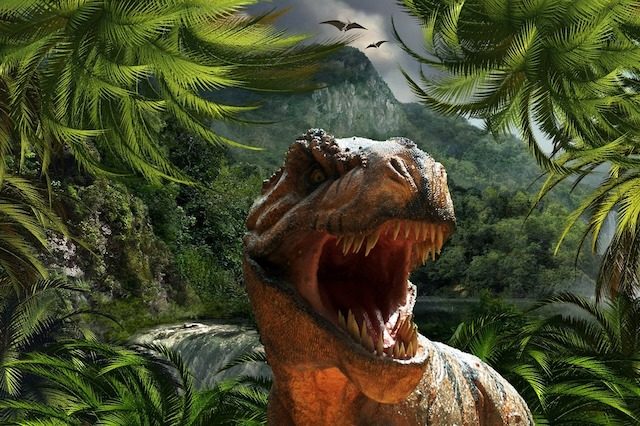
Do you remember the end of the first Jurassic Park , When a Tyrannosaurus rex somehow makes its way into the visitor center, battles Velociraptors, and allows our heroes to escape before letting out a mighty roar? At this point, most of us can probably pick that sound effect out of a crowd. And that speaks volumes about the power of sound in cinema and Steven Spielberg's vision. It's also deeply ironic, because evidence shows that a Tyrannosaurus rex couldn't roar at all.
It's difficult to piece together the anatomy and actual characteristics of dinosaurs based on fossils, but we've been doing this for a long time. While this is also speculative, based on the available scientific evidence, it's unlikely that a dinosaur like Tyrannosaurus rex had a larynx. This means it's unlikely that it could have produced sounds like any living mammal, such as bears, lions, and other animals we associate with roaring.
However, birds have something called a syrinx, which allows them to produce sounds. It's more likely that a dinosaur could have had something similar, allowing for bird-like chirping, but even then, it could have belonged to a group of smaller, arboreal dinosaurs that evolved into modern birds.
Tyrannosaurus rex could still make sounds, but they were perhaps more in line with those of more modern reptiles. Think of the hissing sounds snakes and crocodiles can make, or even humming and drumming sounds. While they were unlikely to be silent on 100%, they were probably nowhere near as loud as they are depicted in films.
9. Cheetahs can't roar.

Speaking of roaring, in the modern world, roaring is a defining characteristic of what we consider a big cat. Lions can obviously roar, and tigers can too. Jaguars and leopards also have this trait, so if you ever hear one coming from the forest at night, stay home. But don't assume you're always safe if you don't hear it.
Besides growling cats, there are purring cats, and while this may sound like your cute kitten at home, there are other cats in the same group that are larger than seems perfectly normal. The cheetah, for example, cannot roar and is therefore not a "big" cat in the true sense of the word. It lacks the vocal cords in its larynx that allow other big cats to make loud noises.
Even though a cheetah can weigh up to 140 pounds and run at speeds over 60 miles per hour, it's not a big cat. In fact, they belong to a strange family called Acinonyx. They're the only cats with claws that are semi-retractable, rather than fully retractable.
8. Earthworms cannot drown.

How many times have you stepped outside after a rain and seen the sidewalk covered in earthworms, pale and damp? If you're like most people, you assumed, or even recognized, that it was because they were escaping the rain to avoid drowning. After all, their little wormholes must be full of water, right? Not so fast.
Earthworms breathe through their skin and can survive completely submerged in water for several days. They require moisture to breathe properly, so rain won't drown them. Instead, it's believed that the worms surface because it allows them to reach their destination more quickly.
Since they need moisture to survive, burrowing into dry soil is actually a slow process for a worm. But in the rain, they can emerge, stay as moist as they want, and likely move much faster. This is convenient.
The second possibility is that the rain confuses the worms, who might think the sound of raindrops is a predator, so they simply head upward to escape. In either case, they don't drown.
7. Baby pandas can't poop without help.

People make a lot of jokes about pandas online. Thanks to the plethora of videos of the animals acting like idiots, people often wonder how they even survive in the wild, as they seem like cartoon characters on a restricted diet. With that in mind, there's another thing that will make you wonder how they've lasted so long.
Panda cubs risk dying if their mothers don't care for them from birth, as they are among the most helpless cubs in nature. Measuring only 1/900th the size of their mothers, they can't see, can't move, and can't even go to the bathroom on their own. They could potentially die of constipation without assistance.
You can see mother pandas frequently licking their cubs, not to groom them, but to stimulate secretions. Yes, that means they need help, so to speak., unload . During the crucial first week, mothers are constantly close to their babies, rubbing their bellies to make sure they can poop when they need to.
6. Reindeer can't walk or pee.

Have you ever heard the joke that you can't walk and chew gum at the same time? It's an old-school joke that essentially means someone seems clumsy and too incompetent to handle simple tasks. But the fact is, some animals can't walk and perform other basic tasks at the same time. For example, reindeer can't walk and pee.
The fact that reindeer need to stop regularly to urinate, and that entire herds do so, is so well known that Finnish reindeer herders have a name for the distance a reindeer will travel before urinating. One poronkusema is about six miles. If the entire herd stops to urinate, you can expect them to travel another six miles before doing so again.
5. Capsaicin has no effect on birds.

We know from YouTube that people love hot peppers. After all, Hot Ones is a big deal. But whether you love or hate spicy food, you've probably experienced the sensation of capsaicin, the ingredient in peppers that gives you that spiciness.
If you're not a fan of spice, you might envy birds because they can't taste what capsaicin offers. This is partly due to birds and their incredibly rudimentary sense of taste. Humans have between 2,000 and 10,000 taste buds, which help us perceive flavor. Chickens have 24. Research suggests that birds either lack capsaicin receptors or have insufficiently sensitive ones. This may also be beneficial for plants, as it allows birds to ingest and disperse hot pepper seeds, making this an evolutionary advantage.
4. Velociraptors lacked higher intelligence

We already visited once Jurassic Park . Why not go back and watch the raptors? The movies also gave modern audiences a glimpse into how velociraptors work. They're pack hunters, cunning, deadly, and intelligent, and nothing short of Chris Pratt with an outstretched hand can stop them. But then again, this is Hollywood. And while raptors may have been intelligent in real life, that's a bit of a stretch.
Carnivores were intelligent relative to dinosaurs, which is like calling a hot dog mildly delicious compared to gas station food. When you're the best of the worst, you're still not great. Intelligence for a dinosaur, based on the size of the cavity housing its brain, means it was probably smarter than a rabbit, but not as smart as a cat.
Also, remember that the movie raptors were actually closer to Utahraptors. Velociraptors were small, about the size of a turkey, and less intelligent than a cat, making them less intimidating than we all think.
3. The domestic silk moth can no longer fly.

Agriculture has done wonders for humanity, but that's not always true for the things we farm, like silkworms. For millennia, humans have been making silk from these insects, and it has transformed the way these little creatures live. They are the second most widely farmed animal in the world after bees, and we raise trillions of them.
Once upon a time, when the silkworm caterpillar metamorphosed into a moth, it was able to fly. Thanks to generations of farmers, domestic moths can no longer fly because we bred them out of them. For so long, they were never allowed to fly like that; even if they had the chance, they wouldn't be able to.
2. Cats don't taste sweetness.

Cats can be very picky eaters, or they can be furry garbage disposals, consuming everything from cat food to salad, bread, and even rabbit poop. Just like with humans, sometimes there's no accounting for taste. But don't let this fool you into thinking that cat food is the same as ours.
If your cat loves your ice cream, you might be tempted to think they have a sweet tooth, but that's not true. Your cat may love all desserts, but it's probably because of the dairy, fat, or literally something else. Cats are physically incapable of tasting sweetness.
Almost all other mammals can sense sweetness. There's a gene responsible for sending sweet signals to our brains, and it's beneficial for survival because sweet typically means sugar, which means carbohydrates, which means energy. For most animals, sugar means something that helps them survive. But cats, being carnivores, don't act that way. So, a gene known as Tas1r2 works in conjunction with another gene to create the proteins that make up sweet receptors. But cats didn't evolve that way.
Now, when it comes to cats who seem to go crazy for sugar, something else may be at play. Researchers say another gene, Tas1r3, may allow them to taste sugar in high concentrations. Or maybe cats are just weird.
1. Not everyone has an internal monologue.

It's very easy to take for granted that you think the same way other people think. In fact, it's probably impossible to go through life without wondering what the hell someone else was thinking when they did something stupid. But the truth is, we don't all think the same. And some of us think very differently than others.
Most people experience an internal monologue when they think. Your thoughts exist as words, entire sentences, and you "hear" them in your mind, perhaps in your own voice, as if you were talking to yourself. You may be surprised to learn that not everyone can do this, and even those who can't do it consistently.
It's estimated that internal monologue is the predominant method of thinking for between 301 and 501 people. But we also have other ways of thinking. Another common method is visual thinking, which involves imagining something in your mind. Not everyone can do this either. But this way, you imagine a place you want to go, a person you want to see, or maybe a meal you want to eat, without any words or dialogue.
There are other methods of thinking, also based on feeling, based on sensory awareness, and based on mindless instinct. Most of us engage in all sorts of activities at one time or another, and rarely in just one. Very few people have an internal monologue 100% of the time, but for some, it seems never to exist.