

Albania has proven to be one of those European oddities that usually doesn't transcend a few unfortunate stereotypes. This Balkan Peninsula complex, refreshed by the waters of the Adriatic and Ionian Seas, full of mountains and countless ancient traditions, is one example of how Europe still contains places we know very little about and which are still waiting to be discovered by visitors eager to find something more, or at least different. Albania certainly doesn't disappoint. On the contrary, it's one of those countries that leaves you wanting more and is a real surprise, which is no small feat in our time.
To illustrate a little more about the land of eagles, we're going to comment on a few interesting facts about Albania. A little clarity is always good before focusing on a new trip like this. Knowledge is never enough, don't you think?
1. Albanians do not call their country Albania.
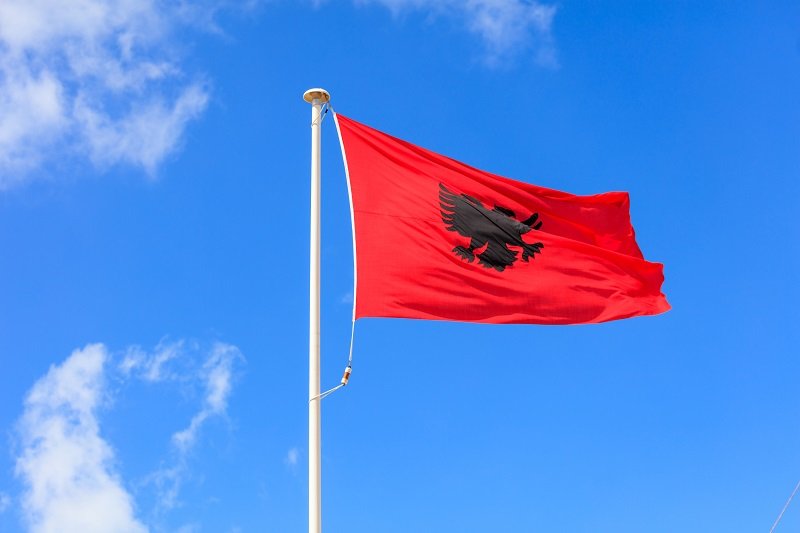
Albanians call their country Shqipëria, not Albania. They also refer to it as Republika and Shqipërisë, specifically referring to the Republic of Albania. This origin likely stems from the Albanian term shqipe, meaning eagle. It is one of the symbols of the Albanian nation, printed in black on a red background. This is why Albania is called the Land of Eagles. Incidentally, despite having a significant population, eagles hunted this species to exhaustion, leaving very few left in the country today, despite its symbolism.
2. Skanderbeg is a national hero
Gjerg Kastrioti, better known as Skanderbeg, was a significant fifteenth-century figure who, by uniting the various holdings of a previously fragmented territory, repeatedly thwarted Ottoman attacks. In fact, as a youth, he enlisted in the Ottoman army to learn their fighting techniques and then defend his people. He truly brought bitterness upon them, for every time they attempted to attack Albanian positions, they were soundly defeated, and Kruja Castle was his finest fortress (one of the must-see places in Albania). After his death (from malaria), the Turkish invasion became inevitable, annexing the territory to the great empire. It is said that Skanderbeg's tomb was plundered and that amulets were made from his bones to protect him during the war. A figure whose battlefield reconnaissance made it possible to hold back the Turkish enemy and create a bottleneck in this part of the Balkans, as otherwise, Italy would have been the next step. And it’s no wonder that in Rome there is a square with an equestrian statue of good old Kastrioti.
3. Being Albanian does not mean being born in Albania
Albania has almost three million residents. But it's believed that there are even more Albanians on the other side of its borders: in Serbia, Kosovo, Macedonia, Greece, and many other European countries. Although it's important to know that there, "Albanian" is considered not only a nationality but also a race. This is why, for example, Mother Teresa, who was actually born in Skopje (North Macedonia), is considered Albanian, given that this would be her family's origin. And it's the reason for the ongoing debate between Macedonians and Albanians, who consider him one of their own.
4. Muslims, Catholics and Orthodox, but above all atheists
A melting pot of religions. This is Albania. Just over 60% identify as Muslim, while the rest are divided between Orthodox (the closer to Greece or Macedonia, the higher the percentage) and Catholic. Atheists are also common. Although the concept of an official religion doesn't exist, and a significant portion of the population is non-denominational, this isn't a country where, no matter how many bells ring or how many muezzins sing from the minarets, there are too many practitioners. Decades of bans and persecution of religions during the dark decades of Enver Hoxha's communist and dictatorial government have taken their toll. In fact, in 1967, it was the first country in the world to declare itself atheist.
5. North Korea has been in Europe for over 40 years
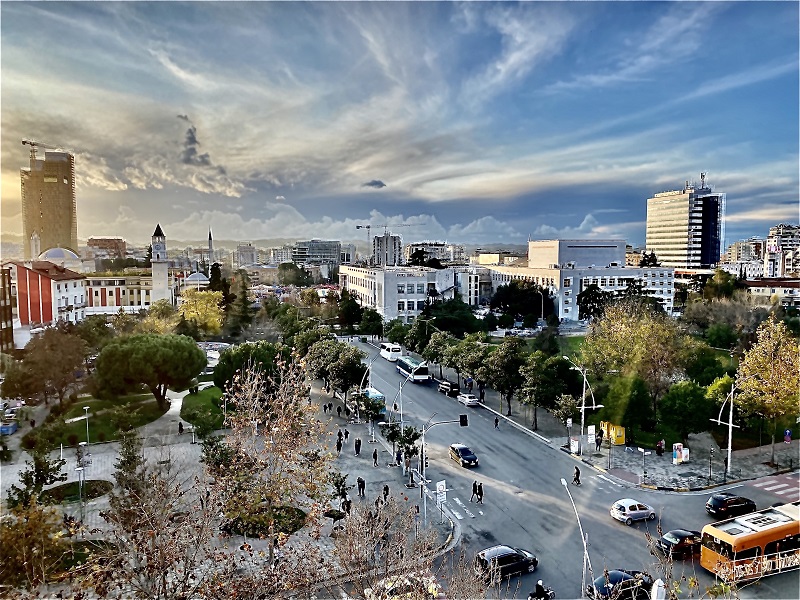
From 1944 to 1985, Albania, or more precisely, the then People's Socialist Republic of Albania, was ruled by Enver Hoxha. Or, equivalently, one of the greatest and most radical communist tyrants of the 20th century. From shadowy secret services (Sigurimi), to torture, to labor camps, to the destruction of religious and historical symbols, and to anyone who disagreed with his government. His radicalism is measured by the fact that everything after Stalin in the USSR seemed weak and subversive. He closed Albania because he believed tourists were true messengers of evil and could infect his people. Ultimately, he distrusted the USSR itself, Yugoslavia, and ultimately even China, so isolationism was at its peak. For four decades, Hoxha transformed his country into something that today would in many ways resemble the hermetic and shadowy dictatorship of North Korea. Communist paranoia still weighs heavily on Albania, so much so that decades after emerging from that period, Albania remains one of the poorest countries in Europe. If not the poorest.
6. Land of Bunkers
One of Enver Hoxha's greatest obsessions was the fear of invasion from many countries he considered enemies. He said everyone wanted to wipe Albania off the face of the earth. From neighboring Yugoslavia, through Russia or the United States. Someone was suspected of planning an attack on the People's Socialist Republic of Albania. Therefore, he took decisive measures to protect himself in the event of an invasion. The construction of hundreds of thousands of bunkers is still very noticeable today. There are about five bunkers per square kilometer. They are located in the mountains, roads, the coast, and, of course, the cities themselves. There are over one hundred thousand concrete and iron bunkers throughout Albania.
7. Eve, blood feud

Many centuries ago, a series of laws, known as Kanun, were written in Albania. They supposedly served to regulate the lives of the region's towns and residents, especially when they were incorporated into the Ottoman Empire. These rules were used in many areas, from agricultural management to simple family relations. And they also dealt with the punishment of bloody crimes. Something still lingers in some Albanian towns, where, in the face of a crime, they take vengeance with death not only on the perpetrator of the crime, but also on their relatives and descendants. Unless they close their doors forever.
8. Albania has its own fjords

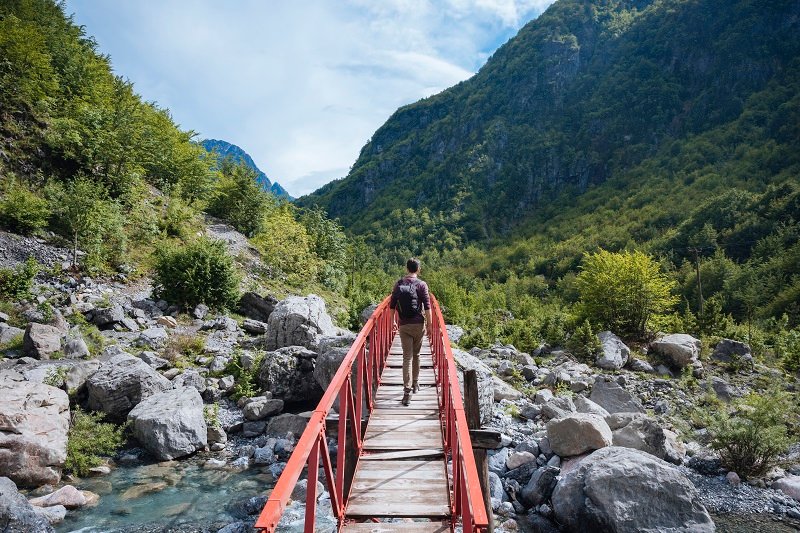
Visitors to the country often talk about the «Albanian fjords.» But if you look at a map, you won't see any fjords. The closest is in northern Montenegro, specifically in the city of Kotor. So... what's so special about the Albanian fjords? It's all down to Lake Koman (Lake Komani), created artificially by damming the Drin River from the distant karst mountains to the north, turning it into a vast shipping lane. Indeed, this large artificial lake, which has submerged entire towns for dozens of kilometers, makes this valley truly resemble the fjords of Norway, but in the middle of the Balkan Peninsula. And the journey between Koman and Fjerze is one of the best ferry crossings you can take in Europe today (also a way to reach the Dinaric Alps, also known as the Albanian Alps), with the Valbona Valley as the star attraction.
9. Albania also has pelicans – the largest in the world.

Before preparing for my first trip to Albania, I knew I'd have to add World Heritage sites, Ottoman-era cities and bridges, medieval castles, bazaars, Roman ruins, impenetrable mountains, bunkers converted into museums, and beaches to the Adriatic coast. What I couldn't have imagined was that Albania also has pelicans. Better yet, the largest pelicans in existence. The Karavasta Lagoon, on an islet, is home to an important colony of Dalmatian pelicans, a species among the heaviest flying birds, weighing up to sixteen kilograms and with a wingspan of nearly three meters.
10. Albanian Alps
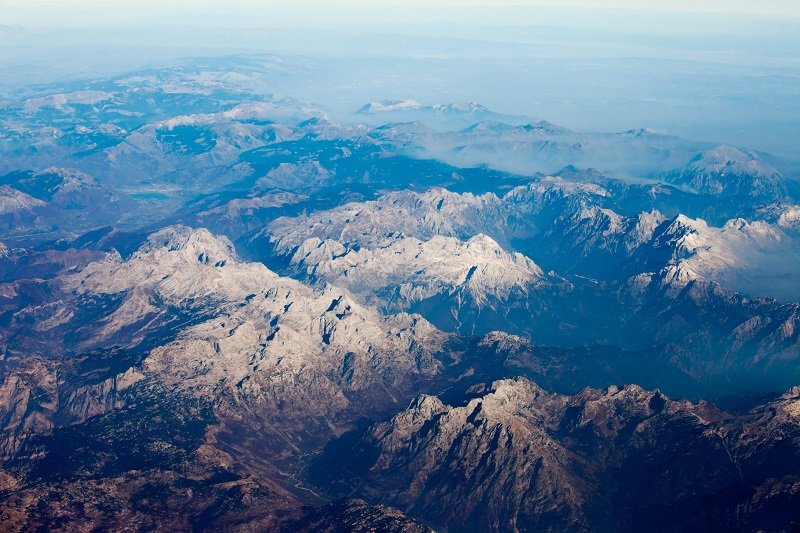
No one doubts that Albania is a country surrounded by the Adriatic Sea and mountains. But what's hard to imagine is that there are landscapes here that make it easy to believe you're in the Swiss Alps or even the Dolomites. It's all about the so-called Dinaric or Albanian Alps, a long mountain range with enormous stone colossi and bucolic landscapes where even brown bears and gray wolves live. Its heart is the Valbona Valley, which I mentioned a few paragraphs ago, as one way to get there is by boat on Lake Koman, a collection of extraordinary postcards of magnificent and sparsely populated nature. For many, the hike from Valbona to Theth is more than just a walk in the mountains. Something to keep in mind.