

When imagining a picturesque medieval landscape, it's almost impossible not to picture a castle somewhere in the background. While it's true that various types of fortifications have existed since ancient times, it was during the medieval period that castles truly flourished.
But what most people don't know about medieval castles, especially in Europe, is that they were typically private fortified residences of local feudal lords or nobles. Depending on the circumstances, these castles played both defensive and offensive roles, and also served administrative and domestic functions. It also goes without saying that castles also served as status symbols, projecting power into the surrounding region.
In this list, we'll look at some of the most original and effective castle structures from around the world.
10. Natural protection
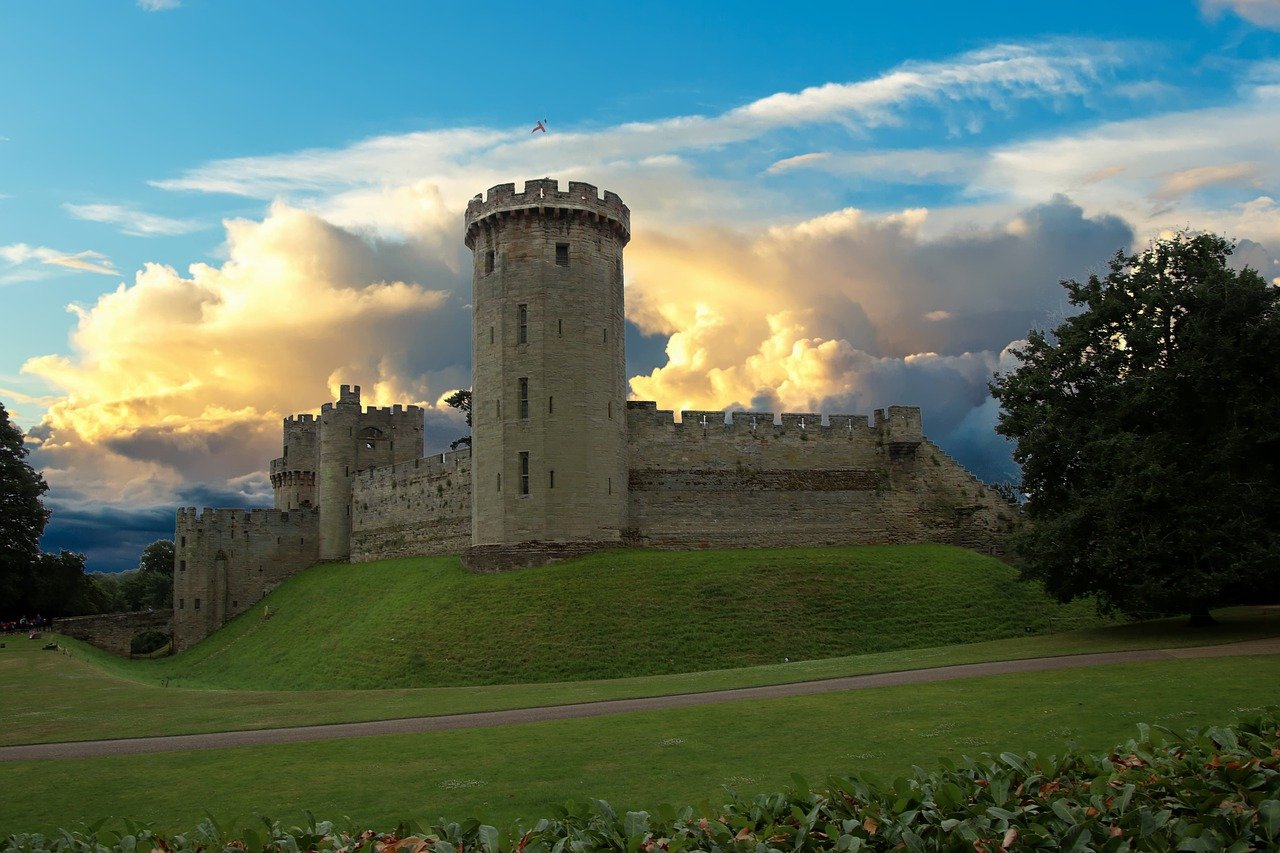
One of the most important things to consider when building a castle is choosing a site that takes advantage of as many natural features as possible. You want to make it very difficult for the enemy to lay siege to you. Building a fortification on high ground is always a good idea. Not only does this increase the height of the walls relative to the enemy army, but it also forces them to attack uphill, slowing them down and making it difficult, if not impossible, for siege weapons to approach.
Motte-and-bailey castles were among the earliest examples of castles in the true sense of the word. They were popular in the 11th century, particularly in France and Norman England. The keep, which was the primary element of a motte-and-bailey castle's defenses and the home of the local lord, was located atop a steep hill or earthen mound known as a motte. Rock outcrops are even more effective at defending a castle, but require more time, energy, resources, and know-how to build and maintain.
Another excellent location for building a castle is near a river, especially in a bend. This provides a natural defense system that can be artificially expanded to surround the entire castle complex. Building on an island in the middle of a lake has the same effect. These types of castles built near rivers or lakes also had the added benefit of providing a constant source of fresh drinking water. Castles built on high hills or rock outcrops often had incredibly deep wells to ensure a source of water within the walls. For example, Kyffhausen Castle in Germany has a well approximately 577 feet deep.
9. Rusticated walls
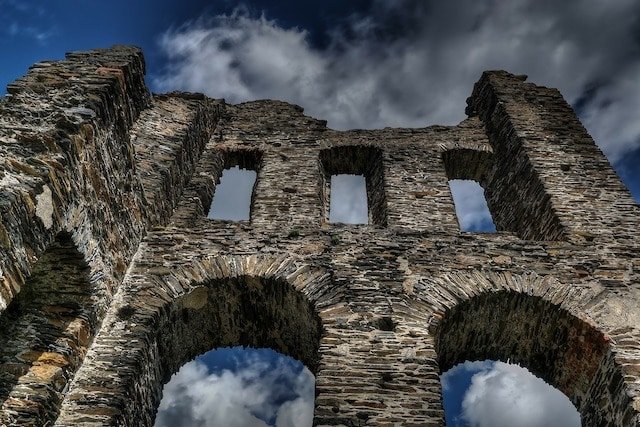
Rustication, also known as crowning, refers to building stones left undressed and unfinished on the exterior of a wall. For years, historians have debated why some ancient masons did this. Initially, rustication was thought to be simply a way to save time and construction costs. Some even suggest it gave the fortress a more menacing appearance. And while this was certainly an advantage, it turns out the command also had a more defensive purpose.
Historians have discovered that rusticated stone walls were much better at dissipating the energy of high-velocity projectiles, such as those fired from catapults, trebuchets, and other ancient or medieval artillery. The uneven surface of the rusticated stones prevented the projectile's energy from being directly transferred to the wall. This is somewhat similar to how spaced armor works on modern tanks.
Rustic masonry dates back to before Ancient Rome and was used on walls. many castles up to the spread of gunpowder and cannon fire.
8. Billboards and scams
Shields, sometimes called khurdas, are wooden defensive structures built atop stone or brick walls. They resemble a covered porch suspended by perpendicular supports. The purpose of the shields is to provide the wall's defenders with a better angle to fire at attackers positioned at the base of the wall.
They have window openings along the parapet for firing arrows or bolts, as well as holes in the floor for hurling stones or other projectiles at enemy soldiers pressed against the base of the wall. Without these shields, defenders would have to strain themselves to fire at the enemy directly below.
During peacetime, billboards were dismantled and stored in prefabricated sections. Whenever a threat appeared, they were reinstalled on the walls and covered with fresh animal skins, which prevented them from catching fire.
In terms of purpose, machinations are similar to billboards, the main difference being that they are permanent and made of the same material as the wall itself. Although machinations require more complex engineering and greater expense, they are irreversible, cannot be set on fire, and are resistant to crossbow bolts and even heavier artillery shells.
During the 19th and 20th centuries, as warfare changed significantly, machinations were used purely for decorative purposes, as seen in the Gothic Revival architectural style.
7. Teeth and slots for arrows
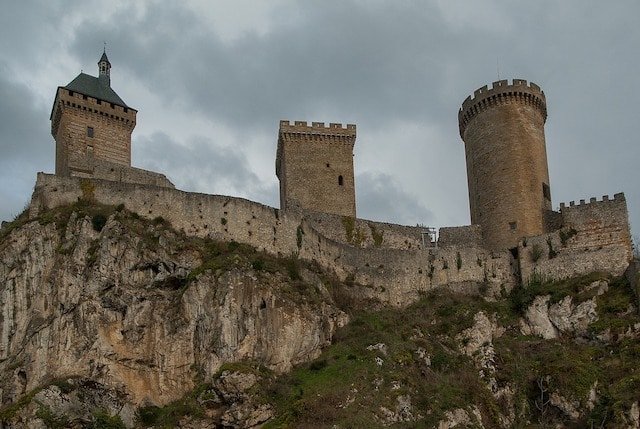
If you imagine the wall of a medieval castle, you likely envision it with crenellations. They have been used since ancient times, with the earliest known example being the palace of Medinet Habu in Thebes, Egypt. They are also present on the Great Wall of China and many other fortifications.
Crenellations, also known as battlements, are made up of merlons, which are projections on the top of a wall. The merlons are the notches between the battlements. Although they don't appear to be much at first glance, they provided excellent protection for defending soldiers.
They used the battlements to hide, shooting arrows, crossbow bolts, or throwing stones at them. Battlements were rarely built on the inner side of a wall, especially in curtain walls, in case the enemy managed to scale them and use them against the defenders.
Some medieval castles even had battlements with built-in arrow slits for additional defense. The invention of arrow slits is attributed to Archimedes during the siege of Syracuse in 214–212 BC, but it is possible they may be much older. Although they were used by the ancient Greeks and Romans, they were reintroduced by the Normans only in the late 12th century.
On the outside, the arrow slits were vertical and very narrow for protection. However, on the inside, they widened to give the archer or crossbowman the greatest possible range from side to side and as close to the base of the wall as possible. In later centuries, they were converted into cannonades. Essentially, they are the same thing, but for cannons.
6. Well-protected gates
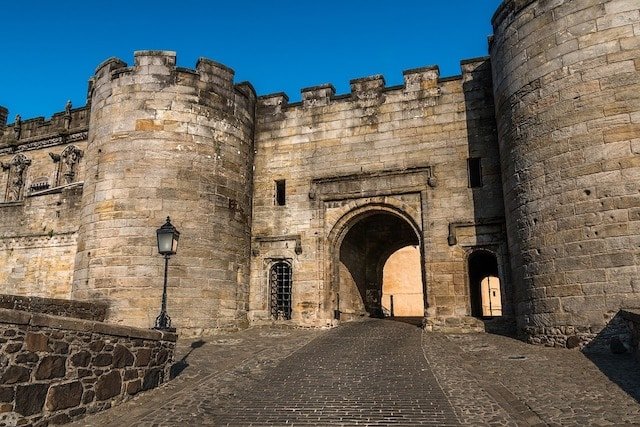
A gate is a natural weak point in any fortification, and the defenders' job is to fortify any such weak point as best they can. After all, it's essentially a hole in the wall, and it had some of the heaviest defenses in the entire castle complex. It's also important to note that these weren't just gates, but gatehouses. These were multi-story buildings that served as passageways.
In many cases, it was difficult for an attacker to even approach the gatehouse, especially with a battering ram. Depending on the castle, you might have a water-filled moat or a deep moat with a drawbridge. Alternatively, you might find a steep or winding path leading to the gate, making it difficult, if not impossible, to use a battering ram.
Most gates were also equipped with two flanking towers, providing a better angle for the gate. This allowed archers and crossbowmen to fire at enemies directly at the gate. Portcullises, essentially miniature forts, were also built directly above the gates for hurling stones at attackers.
The gate itself was, of course, the gate's main feature. It had to be relatively easy to open and close in peacetime, meaning it was usually made of wood. To strengthen it, defenders often used both vertical and horizontal layers of sturdy wooden planks, and sometimes even metal plates.
Most gatehouses were also equipped with two or more portcullises. These are wooden and/or metal latticework that quickly fall and are securely fastened into holes in the ground. If an enemy manages to break down the gates and enter the passage, the portcullises would close, and the enemy soldiers would be trapped inside. Often, the side walls of the gatehouse had loopholes, and at the top, there were assassination holes. Boiling water or hot sand, rather than oil (usually because oil was rare and expensive), were dropped through these assassination holes onto the captured enemy.
5. Barbicans
Also known in the castle business as a «death trap,» barbicans were an additional layer of defense leading to the castle's main gatehouse. Barbicans could take various forms, but the most common was a narrow passageway called a «neck» and one or more secondary gates leading to the main entrance. When an attacking enemy army rushed toward the main gate, they would head through this passageway, making them easy prey for archers and crossbowmen.
Other barbican designs included a tower located above the bridge, or a walled semicircle in front of a moat and drawbridge. Castles could have multiple barbicans protecting the main entrance. With the development of artillery technology in the 15th and 16th centuries, these became obsolete.
Barbicans were also used in Beijing, China, to guard numerous gates to the capital during the Ming and Qing dynasties. They were demolished in the 1960s, along with most of the old city's other defensive structures, to make way for modern roads, subways, and other urban developments.
4. Elephant-proof gate

Battering rams of various shapes and sizes have always been used as an effective method of breaching fortified gates. Even today, they remain an invaluable tool used by police, military, and other special forces. In medieval India, elephants were excellent and effective battering rams.
The defenders had to compensate for these mighty beasts of war, who had breached the main entrance, by installing heavy spikes on the gates. When one or more elephants charged directly at these gates, they did so with their foreheads, protected by steel plates. The defenders typically installed the spikes at the mid-height of the elephant's forehead. Some of these spikes would also be equipped with hooks, preventing the elephant from retreating and making it a stationary target for the defenders atop the wall.
3. Labyrinths
Due to their location along the so-called Ring of Fire surrounding the Pacific Ocean, Japanese castles have a different design than those in Europe and other parts of the world. Rather than relying heavily on brick and mortar, Japanese castles are made primarily of wood and perched atop large boulders, held together by steep stone walls. Unlike their European counterparts, Japanese castle construction is much more earthquake-resistant. This design also facilitates the incorporation of labyrinths into the defense system.
Built and expanded during Japan's Warring States period, Himeji Castle—the largest in the country—has some of the highest walls, standing at 85 feet, and covers a vast area of over 576 acres. Its walls also tend to widen at the top, making them even more difficult to climb. Along with other defenses, such as multiple concentric moats, machicolations, and hidden chambers designed for surprise attacks, the entire Himeji castle complex has become a complex and highly confusing labyrinth.
His goal was to protect the castle's main fortress from large armies by leading them along steep, narrow, and winding paths. These often branched, leading attackers into dead ends or encountering dozens of sturdy iron gates and narrow passages. Constantly surrounded by high walls, an invading army found itself under fire from the defenders. For better or worse, the walls of Himeji Castle were never breached, and its labyrinth was never tested.
2. Clockwise spiral staircase

When constructing the defensive structures of a medieval castle, architects and engineers had to use everything to their advantage. And in some castles across Europe, they used the attackers' tendency to wield weapons right-handed against them by constructing spiral staircases. If an enemy managed to breach the castle and began to ascend the towers or keep, they were sometimes forced to do so by clockwise spiral staircases.
This gave the defenders, who typically fought down the stairs, an advantage. Since most soldiers held their weapons with their right hands, this meant their sword hand was constantly blocked by the inner wall. Therefore, attackers moving up had to expose themselves completely to effectively use their weapons.
The defenders, on the other hand, not only benefited from the bottleneck provided by the ladder, their higher position on the ground, and the disadvantage of the attackers, as they had to constantly expose themselves, but also used the inner wall as a partial shield.
Travel steps were also quite common in medieval castles, such as those at Berkeley and Hever Castles in the UK. In both examples, some steps are uneven, having a different depth than others. While this may give the impression of poor craftsmanship, it was actually intentional.
Over time, the inhabitants grew accustomed to these steps and instinctively adapted to the gait. The attackers, however, were unsuspecting and, in the heat of battle, often lost their balance, stumbled, or even fell, giving the defenders a small but possibly decisive advantage.
1. Secret passages and exits

Since castles were typically the private residences of nobles or local lords, it was in their interests to have a back entrance for emergencies. These are known as postern gates or sally ports. These are small, hidden entrances to the castle complex, located away from the main gate and large enough for one horseman to pass through at a time. These gates were built in a location where they could not be attacked or destroyed by enemy artillery.
During a siege, people could come and go relatively unnoticed. This allowed them to bring food and other resources, send messengers, or even flee the castle if they were attacked. They were also used for small raids on the besiegers, attacking isolated pockets of enemy forces, sabotaging siege equipment, or destroying their food supplies. Since most castles had at least one, the postern gate wasn't really a secret, but it was usually difficult to find.
However, the secret was the hidden passages that some castles had. One such example is in Bran Castle in Romania. It connected the first and third floors of the castle and was used in case of emergency. In fact, it was so secret that it was only rediscovered in 1920 during a major renovation.