


Espionage played a role decisive role during World War II. All major powers at the front, including the USSR, the USA, Great Britain, and Germany, made extensive use of spies and secret agents. In addition to the usual work of eavesdropping and assassination missions, these agents were also responsible for training local resistance movements in occupied regions, as well as preparing the battlefield before a major offensive.
10. Operation Greif«

As the war progressed, Otto Skorzeny earned a reputation as one of the most dangerous and effective operatives in Europe. Working directly for Adolf Hitler, he rescued Mussolini from a fortified mountaintop hotel in Italy shortly after he was overthrown and arrested by Italian authorities. On another occasion, Skorzeny successfully kidnapped the Hungarian regent's son., Admiral Horthy , and used it to force Hungary to stay in the war.
His most daring mission was the infiltration of Allied positions in Belgium during the final stages of the war. Its primary objective, known as Operation Greif, was to kidnap or assassinate General Dwight D. Eisenhower, using the major Ardennes offensive as cover. It was a poorly planned operation, and agents on the ground were quickly foiled. captured by the Allied forces, mainly because of their poor English.
9. Operation Animals

Operation «"Animals"» In reality, it was a series of operations carried out by Allied spies and local resistance fighters in occupied Greece. Sometime in June 1943, coordinated attacks began on communication lines, railways, and other infrastructure under German occupation, creating the impression that an Allied invasion was imminent.
However, there were no plans to attack Greece before capturing the Italian peninsula. The mission was actually part of a large-scale deception operation, dubbed "Mincemeat," designed to distract the Germans from the impending attack on Sicily. It largely worked, as it forced the German high command to tie down some of its best units in Greece instead of sending them to reinforce Sicily, including 1st Panzer Division . Operation Animals played a significant role in the outcome of the war on the European front, as it directly led to the capitulation of Italy. 3 September 1943.
8. Operation Ripe
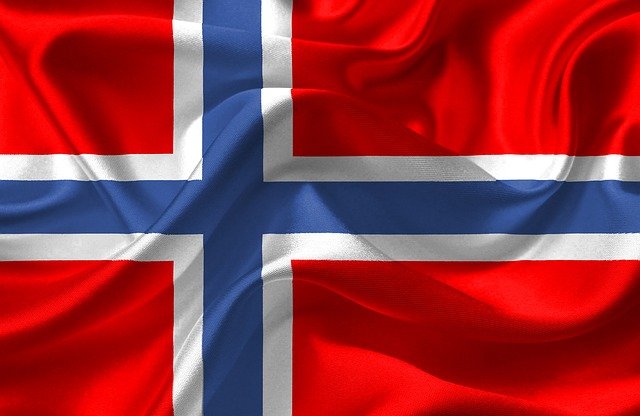
On March 24, 1945, an American covert unit was airdropped somewhere in the Snäsa Mountains, marking the beginning of the only US-led operation of the war in occupied Norway. Participants included Norwegian-speaking Americans, Americans of direct Norwegian descent, and Norwegians who had somehow ended up in the United States for various reasons.
Working with local resistance forces, the unit's primary objective, codenamed "Reip," was to make life difficult for retreating German troops as the war entered its final stages. They were largely successful, as the group was responsible for sabotage several railway lines and other evacuation routes used by the Germans. In honor of their contribution to the war, a Norwegian Home Guard unit stationed in the Trøndelag region was recently renamed to the RYPE task force.
7. The Duquesne Spy Ring

The Duquesne spy ring was named after and led by Frederick "Fritz" Joubert Duquesne, a South African-born operative who worked for Germany in the lead-up to the war. The New York-based operation involved at least 33 other spies , making it one of the largest spy operations ever uncovered on US soil.
It was a complex, large-scale operation, although we are still uncertain about the extent of the information passed to Nazi Germany during its execution. Duquesne, who had previously spied for Germany during World War I, was a difficult agent to catch, as he was adept at changing identities and remaining silent for long periods to avoid arrest. He worked as a journalist, film publicist, and, at times, a journalist., fictional Australian war hero and even an advisor to the president Theodore Roosevelt .
6. Operation Anthropoid«

Reinhard Heydrich was a high-ranking official in the Nazi regime and one of the main architects of the Holocaust. As head of the Gestapo and other military police organizations in Germany, he created the horrific Einsatzgruppen ; death squads specializing in counterinsurgency and large-scale ethnic cleansing campaigns that followed the German advance eastward. He will never stand trial for his crimes, as Reinhard Heydrich was one of the few SS officers killed by resistance forces long before the end of the war.
Operation Anthropoid was carried out by two Czech operatives Josef Gabčík and Jan Kubiš May 27, 1942 . At the time, Heidrich was in Prague as governor of one of the occupied provinces of Czechoslovakia, which he ruled with an iron fist. Although the initial attempt was unsuccessful, as the pistol used by one of the agents jammed, a grenade thrown under his car seriously injured Heidrich. He died on June 4, making the assassination one of the most high-profile of the war.
5. War against trains

Throughout the war in Europe, partisan forces in many occupied countries made a concentrated effort to sabotage the railway network. The Soviet high command even had an official word for this., Operation Railroad War« , in which partisan units in Belarus were sent to attack the railway network to support the upcoming Soviet offensive in Ukraine and Belarus.
In fact, the operation is now an important part of Belarusian war history and is still taught in schools as the main achievement of the Belarusian partisans. During the operation, hundreds of thousands of miles of railway lines were destroyed, which seriously limited the German ability to strengthen their positions in the east. In the west, partisans in occupied countries such as Norway, Italy and Greece, specifically targeted railway lines and railcars to disrupt the Axis war effort, with varying degrees of success.
4. Operation Fortitude South«
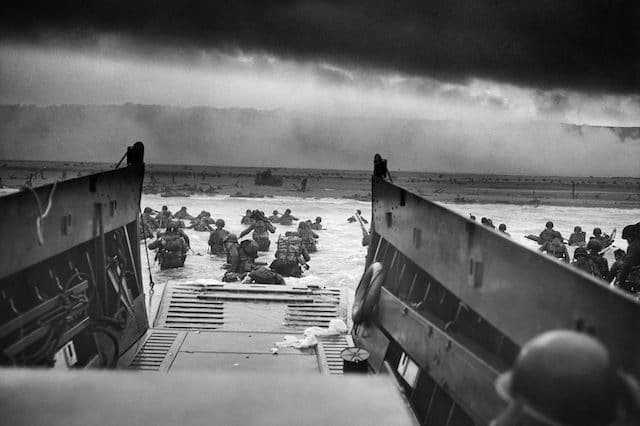
Operation Fortitude South was the primary deception operation in the larger Operation Bodyguard, a continent-wide espionage effort to conceal the Normandy landings. Although the Germans knew the main Western Allied forces were about to attack somewhere, they had no idea where, thanks in large part to numerous intelligence and counterintelligence operations by British and American operatives.
«Fortitude South was primarily intended to force the Germans to concentrate their firepower in the Calais area near the Strait of Dover - the most probable location for a potential amphibious invasion from Britain—instead of Normandy. One of the many stages of the mission was a sub-operation called Quicksilver I , when an entire fake army group called the First United States Army Group was created, equipped with dummy planes, tanks, and other fake military equipment that looked like a real military force. The operation was so successful that even after the D-Day landings began, Hitler about seven weeks refused to send reinforcements there, waiting for an invasion that never came.
3. Operation Gunnerside

Operation Gunnerside was one of the most daring covert operations of the war, as it involved a small team of agents attempting to infiltrate a heavily defended and fortified German power plant in Norway. The target was the Vemork hydroelectric power station near the town of Rjukan, which produced most of the world's heavy water. For the uninitiated, heavy water is a form of water with special properties that can be used in the production of nuclear weapons, making it one of the most valuable. connections in the world at that time.
Starting from February 16, 1943 Nine Norwegian commandos fought their way through minefields, frozen rocks, and heavy snow to reach the plant. The actual operation took place on February 27, resulting in the complete destruction of the facility's heavy water production cells. It is estimated that Germany lost over 500 kilograms—or about 1,100 pounds—of heavy water to the sabotage, setting back its nuclear program by months, if not years, and allowing the Allies to gain a decisive advantage in the nuclear arms race.
2. Richard Sorge

Richard Sorge was a German journalist and a member of the Nazi Party since 1933. In 1938, he was stationed in Tokyo as the chief adviser and press attaché to German Ambassador Eugen Ott. In German and Japanese circles, Sorge was considered a devoted member of the Nazi Party, although in reality this was far from the case. In fact, Sorge was staunch communist since the First World War and even participated in uprising Spartak League during the short-lived German Revolution of 1919.
From his recruitment in 1925 until his arrest by Japanese authorities in late 1941, Richard Sorge proved to be arguably the most valuable asset in the global Soviet intelligence network. In May 1941, he correctly reported that the Germans were about to launch a full-scale invasion of the USSR on June 20, just two days or so away. In August of that year, his report on Japan's plans to attack targets in the Pacific, specifically Pearl Harbor, rather than the USSR, enabled Stalin to redeploy most of his troops from Manchuria deep into Russia. With these reinforcements, Russia was able to reverse its precarious position in the battle. near Moscow and force the German troops to retreat, which became a turning point moment in the war.
1. Red Orchestra

The Red Orchestra was just one of many resistance groups operating against the Nazis in Germany and neighboring countries, though it was certainly the most successful. From 1933 to 1942, when it was finally exposed, the group's spies, informants, and other undercover agents participated in various operations against the Nazi regime, including providing shelter to local Jews and documenting Nazi atrocities for foreign media.
Because of its name, the group was often associated at the time with the USSR and its intelligence network spread across Western Europe, although in fact its members represented a wide range of political circles . After the German authorities destroyed it in 1942, most of the Red Orchestra members were either executed or sent to various concentration camps. By throughout Germany, which led to the tragic end of one of the most daring espionage operations of the war.