

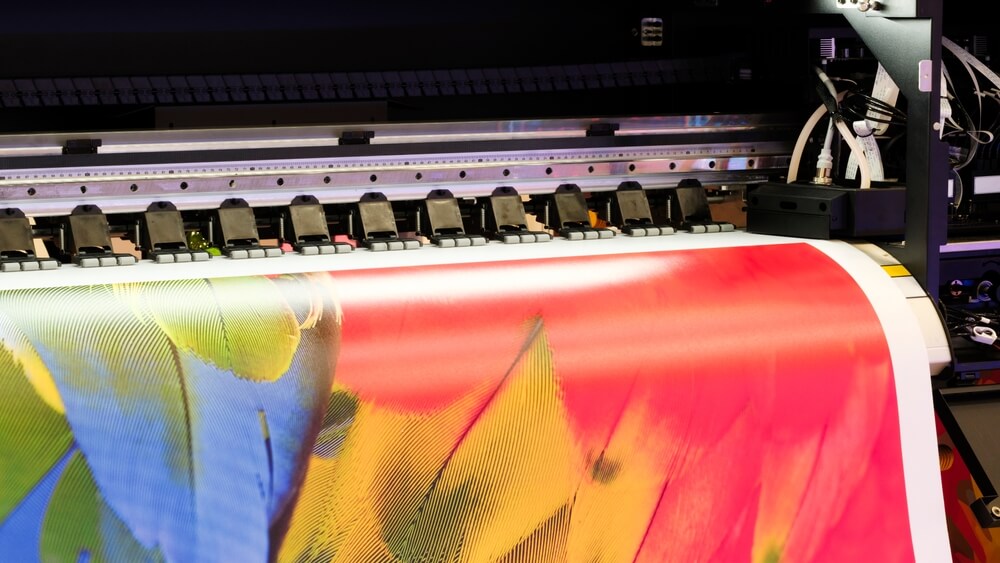
Digital printing transfers an image from a file directly to paper, without the use of printing plates. Offset printing requires the preparation of printing plates, from which the ink is transferred to the paper indirectly, through a rubber cylinder. Therefore, digital printing is faster and cheaper for short runs and allows for changes to the content of each copy, while offset printing becomes more cost-effective for longer runs and offers more options, such as special colours.
To sum it up
- Technology: Digital printing directly from a file (toner or ink), offset printing – from exposed printing plates through an offset cylinder.
- Cost: In digital printing, there are no initial costs, but the price per copy is fixed; in offset printing, preparation costs are spread over the entire print run, so the cost per copy increases with the quantity.
- Personalization: Only digital printing makes it easy to print each product differently (names, numbers, codes).
- Choice: Small print runs and urgent deadlines – digital printing; large print runs, Pantone colours, unusual paper – usually offset printing.
How does offset printing work?
Offset printing — is a flat-bed printing technology that utilizes the mutual repulsion of oils and water. On an aluminum plate (printing form), oil-based ink is applied to the printed areas, while a thin layer of an aqueous solution is applied to the non-printed areas, preventing the ink from adhering. Today, printing forms are typically made using this technology. CTP (Computer to Plate), that is, they are exposed directly from the file.
The ink doesn't go directly from the printing plate to the paper. It first passes through a cylinder covered with rubber sheeting , and only from there onto the substrate, hence the term "offset printing." Color printing requires a separate printing plate for each color: usually four per model. CMYK , plus additional forms for special colors, such as colors from the Pantone color palette.
Before printing itself, the printing press must be prepared: the printing plates must be installed, the ink and dampening parameters must be adjusted, and the primer sheets must be manufactured. This requires time, materials, and money, regardless of whether we're printing 100 or 10,000 copies.
How does digital printing work?
В digital printing The image is created directly from computer data. In electrophotographic machines (which work similarly to laser printers), the image is created using dry or liquid toner, while inkjet printers use ink droplets. There are no printing plates or lengthy setup times: the file enters the machine, and the finished sheets emerge moments later.
Since each sheet is printed anew from the file, subsequent copies may differ. This is the basis variable data printing (VDP): Personalized invitations, numbered tickets, name badges, or mailings with the recipient's name.
Comparison chart of digital and offset printing
| Characteristic | Digital printing | Offset printing |
|---|---|---|
| Print the form | No - print directly from file | Plates exposed in CTP, separately for each color. |
| Cost of preparation | Almost zero | High (cymbals, organ, waste paper from shoes) |
| Cost of a copy | Similarly, regardless of blood circulation. | As blood circulation increases, its importance decreases. |
| lead time | Short and instant printing is possible. | Longer period due to preparation |
| Personalization | Yes, each copy may vary. | All copies are identical. |
| Special colors (Pantone) | Usually simulated using CMYK. | Printed with separate inks. |
| Formats and substrates | Typically these are smaller sheets and a narrower range of paper. | Large sheets, wide choice of paper of different thicknesses. |
| Typical areas of application | Business cards, invitations, short series, prototypes | Catalogues, books, magazines, leaflets in large print runs. |
Price and quality – what’s the real difference?
With digital printing, you pay primarily for each printed sheet, so the cost increases roughly proportionally with the print run. With offset printing, the bulk of the cost is spent on preparation, and each subsequent copy is inexpensive. At a certain point, the curves intersect, and offset printing becomes cheaper. The exact point depends on the format, number of colors, paper, and the printing house's price list. Therefore, for small print runs, it's worth requesting quotes for both technologies.
The quality of modern digital printing is very good in most cases. Offset printing still has an advantage where it matters. accurate color rendering in accordance with corporate standards (Pantone inks instead of imitation), large, uniform solid colors, repeatability in very large print runs, or printing on non-standard paper types.
When should you choose digital printing and when offset printing?
- Digital printing – when you need a small print run quickly, you want to make a proof copy, print versions for different recipients, or personalize each print.
- Offset printing – this is printing in large print runs that requires the use of Pantone colours or special inks (such as metallic), printing on non-standard paper or aiming for the lowest possible unit price.
- A combination of both methods – for example, offset printing of a large number of leaflets and digital printing of a short personalized version.
Regardless of the technique used, prepare the file according to the printer's specifications: appropriate resolution, crop margins, color profile, and fonts converted to curves or embedded in the PDF file.
Frequently Asked Questions (FAQ)
At what volume does offset printing become profitable?
There's no set limit. It depends on the format, number of colors, paper type, and the printing house's price list. For medium runs, it's best to request quotes for both printing methods.
Is digital printing really inferior in quality to offset printing?
In most cases, this isn't suitable—modern digital printing presses produce excellent results. Offset printing is advantageous when working with Pantone colors, large, uniform surfaces, and very large print runs.
What is a CT perfusion plate?
This is an offset printing plate, printed directly from a computer file (Computer to Plate). A separate plate is produced for each color.
Is it possible to personalize offset printed items?
Offset printing itself produces identical copies. Personalization, such as adding names or numbers, is usually accomplished in a separate process, most often digital overlay.
Why is displacement called displacement?
Since the ink does not flow directly from the printing plate to the paper, but first into a rubber cylinder and only from there onto the substrate, this is called indirect printing.
See also
- What is the difference between a laser printer and an inkjet printer?
- What is the difference between Promarker and Brushmarker?
- What is the difference between a webcam and a digital camera?
- What is the difference between LED and LCD screen?
- What is the difference between OLED and QLED?