

What's in a name? This question has been asked many times, and more than one person has racked their brains trying to come up with the perfect name for a screenplay, a dog, and even a child. There's a Swiss consulting firm that will charge you more than $29,000 , To help you name your child if you have far more income than creativity. And who knows, it might be worth it. After all, things can be named in the most unexpected ways.
10. The Milky Way gets its name from the breastfeeding goddess.

The Milky Way galaxy we call home includes 200 billion stars Along with our Sun. It's about 13.6 billion years old, making it a hair younger than the universe itself, and is said to look a bit like a Pringles potato chip. None of this, of course, explains why they call it the Milky Way.
The somewhat delightful title goes back to its roots roots in mythology , the same place where most things in the cosmos get their names. Saturn, Mars, Jupiter, all the Roman gods. The Romans once called the Milky Way via lactea, which translates as «milk road.» If you get the look The Milky Way on a clear night far from the city looks stunning and breathtaking. And the burst of brilliant white light is somewhat reminiscent of the Milky Way.
Before the Romans, the Greeks also had a dairy-themed name - « galaxias kyklos » which means «milky circle.» So it's more or less the same idea. As for the story? Zeus brought young Hercules home to his wife. Hera, so that she could breastfeed him , while she slept. It is known that Hera hated Heracles. His mother was mortal, and when she awoke and saw the baby, she pushed him away, spilling milk across the night sky. Thus, the Milky Way was born.
9. Wall Street got its name from the Dutch settlers.

For most of us, Wall Street is more of a concept than a real place. It's been the subject of movies and stories, and we all know it's where money is made, even if few of us ever have reason to go there. If you're not familiar, Wall Street is the eight blocks of Manhattan that house the Financial District. Both the NASDAQ and the New York Stock Exchange are located on Wall Street.
The name can be traced back to Dutch , who at one time settled in New York as New Amsterdam. There are some variations in the details of this story as it dates back to the 1700s, but in some of them part of the wall's name refers to the present wall .
According to one theory, the Dutch signed a treaty with Native Americans in the area and then violated it. They built the actual wall as part of their defense against them after the fact.
Another version of this story states that the northern end of the New Amsterdam settlement was marked by an earthen wall. This could have been used for defense against both Native Americans and the English.
Another theory suggests that it may have gotten its name from the Walloons, an ethnic minority in Belgium. Some of the first settlers are said to have been Walloons.
8. Mastodons were named after their teeth.
Mastodons are often confused with mammoths, But they were distinct animals with some clearly defined traits. The mastodon was shorter and had straighter tusks. And while the mammoth was a herbivore that chewed grass, the mastodon ate tougher food, and his teeth They were very different from the smooth, flat teeth in the mammoth's mouth. And this is a very significant detail.
While a mammoth's molar appears flat and smooth, a mastodon's molar looks like a cross-section of a mysterious stalagmite cave. These numerous ridges on the teeth helped the creature chew on twigs and branches. The name mastodon derives from this feature and literally translates as « chest tooth » because when their fossilized remains were first discovered, it was thought that the teeth looked as if they were covered in nipples.
7. Minke whales were named after an incompetent whale watcher.
When you hear the name «blue whale,» you can pretty confidently guess what it was named for. "Kasatka," though unofficially called "kasatka," is also fairly easy to guess. But what about the minke whale? It's an unusual name, and its origins can be traced to one of the few instances in the history of nomenclature where something was named solely to mock someone's intelligence.
Whaling was once a common practice for many cultures. Norway has a long history of whaling, and it's here that you'll find the origins of minke whales. As the story goes, aboard a Norwegian whaling ship named Mainke there was a man , whose job it was to find whales. They say he was new to the job and apparently not very good either. He called out to a blue whale, which, as you may remember, is the largest creature to ever live on the planet, weighing around 200 tons. Of course, it turned out to be at all not a blue whale, and a minke whale, which weighs about 8 tons. As a result of his incredibly large mistake, the team began calling them "minke whales" in honor of the unfortunate observer.
6. The Bible is named after a Lebanese seaport.
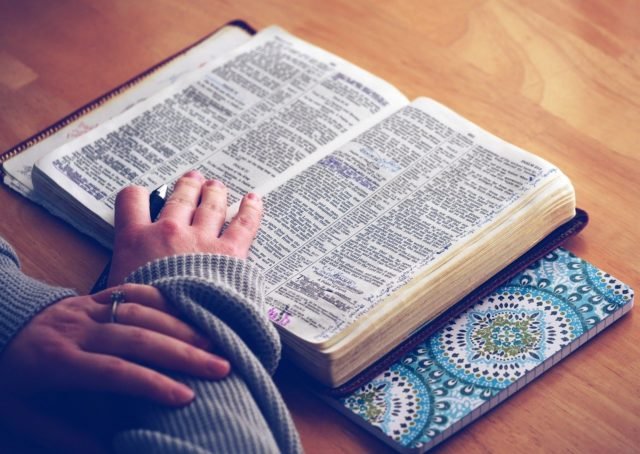
The French word for «library» is bibliotheque . When a scientific article or book lists references, it's called a bibliography. And the book of sacred scriptures in the Christian religion is commonly known as the Bible. There's a reason they all sound the same, and that's because the root of all the words comes from the same place—seaport. in Lebanon .
Byblos was inhabited from the Neolithic period, from as early as 8000 BC to 4000 BC. During the Greco-Roman period of history, the site became a vital location in the world of books, as it was the center of all imports and exports of Egyptian papyrus, the paper on which everything was written at that time.
Papyrus paper soon became one of the most important resources in the world, and the Greeks began to call it by its place of origin – Byblos. The name evolved from byblos to biblia As papyrus paper was collected into books, church leaders began calling the sacred books «the bible,» which eventually evolved into the word «Bible.».
5. Heroin made people feel like heroes.
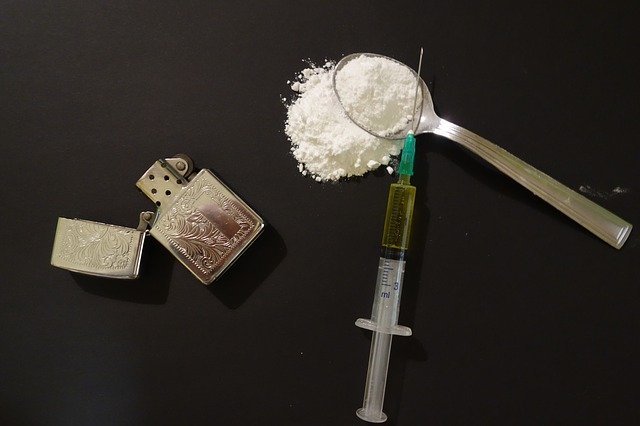
Heroin is a drug we're all warned to avoid from childhood because of its dangers and addictiveness. But at some point, you might have wondered why it has the same name as a female heroine, albeit without the «e.» It's no coincidence that these words are so similar. Heroin makes you feel like a hero—that's the idea behind the name.
Remember, when heroin first appeared, it was widely used as a medicine. Heroin is a brand name for a cough medicine manufactured by Bayer, and the name comes from the German word for «heroic» . Why call it that? Because people who used heroin at that time described themselves as heroic , and the name stuck.
4. Idaho was made up.

The etymology of place names is always fascinating because we often take place names for granted. How many people from California can confidently claim to know what the word «California» even means? The name comes from a 16th-century Spanish romance novel. California was the queen of Paradise Island. Other state names come from Native American languages, such as Alaska, which comes from the Aleut word meaning «great land.».
Unique among the states is Idaho . It is conceivable that this word is of Indian origin, and that is what George M. Willing said when he submitted it to Congress as the name of the state of Colorado. He said that it meant « Pearl of the Mountains »The problem was, it wasn't a Native American word at all; he'd simply made it up. So they rejected it and chose a Spanish origin for Colorado, naming it after the river, which was dyed red, or, in this case, «the color of the rojo.».
A few years passed, and Congress needed to name a new state, and for some reason they all forgot that Wheeling had lied about Idaho being an Indian word. So that's what they went with, and to this day, it still means nothing.
3. The Bobbit worm was named after Lorena Bobbitt

One of nature's most fearsome creatures is the bobbit worm. This deep-sea worm lives beneath the seafloor, waiting to ambush prey that settles above it. They can grow up to three meters in length, Although most are between two and four feet long, their jaws, which open at an angle of almost 90 degrees, snap shut with enough speed to cut the prey in half , as they drag it under the silt and manure. They also have stinging bristles that can cause a burning sensation and even permanent numbness.
Despite all the creepiness, it's safe to say that the most disturbing thing about the bobbit worm is its name. They were named after Lorena Bobbitt , a woman who infamously cut off her abusive husband's penis with a knife back in 1993. The worm bears this name for obvious and unpleasant reasons.
2. Scotch is an insult to the Scots.

These days, most of us like to think of ourselves as good people—or at least, you'd like to think so. The idea of ridiculing people because of where they're from is roundly derided as bigoted, prejudiced, and wrong. Naming a product based on negative stereotypes about people from a particular country would be completely unacceptable today. But Scotch wasn't made today. It was made in the 1920s.
Shortly after the tape was invented, its creator, Richard Drew, was testing it. A worker using it was annoyed that it wouldn't stick, and the reason was the adhesive. was only on the edges tape, not over the entire surface. The worker told Drew to take it to his to Scottish bosses — referring to the Scots, whom he insulted for being cheap, a stereotype at the time. The name stuck and became a source of pride.
1. The Ouija board (allegedly) named itself
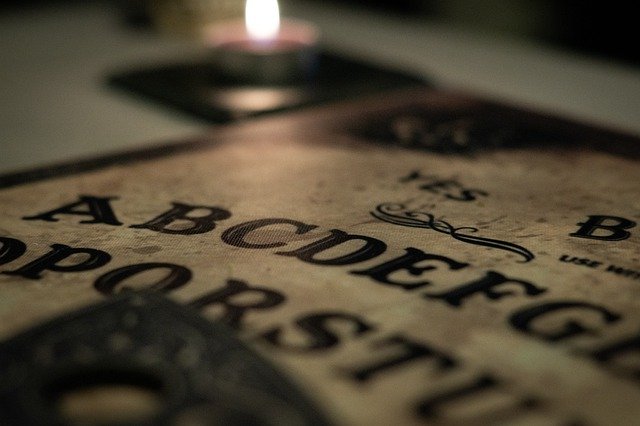
You can prove that the world's best party game/way to randomly summon a demon is a Ouija board. You could have bought them back in In 1891 , and they have become even more popular in recent history thanks to their appearance in movies and other places in pop culture. In 2014, they were mandatory a Christmas attribute. Considering that every time someone uses them in a movie, half the actors die, that's impressive.
Besides demons and ghosts, the most unusual part of the Ouija board is its name. It's not a word you encounter very often, and the internet won't be much help. That's because the word Ouija comes from one place: Ouija boards.
As the story goes, a medium named Helen Peters used a spirit board in 1890. She asked the board what she should call it, and it told her Ouija. She asked what it meant, and the sign on the board shifted to the words « Thank you». ”
If this story is to be believed, the Ouija board is perhaps the only inanimate object in history to have named itself.