


The Guinness Book of World Records is a collection of incredible achievements and astonishing facts from around the world. It features not only athletic feats and unique human abilities, but also truly curious and sometimes unusual records. One category of particular interest to many is the cost of record-breaking. Some achievements require colossal investments, while others are practically free but surprising in their simplicity. In this article, we'll look at the most expensive and cheapest Guinness World Records, which evoke awe, laughter, and admiration. Find out what people are willing to do to earn a place in the book of records and why it doesn't always require millions.
Cheapest records
5. The cheapest supercomputer-decoder
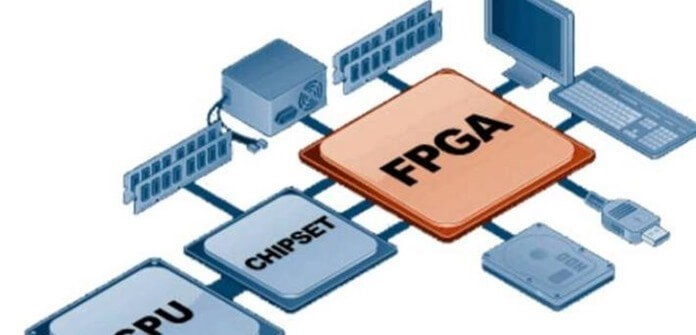
In 2011, the American company Pico Computing released a mini-supercomputer for code-cracking, priced at just $400. It's the size of a typical desktop computer, yet packs all the power of a supercomputer, and is designed for military and government applications, like other Pico Computing developments.
This company's computers are based on a field-programmable gate array (FPGA). It can be configured after production, but this cannot be done using C or Java. FPGA programming must be done at the logic gate level, which signals the device to turn on or off.
Despite these complexities, Pico Computing products are in demand in a niche market, as FPGA-based computers can be programmed for specific computing tasks, which they can handle much faster than solutions from Intel and AMD.
4. The cheapest car of all time

When the Milwaukee, WA-based AO Smith Company decided to enter the automobile business, it didn't set out to build the cheapest car in the world's history. But that's exactly what they ended up doing.
The car, initially called the Smith Flyer and later the Briggs & Stratton Flyer (the rights to produce it were transferred to Briggs & Stratton), cost between $125 and $150.
For this price, you got a vehicle without a body, muffler, or shock absorbers, with a top speed of about 18 km/h, and little hope of survival in the event of an accident. But the driver had access to:
- wooden base-bench,
- hard seat,
- 4 wheels,
- 2 hp engine located on the fifth wheel.
And all this magnificence was offered and purchased from 1915 to 1925. Then Briggs and Stratton sold the rights to the "flying bench," as the machine was affectionately called, to another manufacturer, who eventually fitted it with an electric motor to power the wheels. Then the Flyer's trail faded; apparently, it didn't achieve popularity.
3. The cheapest mobile home
Guinness World Records experts haven't released the exact price of this Chinese wonder, unveiled at the Get It Louder exhibition in 2013. However, it is the world's cheapest mobile home, a small, three-wheeled, accordion-like structure based on a bicycle.
Polypropylene was used as the material for creating the mobile home called Off-Grid.
This tiny structure contains a kitchen with a sink, a water tank, a convertible bed, and even an attachable garden cart.
If necessary, several tricycle houses can be connected to each other to create additional space.
2. The cheapest hotel

Think this hotel is in a third-world country? No, it's in prosperous London and part of the budget hotel chain Tune Hotels. Rooms start at £9 per night.
For this price, guests will receive not only a bed but also a private bathroom, shower, air conditioning, and even a desk. For an additional fee, guests can get a TV, housekeeping, a safe, and a hairdryer.
1. The cheapest Android smartphone
If we asked you which smartphone is best to buy if your budget is limited to $35, we'd likely get a wide range of answers. But the Guinness Book of World Records has its own opinion on the matter. It's the Jivi JSP 20. The cheapest Android smartphone costs $32. It was announced in 2014.
The phone features a 3.5-inch screen with a resolution of 480 x 320 pixels, a single-core 1 Ghz processor, 128 MB of RAM and a rear 2 MP camera.
At the time of its announcement, the 20 JSP firmware was an ancient Android version, version 2.3.5 Gingerbread. It's possible the manufacturer released updates, although given the budget nature of this model, it's doubtful it was kept up-to-date.
The most expensive records
5. The most expensive comic book in the world
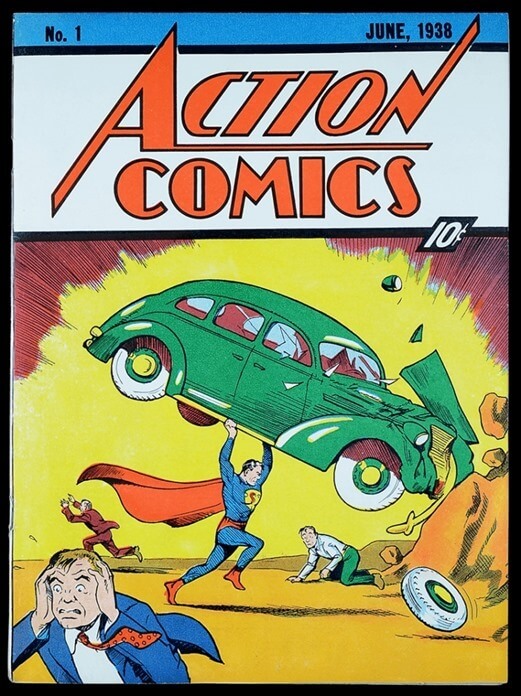
In August 2014, Action Comics # 1, the first issue of the American comic book series featuring the adventures of Superman, was auctioned on eBay. This series was launched in 1938 by Joe Shuster and Jerry Siegel, and ran until 2011.
The price of one copy of the first edition was $3,207,852. Well, its new owner may not have the strength of Superman, but he certainly has the power of money.
4. The most expensive animal species kept in a zoo
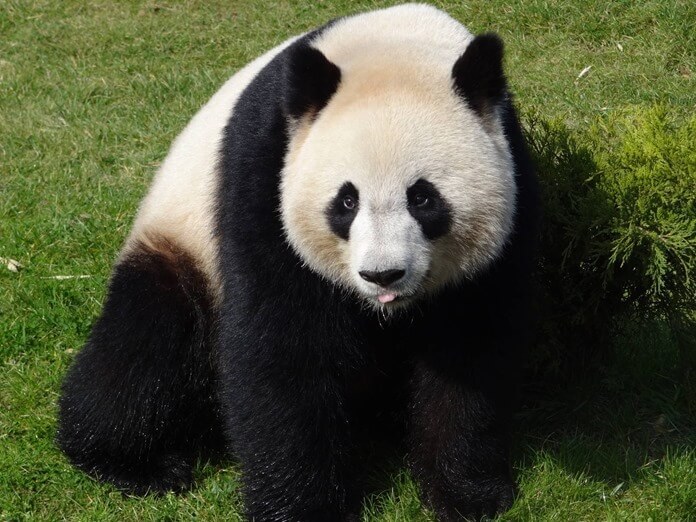 China's pride, the giant panda (Ailuropoda melanoleuca), may be exported abroad, but not for free. Four zoos in the American cities of San Diego, Atlanta, Washington, and Memphis pay the Chinese government $1 million each annually for the right to house a pair of these rare creatures.
If the pandas give birth to offspring, it costs the zoo $600,000.
Interestingly, zoos in Australia and Thailand pay less for the rights to giant pandas than do Americans ($300,000). Why? Because the Chinese government considers America a rich country and therefore can afford to pay more for Chinese animals.
3. The most expensive card in the world
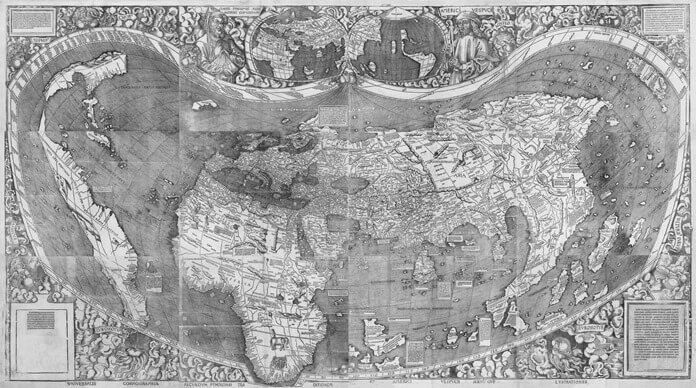 Nowadays, you can plot and track your route using a smartphone app or GPS. But there was a time when people had to rely solely on hand-made maps. And the value of some of these maps has only increased over time.
The most expensive map, with the long title Universalis Cosmographia Secundum Ptholomaei Traditionem et Americi Vespucii Alioru[m]que Lustrationes (Map of the World, Constructed According to the Method of Ptolemy and Supplemented with New Lands by Amerigo Vespucci), was created in 1507.
Its author, cartographer Martin Waldseemüller, was one of the first to accurately indicate latitude and longitude on a map and was also the first to use the name "America." The southern part of the New World was named after the Florentine navigator Amerigo Vespucci. The cartographer used the Latin version of the Florentine's name.
Interestingly, while the main map shows North and South America as two distinct landmasses separated by a narrow strait, there is a small map inset at the top edge that shows the isthmus connecting them.
Only one copy of the map survives today. It is valued at $10 million. Waldseemüller's creation is currently housed in the U.S. Library of Congress.
2. The most expensive milkshake

The world's most expensive milkshake, LUXE, is in New York.
It costs $100 and the recipe includes a variety of ingredients, including:
- edible 23-karat gold, which gives the finished dish a pleasant shine;
- Vanilla ice cream made with premium Tahitian beans;
- Donkey caramel sauce, yes, you read that correctly, it's a sauce that contains donkey milk;
- Madagascar vanilla beans;
- Jersey milk is tasty and very fatty.
And a number of other ingredients, each of which increases the price of the LUXE cocktail. Would you like to try it?
1. The most expensive covert operation
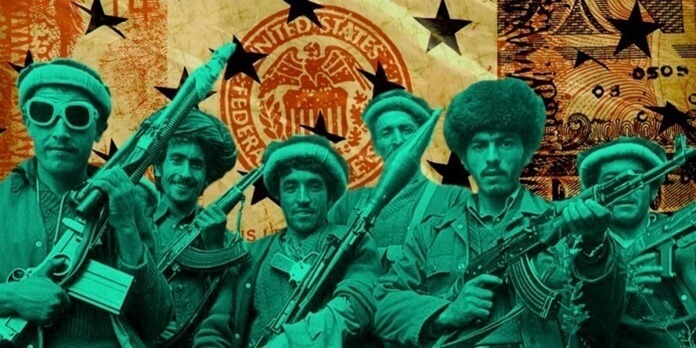 Or rather, it's the most expensive declassified operation, as we won't know the true cost of modern special operations for a long time. This is Operation Cyclone, a program run by the United States Central Intelligence Agency to arm and train Islamist insurgent groups (known as "mujahideen") to fight the USSR in Afghanistan.
Between 1979 and 1989, the CIA spent more than $1.4 billion on weapons, supplies, and training for the mujahideen.
Operation Cyclone was the brainchild of Zbigniew Brzezinski, President Jimmy Carter's National Security Advisor. He believed that the USSR or its proxies could be drawn into a protracted and futile counterinsurgency campaign (Brzezinski called it "their Vietnam").
The long-term consequences of this program were debatable. Cyclone certainly played a role in weakening the Soviet Union and may have hastened its collapse. However, the lack of oversight over the distribution of weapons and military aid led to the strengthening of the mujahideen, who later turned their weapons against their benefactors. Notorious terrorists such as Mohammed Omar and Osama bin Laden emerged from their ranks.