


A spider is one of the most terrifying creatures on Earth. Anyone with arachnophobia will confirm this. You might be asking, "What could be so scary about such a small creature?" I'll answer your question with a question: "What small creature?" Look at the largest spider in the world, which ranks first in this ranking, and find out where he lives so you can plan your vacation away from there.
10. Tegenaria wall
- body 3 cm, leg span 14 cm
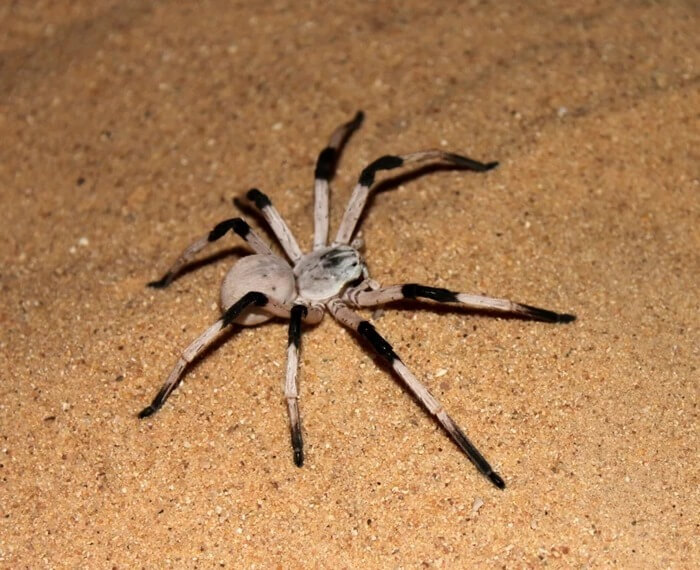 Habitat: In the desert dunes of Wadi al-Arabah in southern Israel and Jordan.
This is the smallest representative of arachnids in our selection, and one of the largest spiders on Earth.
Dehydration and sunburn aren't the only dangers you'll face if you find yourself in the hot sand dunes of the Wadi al-Arab desert. After all, this is home to the largest huntsman spider in the Middle East. It creates its lair in the sand and comes out at night. Scientists don't believe the wall spider is highly venomous, but no one has tested this hypothesis.
9. Brazilian wandering spider
- body 10 cm, leg span 7 cm
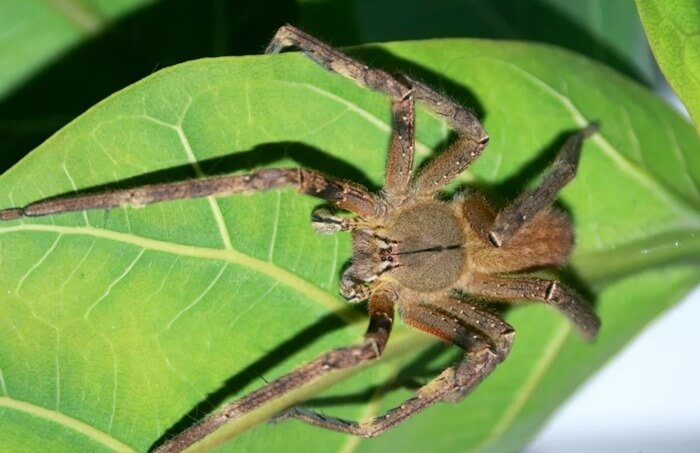 Where it lives: in South and Central America.
Not the largest spider on the list, but the most dangerous. This furry banana-loving spider even made it into the 2010 Guinness Book of World Records as the world's most venomous spider. Guinness doesn't have a category for the most aggressive spiders, otherwise the Brazilian spider would have made it. In this regard, it's very close to the world's most venomous snake, which isn't known for its gentle nature either.
When bananas aren't available, the eight-legged Brazilian spider eats mice, lizards, and large insects. To kill a 20-gram mouse, the spider only needs to inject 6 micrograms of venom intravenously and 134 micrograms subcutaneously. By comparison, a black widow spider would require 110 micrograms and 200 micrograms of venom, respectively, for the same purpose.
The Brazilian wandering spider's venom is extremely dangerous and can kill a person within two hours. It can also cause a four-hour, painful erection in men. So, in the future, this dangerous arthropod may serve science as a treatment for erectile dysfunction.
8. Camel spider
- body 5-7 cm, leg span 12-15 cm

Habitat: Any warm desert region. You're safe (from this spider) in Australia. It's never been spotted in Antarctica, if that helps.
This spider, also known as the solpuga, got its unofficial name because it eats camels for breakfast. Don't believe it? You're right. It's nicknamed the "camel spider" for the humps on its head. Other sources say that when startled, the spider can leap quite high and grab whatever's above it with its powerful chelicerae (jaws). In the desert, that something often turns out to be a camel's groin.
The solpuge's jaws are so strong they can even pierce a human fingernail. In videos of the world's largest spiders, solpuges look particularly menacing, especially when viewed from the side. The teeth and cutting edge are clearly visible.
The good news is that this spider is not venomous. The bad news is that if it bites you, rotting food particles can get into the wound, which can lead to serious inflammation.
7. Hercules baboon
- body size from 7 to 9 cm, leg span up to 20 cm
 Where it lives: in African countries such as Niger, Benin, Ghana, Cameroon and Nigeria.
The only known specimen of the Hercules baboon was captured in Nigeria about a hundred years ago and is housed in the Natural History Museum in London. It got its name from its habit of eating baboons (just kidding). In reality, this spider is named for the resemblance between its legs and the toes of a baboon. Since no one has seen this spider for a long time, it is assumed that it has disappeared from the face of the Earth. A more optimistic scenario is that it may live underground, away from human eyes.
A close relative of the Hercules baboon, the king baboon spider (Pelinobius muticus) lives in East Africa, and another related subfamily, the Harpactirinae, is known for its aggressive and unpredictable behavior and potent venom.
6. Ornamental Rajai Tarantula
- body 8 cm, limb span up to 20 cm
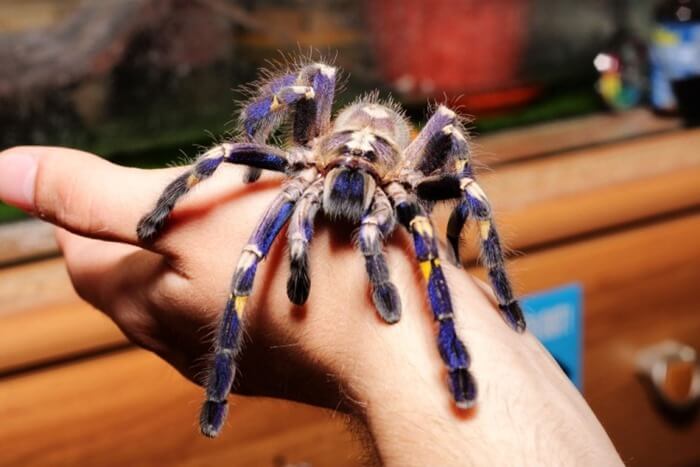 Habitat: In old trees or old buildings in Sri Lanka and India.
Tarantulas aren't limited to Central and South America. A huge tarantula the size of a human face has adapted to deforestation in Sri Lanka and has taken up residence in abandoned buildings. It enjoys eating birds, lizards, rodents, and even snakes.
This species was discovered relatively recently, in 2009. It was named Poecilotheria rajaei in honor of police officer Michael Rajakumar Purajah, who guarded the scientists during their expedition.
5. Colombian giant tarantula
- body 8 cm, leg span up to 20 cm
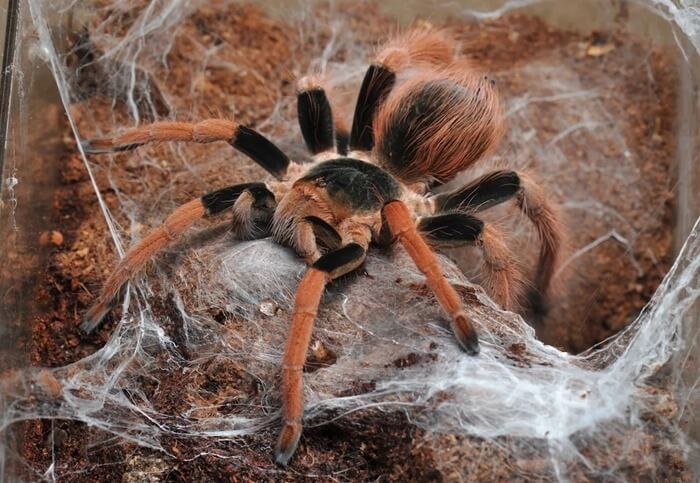 Where it lives: in the tropical forests of Brazil and Colombia.
This member of the tarantula family feeds on mice, lizards, and large insects, so you can use it to control household pests. It's rarely imported to Russia, and any arachnophile collector dreams of owning this handsome Colombian.
This species has spines on its hind legs, which it uses to attack and fend off enemies. It is not aggressive toward humans, but may bite if given the opportunity. The Colombian giant tarantula's venom is not lethal, but there is a risk of allergic reactions. In short, it is not the most suitable pet.
4. Brazilian Black Tarantula
- body 16-18 cm, leg span 7-10 cm
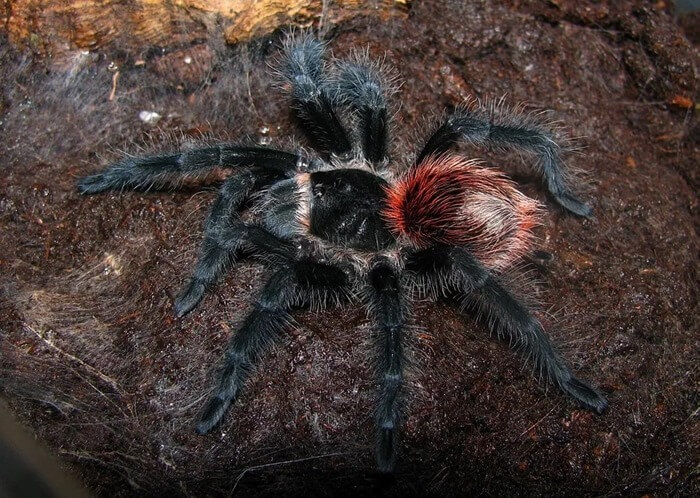 Where he lives: in Uruguay, Paraguay, Brazil and Argentina.
Don't forget to visit South America if you're looking for giant spiders. The Grammostola anthracina is a species of tarantula, popular for its beautiful black, metallic-looking fur. It's unlikely to bite you, as long as you feed it cockroaches or crickets. However, the long hairs on the legs and body of the Brazilian tarantula can cause irritation when in contact with human skin.
3. Horse spider
- body 8-10 cm, leg span up to 25 cm
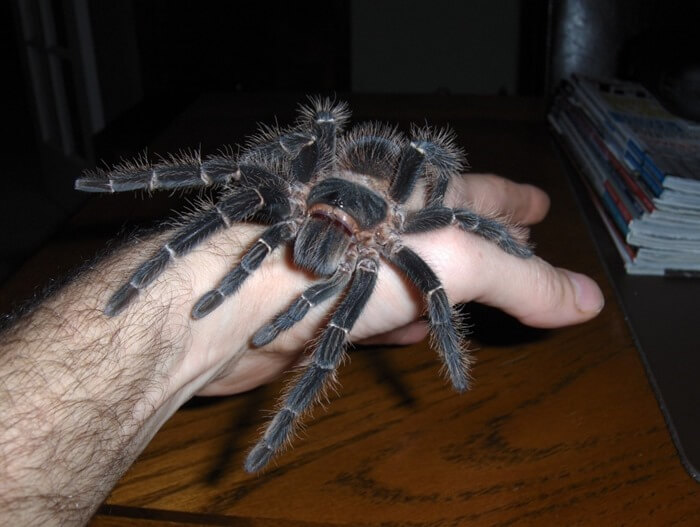 Where it lives: in the forests of Brazil. It's a popular pet, so you might see them in pet stores and perhaps in your neighbor's apartment.
The third largest spider in the world, the horse spider breeds easily in captivity and is considered docile. However, if provoked, it can bite, which isn't dangerous but can be quite painful. These animals also have a cute habit of scratching their stinging hairs when threatened. Therefore, avoid holding the spider close to your eyes.
2. Giant Huntsman Spider
- body 4.6 cm, leg span from 25 to 30 cm
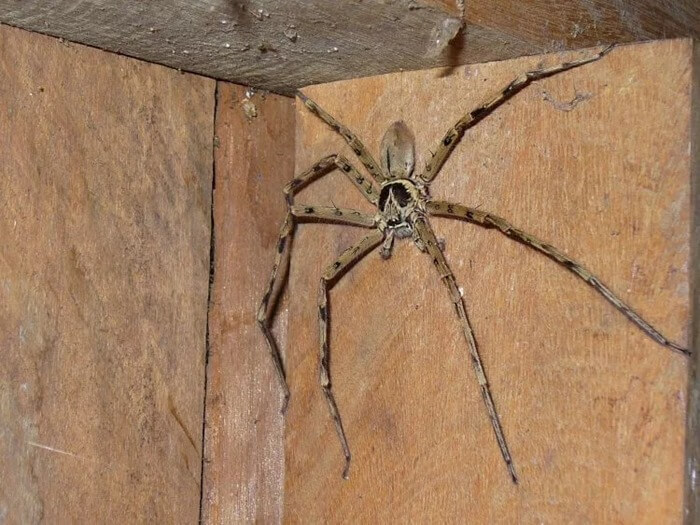 Where it lives: Only in the caves of Laos, but similar huge huntsman spiders live in all warm and temperate regions of the planet.
While the Goliath birdeater (number one on the list) is considered the heaviest spider on Earth, the giant huntsman spider has longer legs, with a span of 25 to 30 centimeters.
These spiders are dangerous not only to their natural enemies but also to humans. A bite from them may require hospitalization. If you live in a warm climate and hear a rhythmic ticking sound, similar to a quartz watch, a male Heteropoda maxima is nearby. And unless you're a female giant spider, you better run.
1. Goliath tarantula
- body 10.4 cm, leg span up to 28 cm
 Where it lives: in burrows in tropical forests and swamps of northern South America.
Here it is, the largest spider in the world. It looks terrifying in this photo, and for good reason. The Goliath bird-eater is a species of tarantula. The Goliath bird-eater can bite a person with its enormous fangs (1-2 cm), and its venom is comparable in pain and overall effect to that of a wasp.
The spiky hairs of this giant "fluffball" pose a major threat, as they can remain on a person's skin and eyes, causing itching and irritation for several days.
One Theraphosa blondi was even lucky enough to be listed in the Guinness Book of World Records as the largest representative of its species. Caught in Venezuela in 1965, this specimen had a leg span of 28 centimeters.
 As its name suggests, this spider sometimes eats small birds, such as hummingbirds. But it can also transform from a hunter into a tasty prey. People who live in the Goliath tarantula's habitat catch and eat them (they say they taste like shrimp).
And finally, an interesting fact: Male spiders have specialized appendages used to create sounds for defense and sexual communication. The largest spiders produce sounds loud enough for humans to hear. So, if you hear a strange sound in the night, there might be a sexually aroused spider nearby.