

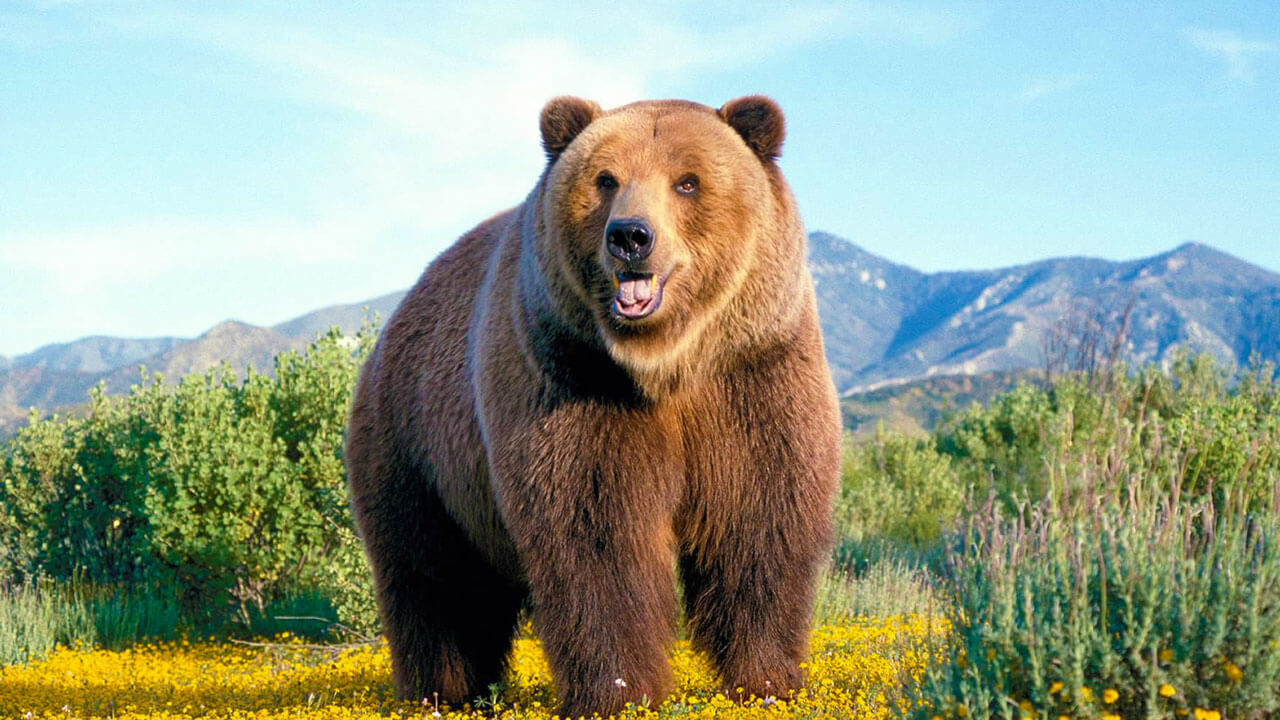
Here are the 10 largest bears in the world, listed by size and weight. The largest bear breeds found around the world.
10. Sloth bear
 Weight - up to 140 kg, body length - up to 180 cm.
Despite its small size, compared to other largest bears in the world, the sloth bear can be very dangerous.
It was precisely this kind of beast that terrorized the Bangalore area for a long time, killing and maiming people. It became one of the most feared man-eaters in history.
9. Spectacled bear
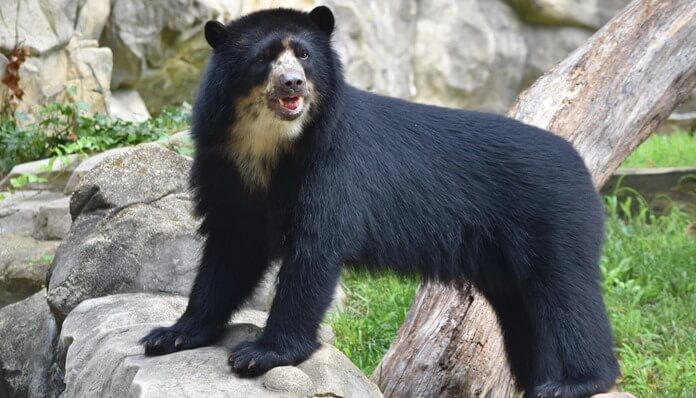 Weight - up to 140 kg, length - up to 2 meters.
This "intelligent bear" got its name because the rings around its eyes resemble glasses.
Although this animal is considered a carnivore, meat makes up about 5 percent of its diet. The rest consists of grass shoots, rhizomes, and fruits. Spectacled bears also enjoy eating termites and ants. Fortunately, their long tongues easily penetrate ant nests.
8. Giant panda
 Weight - up to 160 kg, length - up to 1.8 meters.
One of the cutest animals in the world also belongs to the bear family. But, unlike other bears, the panda prefers a vegetarian diet, mostly made up of bamboo. However, on occasion, the panda will not disdain small animals, bird eggs, or insects.
For a long time, scientists debated which family the panda belonged to—the Ursidae or the Raccoonidae. However, at the end of the 19th century, the Ursidae group prevailed. They studied the panda's skin and concluded that this cute, chubby black-and-white creature was practically an ancestor of today's bears. Genetic testing confirmed that the panda is not a giant raccoon at all, but a true bear, a close relative of the spectacled bear.
7. Himalayan black bear
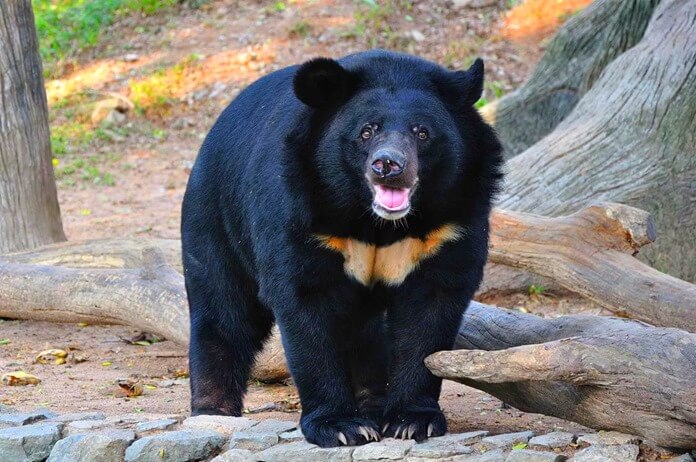 Weight - up to 200 kg, length - up to 1.7 meters.
This is one of the most beautiful bears, with luxurious, shiny black fur and a white or golden "bib." Its crescent-shaped appearance gives the Himalayan bear its nickname, the "moon bear.".
When encountering humans, Himalayan black bears are very aggressive. However, humans are also their greatest threat. In many Asian countries, black bear bile is used as a treatment for impotence and many other ailments. Therefore, dozens of animals are kept in cramped cages and have their bile extracted from their gallbladders using special tubes. This procedure is extremely painful and, one might say, brutal.
6. Kermode Bear
 Weight - up to 300 kg, length - up to 1.8 meters.
This massive creature lives only in the forests of western Canada. Although it is a subspecies of black bear, the Kermode's coat is either off-white or creamy with an amber tint. This camouflage helps the animal catch salmon in rivers.
This bear was named after explorer Francis Kermode, who described it. Local Native Americans call it the "ghost bear.".
5. Black bear
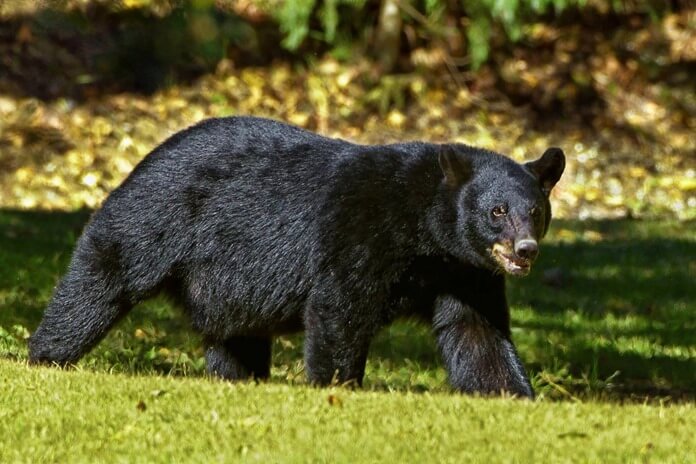 Weight - up to 380 kg, length - up to 2 meters.
The black bear's diet consists mainly of plant foods (raspberries, wild grapes, blackberries, acorns, etc.).
You can't get much hunger on such food, so the cunning bears have adapted: they rummage through garbage dumps and look for scraps. Some black bears can even open screw-top jars.
Black bears usually do not attack people, but they can attack livestock (sheep, goats).
4. Brown bear
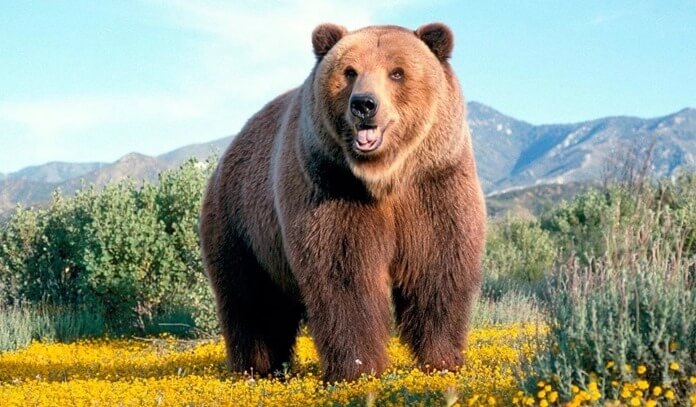 Weight - up to 410 kg, length - up to 2.4 meters.
Brown bears are very unusual animals. They can stand on two legs, pick up things with their "fingers," and often eat what we eat. This—combined with their ability to communicate with each other through scratches left on trees, scents, and sounds—makes them similar to our own way of life.
Brown bears can be found in Western and Central Europe, Scandinavia, Finland, and the Carpathians. In Russia, brown bears inhabit almost all forested areas, with the exception of the southern regions.
This bear was the inspiration for the names of two constellations, Ursa Major and Ursa Minor.
3. Grizzly bear
 Weight – up to 726 kg, length – up to 4 meters.
Grizzly bears, scientifically known as Ursus arctos horribilis (terrible brown bear), have a rather prominent hump on their shoulder blades and long claws (up to 80 mm). Both the hump and the claws are characteristics associated with the grizzly bear's ability to dig.
Grizzly bears are omnivores, and their diet can vary widely. They feed on seeds, berries, roots, grasses, mushrooms, fish, deer, moose, dead animals, and insects. Grizzlies often attack people who are careless enough to approach them too closely. In 1998, a huge man-eating bear was killed in Alaska. Its body size was such that, if it stood on its hind legs, it could peer into the second-story window of a typical five-story building.
In late summer and early fall, grizzlies enter a hyperphagic phase, lasting from two to four months. Simply put, they increase their caloric intake to gain weight for hibernation. During this period, they can add up to 6 kg (13 lbs) per day to their already impressive weight.
2. Kodiak
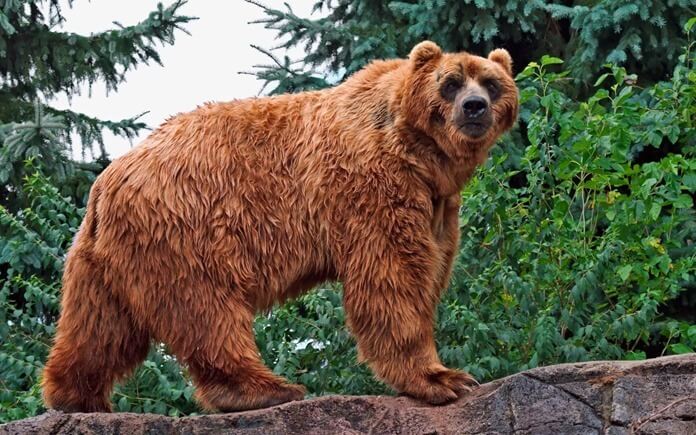 Weight - up to 780 kg, length - up to 2.9 meters.
This furry giant lives on Kodiak Island in Alaska, hence its name. He is the largest brown bear in the world.
The most famous bear to appear in film was also a Kodiak. He starred in such acclaimed films as "The Bear," "Legends of the Fall," and "On the Edge." In total, Bart appeared in 16 films.
1. White Polar Bear
 Weight – up to a ton, length – up to 3 meters.
When asked which bear is the largest, the Guinness Book of World Records names the polar bear. However, in the race for size, the Kodiak bear is close behind the polar bear.
These beautiful, exotic creatures live in northern Canada, Alaska, Greenland, Norway and Russia.
The world's largest bear shares a common ancestor with brown bears. Therefore, interbreeding between polar and brown bears is not only possible but has occurred regularly. Because of this, brown bear populations contain between 2% and 10% of polar bear genetic material. Polar and brown bear hybrids are called polar grizzlies.
However, brown bears don't thrive in conditions where polar bears thrive. And vice versa.
Interestingly, in hot climates, the polar bear's luxurious white fur can turn green. This occurs because microscopic algae grows in the fur.
The largest bear in history is Arctodus simus.
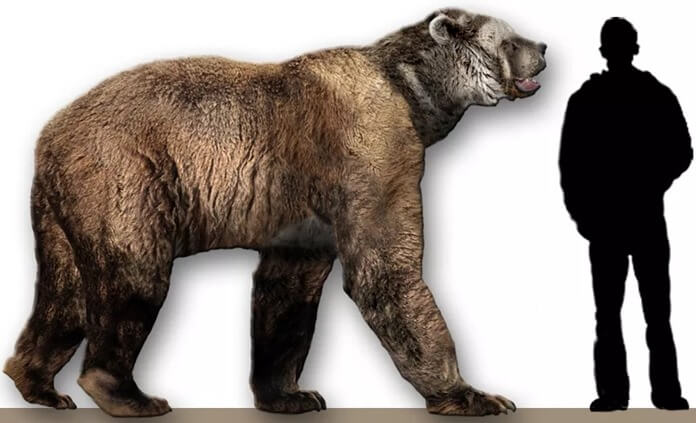 Weight – over 1100 kg, length – up to 3.5 meters.
The extinct giant short-faced bear (Arctodus simus) is the largest bear in the history of Earth. It lived approximately 12,000 years ago. This giant's habitat was North America.