

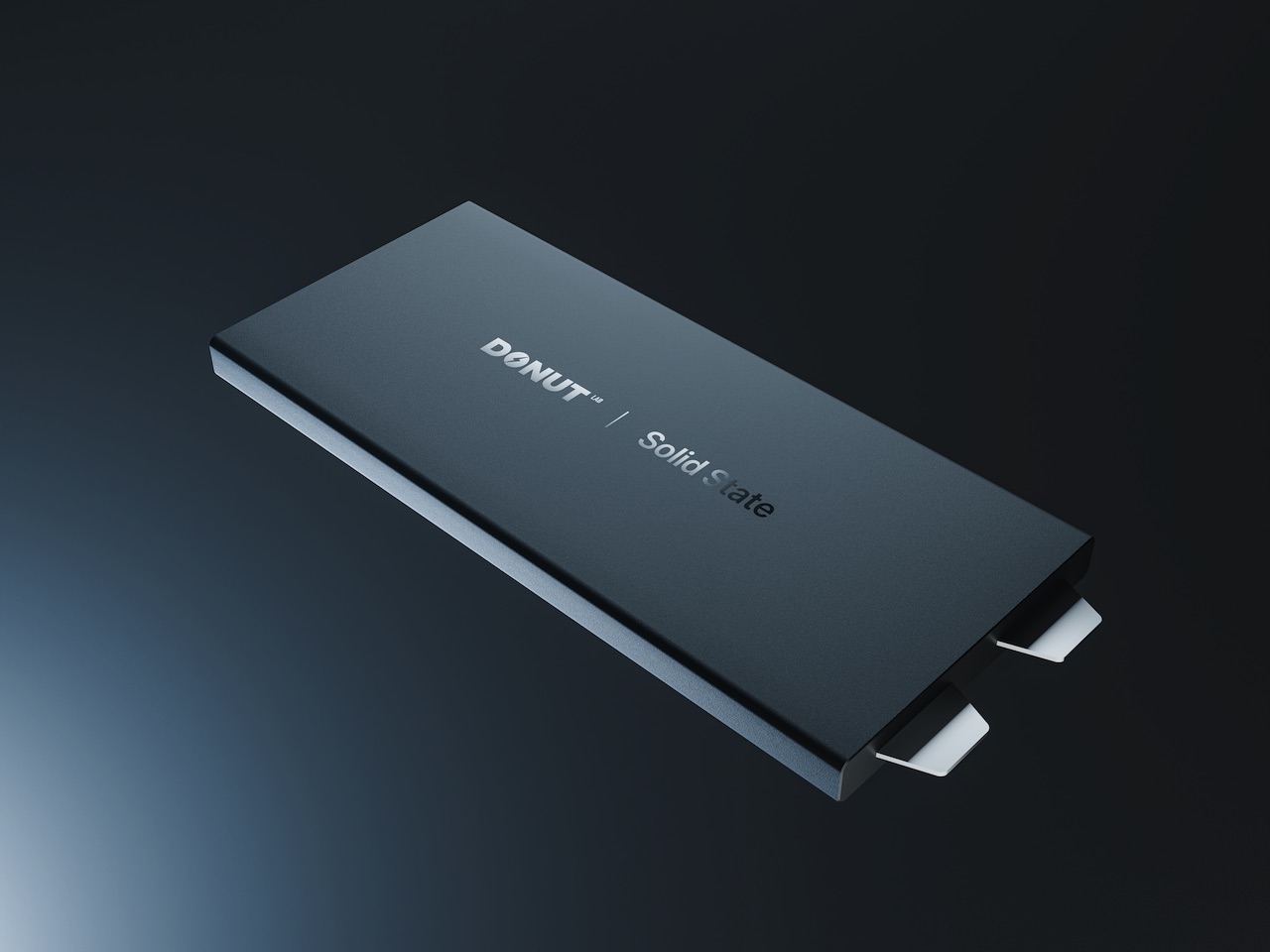
Solid-state batteries have occupied a special place in the electric vehicle conversation for years: always promising, constantly delayed, and always touted as something that will change everything once they actually arrive. At CES, solid-state battery demonstrations have been running for nearly a decade, most of them behind glass, launch dates stretched out into the 2030s, and references to "manufacturing challenges" were vague. Donut Lab just showed up at CES 2027 and announced that the wait is over.
A Finnish company is unveiling what it calls the world's first all-solid-state battery ready for mass-market automotive use, and to back up its claims, Verge Motorcycles will launch motorcycles powered by these cells in the first quarter of 2027. If you've been following our coverage of electric vehicle battery technology, you know why this distinction matters. The question was never whether solid-state chemistry worked. The question was whether anyone could make it work at scale, cost-effectively, and within a reasonable timeframe.

The numbers behind the Donut Battery seem incredible until you consider that solid-state technology eliminates most of the tradeoffs inherent in lithium-ion chemistry. The energy density is 400 Wh/kg, enabling lighter vehicle designs, increased range, and offering designers, who have spent years working with bulky battery packs, more creative packaging options. The charging process is also fundamentally transformed. Donut Lab claims a full charge occurs in just five minutes, with no need to stop at 80%, a familiar limitation for anyone who has observed how an electric vehicle's charging curve flattens out as it approaches full capacity.
Durability figures are equally impressive. The company claims an estimated lifespan of up to 100,000 cycles with minimal capacity degradation over time. By comparison, most lithium-ion batteries in consumer electric vehicles begin to show noticeable degradation well before this threshold. If these figures are confirmed in real-world conditions, the implications for the total cost of ownership will change significantly.
Safety without the usual caveats
Electric vehicle battery safety claims are typically accompanied by caveats, but solid-state architecture changes the underlying physical principles. Donut Lab's cells lack flammable liquid electrolytes, eliminating the risk of thermal runaway, which has led to headlines about battery fires. Dendritic formation, another common problem in conventional lithium-ion cells, is also eliminated. The company has tested operation at extreme temperatures: at -30 degrees Celsius, the battery retains over 99 percent of its capacity. Even at temperatures above 100 degrees Celsius, the cells continue to operate without signs of combustion or degradation. This thermal stability opens up applications not only in passenger cars but also in industrial equipment and aviation, where temperature fluctuations can be extreme.

Materials and production
The supply chain is key here. Donut Lab emphasizes that its solid-state batteries are based entirely on readily available, affordable, and geopolitically safe materials. There's no reliance on rare earth elements. No problematic supply sources from conflict zones. The company also claims production costs are lower than lithium-ion batteries—a claim that will be heavily criticized by industry analysts monitoring production scale.

CEO Marko Lehtimäki presents this announcement as a direct challenge to the industry's persistent delays. "At Donut Lab, we believe solid-state batteries are ready for use in production vehicles now, today, not later," he stated in the company's materials presented at CES. This confidence will soon be tested: Verge Motorcycles plans to begin shipping TS Pro and Ultra models powered by Donut Battery cells in the first quarter of this year.
Who will this change the situation for?
The immediate beneficiaries are electric vehicle manufacturers, who are forced to balance range, weight, safety, and charging speed. In theory, solid-state technology allows for the optimization of all four parameters simultaneously, which is why it has attracted so much attention and generated so much skepticism due to repeated delays. If Donut Lab's production claims are confirmed, the pressure on major battery manufacturers will increase significantly.

For consumers, the practical impact depends on the speed of industry adoption. Faster charging, improved cold-weather performance, and enhanced safety sound enticing, but only if these batteries actually appear in commercial vehicles. Verge Motorcycles produces relatively small quantities, so the more important question is whether Donut Lab can scale to meet the needs of automotive OEMs.
Result
If you've been following solid-state battery announcements and dismissing them as "interesting, but not yet feasible," then Donut Lab's debut at CES 2027 is the first to be watched with a different eye. Verge deliveries in Q1 2027 will either confirm the stated production volumes or reveal gaps. What matters now is whether these motorcycles will perform as advertised in real-world conditions. If you're planning to buy an electric motorcycle and can wait a few months, it's worth keeping an eye on this. If you're hoping for solid-state batteries to appear in mass-market electric vehicles, the timeline remains uncertain, but the path to that point has become shorter.