

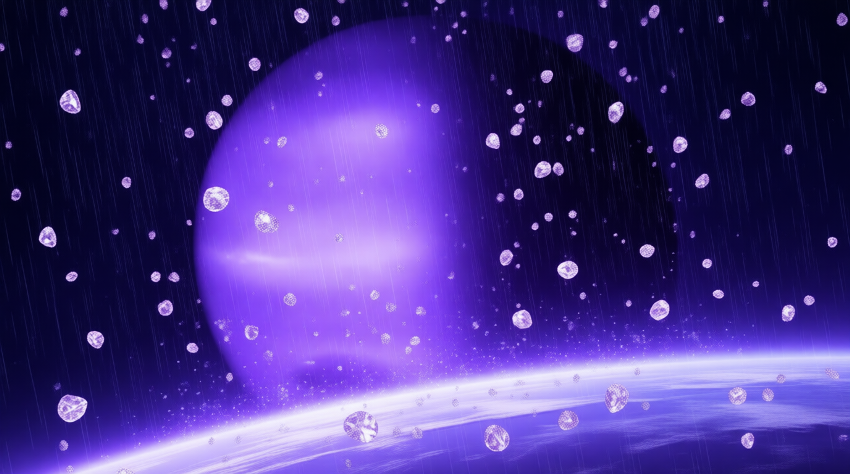
We tend to think of rain as something ordinary: drops of water falling from the sky nourish rivers, lakes, and forests. But nature is far more inventive than it seems. Strange phenomena do occur on Earth—for example, rains of frogs, fish, or worms caused by powerful tornadoes. However, once you leave the Earth's atmosphere, the weather becomes something truly fantastic. Modern research on exoplanets and planets in our solar system shows that instead of water, it may rain diamonds, glass, sulfuric acid, or even molten rock on other worlds. These exotic precipitations not only excite the imagination but also help scientists understand the physics of atmospheres in extreme conditions. Let's take a journey through the universe and discover what exactly "pours from the sky" on other planets and moons.
1. Jupiter and Saturn: Diamond Rain in the Depths of Gas Giants
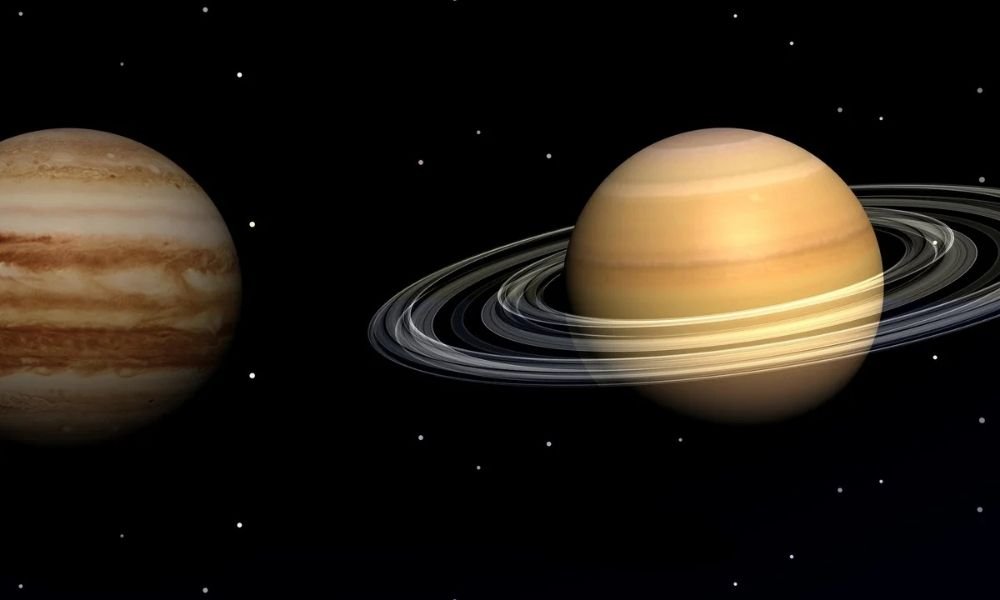
The upper atmospheres of Saturn and Jupiter contain methane, a simple organic compound. Under the influence of lightning and ultraviolet radiation from the Sun, methane molecules break down into carbon and hydrogen. The free carbon gradually sinks deeper into the atmosphere, where temperatures and pressures reach extreme levels. At a depth of approximately 6,000 km, the carbon compresses into graphite, and even deeper, it transforms into diamond crystals.
According to estimates by Dr. Kevin Baines of NASA's Jet Propulsion Laboratory, these diamonds can reach the size of a walnut—about 1 centimeter in diameter. They slowly "fall" through the gas layers, like precious rain. However, as they descend further, at depths of over 20,000 km, the temperature exceeds 5,000°C, and the diamonds melt, turning into liquid carbon.
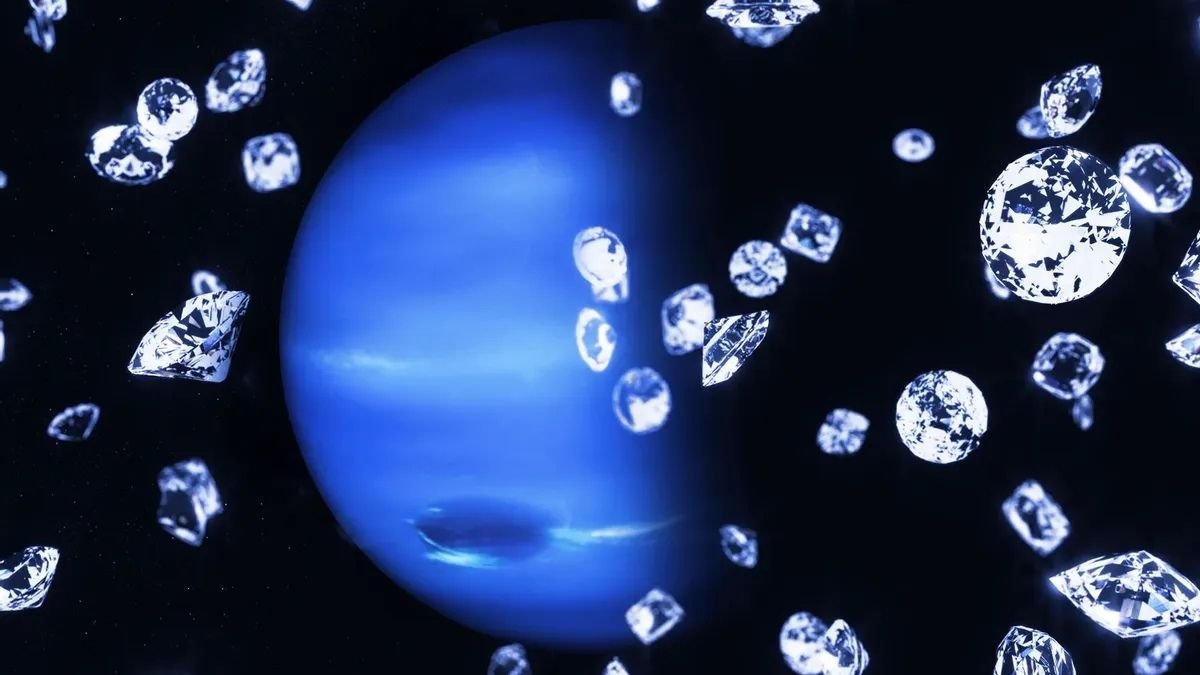
So, it really is raining diamonds inside Saturn and Jupiter—but it never reaches the «surface» because the gas giants simply don’t have one.
This discovery not only confirms the exotic chemistry of the giant planets, but also helps model the internal dynamics of their atmospheres—including explaining anomalies in the distribution of heat and magnetic fields.
2. Venus: Sulfuric acid clouds and "phantom" rain
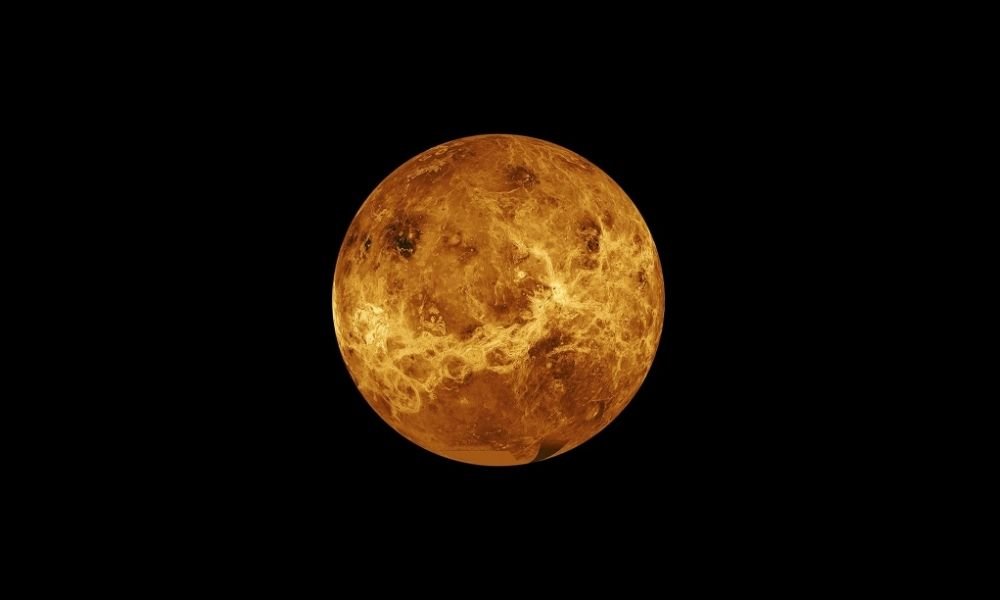
Venus is Earth's closest "sister" in size, but its atmosphere has turned the planet into a living hell. The surface is heated to 467°C, and the pressure is 92 times greater than Earth's. The upper atmosphere (at altitudes of 50–70 km) is dominated by clouds of sulfuric acid (H₂SO₄), formed from sulfur dioxide and water vapor through photochemical reactions.
Rain does fall from these clouds, but it never reaches the surface. As they fall, droplets of sulfuric acid collide with the hot air and evaporate at an altitude of about 30 kilometers. This process is called "phantom rain": the precipitation exists, but remains invisible from the surface. Nevertheless, it is these clouds that reflect most of the sunlight, making Venus the brightest planet in the night sky.
Interestingly, scientists are considering using balloons to navigate precisely these "temperate" layers of Venus's atmosphere—where temperatures and pressures are comparable to those on Earth. But even there, sulfuric acid rain remains a serious threat to any technology.
3. Titan: The methane cycle is analogous to the Earth's water cycle.
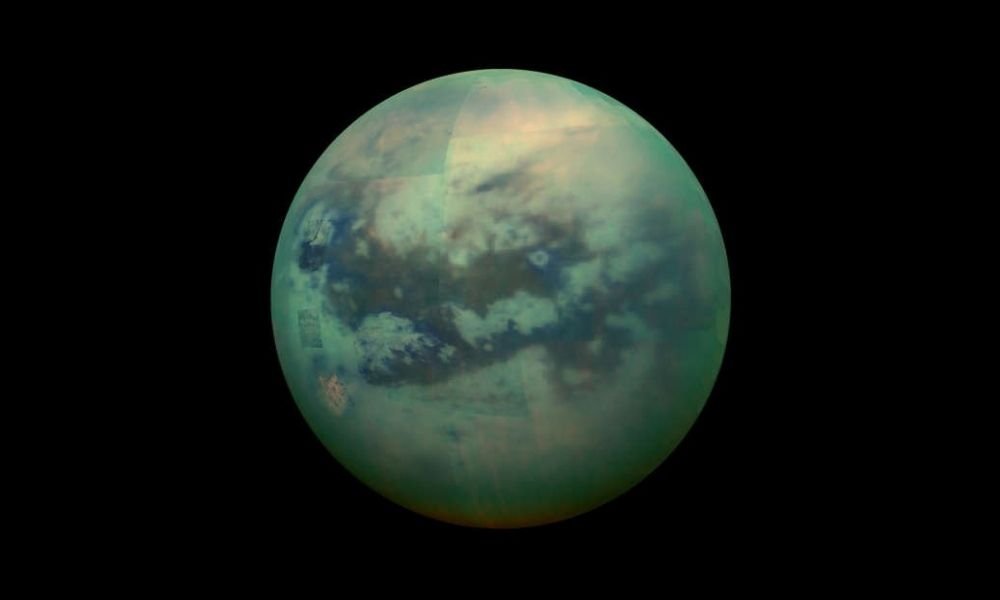
Titan is the only moon in the solar system with a dense atmosphere and an active hydrological cycle. However, instead of water, methane circulates here. Rivers, lakes, and even seas of liquid methane and ethane exist on Titan's surface. Clouds form in the atmosphere, periodically erupting into downpours.
However, such rains are extremely rare—roughly once every 1,000 Earth years in each region. When a methane downpour does occur, it erodes the landscape, forms riverbeds, and fills lakes. This makes Titan the only known body besides Earth where the complete "precipitation-runoff-evaporation-clouds" cycle is observed.
That's why NASA's mission Dragonfly, scheduled for launch in 2034, will explore Titan using a helicopter drone. Scientists hope to discover complex organic molecules there—possible precursors to hydrocarbon-based, rather than water-based, life.
4. HD 189733 b: Molten Glass Rain on an Exoplanet
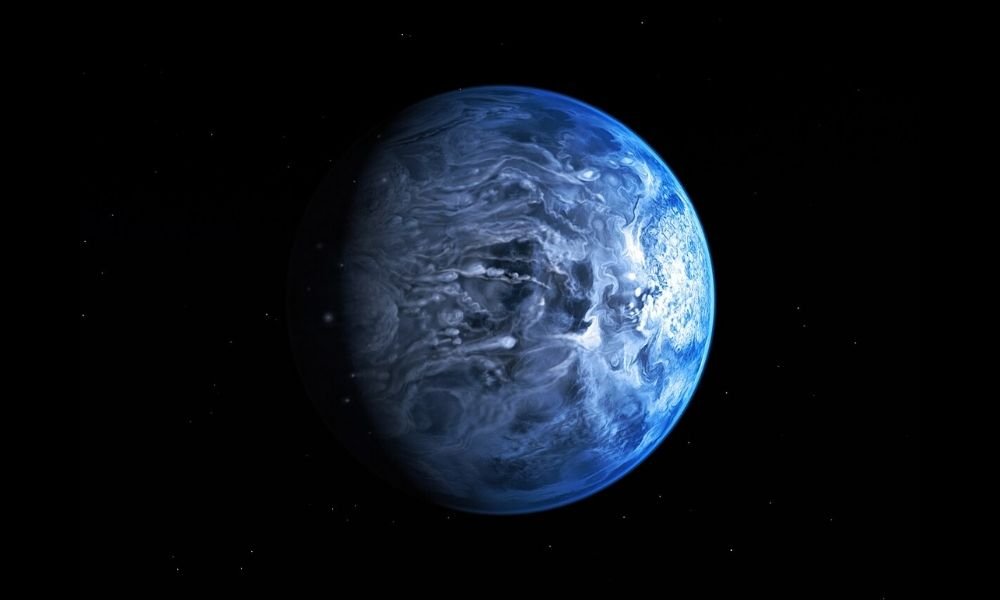
Located 63 light-years from Earth is the exoplanet HD 189733 b, a "hot Jupiter" orbiting so close to its star that one of its "years" lasts only 2.2 Earth days. The planet's surface is heated to 980°C, and its atmosphere is saturated with silicon vapor and oxygen.
Under these conditions, silicon compounds condense into tiny silicate particles—essentially glass. But due to hurricane-force winds blowing at speeds of up to 7,300 km/h, These particles don't just fall downwards—they fly horizontally, like hot glass pebbles. Astrophysicists call this phenomenon "glass rain," although a more accurate term would be "glass squall.".
These silicate particles scatter blue light, giving the planet its unusually intense blue hue—not like Earth's (where the blueness is caused by Rayleigh scattering), but due to the composition of its atmosphere. HD 189733 b became one of the first exoplanets whose color was directly determined using the Hubble Space Telescope.
5. COROT-7b: Rock Rains on a Hot Super-Earth
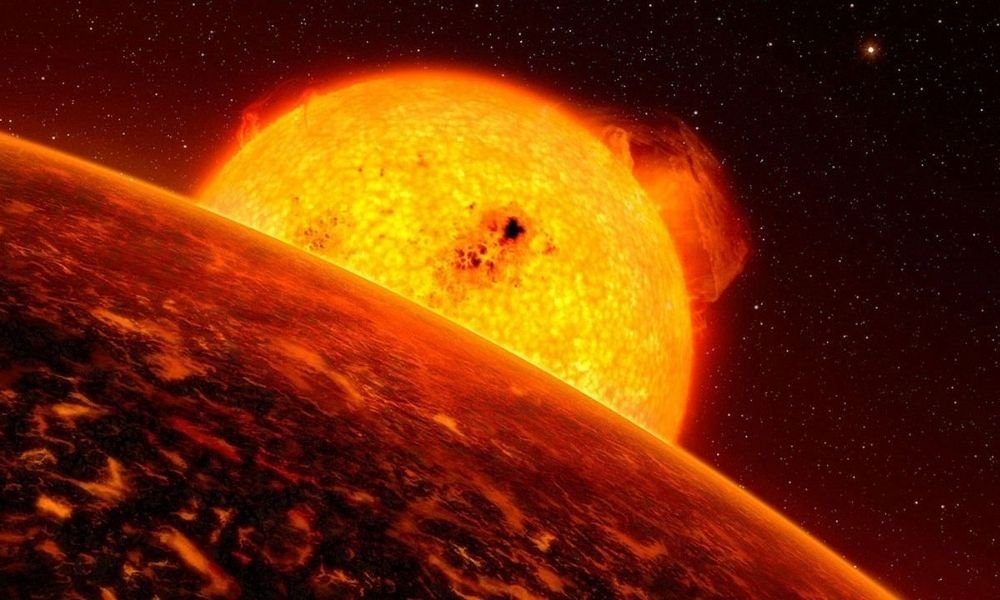
COROT-7b is one of the first super-Earths discovered, located just 489 light-years away. This rocky planet is five times more massive than Earth and orbits so close to its star that its "day" lasts less than 20 hours. Temperatures on its dayside reach 2,300°C—hot enough to melt rock.
Under these conditions, COROT-7b's atmosphere consists not of gases, but of vaporized minerals: sodium, potassium, iron, silica, and even pyroxenes. As these vapors rise and cool on the night side, they condense into solid particles. As a result, the planet experiences a veritable "rock rain"—streams of hot pebbles and ash falling to the surface.
Some models even suggest the presence of "lava lakes" and "mineral clouds," similar to volcanic ash on Earth, but on a much larger and more extreme scale. COROT-7b is a striking example of how planets can exist in conditions completely incompatible with life, yet still exhibit complex and dynamic meteorology.
Conclusion: Weather as a reflection of cosmic diversity
By studying "rains" on other worlds, we don't just enjoy the spectacle of exotica—we expand our understanding of the laws of physics in extreme conditions. Diamonds, glass, sulfuric acid, and molten rock—all of this reminds us that the universe is much richer and more diverse than we might think. Each of these planets is like a laboratory, testing the boundaries of chemistry, thermodynamics, and atmospheric dynamics.
And who knows—perhaps observing such phenomena will one day help us understand where to look for life, and what forms it can take beyond the water and oxygen we are accustomed to.