

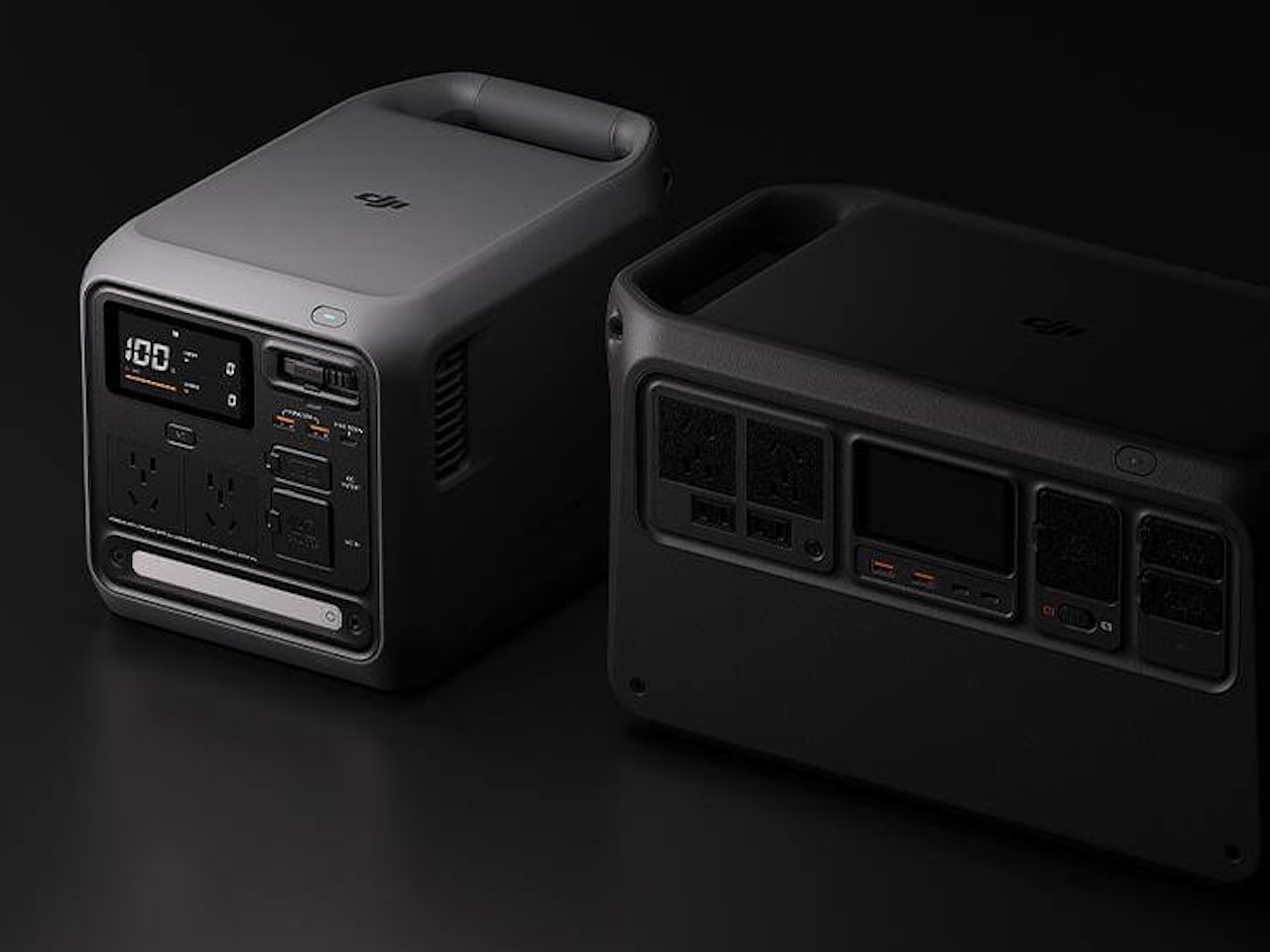
Portable power banks weren't supposed to get better by shrinking their size. The whole category started with people wanting more capacity, not less bulk. But that's exactly what DJI is betting on with the Power 1000 Mini, a 1000Wh lithium iron phosphate battery that weighs 11.5 kg and measures 314 x 212 x 216 mm. It was released in China in January 2027 for 2499 yuan (approximately $359), making it noticeably smaller and lighter than the Power 1000 V2, which launched six months earlier. At 14.2 kg and 448 mm long, the V2 weighs 134 mm and is almost 3 kg lighter. It's the difference between a box you can carry with two hands and one you can grasp with one. So the big question is: What happens when a power plant stops trying to do everything at once and starts optimizing its operation at the moment when you really need to master it?
What is this?
The DJI Power 1000 Mini is a rechargeable battery pack with 1000Wh lithium-iron phosphate cells. It's designed to power laptops, cameras, drones, portable projectors, and small kitchen appliances away from power outlets. It offers a maximum output of 1000W and a continuous output of 800W, which is sufficient for most mobile workflows, but significantly lower than the 2600W maximum of the Power 1000 V2.
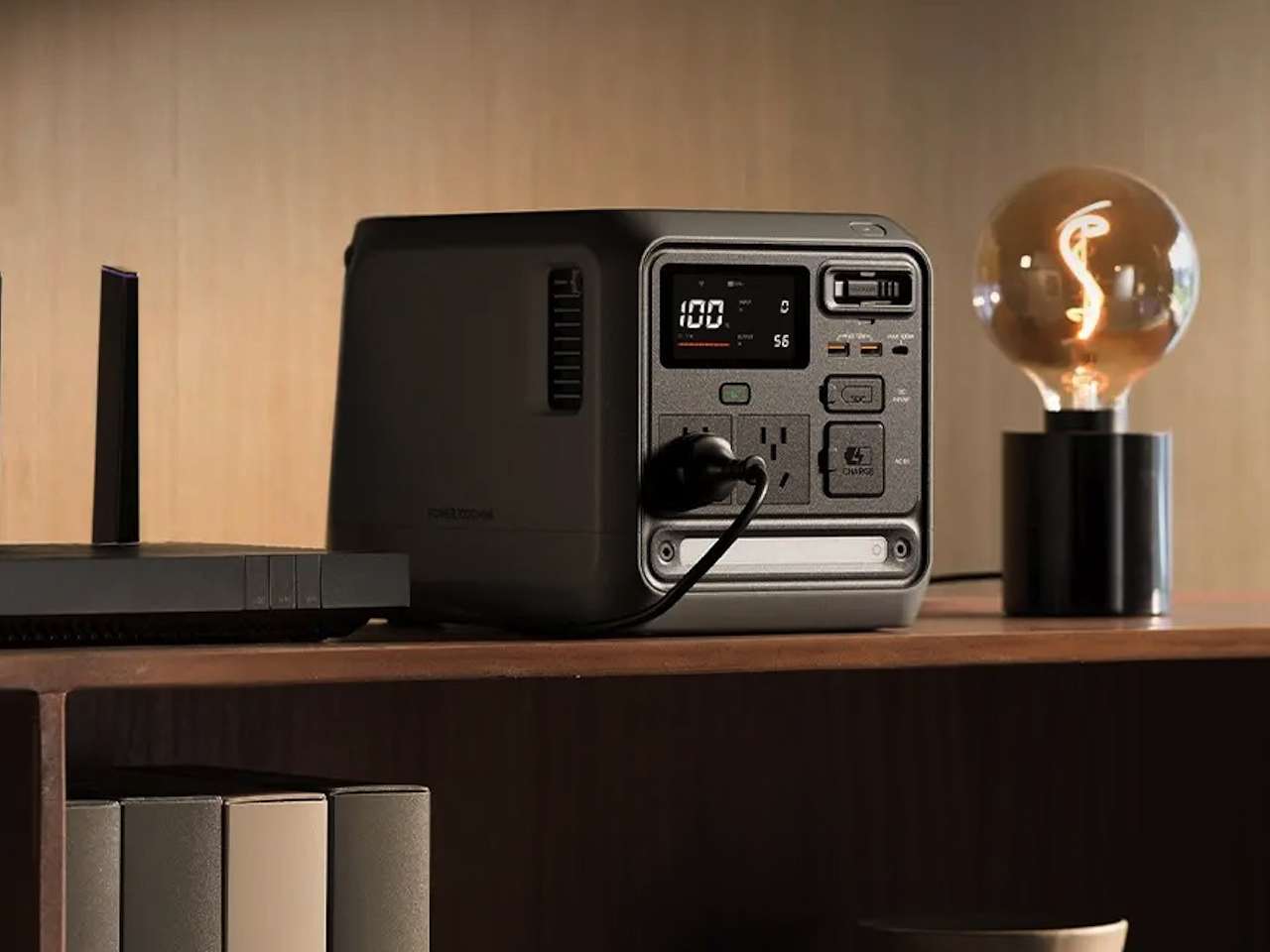
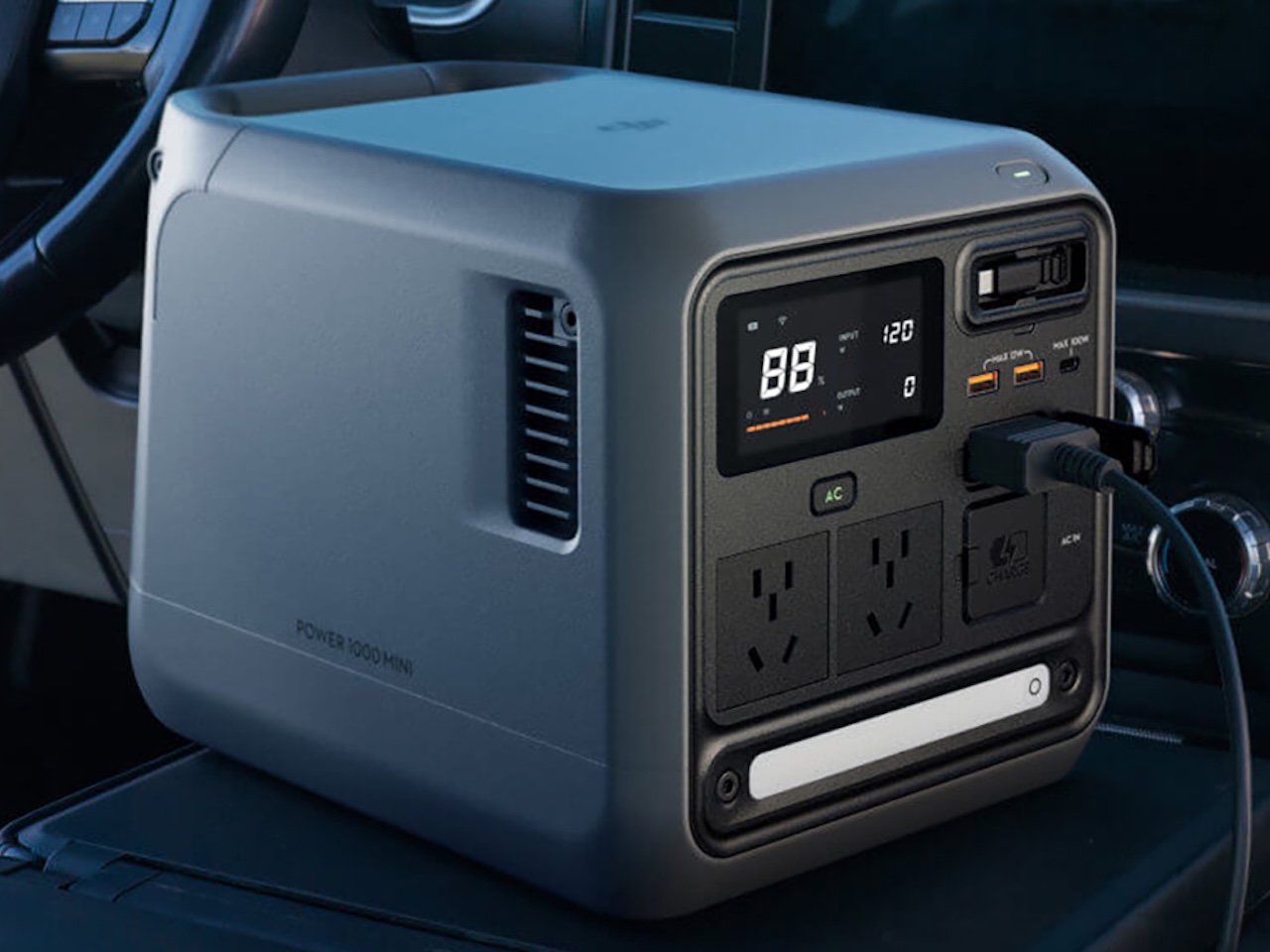
One of the features that sets this device apart from most competitors in this price range is its integrated retractable USB-C cable. The cable supports bidirectional 100W charging, meaning it can supply power to the connected device or receive incoming charge through the same cable. You pull it directly from the charging station, eliminating the need to carry a separate charging cable for quick recharging of phones, tablets, or small laptops. It's a small addition, but it reduces the bulk of your bag. DJI also included a built-in LED flashlight with an SOS flashing mode for camping or emergency situations. The flashlight is located on the top of the device and operates independently of the main output ports.

The front panel features two AC outlets, one 100W USB-C port, two 12W USB-A ports, and one SDC port, which connects directly to DJI drone batteries and accessories. You'll notice that the number of ports is smaller than the V2, which has four AC outlets. The Mini isn't designed to power a full camp kitchen or operate multiple high-drain devices simultaneously.
What DJI removed to reduce its size
The DJI Power 1000 V2 has four AC outlets and a maximum output power of 2600W. The DJI Power 1000 Mini has only two AC outlets and a maximum output power of 1000W, with support for continuous loads of up to 800W. This is a significant reduction in maximum power, so if you're using multiple high-drain devices simultaneously or powering a portable heater or electric kettle, for example, the Mini won't handle it. DJI intentionally reduced the number of internal components in the power output configuration, allowing for a smaller frame and reduced weight.
The Mini also loses some of the expansion features found in the V2. The V2 supports external battery packs and more complex charging schemes, making it more suitable for long-term battery life or situations where capacity needs to be gradually increased. The Mini is a fixed-capacity device with no expansion options. What you buy is what you get.

DJI maintained the same 1000Wh battery capacity for both models, so the reduction in physical size didn't come at the expense of energy storage. The Mini and V2 hold the same amount of power. The difference lies in how much power can be used at one time and how many devices can be connected simultaneously.
The retractable USB-C cable is the only feature that differentiates the Mini from the V2. Everything else is a cutback or abbreviation. This isn't a criticism, but rather a design philosophy.
The Mini isn't trying to be an improved version of the V2. It's a different product for a different use case. DJI is clearly betting that enough users will prioritize portability and ease of transport over maximum power and port flexibility. Whether this bet pays off depends on how closely the Mini's target audience aligns with actual buyers. The tradeoff is clear: DJI removed the two AC outlets and lowered the power ceiling to make the device more physically comfortable to handle. A built-in handle on the top allows for one-handed carrying, and it fits in the trunk of a car alongside other equipment without taking up any extra space.
Charging speed and battery life
DJI claims the Power 1000 Mini fully charges in approximately 75 minutes from AC power, and charges up to 80% in less than an hour. These figures place it among the fastest options in the lithium iron phosphate power station category of this capacity. Most competing 1000W devices require two hours or more to fully charge, so the Mini's charging speed is a real advantage if you need to quickly top it off between uses. The station also accepts USB-C charging and compatible solar panels, giving offline users the option of recharging without access to AC power. DJI doesn't specify solar output, but most devices in this category support solar power between 100 and 200W, which equates to approximately five to ten hours of charging under full sunlight, depending on the size and efficiency of the panel.

A lithium iron phosphate (LiFePO4) battery maintains a capacity of at least 80% after 4,000 full charge cycles. At one full charge cycle per day, this equates to approximately a decade of stable operation before the battery's capacity drops below the threshold. Furthermore, LiFePO4 cells operate more safely over a wider temperature range than standard lithium-ion batteries, an important practical factor for outdoor and vehicle use. If you leave the Mini in a hot car or use it in cold weather, the battery will not degrade as quickly as traditional lithium-ion batteries.
Features of the model
Brands like Bluetti, Jackery, and EcoFlow are downsizing their mid-range models while maintaining or increasing the number of charge cycles. The trend is toward lighter, more convenient devices that still provide sufficient capacity for short-term off-grid use or mobile workstations. The Power 1000 V2 arrived at a time when DJI was just establishing itself in this category and needed to demonstrate its full capabilities.
The Mini model was released after DJI consolidated its position and was able to focus on a narrower market segment. It's aimed at users who found the V2 sufficiently functional but too bulky for everyday transport. The target audience includes content creators filming on location, tourists who need to charge their devices overnight, and drone operators already using the DJI ecosystem. The retractable USB-C cable and reduced size suggest DJI is targeting a segment of buyers who need battery capacity but don't want a bulky charging station. The price difference supports this positioning.
In China, the Mini retails for 2,499 yuan, while the Power 1000 V2 currently sells for $699. This is a significant difference, creating a clear distinction for buyers who don't need the V2's higher maximum power. DJI has not yet confirmed when or whether the Mini will launch in North America, Europe, or other international markets.
The Power 1000 V2 followed a similar development pattern: debuting first in China, then expanding to other markets a few months later. Therefore, the staggered launch of the Mini will be consistent with DJI's recent approach. If the Mini is launched internationally at a competitive price, it will put direct pressure on compact models with lithium-iron phosphate batteries from established competitors. The body has a matte finish that resists fingerprints and scratches better than glossy counterparts, and the grip is wide enough to accommodate gloved hands, which is important in cold weather or when working outdoors.
Who is this model not suitable for?
If you need to power multiple high-drain devices simultaneously, the Mini's 1000W maximum output and 800W continuous load will be insufficient. In this case, the Power 1000 V2 or a larger unit with a higher maximum output will be a better choice. However, if you're using it to power a multi-purpose camp kitchen, power tools, or require more than two AC outlets, the Mini's reduced number of ports and lower output will be significant limitations.
The lack of expandability also means it's not the best choice for users who want to scale power over time or add external battery packs. If your power needs fluctuate significantly or you plan on long-term off-grid use that might require system expansion, the V2's flexibility justifies the extra size and cost. The Mini also doesn't make sense if you primarily use it in a stationary location.
If the device is stationary and rarely moved, reducing size and weight doesn't offer much benefit. It's better to choose a more powerful model with more ports and greater flexibility. The Mini's advantages only come into play when portability is important, when you frequently move the device between locations, or when you need to carry it by hand over long distances.
Result
The Power 1000 Mini is DJI's answer to the question of what a portable power station should look like when it stops trying to replace a wall outlet and starts being optimized for portability. It's smaller, lighter, and charges faster than the Power 1000 V2, but sacrifices maximum output power, number of ports, and expandability. For users who found the V2 powerful enough but too bulky for everyday transport, the Mini offers a clear alternative.
For users seeking maximum power or flexibility, the V2 remains the best option. The Mini's impact internationally at a competitive price will determine the pressure it places on compact lithium-iron-phosphate battery models from Bluetti, Jackery, and EcoFlow. Currently, it's only available in China, highlighting where DJI believes the portable power station category is heading: toward lighter, more user-friendly devices designed primarily for use when you actually need to take them out of your hands.