

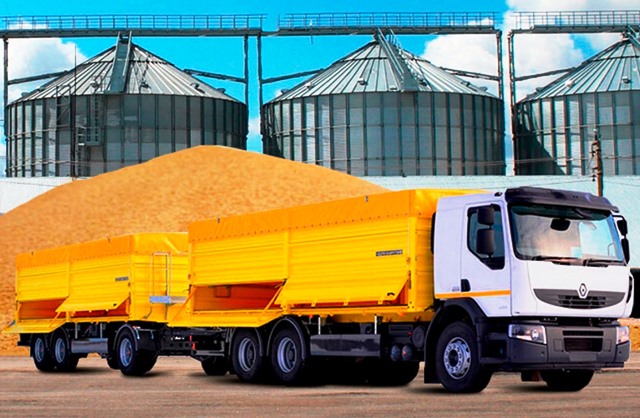
Agriculture remains a key sector of the global economy, providing food and resources to the population. A key element of this industry is the transportation of agricultural products from the field to the storage facility or point of sale. Grain trucks and their trailers play a key role in this process.
1. Evolution of technology
Grain trucks designed for transporting grain have been around for many years, but modern technology has brought significant changes. One of the most important components is the trailer, which significantly improves the efficiency and safety of transportation.
2. Increased load capacity
With advances in engineering and materials, grain trailers are now capable of transporting larger volumes of grain in a single trip. This allows agricultural enterprises to reduce the number of trips and, consequently, reduce fuel and time costs.
3. Innovations in design
Modern grain trailers boast a number of innovative features. One of these is the use of lightweight yet durable materials, such as aluminum or special composites, which reduces the trailer's weight and increases its load capacity.
4. Security technologies
Safety plays a vital role in transporting agricultural products. Many modern grain trailers are equipped with advanced temperature and humidity control systems, which help prevent grain from overheating and becoming damp during transport. Innovative anti-lock braking systems (ABS) and reinforced suspensions also ensure stability and safety on the road.
5. Environmental efficiency
With growing awareness of environmental issues worldwide, agricultural enterprises are increasingly focusing on the eco-efficiency of their equipment. Many modern grain trailers are equipped with emission-reducing and fuel-optimizing systems, helping to reduce their environmental impact.

Types of grain trailers
- Dump trailers: Dump trailers are one of the most common options for transporting grain. They feature a special tipping mechanism that allows for quick and convenient unloading at the destination. This type of trailer is especially popular for large volumes of grain, as it allows for quick unloading and return for more.
- Flatbed trailers: Flatbed trailers are another common option for transporting grain. They feature sides that prevent the load from falling out during travel and ensure its safety. Flatbed grain trailers are classified as two-axle or three-axle depending on the number of axles, which affects their load capacity and stability during movement.
Grain trailers are a vital part of the agricultural operation, and the choice of a specific trailer type depends on many factors, including the volume of cargo being transported, operating conditions, and safety requirements.
Innovations in winter wheat sowing in Kazakhstan
Winter wheat sowing in Kazakhstan's agricultural environment is traditionally associated with risks due to the arid climate and extreme temperature fluctuations. However, modern agricultural technologies and integration with new generations of grain trailers allow for a radical change in the approach to sowing, increasing germination and yield by 25–30%, even in risky farming zones such as the country's northern and central regions.
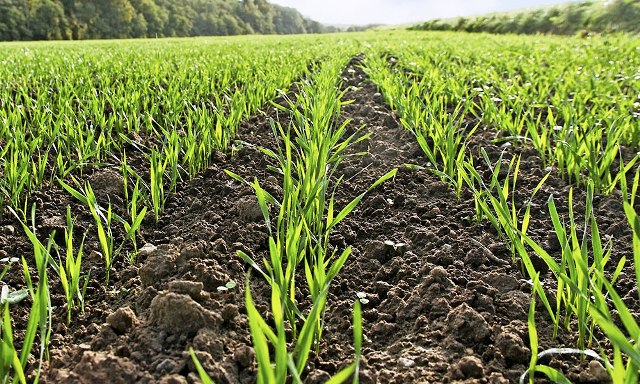
Precise seeding through integrated seed tubes
Over the past two years, Kazakhstani agricultural holdings have been introducing grain trailers with direct pneumatic seeding. Instead of the classic «grain trailer-bunker-seeder» chain, seeds from the trailer are delivered directly to the seed coulters via flexible hoses with computerized dosing. This eliminates unnecessary handling and damage to the grain.
- Variable Rate Adjustment System (VRA): GPS sensors on the trailer analyze the field map and automatically adjust the winter wheat seeding rate depending on soil fertility.
- Pneumatic pipelines with antistatic coating: prevent grain from sticking and crushing when moving through hoses up to 12 meters long.
- Storage bins with the «Stratified Flow» function: Inside the trailer, the seeds do not separate, which ensures a uniform fraction at the output.
Adaptation to Kazakhstan's soil and climatic conditions
Innovative grain trailers for winter sowing in Kazakhstan are equipped with seedbed depth and microclimate control systems.
Important note for farmers: In the dry steppe zone of Kazakhstan (Aktobe and Karaganda regions), the gap between soil preparation and seeding is critical. New trailed systems allow for the combination of deep loosening (chisel tillage) and seeding in a single pass, with an interval of no more than 15 minutes, preserving up to 80% of the moisture in the seed horizon.
Step-by-step technology for innovative winter wheat sowing using a grain trailer (model «AgroSeed Pro 9000»)
- Agrochemical analysis of the field using a built-in NIR sensor in the trailer drawbar (data is transmitted to the operator's tablet).
- Loading seeds directly into the trailer's sealed bin, where the seeds are disinfected through an ozonation system without the use of chemicals.
- Setting up a seeding map via a cloud platform: the field boundaries, the type of winter wheat (soft or hard), and the desired planting density of 350–450 plants/m² are entered.
- Transportation to the field and combination of operations: The trailer is coupled with a tractor with a capacity of 250 hp, simultaneously performing three tasks: cultivation, application of starter fertilizer (NPK 10:26:26) and pneumatic seeding in a strip of 4.5–6 meters.
- Error monitoring and omnichannel: A 12-row coulter with pressure sensors on each row transmits data to the cabin. When a row becomes full, the system automatically increases the pressure in that channel.
Digital Innovation: Internet of Things (IoT) in a Trailer
The latest development for Kazakhstan's agricultural enterprises is the VISION Twin grain trailer, which synchronizes with the KazCosmos satellite system. Every two seconds, the trailer's module analyzes:
- wind speed and air humidity (affects seed blowing);
- seed temperature inside the bunker (should not exceed +15°C for winter crops);
- tractor fuel consumption per hectare.
Based on this data, the onboard computer adjusts seeding speed and seeding depth in real time. According to preliminary results for the 2027 season in the Kostanay region, the use of such a grain trailer increased the field germination rate of winter wheat from 78% to 94%.
Advice from an agricultural engineer: For sowing winter wheat in western Kazakhstan (dry fescue steppes), choose grain trailers with a two-chamber hopper (seeds and fine hydrogel). The hydrogel is embedded to a depth of 5-7 cm along with the grain, creating a local water reserve for 2-3 weeks. This increases the guaranteed germination rate to 97%, even if autumn rains do not fall for a month.
Conclusion
Grain trailers play a vital role in modern agriculture, ensuring the efficient and safe transportation of grain from collection to destination. Modern innovations in trailer design and technology significantly improve the transportation process and contribute to increased productivity and environmental sustainability in the agricultural sector.