

So, here's the story. Imagine it's 1913, France. A French agronomist, Max Ringelmann, a curious man, decided to observe people pulling a rope. It was just a regular competition, nothing special, apparently. But this observation gave rise to something entirely new—the Ringelmann effect, as it was later called.
The gist of it is: the more people there are on a team, the less effort each individual puts in. Sounds a bit sad, right? Like, you know, «the deeper the forest, the darker it gets.» Because, no matter how you look at it, if you lose, who's to blame? No one in particular; it's all kind of blurry. And vice versa, when you win, it's also not entirely clear whose fault it is if there are a lot of people. And, of course, with a bunch of people, there's always a greater chance of discord, misunderstandings, and, as they say, «bottlenecks» in the work.
And this is a very effective thing. I think how often we see this in life! In large companies, in teams... Sometimes it seems that if one or two people took on all the work, it would be faster and more efficient.
Now, to make things clearer, let's look at the army. There, everything is even more structured. A brigade is typically four regiments, a fairly large force. A regiment is made up of battalions, usually two. A battalion is a company, and a company has about a hundred men. And that's where things get interesting.
Sometimes, you know, a company, even with a hundred men, can decide the outcome of a battle. It can turn the tide of history! And it's honestly a bit mind-boggling. A hundred soldiers, and they're capable of such a thing! And sometimes, you know, a brigade, a regiment, a battalion… and it still doesn't work out. As the saying goes, «hit the wrong target.».
In short, the Ringelmann effect isn't just a dry theory. It's about people, about motivation, about how we work together (or not so much) in large groups. And I think this is worth considering when assembling a team for something important. Otherwise, you could lose at tug-of-war, and in life too. And then it'll be a long time to look for someone to blame.
10. 303rd Squadron

Although the Polish nation surrendered less than a month after the German invasion on September 1, 1939, it by no means marked the end of Poland's involvement in World War II. In August 1940, No. 303 Squadron was formed from refugee pilots from the 1st RAF Police Regiment, assembled in Blackpool, England. Trained on obsolete aircraft back in Poland, they embraced their Hawker Hurricanes with such energy that they rose to the top of the RAF's Battle of Britain rankings and remained there for virtually the entire war, shooting down three times as many enemy aircraft as the average RAF squadron, while suffering one-third the losses. On September 7, 1940 alone, they shot down 14 Luftwaffe aircraft without losing a single person.
Many experts, both then and in recent years, have credited 303 Squadron with being key to victory. Air Chief Marshal Hugh Dowding said that without their contribution to the Battle of Britain, «I hesitate to say the outcome would have been the same.» Karl Craffys of the New England Air Museum said of 303, «...they were able to turn the tide of history.» Despite their remarkable performance, their contribution was downplayed for decades, largely due to Poland's presence behind the Iron Curtain, which exacerbated tensions with the British government over its failure to fulfill its promise to return the Poles to their liberated homeland.
9. Princess Patricia's Canadian Light Infantry
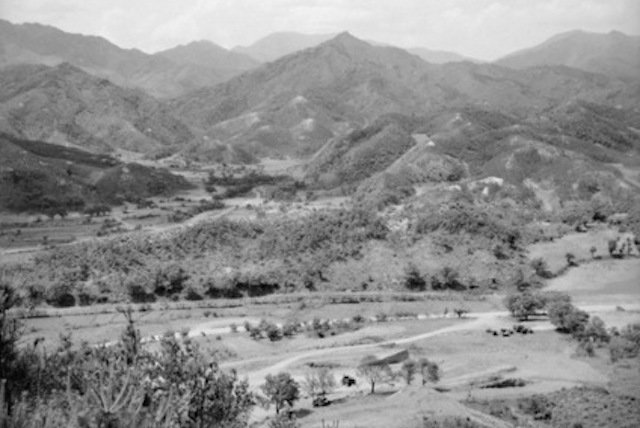
At least by Western standards, it's not ideal for a group of soldiers to have the word «princess» in their regiment name, and this was especially true in the 1950s. The teasing likely died down after the events of April 24-25, 1951. That's when the 2nd Battalion, Princess Patricia's Canadian Light Infantry, was deployed to Hill 677 to protect the South Korean army's retreat across the Gapyeong River valley, approximately 10 miles from the 38th parallel, in response to a massive Chinese offensive.
To illustrate what the 700 Canadians faced, on April 23, the 3rd Battalion of the Royal Australian Regiment encountered the Chinese and was forced to retreat after suffering heavy losses. The following day, 5,000 Chinese soldiers launched waves of attacks on the Canadians, including under the cover of night. Desperate measures were required to hold the line; for example, one wounded private had to launch three lone counterattacks. At another point, Lieutenant Michael Levy called on Canadian artillery to shell his position to halt the attack. By the end of the battle, the Canadians were completely cut off, saved only by airdropped supplies. Ultimately, their dedication and bravery would buy the United Nations forces time to regroup and halt the major Chinese offensive.
8. 1st Tank Brigade

Let's talk about the most recent events on this list. It's time to turn our attention to Chernihiv, a city in Ukraine about 60 miles north of Kyiv. When the Russian invasion of Ukraine began on February 24, 2022, this brigade of approximately 150 tanks and 1,200 troops was the only force standing between the city of 230,000 and the Russian 41st Combined Arms Group, which included more than 10 battalions. By February 25, the 1st Brigade had already stopped the 41st.
By March 6, it was expected that the significantly superior brigade would surrender, as its supply lines were threatened with encirclement. Instead, it not only held firm, but suffered far fewer losses than expected and managed to shoot down an aircraft. By March 23, having lost 10,000 men, the 41st Division retreated to change strategy, bringing the Ukrainians an unexpected victory.
7. Cavalry reserve in Poitiers

Now that the relatively current events are over, the next entry will take us to the other end of the timeline and into the Middle Ages. Regarding the major battles of the Hundred Years« War (1340–1457), the Battle of Poitiers in 1356 AD is often overshadowed by the Battle of Crécy a decade earlier and the Battle of Agincourt half a century later. Following the end of the Ten Years» Truce following the momentous victory at Crécy, a 12,000-strong English force under Prince Edward "the Black" raided central France. They were caught by a 40,000-strong French army under King John II, and despite Prince Edward's attempted retreat, the battle began on September 19.
Although the archers again had a devastating effect on the French—just as they had at Crécy—this time the battle was by no means so one-sided. Attacking in three main waves, they threatened to overwhelm the English army. Edward sent a detachment of 160 cavalry around the French army, spreading panic among the French at being surrounded. This surprise attack resulted in such a rout that King John II was captured, and his ransom was not paid until 1360.
6. Tzvika Force
In 1973, Syria invaded Israel near the Golan Heights. One of those determined to stop them was 21-year-old Zvika Gringold. He had hitchhiked to the Nafehi base and was sent to pick up the wounded from two damaged Centurion tanks. Instead, Goldman and company repaired the tanks and intercepted a Syrian column of T-55s. After disabling six enemy tanks, Zvika Force switched to another tank to continue the fight, deceiving the masses of Syrian tanks and their own Israeli superiors, convincing them that there simply must be more than one tank capable of fighting dozens of enemy tanks.
Eventually, Zvika Force joined a group of a dozen other tanks. Fighting against over 100 additional tanks, Zvika Force was repeatedly forced to defend Nafeh alone. Ultimately, 30 hours passed before Zvika and company abandoned their Centurion tank, buying more than enough time to fortify the base and halt the invasion. This story was later harshly criticized for being propaganda. Certainly, there was some exaggeration of his exploits. For example, some reports put the number of tanks destroyed by Zvika Force at 60, which, according to Greengold himself, was nonsense. Nevertheless, the heroism of this core tank crew could not be denied.
5. Bill's Rifle Company
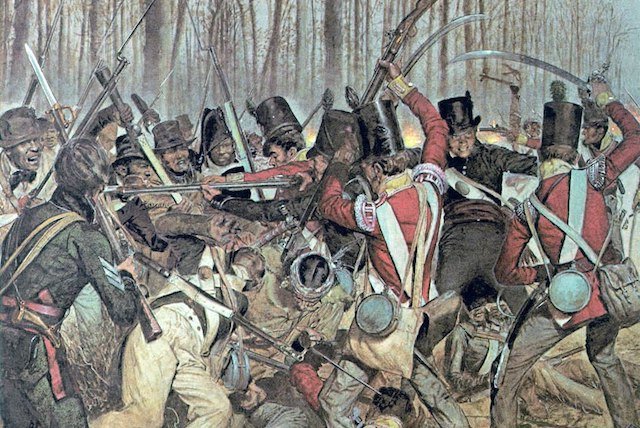
The popular image of the Battle of New Orleans in 1815 is essentially of redcoats marching toward a massacre by Americans, inflicting minor casualties in return, and two weeks after the war had ended. But this famously misguided attack was the end result of several engagements that began in December 1814, and earlier in the battle, things had gone much more favorably for the British. In the first clash, the British captured five American warships at Lake Borgne and seized the initiative.
Then, on the night of December 23, 1814, British infantry clashed with Beale's Rifle Company at Wheeler Plantation. Although the battle ended in a stalemate and casualties were roughly equal, British morale was severely shaken, and further attacks were delayed, allowing ample time to strengthen the defenses before the British launched their famous, doomed attack on January 8 of the following year. Unusually for a group that had distinguished itself so greatly in such brutal combat, Beale's Rifle Company was composed of merchants and lawyers. Twenty years after the battle, the participants were granted land grants.
4. Rosecrans at Rich Mountain

On July 11, 1861, at the beginning of the American Civil War, the Northern Army under General George McClellan confronted the Southern Army under General Robert Garnett at Rich Mountain, Virginia. The Southerners were defending two mountain passes in the Appalachian Mountains and the Staunton-Parkersburg Turnpike, which would be crucial if the Confederacy wanted to end the secession of northwest Virginia counties. McClellan sent a brigade of troops under General William Rosecrans to flank the Confederates. Rosecrans did so and then launched an attack as ordered.
As veteran John Beattie reported in his 1879 memoirs,«Citizen-Soldier» , McClellan and his troops could easily hear the fighting behind enemy lines, and the troops waited for McClellan to order an attack. But McClellan decided against such an attack, believing Rosencrans was beyond rescue. Rosencrans's brigade effectively routed the Confederates and captured half their army.
3. 8th Hussar Cavalry Regiment
On January 22, 1795, Holland was at war with France as the French Revolutionary Wars raged. A flotilla of fourteen Dutch ships was frozen in the waters off Hexel Island, about 50 miles north of Amsterdam. The heavily armed ships were prepared to attack ships from unfrozen waters or to bombard them with artillery.
So, General Jean-Charles Picergu turned to a more unusual weapon to combat the gunboats and ordered a cavalry attack on the ships. The 8th Hussar Cavalry Regiment caught the ships so completely by surprise that they surrendered faster than the French had dared hope, in one of the most extraordinary events in military history.
2. Reconnaissance and reconnaissance platoon
When the Wehrmacht launched its final blitzkrieg on December 18, 1944, to begin the Battle of the Bulge, the I&R Platoon of the 394th Infantry Regiment near Lanzerath, Belgium, consisted of only 18 men, led by 20-year-old Lieutenant Lyle Buck. Upon detecting the approach of the 1st SS Panzer Division, the platoon's communications with higher command were cut off by a two-hour artillery barrage, and a group of more than 250 organized paratroopers attacked. Unfortunately for the attackers, the platoon had already received orders to hold at all costs.
Over the next day, the platoon inflicted 200 casualties on the enemy and delayed the advance for much of the day until 50 paratroopers launched a flanking attack at dusk. Amazingly, they suffered only one wound, when Buck was shot in the leg, and one man was killed. The Battle of Lanzerath provided such an invaluable delay that virtually the entire northern German attack was thrown off schedule by 18 hours, allowing for significantly better defensive preparation and counterattacks. It wasn't until 1981 that this remarkable stand was recognized, and the platoon became the most decorated in the US military.
1. The Lost Battalion
In a battle between Americans and Germans that largely boiled down to the actions of a single small group, on October 2, 1918, 700 soldiers of the 1st Battalion, 308th Infantry Regiment, under the command of Major Charles Whittlesley, attacked the Germans along the Charlevoix Pass in the Argonne Forest. While units on either flank were stymied, these nine companies reached their objective (according to some accounts, by a breakthrough, according to others, because the Germans lured them with orders to retreat) and were then cut off by the 2nd Landwehr Division. For the next five days, the battalion was subjected to almost relentless sniper fire, machine gun fire, and attacks.
Not only did these isolated troops face countless attacks from vastly superior forces alone, but the only point where they received support from the rest of the Allied army actually aided the German army. On October 4, the 152nd Field Artillery Brigade began bombarding the area in an attempt to relieve the battalion, but due to false information, their shells overwhelmingly hit their comrades, killing 30.
The Germans were well aware of this, and when the Americans sent pigeons back to command to call for an end to the bombardment, German snipers shot them down. The only pigeon that got through arrived wounded by a German bullet. The end of the bombardment meant a resumption of German attacks, but even lacking food and ammunition, they were able to repel the attacks, and the attempt to destroy the battalion tied down the German forces enough for the remainder of the American offensive to break through. Only fewer than 200 men emerged from the battle in full health, having contributed significantly to ending World War I a month later.
Dustin Koski wrote «Return of the Living» , a post-apocalyptic supernatural comedy.