

Almost every ancient polytheistic culture had weather gods. Most of us know of Thor, the god of thunder, but there were gods of wind, rain, lightning, and other gods in North and South America, Africa, and Asia. Weather has always fascinated and confounded humanity. And even today, when we can explain it all with science rather than the whims of omnipotent beings, there are still phenomena that occasionally baffle even the best of us, some of which have nothing to do with weather at all. With this in mind, let's look at 10 of the world's most bizarre weather phenomena.
10. Meat shower in Kentucky

Rest assured, it doesn't rain meat anywhere in Kentucky. But that doesn't mean it never happened. And when you learn the whole story, you'll wish it was just raining meat, because that's far less disgusting than the truth about this mysterious event.
There was a day in 1876 when the residents of Olympia Springs were treated to meat from heaven, which was said to be quite substantial in size. One witness described it as « full horse-drawn wagon », which wasn't a literal measurement, but simply an 1876 way of saying «a lot.» It covered space 100 yards x 50 yards .
So, people came out to look at the meat, which fell in small pieces and scraps. A few brave and/or foolish souls also decided to taste the meat to see what it was like.
The meat was sent for analysis, and although most locals lost interest in it, one scientist came up with an explanation. The meat had come from vultures. In other words, they had eaten it and then, after flying away, vomited it all over the city.
It turns out that vultures, in a panic, scatter everywhere. This makes them lighter and allows them to escape faster. The theory, based on the condition of the meat, fits the details.
9. Watermelon Snow

Watermelon snow sounds delicious, but we recommend avoiding it if you ever see it. It's less tasty and refreshing than algae snow. Chlamydomonas nivalis . Unlike most algae, which thrive in standing water or ponds, this species simply loves snow. And while you can technically survive on it in small quantities, you're probably, get diarrhea because of their problems.
This is commonly known as summer snow algae, meaning it thrives in snow that remains in high-altitude areas during the summer months, when lower altitudes experience warmer weather. It forms reddish-pink streaks or pockets on the snow, which can be mistaken for blood. The red part actually protects the algae from ultraviolet radiation.
8. Star Jelly
There's a good chance you could sell a product called Star Jelly as a breakfast food, but that's neither here nor there. In real life, star jelly owes its origin to a potential cornucopia of sources, thanks to the fact that people tend to lump mysterious goo into one category.
While folklore suggests that it fell from the sky ( (hence the name), star jelly can actually emerge from many places, and some of them can be potentially dangerous. These could be simple oviducts. frogs or gelatinous aquatic bryozoans gathered together. Sometimes fungi can form gelatinous clusters, especially if they are rotting, and even slime molds fit the bill.
7. Atmospheric rivers and lakes
A relatively new discovery, atmospheric lakes and rivers are very similar to what they sound like. The concept of atmospheric rivers is slightly older than lakes, and they're quite remarkable. Capable of reaching 1,000 miles in length and 400 miles across, an atmospheric river is a stream of water vapor in the atmosphere that can dump a hell of a lot of water as it descends. Up to the equivalent of 25 rivers of the Mississippi . If that's too intense for you, there's a recently discovered atmospheric lake.
Similar to an atmospheric river, but not as fast-flowing, an atmospheric lake is a vast reservoir of water vapor in clouds. Essentially, it lake in the sky . Unlike the river, which sounds very intense, the atmospheric lake, which opens over the Indian Ocean, was thought to contain enough water to form a puddle. 620 miles wide , but only a few inches deep. They move through areas with little wind and form in equatorial regions near coastal areas. They can also last nearly a week as they move slowly, bringing rain to often very dry and arid places.
6. Sun Dogs
Anything with a name like a sun dog must be at least a little cool, and fortunately, this rare occurrence truly is. You'll have to be very lucky to find a sun dog, as the conditions must be just right. A right angle is needed, in this case. 22 degrees . In the atmosphere inside cirrus or cirrostratus clouds there should be ice crystals . If the clouds are there and you, the viewer, are in the right position, you get a sun dog or a phantom sun.
The sun dog effect is where the sun appears to be surrounded by a massive halo of light, with another sun visible on either side of it at the edge of the halo. Depending on how you look at it, they may appear to have spikes or coronas extending from them. So, three suns together, and the other two often appear slightly smaller than the actual sun as a whole.
5. Fog in the apartment
Human-caused climate change is a hotly debated topic these days, but if you're still not convinced that humans can influence the weather, take a look at fog in an apartment building , to see the most graphic example of this you will ever find.
Known in Panama City, Florida, apartment fog occurs when hot, moist air hits the artificial walls of a condominium. It rolls off the Gulf of Mexico and then, breaking against the apartment walls, rises into the air and cools, creating a wave of white fog.
The air cools by about one degree Celsius for every 100 meters of altitude it gains. The apartments forced the air to rise about 50 meters to pass them, but that a drop in temperature by half a degree It was enough for it to condense into clouds. As soon as it reached the building, the temperature changed again, and the clouds evaporated, leaving the apartments, and only the apartments, shrouded in fog.
While it's interesting to see this happening over buildings, it's very similar to the phenomenon of mountain peaks being shrouded in fog. We simply accept it as more normal when we see it in the mountains than on buildings along the coast.
4. Steam Devils
A dust devil is what happens when a patch of dry land heats up more than the surrounding ground, causing rising air to swirl like a weak tornado, lifting dust along with the ground. It's not a common occurrence, but many of us have at least heard of it. However, it's not the only weather devil. Much rarer, but equally stygiansteam devil somewhat opposite to its dusty relative and is found over bodies of water or damp ground rather than in dusty areas of land. They have been observed to form on frozen grass , when the sun falls on it and begins to heat the frozen surface, creating the necessary temperature difference.
Like a dust devil, it forms when contrasting air temperatures create a vortex. In this case, the water on which the steam devil forms is usually warm when a colder air current reaches it. Warm, moist air from the water rises into the colder air and begins to rotate, drawing in water vapor from below. They typically don't grow very tall, often only a couple of meters in height.
3. Luvia de Pecas

Raining animals is certainly a strange phenomenon, but there are so many articles about it these days that it's easy to find explanations. Typically, things like fish and frogs falling from the sky are associated with waterspouts, which suck the animals out of a body of water and transport them elsewhere, or simply flash floods, which create the impression that they fell after a storm. But raining fish, known as lluvia de pecas in Yoro, Honduras, works a little differently.
Yoro is privileged to enjoy a regular rain of fish. This occurs once or twice a year, and has been observed by crews from places such as National Geographic . Or at least partially. They couldn't confirm that fish fell from the sky, but they did see fish on the ground.
The small silvery fish that appear are not native. They also appear blind. This has led some to speculate that they inhabit an underground river, and are forced to the surface during particularly strong storms. during floods and leave them on the ground. This could explain why they are always found in the same place, rather than scattered all over the place, for example, if they are besieged by a waterspout.
2. Blackbird Shower
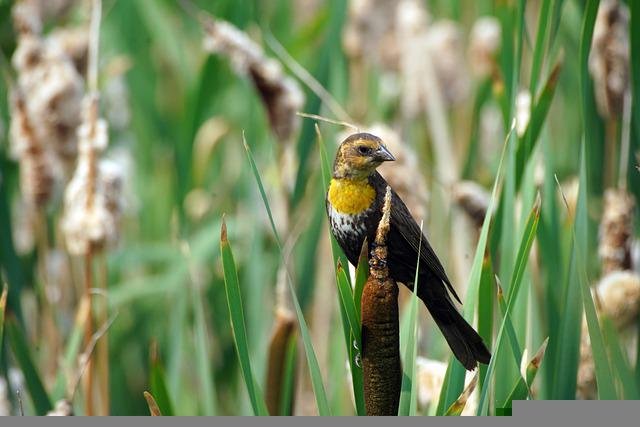
History is riddled with stories of animals falling from the sky. lluvia de pecas is just one of many examples. It rains frogs и tadpoles . It is known that spiders also fall like rain and larvae . And in 2022, hundreds of yellow-headed blackbirds fell from the sky over Chihuahua, Mexico.
Unlike many animal rain incidents that have occurred in the past, the blackbird incident was caught on camera, So you can see it happen firsthand, and it's quite dramatic. The birds crash to their deaths, as if someone dropped them from a bucket, and sadly, many of them don't survive the fall. But why did this happen in the first place? Frogs at least have an excuse to fall when they take to the air, but birds can fly.
While it's just a theory, the most plausible explanation seems to be that the birds «flared up » , that is, a large bird of prey likely attacked the flock, and in a panic, they all dove as fast as their tiny wings could carry them. The result was an ill-timed escape, causing too many to fall to the ground too quickly.
1. The Qi'yan Event
The weather can be terrifying and deadly. It is said that Hurricane Galveston In 1900, it claimed the lives of between 8,000 and 12,000 people. In 1970, cyclone Bhola could kill up to 500,000 people. About 20 people per year dies from lightning strikes in the United States. And several people even died from hail . What about some other kind of destruction from the sky? How deadly is it when it rains fire?
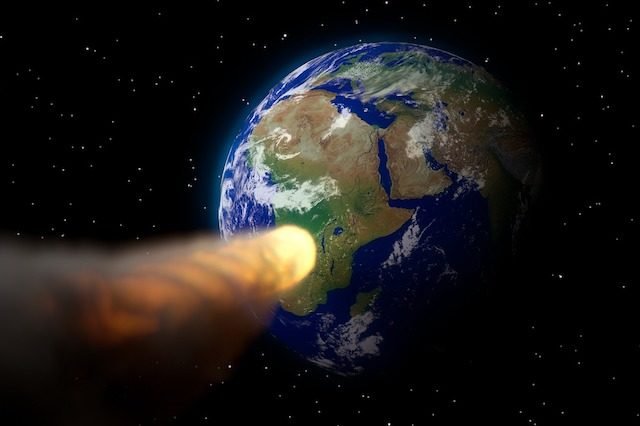
In 1490, residents of Chin-yang, China, witnessed what is now considered an asteroid explosion. At the time, however, it was thought to be a rain of stones that rained death and destruction across the countryside.
It is believed that at least 10,000 people died in this incident. The fallen stones weighed from 1 to 1.5 kg . In more understandable terms, some were supposed to be the size of a water chestnut, and others - goose egg . But they also fell from space, and their speed must have been incredible.
Historical reports of the incident are considered reliable , and there are precedents where objects have broken into many thousands of pieces, which could explain the death toll if this had happened in a populated area.