
When police appear in the news these days, it's almost never for a good reason. Police annually shoots more 1000 people. There is also evidence that since 2000, police have confiscated approximately 70 billion dollars from ordinary citizens through civil asset forfeiture proceedings, regardless of whether these individuals are criminals or not. If that weren't enough, there's also evidence that police will occasionally fabricate or plant evidence to frame innocent people for crimes or cover up their own mistakes.
10. The FBI has charged four people with murder.
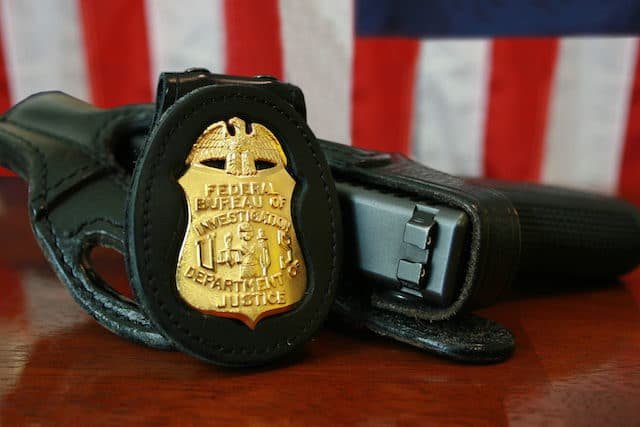
Law enforcement agencies rely on informants for information. These are often criminals themselves, hanging out with and around other criminals and willing to share information with law enforcement in exchange for money or leniency when it comes to prosecuting their own crimes. But how valuable should an informant be?
Joseph Salvati was imprisoned for 29 years because the FBI framed him for a murder he didn't commit. They did this to protect the real culprit, a man named Jimmy «The Bear» Flemmi. Flemmi was an FBI informant for the Mafia, and they didn't want to risk losing the information he'd provided them, so when Edward Deegan was murdered in 1965, the FBI forced Flemmi and others to give false testimony to convict Salvati and several others of the crime. crime .
Two of the convicted men died in prison, and the third was released in 2001. The sentences were overturned after a journalist discovered FBI secret memos , which were never revealed during the trial. They revealed that Flemmi was the real killer and informant, and that a key witness, another hitman, was lying but had been helping them with other cases, so they overlooked him.
The government awarded Salvati and others $101.8 million for creating the framework. FBI lawyers argued that they were working for the federal government, and the trial was state-level, so they were under no obligation to share information, and the convictions were not their fault. The judge disagreed.
9. Sheriff Joe Arpaio charged a man with attempted murder.
Infamous Maricopa County Sheriff Joe Arpaio has been in the news for years for his PR moves , including forcing inmates in his prisons to wear pink, eat terrible food, work in chain gangs, and much more. His office was also known the failure of serious criminal investigations, including child abuse and sexual assault. Despite his dozens of controversial actions, it's unsurprising that among them was accusing people of crimes.
James Saville spent four years in prison for attempting to create bomb , to kill Arpaio. The jury found that Arpaio and his sheriffs lured him into a trap, orchestrating the whole thing as a publicity stunt. The man who showed Saville how to make the bomb was a police officer who not only paid for all the parts but also drove Saville to the stores to pick them up. The media was waiting as he drove Saville to the place where he was eventually arrested. Essentially, they orchestrated the entire scheme and made Saville look like the loser.
Saville filed a lawsuit and the district paid He's worth just over a million dollars.
8. James Dennis was sent to death row after being framed.

James Dennis was sentenced to death for the murder of a high school student back in 1991. After 25 years in prison, he was finally exonerated after the courts determined that Dennis did not commit the crime and was instead framed by police.
Sentence was filmed in 2013 and confirmed on appeal in 2016. It was found that the police and prosecutors had concealedkey evidence during a trial to secure a conviction. This includes witness confessions that place blame on someone else, as well as the concealment of some witnesses and the coercion of others. Witnesses claimed that the crime was committed three men , and Dennis didn't match the description of any of them. He did confess and provide details about the crime and his accomplices, but the police never shared this information with the defense.
Dennis sued the two detectives who framed him, as well as the city. The police's defense was that they had done nothing wrong, but even if they had, how could they have known that concealing certain evidence violated Dennis's rights?
7. Jamal Trulov was charged with murder and received 50 years

Jamal Trulov was convicted of murder in 2007 and sentenced to 50 years in prison. In 2015, he was retried and subsequently acquitted of the crime, after which he sued the city of San Francisco, which resulted in a staggering $13.1 million. dollars because of how poorly the police handled the case.
Police coerced a witness into testifying that Trulove was the killer and concealed other evidence proving his innocence. Detectives in the case showed witnesses photographs of Trulov , but no one else. This only became known because, when the police told a witness that it was Trulove, there was someone in the room another suspect in another crime , and was overheard. The police then paid the woman $63,000 to help her move. They also learned of other suspects and neglected to investigate them. Ultimately, although Trulove won a settlement, the police simply walked away, and no one was punished.
6. Police beat a confession of murder out of an Armenian
Armen Armen Poghosyan conducted in prison for five and a half years Pogosyan served a 15-year sentence for the rape and murder of a child. He was only released when the real killer was caught. Pogosyan initially confessed to the crime after being verbally assaulted by officers during interrogation. Official documents state that he was beaten, and at one point, an officer hit him so hard in the ears that he the eardrum burst . They forced him to sit on a glass bottle and made him listen to his brother being beaten in the other room.
After his conviction was overturned, he was awarded $6.2 million in compensation to Armenia, which is about $15,000 USD.
5. Police planted a rifle cartridge to frame Arthur Allan Thomas for murder.

Some people are so committed to lies that they will do anything to support them, and this was the unfortunate case of the frame-up of Arthur Allan Thomas, a man who spent nine years in prison for a murder he didn't commit. He was even convicted of the crime twice.
Thomas was convicted of double murder in 1970. That conviction was overturned after it was discovered that police had taken a shell casing from Thomas's rifle and threw her into the garden victims to link him to the crime scene. Forensic experts were unable exclude Tom's rifle , but they also couldn't confirm that his weapon had been used, so police, weeks after taking the rifle into custody, dumped the shell in the garden and then recovered it to make an arrest.
It was the shell casing that helped secure Thomas's release, as police searched the garden in August. However, the shell casing was found in October, just a week after police obtained the rifle. Although the conviction was overturned and Thomas received a million-dollar settlement, none of the officers involved were ever held accountable.
4. New Orleans police planted a gun on the victim's shooter
Six days after Hurricane Katrina in 2005, police investigated what they claimed was a shootout on the Danziger Bridge in New Orleans. Two civilians were killed and four others were wounded. Police long claimed the killings were justified because they were returning fire and defending themselves from an attack. This turned out to be untrue. In reality, police had fired unprovoked shots at their victims, who weren't even armed, and then conspired to cover it up after the fact by framing the dead as the attackers.
The officers agreed to falsify documents and witness statements after the shooting because they knew it was illegal. Later to the scene of the incident a gun was planted and tied to one of the victims to back up the lie, and a whole false witness was produced to corroborate the police's story. This led to two officers being charged, and Later they pleaded guilty .
3. Atlanta police killed a grandmother and then planted drugs on her.

You'd hope that if the police are going to search a house to catch a criminal, they'll do their due diligence to ensure they're searching the right house. Too often, that's not necessarily the case, and sometimes it can get even worse.
In 2006, Atlanta police raided the home of a 92-year-old woman in what was intended to be a drug bust. They shot Katherine Johnston five times, and she died. No drugs were found, of course. However, the officers planted marijuana at the scene and later presented cocaine as evidence of drugs they had purchased in the house prior to the raid.
Post facto evidence showed that the documents were falsified , to suggest that drugs were present at the scene. Other court documents stated that city police had the habit of lying to obtain warrants in addition to fabricating evidence of drug transactions.
Three officers were jailed for their roles in the murder and cover-up, although they received sentences of between five and 10 years in total.
2. Police forged witness statements to convict a New Zealander
Alan Hall spent 19 years in prison for a murder he didn't commit in New Zealand. Witnesses saw a man at the scene who looked nothing like Hall. They claimed the man was Māori, but police deleted that part because Hall was white. Other witnesses also claimed the man had dark skin, was much taller than Hall, was right-handed when Hall was left-handed, and was muscular when Hall was thin. He didn't match any of the descriptions. Police also noted that they believed Hall might have an intellectual disability, but they continued to question him without a lawyer. Years later, it was determined that Hall suffers from autism .
He was convicted in 1986, and the prosecution knew since 1988 that the police had tampered with evidence, but did nothing about it. Only in 2022 The Supreme Court finally overturned the conviction and removed any hope of appealing the decision that Hall and his family finally had to end their fight.
1. Florida police chief arrested innocent people to boost his arrest statistics
People often accuse the police of issuing traffic tickets, but that's not entirely true. Cops also like to sanitize a certain percentage of arrests to make them appear effective, and in Biscayne Park, Florida, police were willing to frame innocent people to keep their statistics perfect.
A sixteen year old boy was accused of multiple thefts by the police chief and his officers who arrested and charged the boy with four crimes , despite the lack of evidence of his involvement.
Later the boss said that it was too much for him they put a lot of pressure on me , and he wanted to impress other officials with an impeccable arrest record. So they simply started arresting anyone they wanted and charging them with crimes. This meant charging black people with crimes in white neighborhoods. The 16-year-old was just one of several. He even publicly bragged about how well his department was doing.
After his capture, the leader was sentenced to three years in prison. The charges against the boy were dropped.