

How good do you think your reflexes are? How many reflexes do you actually have? Strictly speaking, a reflex is an action your body performs in response to some stimulation, but without any conscious effort on your part. Most of us will have to go to the doctor and have him tap our knee with that little hammer to see if we fall over, but that's just one of many reflexes the human body uses. Some reflexes are much more unusual and exist for unpredictable reasons.
10. Hippos have a reflex that allows them to sleep in water without drowning.
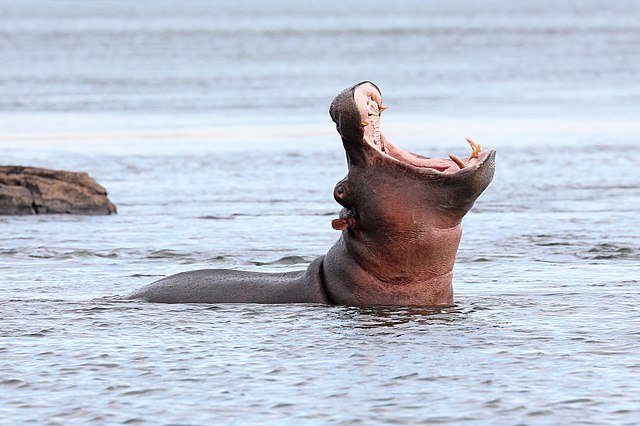
Humans, of course, cannot claim sole control over reflexive actions, since most living creatures, for one reason or another, possess multiple reflexes. Some animals, for example, the hippopotamus, are even highly specialized.
Since hippos spend most of their lives in water but can't breathe underwater, they need to be careful not to drown. Hippos even sleep in water, which makes breathing even more difficult if you think of it as a completely conscious effort. Luckily for hippos, they have a reflex that takes care of this.
A hippopotamus can fall asleep underwater, holding its breath for only five minutes. The animal surfaces, breathes, and then dives back underwater while sleeping, thanks to a reflex action.
9. Nerve impulses can cause the severed head of a dead snake to bite you.

If you know anything about wilderness survival, you probably know that if you kill a venomous snake in the wild, you should be wary of its head, even if you cut it off. A reflex action in the snake's head can cause it to bite and inject venom even if the head is no longer attached to the body.
A snake's head could potentially bite you within a few hours. In fact, in some parts of the world, people often believe they're in no danger and are bitten by a severed head.
8. The rectoanal inhibitory reflex can detect the difference between gas and stool.

There are many reflexive actions that provide us with a kind of safety. They do what needs to be done for us. Things that, if left to our conscious mind to control, we probably wouldn't be able to do quickly enough or often enough to use. Perhaps if none of your reflexive actions worked, you probably wouldn't live a very comfortable life. For example, the rectoanal inhibitory reflex.
There aren't many subtle ways to express this, so let's not beat around the bush. This reflex is what allows you to judge whether you're about to pass gas or something else. You can imagine how valuable this reflex is when you're sleeping. In other words, the rectal muscles are able to determine when you need to go to the bathroom or whether a simple fart can safely resolve the issue. This is a necessary function for maintaining continence, and without it, you'd have to go to the bathroom much more often as a precaution.
7. The Arnold reflex causes coughing when the ear canal is stimulated.
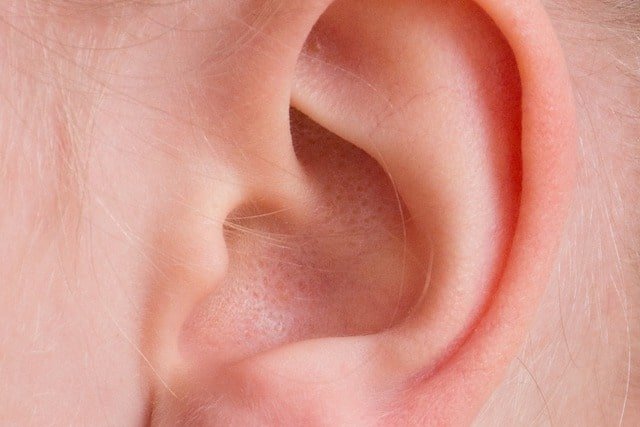
There are a number of causes of coughing, ranging from viral or bacterial infections to inhaled irritants, allergies, and more. Determining what's causing someone's chronic cough can be much more difficult than you might expect due to the numerous potential causes. One cause you may consider when all other possible causes have been ruled out is the Arnold reflex.
The Arnold reflex triggers coughing when the vagus nerve, which runs through the ear canal, is stimulated. This means that if you have something lodged in your ear or if something is damaged, it can put pressure on this nerve, causing chronic coughing symptoms that can last for weeks. You may have experienced this yourself if you've ever tried to clean your ear too aggressively and found yourself coughing once or twice as a result of pressing too deeply. Something as simple as rinsing your ear to clear it can solve the problem.
6. The glabellar reflex allows you to get used to having your forehead tapped.

Here's a strange one you can test yourself without any ill effects. The glabellar reflex can be demonstrated by using one finger and lightly tapping a person between the eyebrows, just above the nose. The person being tapped should blink each time you tap them, but only for a short period of time. This blinking is involuntary, and as you continue tapping, the reflex will cease, and the person will be able to keep their eyes open while you tap.
So what's the point of this reflex, and why does anyone care? It's actually a useful tool. Habituation to tapping—that is, the ability to get used to it—should occur within a short period of time. In a healthy adult, if they can't get used to the reaction and continue blinking, it can be used as an early indicator of various conditions affecting the brain, including dementia and Alzheimer's disease.
5. Cutting your fingers is a reflex action.

Have you ever been in a pool or bathtub for so long that your hands and feet turned a little red? Did you think the reason your hands and feet turned blue was because they were too wet? Maybe they just absorbed too much water? It turns out that's not true at all, and science has known about this for about a hundred years.
If you have a certain type of nerve damage in your hands, you can't prune your fingers. This means the effect has nothing to do with the water itself. It's actually a function of your autonomic nervous system. Blood vessels constrict under the skin, causing the wrinkled, prune-like effect. It's a reflex action. But what's the point?
For some time, it was believed that the wrinkle pattern in the skin served a specific purpose. The wrinkles formed tiny channels that allowed water to drain and improved grip when your hands were wet.
Studies conducted to confirm this theory showed that subjects with cut-off hands were better at grasping wet objects than those with dry hands. There was no benefit to grasping dry objects with prune-shaped hands, suggesting that the purpose of cut-off fingers is to help you grasp wet objects in a humid environment.
4. The bulbocavernosus reflex can reveal spinal cord injury.

Using a small hammer to tap someone's knee is a fairly noninvasive way to test a reflex action. But many of our reflex actions are more difficult to assess than this. Testing them requires some rather unusual methods that might discourage you from even testing them. One such reflex is the bulbocavernosus reflex, which is used to test for spinal cord injuries. So it sounds like it might be important, but it requires a bit of work.
In certain types of spinal cord injuries, the bulbocavernosus muscle will not contract when stimulated, allowing for a diagnosis or prognosis. However, testing this muscle requires two hands in awkward locations. The muscle itself can be reached through a rectal examination, which means the doctor must use their finger to locate it. Then, to stimulate the muscle, they must squeeze the patient's genitals with the other hand to see if the muscle contracts.
3. Goosebumps are a rudimentary reflex action.

Goosebumps is the name we give to a physical reaction that typically occurs when you're cold or perhaps scared. One of the most common signs of goosebumps is the hairs on a person's arm standing up, and small bumps we call goosebumps appearing on the skin. This resembles the skin of a real goose, if you've ever seen one without its feathers, hence the name.
Goosebumps are thought to be a vestigial reflex action dating back to our prehistoric ancestors. Beneath each tiny hair on the arm is a muscle called the erector pili muscle, and nerve impulses can contract these muscles, causing the hairs to rise.
Many mammals have a similar reaction, and it serves one of two purposes. Either the hair stands up, creating an insulating layer against the elements, or an animal like a cat will puff itself up when threatened to appear more dangerous to potential predators. Since this reaction most often occurs in humans when they are either cold or afraid, there is a clear correlation between the two, even if the results don't provide much benefit to humans.
2. REM atonia suppresses the reflex action that causes sneezing

Have you ever thought about how often you sneeze during the day? Probably not, so for clarity's sake, you should know that most people sneeze about four times a day. That's a lot of sneezing. Can you ever remember sneezing in your sleep? Presumably, if you did such a thing, you would wake up. Or maybe you've seen someone else sneeze after waking up. Chances are, you've never experienced this, and it's due to a different reflex action.
REM atonia is the reason most people can't sneeze in their sleep. It's also the reason you don't act out your dreams while you're asleep. Imagine the chaos that would result if everything going on in your head were playing out in your body without you even realizing it.
REM atonia is designed to prevent your brain from sending signals to your body when you're not conscious. It's a kind of self-induced paralysis that keeps you motionless and prevents you from putting yourself in danger or doing anything you shouldn't do until you're awake.
This doesn't mean it's impossible to sneeze in your sleep. It could work in two ways. First, the REM atonia effect doesn't work. You've probably heard of people who sleepwalk or even drive in their sleep. The effect doesn't work on them. It could also work the other way: something physically forces you to sneeze, and if that were the case, your brain would actually force you to wake up first, and then you'd sneeze.
1. The Lazarus reflex causes brain-dead patients to raise their arms.

There's no reflex more fitting for a horror movie than the Lazarus reflex. The name itself gives a small hint of what's in store. This reflex has historically convinced people that victims of severe brain injury leading to brain death were perhaps not as severely damaged as they appeared.
The Lazarus reflex works like this: a brain-dead person may still raise their arms and then cross them over their chest in the classic «vampire in the coffin» pose. You can imagine how eerie it would be to walk into a patient's room, presumably dead, and see their arms moving and crossed over their chest, as if they were already dead. It would be even more eerie if you happened to be in the room and witnessed this happening.
The Lazarus sign is extremely rare, which makes it even more alarming because few people have likely heard of it. In many cases of brain death, the patient survives only a short time afterward. However, in two of the only recorded cases of the Lazarus sign, patients survived for more than 100 days after being diagnosed with brain death.
All evidence suggests that this is simply neural activity and that the brain is not involved at all. After patients exhibiting the Lazarus sign complete the action, their arms typically fall back to their sides.