


The Internet is a global network connecting billions of devices around the world, and although it is used daily, understanding how it works remains a mystery to many.
Its infrastructure and operating principles are linked to complex processes that provide access to information and the ability to communicate in real time.
This answer to our question covers key points: how information is transmitted, what IP addresses are, protocols, and data routing.
Introduction in simple words
The internet operates as a vast network of computers, phones, and other devices exchanging information. When you visit a website, your computer sends a request to the server—a powerful computer that stores the website's data. The request passes through a network of routers and other devices that route it to the right location. The server processes the request and sends back data, such as text, images, and video. This data is transmitted as small packets, which are assembled on your device and displayed as a finished page.
The main components of the Internet

The internet can be compared to a vast network of roads through which information "travels." It is built on several key components, without which this global system could not exist:
- Servers and data centers. They store and process data. When you request access to a website, the request is sent to the server, which responds with the page's content.
- Clients — these are users' devices, be it a computer, smartphone, or tablet. When you access the internet, your client requests information from servers.
- Routers and switches. These devices transmit data packets between networks. Routers determine which path the data should take to reach its destination most efficiently.
These elements are interconnected via cables, fiber optics, and wireless technologies, forming a unified information transmission system. Protocols that allow devices to communicate with each other operate within this complex infrastructure.
Protocols and IP addresses
In order for devices to exchange data, they must «speak the same language.» This «language» is data transfer protocols. The most famous and main of them is TCP/IP (Transmission Control Protocol/Internet Protocol). It is responsible for dividing information into small fragments - packages, which are sent over the network.
Every device on the internet has a unique IP address—like a postal address—that identifies a computer on the network. There are two types of IP addresses: IPv4 (consists of 4 numerical blocks) and IPv6 (designed to expand the available address space due to the increase in the number of connected devices).
Example: When you visit a website, your computer sends a request to the server using the website's IP address. The server's response is returned to you using your IP address.
DNS: How the Internet Finds Websites
Remembering IP addresses for each website is a difficult task, so the Internet uses the Domain Name System - DNS (Domain Name System). DNS allows human-readable website addresses (such as example.com) to be converted into the numerical IP addresses needed to connect to the server.
For example, when you enter a website address in your browser, your request first goes through a DNS server, which looks for the corresponding IP address. Once the address is found, data transfer between your device and the server begins.
How data transfer works
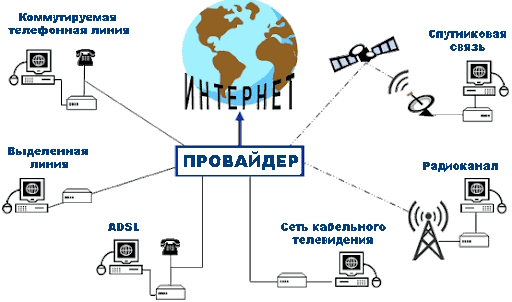
When you send a request to a web page, that request is broken down into many data packets. Each packet travels through various routers and networks to reach the final server. This process can be compared to sending multiple emails, which may take different routes but ultimately end up in one place.
Each packet carries a portion of data and information about its destination and origin. Along the way, packets may encounter problems, such as delays, data loss, or data corruption. In such cases, TCP protocols ensure that the data is retransmitted to ensure the information is received intact.
Routing principle
When packets travel across the internet, they pass through several intermediate points - nodes. Nodes are powerful devices that analyze where the next packet should be sent. This process is called routing. At each stage, routers determine which path a packet should take based on network congestion, distance, and other factors.
Example: Imagine you're sending a message to a friend in another country. Your message may travel through several nodes in different countries before reaching the recipient, even if it only takes a fraction of a second.
Internet safety
The internet offers tremendous opportunities for data exchange, but it also carries risks. Various security measures are used to protect information:
- Encryption — one of the most popular data protection technologies. Protocols such as HTTPS, ensure secure connections by encrypting information during transmission.
- Firewalls and antiviruses. These programs monitor traffic and prevent malware from accessing devices.
- VPN (Virtual Private Network). A VPN hides your real IP address and encrypts your data, providing additional security and anonymity when using the internet.
Conclusion
The internet is a complex system whose operation relies on the interaction of numerous components: servers, routers, protocols, and addresses. Understanding its structure and principles helps us understand how each request travels from device to server and back, how data is routed, and why network security is so important. In a world where information travels at the speed of light, the internet continues to evolve, connecting people and technologies across the globe.