

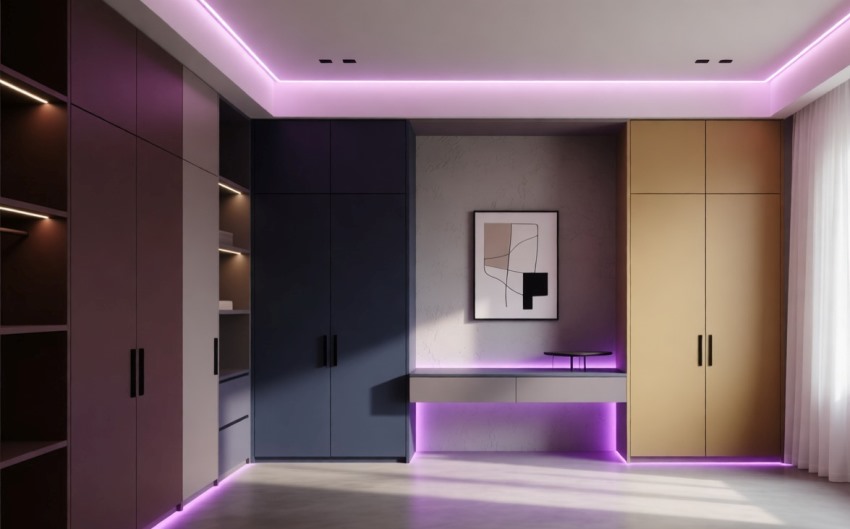
Closets have long ceased to be simply a place to store clothes or dishes. Today, they are a fully-fledged architectural element of space, a zoning tool, an interior accent, and even an expression of the owner's personality. Designers are increasingly designing interiors around closets, rather than the other way around. In this article, we've compiled ten current trends that demonstrate how modern closets are becoming central features in any room—from the living room to the hallway.
1. Modular systems: freedom in composition
Flexibility and adaptability are key characteristics of modular wardrobes. They can be assembled in any configuration, from a compact chest of drawers to an entire wall. Manufacturers offer dozens of elements—open shelves, closed sections, pull-out drawers, niches for a TV or home theater. These systems are easy to upgrade: add a module, and the interior "grows" with you. This is the ideal choice for those who don't like renovating every five years but still want to change their decor.
When choosing a modular system, pay attention to the following aspects:
- Compatibility of elements: not all modules of different series are compatible with each other in depth and height;
- The quality of the fasteners is what determines the durability of the entire structure;
- Possibility of built-in equipment - niches for TV are especially important in the living room, and for a minibar in the bedroom;
- Aesthetic integrity: even with different functionality, modules should be designed in the same style.
2. Invisible cabinets: harmony without boundaries
One of the most popular techniques in minimalist interiors is hidden cabinets, the fronts of which blend seamlessly with the wall. This is achieved by using the same materials and colors as the wall finishes: wallpaper, plaster, wood paneling, or even mirrors. This approach creates the illusion of space without unnecessary details. This is especially true in small apartments, where every square centimeter counts and visual clarity is a top priority.
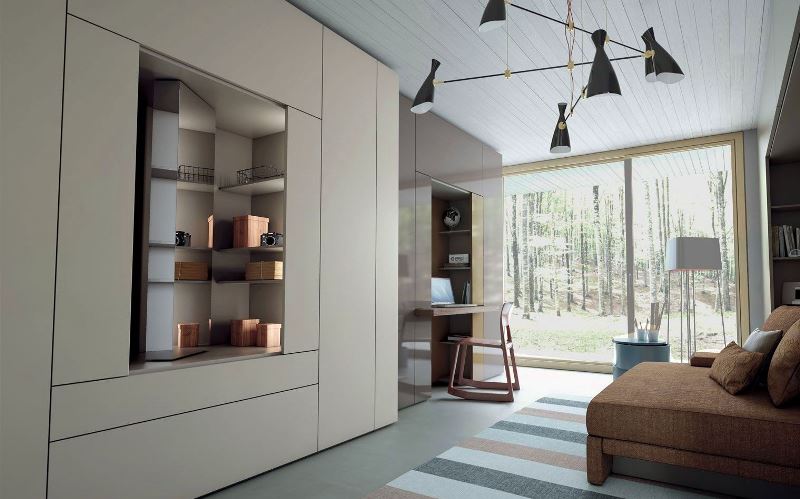
To make your wardrobe truly "disappear" into your interior, consider the following:
- Use the same textures and shades as on the walls - even a slight difference in tone will ruin the illusion;
- Avoid handles and use contactless opening systems;
- Make sure that the lighting falls evenly on both the wall and the facade - shadows can reveal the boundaries of the cabinet;
- If the wall isn't perfectly level, it's best to entrust the installation to professionals: the slightest distortion will ruin the effect.
3. Open shelving instead of blind facades
While open shelving was once considered "for the poor," today it's a sign of good taste. This is especially true if it holds home decor, designer-covered books, or collectibles rather than old dishes. These shelving units function simultaneously as a storage system and a decorative element. It's important to follow this rule: not everything should be on display. Ideally, a 60:40 ratio of open and closed sections is used.
To prevent an open cabinet from turning into a display of chaos, follow these simple rules:
- Group items by color, shape, or theme to make the composition look thoughtful;
- Change the contents of the shelves once a season - this will liven up the interior;
- Limit the number of small details - they quickly create the impression of clutter;
- Use decorative boxes or wicker baskets to store small items.
4. Built-in wardrobes: perfect integration into the architecture
Built-in furniture is a trend that's gaining momentum in city apartments and cottages with unusual layouts. Flush-mounted cabinets, fitted into niches, under stairs, or along sloping attic walls, are a space-saving solution that also creates a sense of well-thought-out design. Built-in cabinets with lighting are especially striking: LED strips or spotlights add depth and drama to even the most modest space.
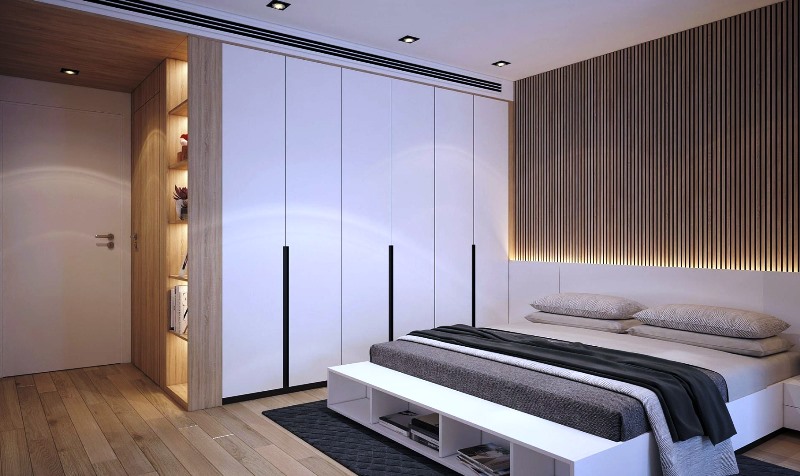
When designing a built-in wardrobe, remember:
- The measurement must be taken on site - unevenness of walls and ceilings in old houses can reach several centimeters;
- Leave gaps for ventilation, especially if the cabinet is located in a bathroom or kitchen;
- Think about the interior layout in advance: it will be difficult to rearrange the partitions in the built-in wardrobe later;
- Use sliding or hinged doors depending on the available space in front of the facade.
5. Natural materials: wood, linen, stone
Artificial surfaces are gradually fading into the background. Today, everything real is in fashion. Oak, ash, walnut, cork, even bamboo—natural textures are becoming the basis for cabinet fronts. It's important for the material to "breathe"—this creates a feeling of comfort and warmth. Particularly trendy is the combination of wood with other natural textures: stone on a kitchen backsplash, linen textiles on a sofa, or ceramic tiles in a bathroom. In such an interior, a cabinet is not just furniture, but part of the living environment.
When working with natural materials, keep in mind:
- Wood requires care, especially in areas with fluctuating humidity;
- The color of a natural cabinet may change slightly over time - this is not a defect, but a natural patination process;
- Choose eco-friendly finishes: oils and waxes are preferable to solvent-based varnishes;
- If your budget is limited, use veneer—it preserves the natural texture but is significantly cheaper than solid wood.
6. Hinged wardrobes: a classic with a new look
Don't write off hinged wardrobes—like a fine wine, they remain relevant, only gaining depth. They're being reimagined today: designers are abandoning bulky models in favor of narrow, yet tall designs. Particularly popular are wardrobes with two or three handleless doors, which open using a push-to-open system: a gentle push is all it takes, and the door slides smoothly to the side.
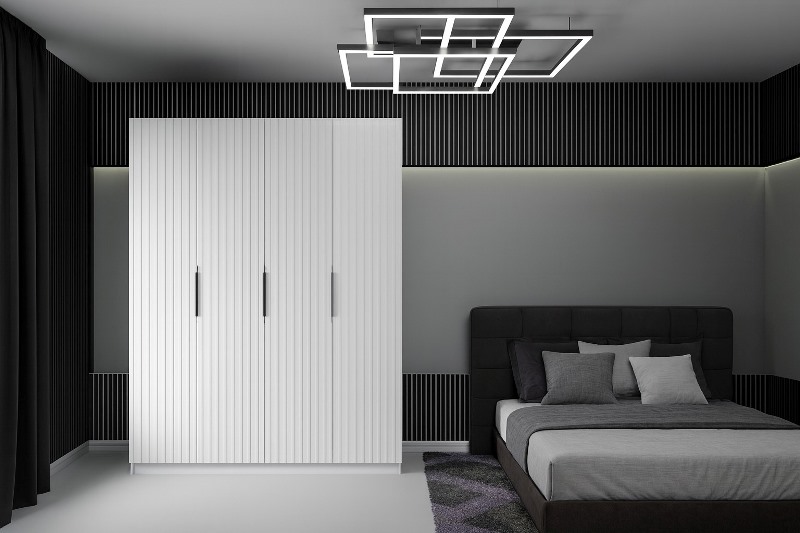
Another characteristic of modern swing-door models, which can be found in our swing-door wardrobe catalog, is attention to detail. This can include unusual finishes: sandblasted frosted glass, wood milling, or imitation fabric on MDF panels. These wardrobes become the center of attention even in the most minimalist interiors. And most importantly, they are practical: the interior can be easily customized to suit the owner's needs, and the opening mechanism has stood the test of time.
7. Hinged wardrobes in small rooms: myth or reality?
Many people think that swing-door wardrobes "eat up" space—and this is partly true. But modern solutions make it possible to fit them even into a tiny bedroom or hallway. For example:
- Installation of narrow (up to 45 cm deep) cabinets at the head of the bed;
- Using mirrored doors - they visually enlarge the room;
- Orientation of doors inwards: when opened, they do not extend into the passage, but rotate inside the body;
- Place the cabinet along the long wall, where the doors do not interfere with movement.
The key is to consider the opening path and ensure it doesn't interfere with active use. If this is taken into account, a hinged wardrobe will not only stay out of the way but will also add a sense of cohesion and completeness to the interior.
8. Monochrome facades with unexpected accents
Color schemes are becoming increasingly expressive. Deep shades are popular: dark green, rich burgundy, and graphite gray. However, the key is not the color itself, but its combination. For example, a dark cabinet in a light interior creates a striking tension. Or, conversely, a crisp white cabinet against richly colored walls becomes a focal point. Sometimes designers add a touch of flair: painting the front of one cabinet a contrasting color, or using unusual hardware—bronze leaf-shaped handles, for example.
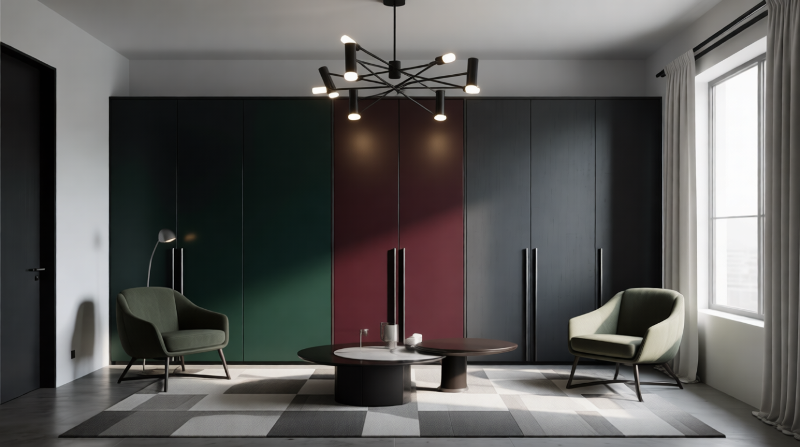
To ensure your color experiment doesn't turn out to be disappointing, follow these tips:
- Check the shade of the facade under different light sources - it may look different in daylight and evening light;
- Use colored cabinets in interiors with neutral wall and floor finishes - otherwise you risk overloading the space;
- It is better to make contrasting accents in one area of the room - for example, only in the lower part of the cabinet or only on the central doors;
- Don't forget about the fittings - they can be the finishing touch or, conversely, spoil the impression of an expensive facade.
9. Cabinets as partitions: zoning without walls
This is especially true for studios and one-bedroom apartments. Instead of a plasterboard partition, install a wardrobe, giving you two benefits: space division and storage. These structures can be open-plan (with shelves on both sides) or solid (with cabinet doors on one side and open shelves or even a work surface on the other). It's important that the wardrobe/partition harmonize with the overall style: for example, a Scandinavian interior might feature light wood and simple shapes, while a loft might feature black metal and glass.
10. Smart cabinets: technology inside the cabinet
Digitalization has also reached furniture. Modern wardrobes are equipped with:
- Built-in lighting with motion sensors;
- Ventilation and drying systems (especially for dressing rooms);
- USB ports and wireless charging;
- Touch control panels for lighting and backlighting.
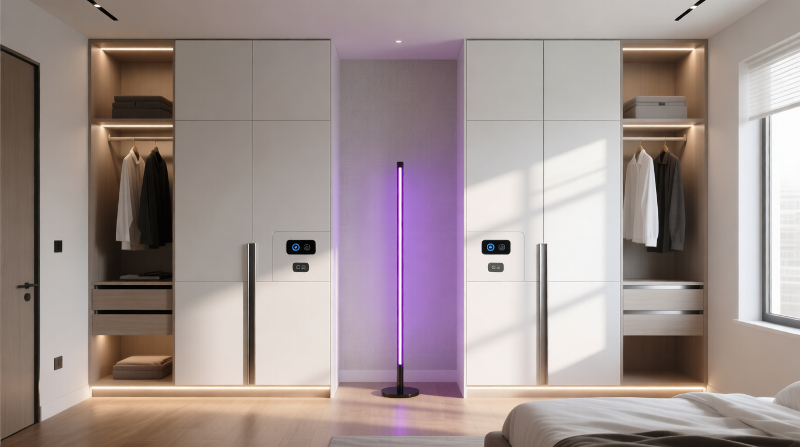
These aren't just "gimmicks"—these features genuinely improve comfort. For example, built-in lights turn on as soon as you open the door and turn off 30 seconds after you close it. And in a walk-in closet with air conditioning, clothes wrinkle less and don't absorb odors.
Conclusion: The wardrobe as a reflection of lifestyle
Today, a wardrobe isn't about capacity, but about mindfulness. Its shape, material, color, and even its opening mechanism reveal a person's lifestyle. Whether they enjoy order or creative chaos, prefer natural textures or technological surfaces, value silence or openness. By following these trends, you're not just choosing furniture—you're designing an environment in which you'll truly feel good.
And remember: even the most fashionable closet is no substitute for a well-thought-out layout. Make it not just beautiful, but also practical—after all, true trends are always born at the intersection of aesthetics and practicality.