
Wars aren't always won by traditional units fighting in rigid formations, even if they still do the bulk of the work. Throughout history, military commanders have experimented with unusual, specialized units that don't fit into any conventional military role, often with great success.
10. Ghost Army

The 23rd Special Forces Headquarters—or «Ghost Army»—was activated on January 20, 1944, as a secret, highly specialized unit of the U.S. Army during World War II. Not all of them were combat specialists or even particularly skilled in combat, as they were not originally conceived as a conventional force. Consisting of over 1,000 soldiers and 82 officers drawn from a variety of professions, from art to sound design, the Ghost Army was instead responsible for large-scale deception operations, such as creating entire fake regiments and sending false radio messages to the Germans, usually to support conventional Allied offensives.
This may sound like wartime scenery, but these guys usually worked right on the front lines. To make matters worse, the Germans were especially keen on them, making them one of the most dangerous positions on the European front. Nevertheless, they were a largely successful unit, especially on D-Day. By some estimates, the «Ghost Army» may have saved the lives of 15,000 to 30,000 American soldiers throughout the war.
9. The Richie Boys
«Ritchie's Boys» is a recently coined term referring to a disparate group of over 11,000 operatives trained at Camp Ritchie near Cascade, Maryland, during World War II. Many fled Europe due to persecution or the outbreak of war, and their fluency in European culture and language made them an invaluable asset to the Allied war effort.
The Ritchie Boys received rigorous training in many areas, particularly espionage and interrogation, and were sent back to Europe to work against the Nazis. Although they operated independently and resembled more a decentralized spy network than a real unit, they were nonetheless highly effective throughout the war. The Ritchie Boys provided the bulk of the intelligence gathered on the Western Front for the Allies, including crucial early information on the scale of the Holocaust.
8. Block 9900

Unit 9900 is a special operations unit of the Israel Defense Forces (IDF), responsible for providing intelligence to other units and conducting covert operations. Founded in the mid-1970s, this elite covert unit has played a significant role in a number of high-profile missions, including assassinations of Palestinian militant leaders and rescue operations. It also collects intelligence on a variety of topics, including terrorism, weapons proliferation, and foreign policy.
One of its many units is Roim Rachok, which specifically seeks out individuals with autism to utilize their unique skills and abilities, making them well-suited for tasks such as identifying minute details in raw satellite images. According to the IDF itself, the program is still active and successful, and the unit works with other units of Unit 9900 to address the unique challenges of Israel's defense.
7. Paradogs

Paratrooper dogs played an integral role in the success of the Allied forces during the Normandy landings. While many people would likely be outraged, there was nothing cute about what they did there. These British dogs were trained to target enemy positions, carry supplies, and sniff out explosives wherever possible, allowing them to be right in the thick of the action during a high-risk operation.
Much of their training involved getting used to the loud, explosive sounds of incoming bullets, as they were dropped alongside the human paratroopers on the day of the invasion—June 6, 1944—and were exposed to the same dangerous conditions as the soldiers. Unfortunately, not all of them returned alive, and they had to be replaced by other dogs to complete the mission. These paradogs proved invaluable during the invasion, and many were even decorated for bravery after the war.
6. Mamluks
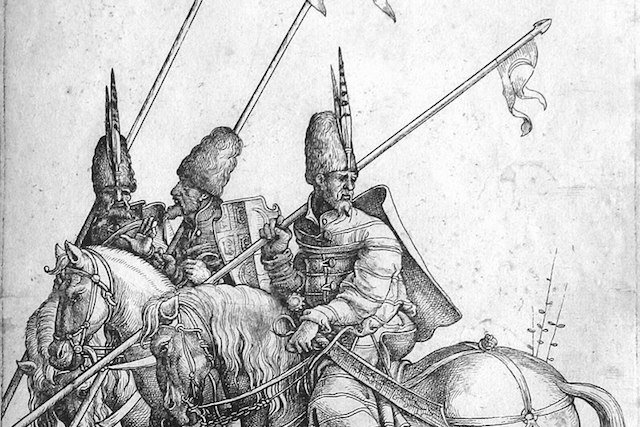
The Mamluks were a military class that rose to prominence during the Islamic era in the 13th century. Originally hired as personal bodyguards for members of the royal family of the Ayyubid Caliphate, they rose to power due to the ongoing decline of the Islamic Empire at the time, particularly in Egypt. From 1250 to 1517, the Mamluk dynasty ruled most of Egypt and Syria, and Mamluk soldiers constituted the bulk of its military might.
Unlike other types of units, the Mamluks were recruited almost exclusively from slaves of Turkic or Caucasian origin. They were a formidable force, renowned for their skills and achievements on the battlefields of the Middle East and beyond. The Mamluks played a vital role in repelling Mongol attacks in Egypt and Syria, as their victory at Ain Jalut in modern-day Israel decisively halted the Mongol advance westward, something that seemed impossible for most armies at the time.
5. Monuments to men
The Monuments Men were a loose unit of 345 men and women from 13 countries, working as part of the Monuments, Fine Arts, and Archives effort launched by the Allied powers in 1943. Their primary role was to document, preserve, and restore Europe's cultural heritage, particularly artworks and infrastructure targeted by the Nazis, who considered almost all high-class art forms inferior.
The group included concerned citizens and soldiers from around the world, including curators, architects, art historians, and other academic experts. They typically worked on or near the front lines, making the work quite dangerous for, say, an art historian. Despite this, the monument-makers played a crucial role in preserving and recovering many famous works, including the April 1945 raid on a salt mine full of gold, art, and other Nazi treasures in Thuringia, Germany.
4. Immortals
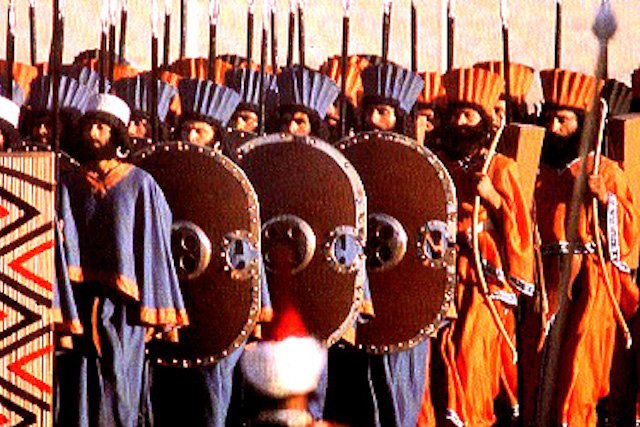
The Immortals, first mentioned by Herodotus in the 5th century BC, were an elite military unit of the Persian army during the Achaemenid Empire, which lasted from 559 to 330 BC. It consisted of exactly 10,000 carefully selected soldiers, meticulously trained in all forms of combat to protect the king and his family. Whenever a member died, they were replaced by another soldier with the same role and rank, giving the unit a seeming immortality.
And this wasn't just a PR stunt. The 10,000 Immortals were a formidable force on the battlefield, with their body armor made of overlapping bronze and iron plates like fish scales, their leather shields made of vine and wood, and their primary weapon, a six-foot-long spear.
The Immortals were a largely successful fighting unit, serving in the main forces of the Achaemenid Empire until Alexander's decisive victory at the Battle of Gaugamela in 331 BC. Despite the defeat, Alexander considered the Immortals an elite, respectable unit and even attempted to preserve them intact as a fighting force after his conquest.
3. Tunnel rats

Tunnel Rats were a unit of American and South Vietnamese soldiers during the Vietnam War. Most were volunteer specialists tasked with clearing the extensive tunnel network used by the Viet Cong in Vietnam and Laos. Their primary functions included finding and disarming booby traps, close-quarters combat, and intelligence gathering.
As you might imagine, this was dangerous and terrifying work, and they were typically armed with only basic equipment, such as flashlights, small pistols, and knives. The tunnels were often complex, consisting of multiple chambers and levels, and the full extent of the network was known only to the Viet Cong and some local residents. In addition to enemy combatants, the team members also had to fend off venomous snakes and other animals, such as bats and spiders.
2. Potsdam Giants

Named after the city of Potsdam in modern-day Germany, the Potsdam Giants were an elite unit of exceptionally tall soldiers recruited by the Prussian King Frederick William I in the early 18th century. Selected for their physical strength and height, the Giants were primarily used to demonstrate Prussian military might at parades and other public events, although they also provided a powerful fighting force when needed.
The unit's official name was the «Great Grenadiers of Potsdam,» and many historians have also called it an early experiment in eugenics. To preserve the regiment, Frederick William experimented with selective breeding methods, such as breeding existing members only with tall women. He also had a special rack for stretching soldiers to make them even taller, which sometimes resulted in their deaths, as might be expected. By the time he died in 1740, there were over 25,000 Potsdam Giants in the city, and the unit wasn't completely disbanded until 1806.
1. Sacred group of Thebes
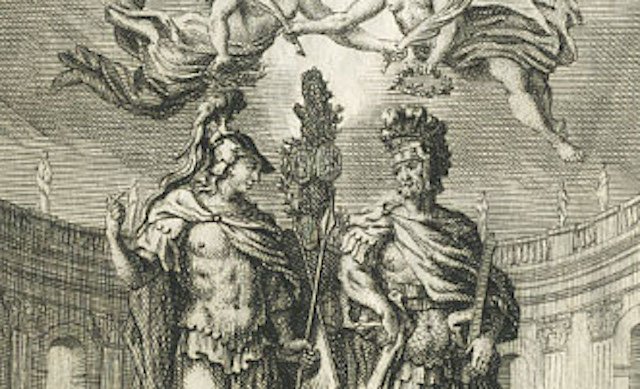
The Sacred Band of Thebes was an elite military unit of the ancient Greek city-state of Thebes. Created by a Theban general named Gorgidas, it consisted of 150 same-sex couples, a total of exactly 300 men. Gorgidas believed that love between the members would make them more loyal and formidable in battle, and rightly so. It was one of the most successful units of the time, first achieving fame under the command of General Pelopidas at the Battle of Leuctrai in 371 BC.
While they may sound like inspiration for a movie«300 Spartans» , In fact, the Sacred Band did confront the Spartans in real life. In fact, this unit played a vital role in ending Spartan hegemony in ancient Greece, when it was still a disparate group of independent city-states. Unfortunately, the Sacred Band was disbanded after the Battle of Chaeronea in 338 BC, when the Macedonian army led by Philip II and his son Alexander defeated the combined forces of Thebes and Athens.