


There are an estimated 8.7 million animal species alive today, but many more have become extinct over the years. This raises the question: have some prehistoric animals survived through evolution? Scientists have discovered several such species that are endangered or on the brink of extinction. In any case, let's take a look at some of these prehistoric animals that still roam the Earth today.
1. The horseshoe crab is one of the oldest species on Earth, having existed since the Ordovician period, approximately 445 million years ago.
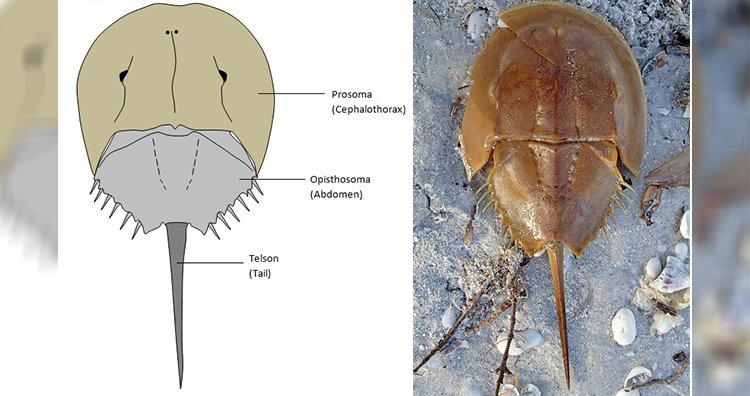
Horseshoe crabs, as their name suggests, are not actually crabs, but rather closely resemble spiders and scorpions. They are also called «living fossils» because they haven't evolved much since their origin. They have large, compound eyes on the sides of their shells: five on the top and two on the bottom. They have blue blood due to the presence of hemocyanin. They also contain amoebocytes, which are used in laboratories today to test the sterility of medical equipment and drugs. (source)
2. The Chinese giant salamander appeared 170 million years ago, which means it survived the Jurassic period.

They can weigh up to 50 kg and grow up to six feet in length, making them one of the largest amphibian species. They belong to the cryptobranchid family, which existed a million years ago. A Swiss doctor mistook their fossil for the remains of a human survivor of the Great Flood. A surprising fact about this species: they absorb oxygen through their skin, as they lack gills. Although the female lays 500 eggs in a burrow, they are rapidly becoming extinct due to increased hunting and poaching. Once abundant in the Chinese mountainous regions, they are now endangered. Prague Zoo houses one of the largest extant species, named Carlo. (source)
3. The Komodo dragon is one of the largest known lizard species today, and it lived four million years ago, as evidenced by fossils recently discovered in eastern Australia.

They can grow up to 3 meters in length and weigh up to 70 kg. Although this species existed approximately 40 million years ago, it was only discovered 100 years ago when an airplane accidentally landed on Komodo Island. This is where they got their name. They can eat up to 80% of their body weight and, unlike most animals, also eat bones and hooves. They have a forked tongue, which they use to sniff out prey and attack it with their venom. Although they may appear slow, they can run at speeds of 21 kilometers per hour and effortlessly swim from one island to another. Appearing in the film King Kong, they can now be found in Komodo National Park in Indonesia. (source)
4. The echidna is the only living mammal that lays eggs. It evolved between 25 and 50 million years ago.

They resemble a porcupine, have a beak like a bird, and a pouch like a kangaroo. They are one of the few mammals with 2,000 electroreceptors located on the tip of their snout. Although they are difficult to find in the wild because they are nocturnal, endangered, and known for their solitary lifestyle, some zoos in Australia, New Zealand, and Tasmania house these unique creatures. Echidnas' spines are modified hairs with fur between them, providing insulation from cold weather. They are known to have the lowest body temperature of any mammal. They have no teeth, and instead use their tongue to catch prey. They are carnivorous by nature. They have bizarre mating rituals, including a courtship dance. They also have one of the largest species of fleas, which measure approximately 0.15 inches (4 mm) in length. (source)
5. The babirusa is a close relative of the European pig, which became extinct about 35 million years ago.
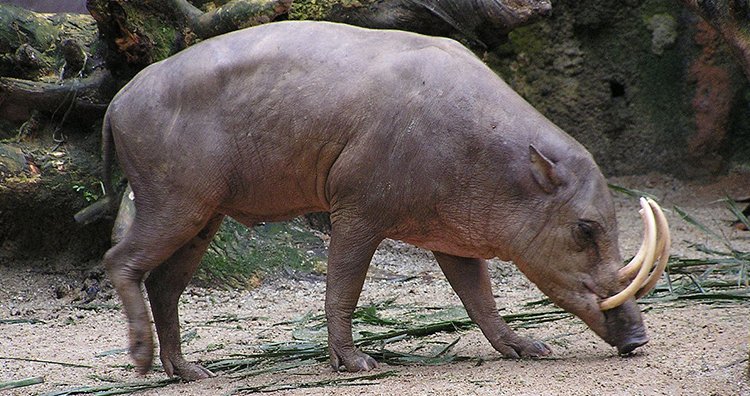
Males of this species are known for their enormous, curved tusks that pierce their snouts. Why they have them remains a mystery. They are certainly not suitable for combat, as they are fragile. Babirusas weigh between 60 and 100 kg. All babirusa species are listed on the International Union for Conservation of Nature (IUCN) Red List. They are omnivorous and live longer in captivity than in the wild. Their ancestry can be traced back to their closest relative, a primitive European pig that became extinct approximately 35 million years ago. Today, only a few thousand individuals remain. Zoos like the Saint Louis Zoo are working to save the species as part of conservation efforts. They are also protected in the Nantou Forest and the Tancoco Nature Reserve. (source)
6. The tapir is found in South and Central America, as well as Asia. It first appeared approximately 23 million years ago.
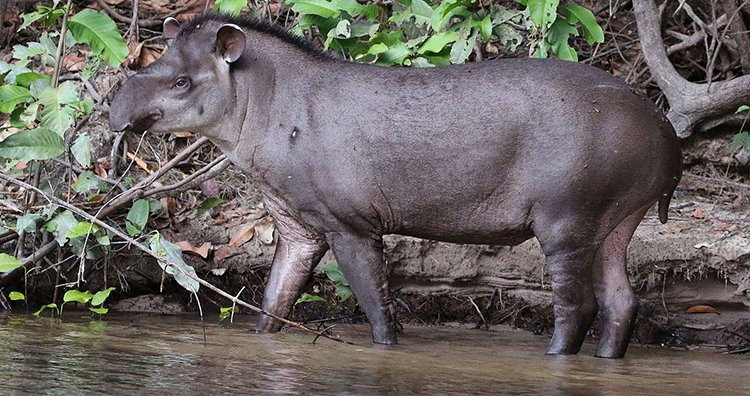
One of the tapir's distinctive features is its elongated snout, used to forage for leaves, fruits, or aquatic plants as food. These animals are ecologically important because their droppings contain seeds, which they disperse as they move. Although they closely resemble pigs in body shape and elephants in snout, their closest relatives are rhinoceroses and horses. Tapirs are unusually heavy and nocturnal. Their role in shaping and maintaining biodiversity makes protecting this species even more crucial. The Lowland Tapir Conservation Program works to protect this endangered species. They are actually close relatives of rhinoceroses and horses. Their highly flexible proboscis allows them to reach inaccessible places in search of food. They weigh approximately 300 kg and use their snouts underwater like snorkels. Today, they can be seen in Corcovado National Park in Costa Rica and throughout the Amazon. (source)
7. The okapi is one of the oldest living mammals, having appeared more than 18 million years ago.

Today, they belong to the giraffe family. Weighing 250-300 kg, they are small in stature and have a long neck. Undoubtedly the rarest animal on this list is the okapi, a cross between a zebra, a horse, and a giraffe. They are shy and reclusive by nature. Their existence was unknown to the world until Sir Harry Johnson obtained skins and bones from pygmies. They are also called «African unicorns.» They have long tongues (14-18 inches), which help them with hygiene, foraging, and grooming. To communicate with her young, a female okapi emits a 14 Hz infrasound, which is inaudible to humans. A large area of 13,700 square kilometers in the Ituri Forest has been declared an okapi wildlife sanctuary. (source)
8. The walrus reminds us of an animal from cave paintings. They existed 15-20 million years ago.

Walruses are known for their tusks, the length of which determines their social status and commands respect. One species, Gomphotaria pugnax, Around 6 million years ago, they had four fangs. Their mouth creates a powerful vacuum. Subcutaneous fat serves as insulation, retaining heat in extremely cold temperatures reaching -35 degrees Celsius. In the wild, they live up to 40 years, and their population is estimated at around 250,000 individuals. They are the last representatives of the family. Odobenidae . Walruses can weigh up to 4,000 pounds and live in the Arctic. Walrus tusk is highly sought after, which has led to a decline in their numbers in recent years. They can be found in Canada, Russia, and Alaska. (source)
9. The first appearance of the Siberian musk sheep occurred about 5.33 million years ago in northeast Asia.

Siberian musk deer first appeared in northeast Asia approximately 5.33 million years ago, making them the most primitive species of musk deer living today. They are small, antlerless, herbivorous animals, measuring 70 to 100 centimeters tall. Their fangs have earned them the nickname «vampire deer.» They are rarely seen in the wild, but two specimens can be seen at Ranua Zoo in Finland. (source)
10. Saigas inhabited the entire Great Steppe throughout the Pleistocene period (about 2.588 million years ago).

Today, there are fewer than 50,000 saigas in the world. This is due to overhunting for their horns, which are found only in males, which disrupts the reproductive balance. They are herbivores and travel in herds. They are known for their long migrations. A lesser-known fact is that saigas are fast animals, capable of running at speeds of up to 80 km/h. Their lifespan in the wild is only 6-10 years. They are distinguished by a long, ringing call, which helps them survive the different seasons. According to the ICRC, they are endangered and are currently found only in certain areas of Central Asia and in a nature reserve in Ukraine. (source)