

It's not every day you stumble upon a shrine in the Western or secular world, but there are plenty of them. Many people in the modern world use the word jokingly; for example, if someone is a fan of a particular celebrity or athlete, they might have a shrine in their home filled with memorabilia of that person. But true shrines of religious significance exist all over the world. Some, however, may be a little more esoteric or downright bizarre than others.
10. Dobby the House Elf's Temple

World Harry Potter has become firmly entrenched in pop culture, with millions of fans who have read the books and watched the films. It has become a cultural phenomenon no one could have expected, and to appreciate just how strong its grip is, you just have to go to Pembrokeshire.
В films about Harry Potter The character of Dobby the house elf proves to be both a nuisance and a helper for Harry and his friends. Harry eventually frees the elf, who becomes a slightly annoying but useful ally until his untimely death.
On-screen, Dobby died at a place called Freshwater Beach, west of Pembrokeshire. In real life, fans continued to visit the site to mark the grave of this entirely fictional, computer-generated character, building shrines in his memory.
Dobby's shrine isn't particularly deep, more like a pile of stones marking the spot of his death. One stone reads, "Here lies Dobby, the free elf." The stones are also interspersed with scattered socks, as Dobby was given the sock that allowed him to become free.
The area is actually a protected conservation area, and the National Trust, which looks after it, has asked people to stop leaving stones and socks there because of the danger they could pose to local wildlife.
9. Japanese Hemorrhoid Temple

If you were to make a list of all the things you'd never want to honor or venerate, where would hemorrhoids fit? If you're in Japan and visiting Kunigami Shrine in Tochigi Prefecture, those swollen little backaches might not even make it onto your list, considering you'll find a hemorrhoid shrine there.
To explain, in the Shinto belief system, various gods, known as kami, are beings who enjoy a good laugh. Besides, it makes for a good joke, it seems. The shrine is for those who want to exorcise their bogeymen by eating egg offerings and washing their butts, which seems to be a ritual. If that fails, some people literally shake their butts in front of the shrine itself.
The specific ritual requires a person to bathe in a sacred river, then visit a shrine, point the butt of a gun at a sacred egg, and recite a prayer. Although there are literally thousands upon thousands of Shinto shrines in Japan, this is the only one dedicated to the treatment of hemorrhoids.
8. Temple of the Indian Motorcycle God

Like most places in the world, India has seen its share of drunk driving accidents over the years. People there often leave something at the scene of an accident to commemorate those who died, but the Pulia Baba temple in Jodhpur takes things to a new level.
The legend surrounding this shrine tells of a man who crashed his motorcycle at this spot in 1988. Police arrived to clean up the scene and took the motorcycle to their station, but the next day, it somehow reappeared at the crash site. The police emptied the gas tank and chained it, but when they returned, the chains had broken, and the motorcycle was back at the crash site.
It was decided that the bike should remain where it was, and a shrine was built around it. The bike sits on a stone platform enclosed in glass. Passersby offer a quick prayer to the Motorcycle God, known as Om Banna or Bullet Baba, because the bike is a Royal Enfield Bullet. Some simply honk their horns, like the motorcycle deity.
People will leave flowers and even full bottles of alcohol at the site in hopes of receiving the god's blessing and a safe journey. A priest works there and performs daily rituals and services.
7. Temple of the Miraculous Tortilla

If you witnessed a true miracle, you might build a shrine on the spot yourself. But you should clarify beforehand what exactly qualifies as a miracle. For Maria Rubio, the answer to this question was given back in 1977, when she was preparing to make a bean burrito and saw the face of Jesus in her tortilla.
Mary was one of the first people to see the face of Jesus in food. It's something of a cliché these days, but in 1977, it was completely new. So new, in fact, that she and her family ended up on television and became famous, if not infamous, as a result.
While some mocked Rubio, others believed. The house itself became a tortilla shrine, and many visitors came to see the tortilla over the years. The family preserved it for about 30 years, until it finally fell apart, as ancient tortillas do.
6. North Korean escalator

North Korean leader Kim Jong-il died in 2011, paving the way for his son to take over the reins of power. But before he finally passed away, the infamous leader took his last photo in a Pyongyang supermarket, descending an escalator.
Because it was the man's final image, it became inextricably linked to him and his legacy. As a result, the escalator itself became a shrine to the fallen ruler. A video, allegedly released by the regime later, shows mourners crying and falling off the escalator, while one laments, "If only he could ride it again.".
5. Auckland's Middle Buddha

Downtown Oakland, California, might seem an unlikely location for a Buddhist temple, but that doesn't change the fact that one is there. A Buddha statue and accompanying shrine stand right in the middle of a busy street. Drape flowers and flags, members of the local Vietnamese community pray there every day.
The shrine was never meant to be a shrine. Instead, a local resident, irritated by the amount of trash and vandalism occurring in the area, went and bought a cheap Buddha statue to place there, hoping it would deter people. At the very least, it was meant to be an annoyance, something to encourage people to move on.
While it may have served this purpose, it also began to attract Buddhists. Dozens of people began arriving to pray and make offerings, transforming the simple shrine into something more whimsical. Soon, it had a full enclosure and even a sound system for playing soft music. Today, it is a tourist attraction as well as a functioning shrine, and the offerings are removed weekly.
4. Temple of the Unruly Beggars in Bangkok

In northern Bangkok, you'll find Chuchok Temple, dedicated to a beggar said to have found good fortune as a result of his actions in a past life. If you've come to ask Chuchok for favors, you need to appease him. And how do you do that? By getting a little dirty.
This type of shrine works like this: you ask for a favor with a small offering. If the spirit grants it, you must return with a much larger payment, otherwise you will face the consequences. It is said that Chuchok was a depraved man, so he enjoys such payments as stripper dances.
As the story goes, a man who had begged Chuchok for favors many years earlier won the lottery and returned with so-called coyote dancers to put on a show. It's now common for people to bring dancers, so to speak, in hopes of good luck.
3. Shrine on Mount Kemukus

Any place colloquially known as Sex Mountain is bound to have an interesting history, and Mount Kemukus certainly does. Muslim pilgrims travel to this Indonesian mountain in search of wealth, good fortune, and all that jazz. The means by which they obtain it, of course, is a bit surprising.
There's a small temple at the top of the mountain. Those who worship there are granted wealth and good fortune if they have sex there seven times in a row every 35 days. The only catch is that they can't have sex with their spouse. Most people seem to simply opt for the anonymous experience.
As you can imagine, when this became world-famous, it didn't sit well with many of the more humble locals. Attempts were made to ban and close the temple, which ultimately devastated the local economy.
2. Mimizuka Ear Temple
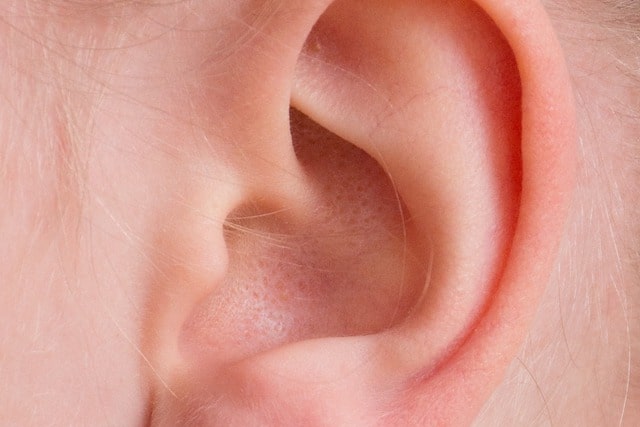
Not every temple is silly or weird; some are downright horrific. Mimizuka Shrine in Kyoto, Japan, is one such shrine. The shrine, a small hill with a stone structure on top, was built to house thousands upon thousands of ears and noses cut off from Korean soldiers during a 16th-century war.
Japan attempted to invade Korea between 1592 and 1598. At the time, it was common practice to cut off an enemy's head as a trophy. But due to the distance between the war and Japan, the decision was made to scale back the scale and simply take the ears and noses of the dead as souvenirs.
The pieces were returned to Japan, pickled to preserve them, and placed in a mound that literally translates as "ear mound." Inside are the remains of 38,000 Koreans.
1 Thai Temples of Red Fanta
In Thailand, belief in ghosts is the norm. People there often play a more active role in their spiritual inclinations than in a country like the United States, where a third of people admit to believing in ghosts.
For many Thais, believing in ghosts means dealing with them. It seems the easiest way to appease a spirit is to feed it well. At the low end of the spectrum, you might offer a ghost some water and rice, but that's pretty simple. Bananas and coconuts are a step up, and they'll make the ghost happier. But the best treat for ghosts seems to be Red Fanta.
If you're unfamiliar, Red Fanta is a strawberry-flavored soda. You can find cups and bottles of it at shrines throughout Thailand. The bottles even come with straws to make the spirit easier to drink.
So why Red Fanta? It's quite complex and not entirely clear. Offerings of "sweet water" for many alcoholic drinks is common practice, and soda is perfectly suited for this. The color red also draws inspiration from Chinese culture, where red is considered a lucky color, not to mention blood, which can represent both fertility and sacrifice in Thai culture. And at some point, it seems like it simply stuck, like being in the right place at the right time, and became the preferred sacred offering, to the point that Thailand has become the fourth-largest Fanta market in the world.